Coyotito's Hanging Box
Coyotito's hanging box is the woven container suspended from the roof of Kino's brush house where his infant son sleeps. It is the first object the narrative draws attention to in Kino's home, and its presence anchors the family's daily rituals of care and vulnerability. The box becomes a focal point of danger when a scorpion descends its rope toward the baby, triggering the crisis that drives the entire plot. Later, during the family's flight, the box is torn open and its contents scattered by the unknown assailants who burn Kino's house, marking the destruction of the family's domestic sanctuary. As a material object, the hanging box embodies the fragile security of Kino's world and the first breach through which evil enters.
Identity and Domestic Function
The hanging box is introduced in the opening scene as Kino awakens in the near dark. His eyes move first to the lightening square of the door, then to the hanging box where Coyotito sleeps, and finally to Juana beside him . The sequence establishes the box as the second most important object in Kino's perceptual world, after the threshold of his home. It is a simple woven container suspended by ropes from the roof support, and it serves as the baby's bed. Juana's first action each morning is to go to the box, lean over it, and speak a reassuring word to Coyotito . The box is thus the locus of the family's first daily act of care, the place where the infant's vulnerability is met by maternal attention before the day begins.
The Scorpion Attack and the Breach of Safety
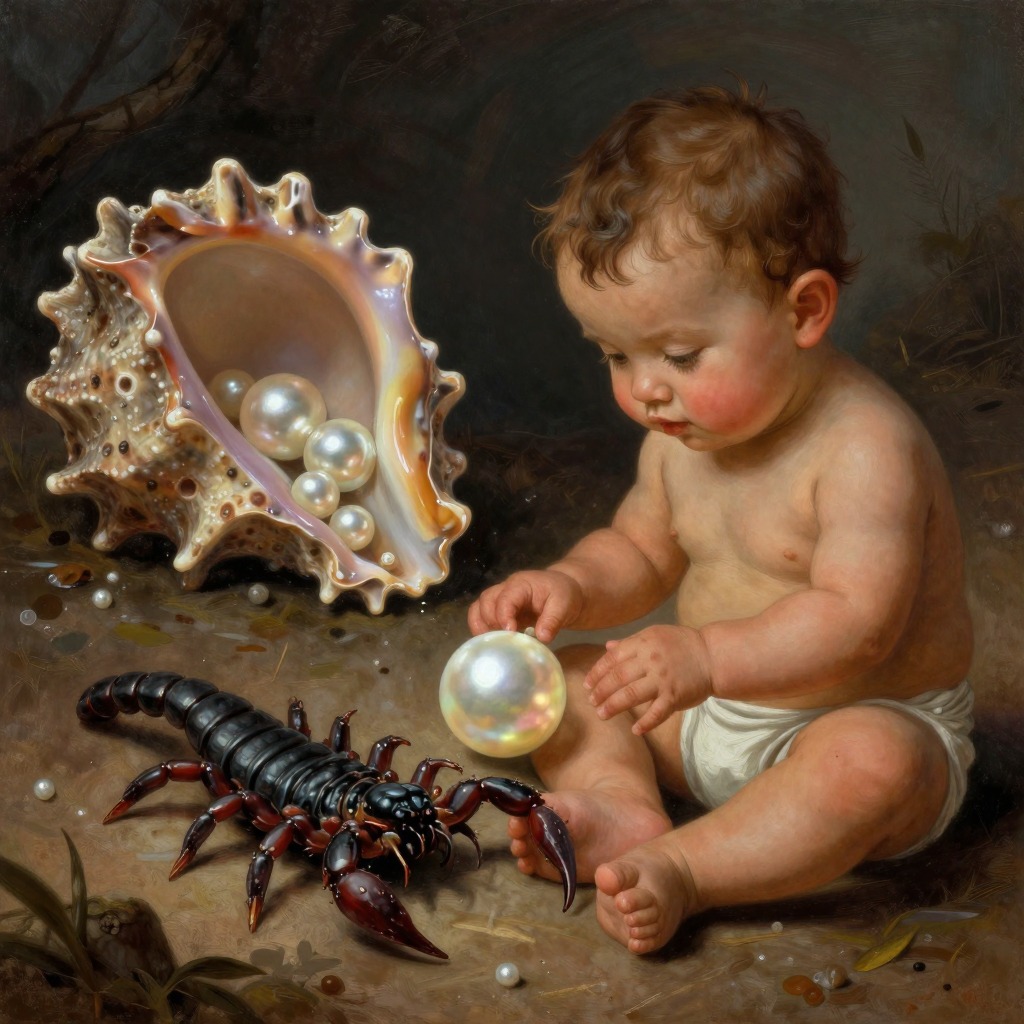
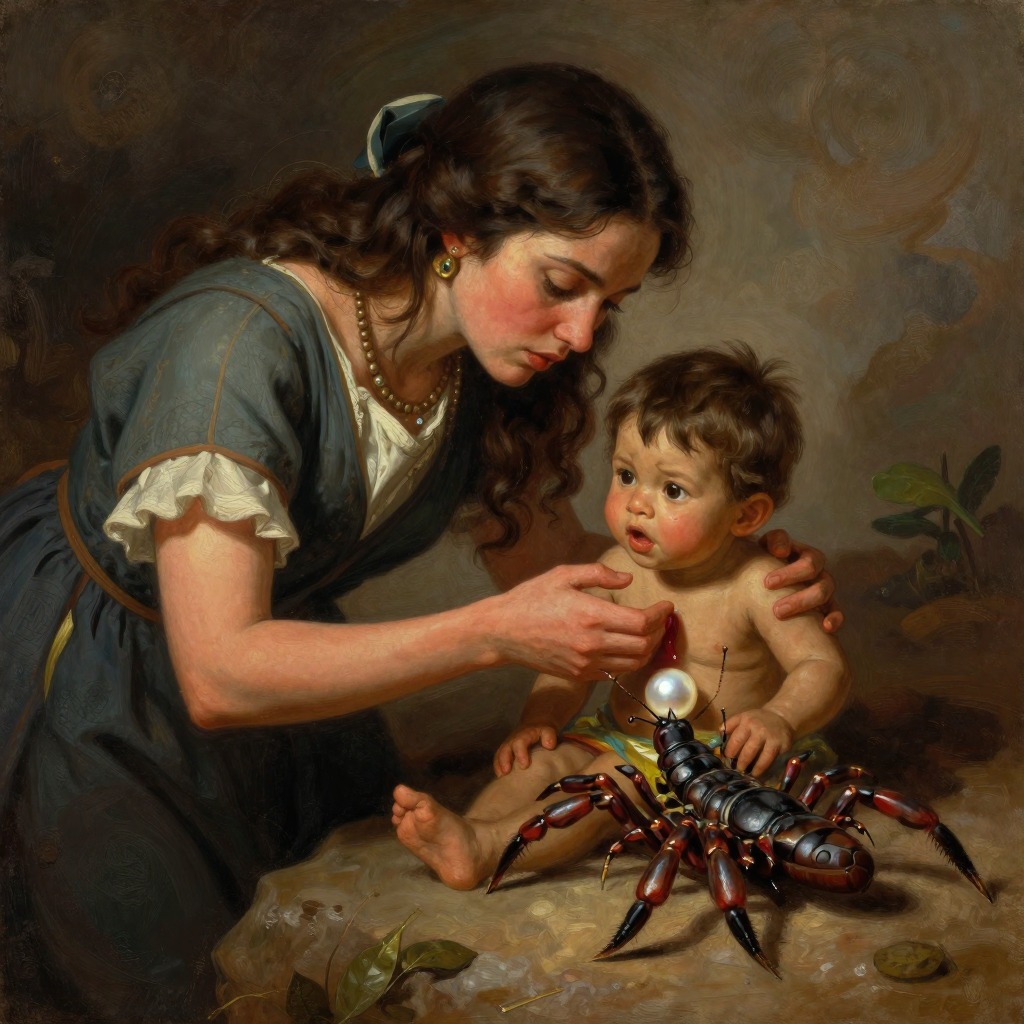
The hanging box becomes the stage for the story's inciting crisis. A streak of sunlight falls on the box and its ropes, and then a tiny movement draws Kino and Juana's eyes: a scorpion moves slowly down the rope toward the baby . The scorpion's stinging tail is straight out behind it, capable of whipping up in a flash. Kino's breath whistles in his nostrils, and in his mind the Song of Evil begins, the music of the enemy, while underneath the Song of the Family cries plaintively . The scorpion moves delicately down the rope toward the box, and beneath it Coyotito laughs and reaches up his hand toward the danger . Kino's hand moves forward slowly, but at the moment Coyotito shakes the rope, the scorpion falls onto the baby's shoulder and strikes (E00139–E00140). The hanging box, which had been the symbol of the family's warmth and security, is transformed into the point of entry for poison and fear. The attack on the baby inside the box is the event that sends Kino and Juana to the doctor's gate, where Kino is humiliated and his rage is born.
Destruction of the Box and the Family's Sanctuary
After Kino kills a man in the second night attack and the family flees, the hanging box is destroyed. When Kino returns to his brush house, he finds it burning. Juana tells him that the house was torn up and the floor dug, and even the baby's box was turned out before the fire was set . The box, which had been the most intimate container of the family's life, is violated and emptied by the same dark forces that have pursued Kino since he found the pearl. Its destruction is part of the systematic dismantling of Kino's world: the canoe is broken, the house is burned, and the box that held his son is ransacked. The box's ruin marks the point at which the family's domestic life is irrevocably lost, and they become fugitives with no shelter to return to.
Narrative and Thematic Significance
The hanging box functions as a material symbol of the family's fragile domestic order. It is the object around which the daily rituals of waking, feeding, and protecting the baby are organized. Its position suspended from the roof makes it both central and vulnerable, exposed to the dangers that can enter from above. The scorpion's descent along its rope literalizes the threat that penetrates the family's sanctuary. Later, the box's destruction by the unknown assailants completes the pattern: the pearl's evil does not merely bring external violence but systematically dismantles the physical structures of Kino's home life. The box, like the canoe and the house, is a thing that cannot protect itself, and its ruin is a measure of how thoroughly the family's world has been broken. In the end, when Kino and Juana return to La Paz carrying Coyotito's body, the box is never mentioned again; it has been erased from their lives along with the child it once held.