February 1942
Lale volunteers for transport
In [Krompachy](entity:location-recall-location-krompachy-77d21ea62c1a), [Slovakia](entity:location-recall-location-slovakia-b8542fd96412), [Lale Sokolov](entity:character-recall-character-lale-sokolov-87cc4dc5304b) learns from a government poster that each Jewish family must surrender a child aged eighteen or older for German labor. His older brother Max, a father of two, immediately offers to go, but Lale refuses to let him. Lale reports to the local government department and volunteers himself for transportation, believing his sacrifice will keep his family safe. He is instructed to travel to [Prague](entity:location-recall-location-prague-cf59465294ca) and await further orders, marking the beginning of his journey into the Holocaust.
April 1942
Journey in the cattle train
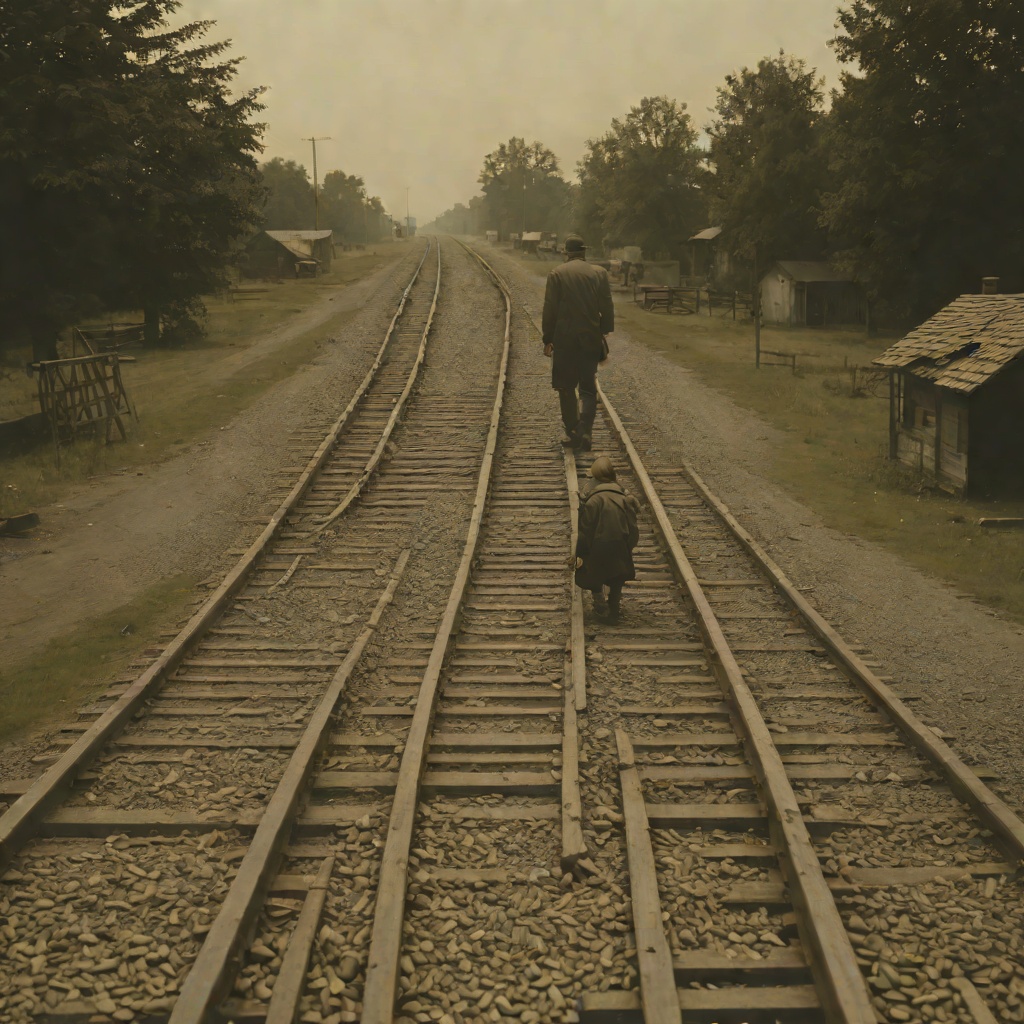
Lale is packed into a cattle wagon with dozens of other young Jewish men, enduring days of filth, hunger, and fear. He tries to keep morale up with encouraging words, but the conditions are brutal: two buckets serve as toilets, fights break out, and a man is killed in a skirmish. Lale clings to his suitcase, hoping his money and languages might buy him safety. He meets [Aron](entity:character-recall-character-aron-964371ba39d4), a frightened young man who looks to Lale for guidance, and Lale advises him to do as they are told.
April 1942
Arrival at Auschwitz
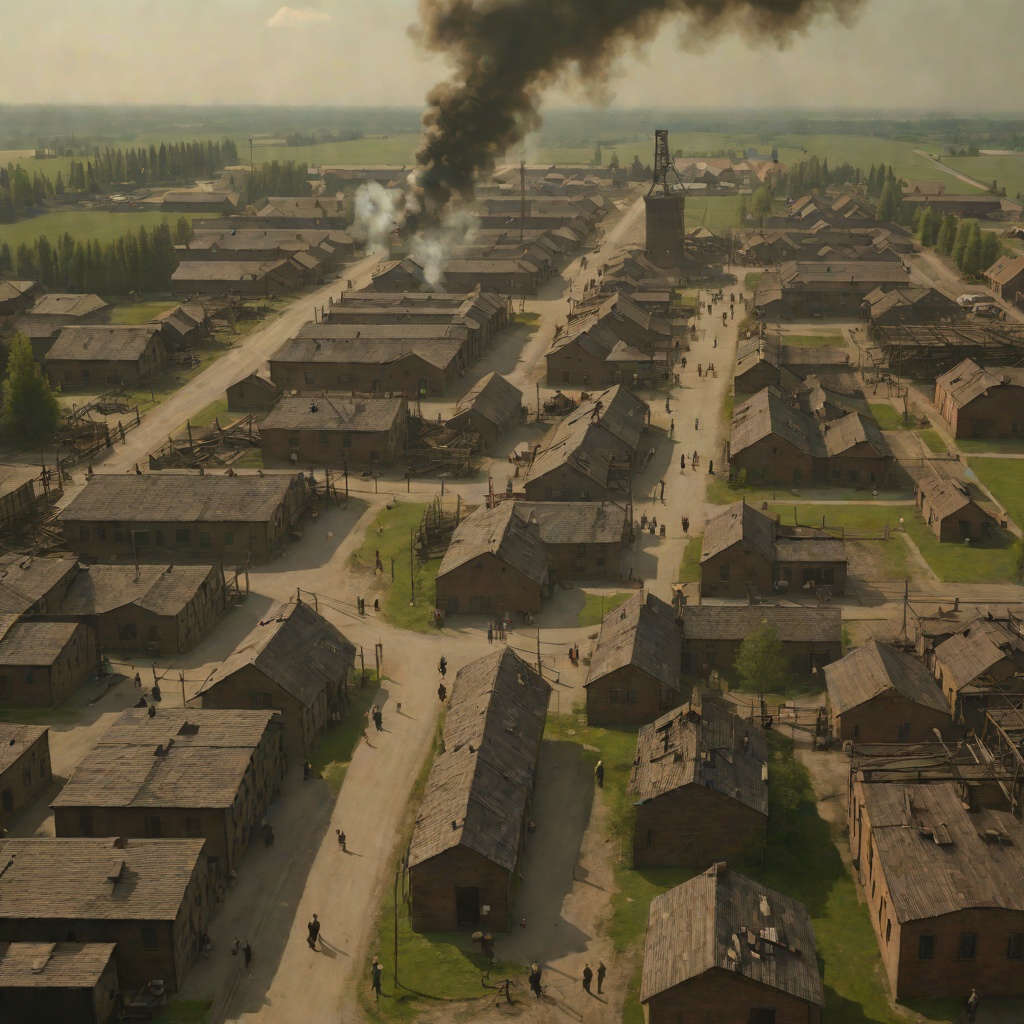
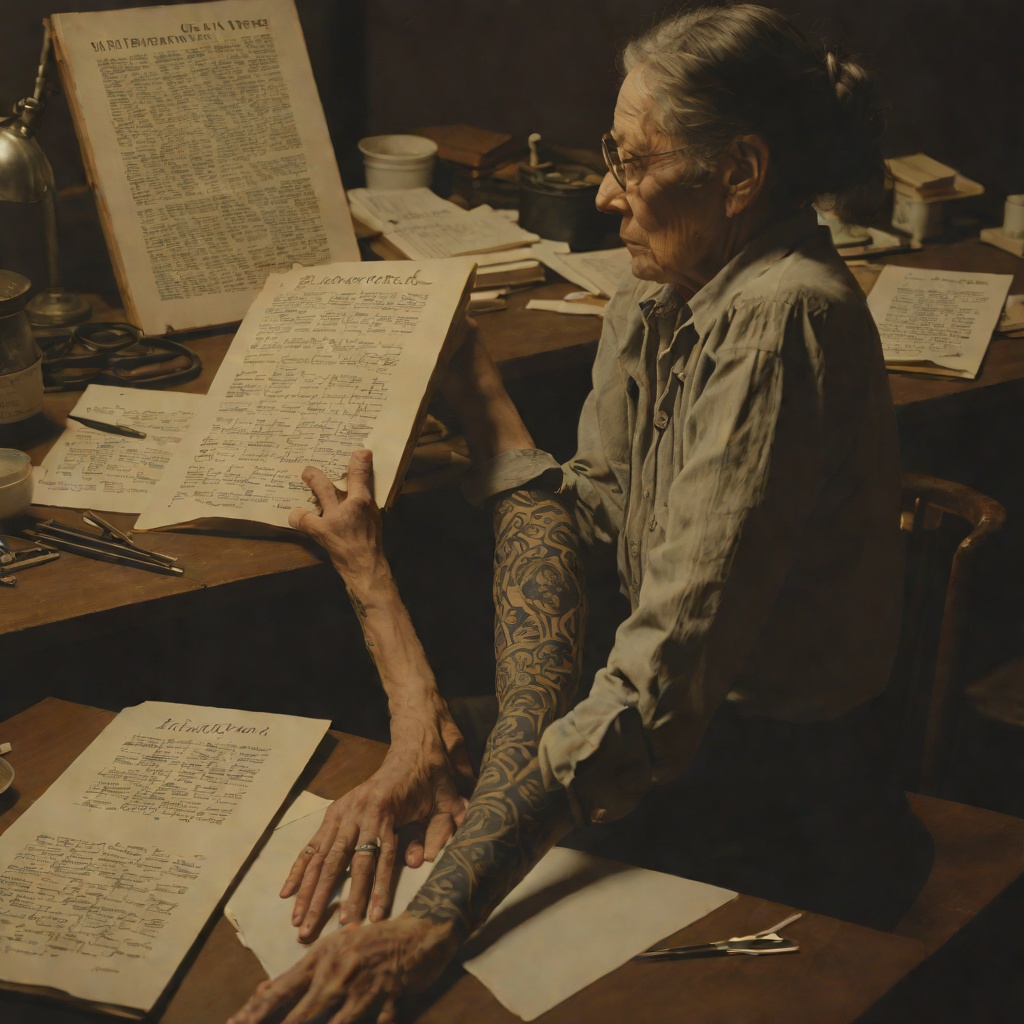
After two days, the train stops and the men are forced out by [SS](entity:organization-recall-organization-ss-4977af73ebea) officers with dogs. Lale sees the [Arbeit Macht Frei gate](entity:object-recall-object-arbeit-macht-frei-gate-f33dc468ccdd) and hears Commandant [Rudolf Hoess](entity:character-recall-character-rudolf-hoess-df72515aea2a) welcome them to [Auschwitz](entity:location-recall-location-auschwitz-5b34fe0799d2), telling them work makes you free. The prisoners are processed, stripped, shaved, and given Russian uniforms. Lale is tattooed with the number 32407, a moment of shock and dehumanization. He then marches through the mud to [Birkenau](entity:location-recall-location-birkenau-9bdba44e12f1), where he and [Aron](entity:character-recall-character-aron-964371ba39d4) are assigned to Block 7.
April 1942
First night in Birkenau
In Block 7, Lale and [Aron](entity:character-recall-character-aron-964371ba39d4) share a crowded bunk. The men are starving and desperate, but a hesitant 'Moooo' from the back of the block sparks quiet laughter, a brief moment of humanity. Lale wakes in the night to relieve himself and witnesses two [SS](entity:organization-recall-organization-ss-4977af73ebea) officers casually shoot three prisoners who are using the latrine ditch. He makes a vow to himself: he will live to leave this place and see the murderers burn in hell. He returns to his bunk, shaken but resolute.
April 1942
First day of labor
The prisoners are roused at dawn and given a thin, foul liquid for breakfast. Lale is assigned to roof tiling, where he meets two Russian soldiers, Andor and Boris, who explain the camp's hierarchy: green triangles are criminals, red are politicals, and Jews wear the yellow star. They warn him that [Auschwitz](entity:location-recall-location-auschwitz-5b34fe0799d2) is being built to be the biggest concentration camp of all. Lale observes everything, storing knowledge for survival, and begins to think about how to get a better position.
Spring 1942
Lale becomes the kapo's boy
Lale's kapo, a small man with a gap-toothed smile, offers him a job as his personal servant, promising an easier life in exchange for obedience. Lale accepts, becoming the kapo's lackey. This position gives him more freedom to move around the camp, but he wonders if he is making a deal with the devil. He continues to observe the [SS](entity:organization-recall-organization-ss-4977af73ebea) and learns that Commandant Hoess is rarely seen and that the Germans lack architectural intelligence.
Spring 1942
Witnessing the gas van murders
Lale follows a truck to the back of the administration building and witnesses a horrific scene: naked prisoners are herded into a modified bus, the doors are sealed, and a canister is emptied through a roof hatch. The bus shakes with muffled screams, and when the doors open, dead bodies fall out. Lale drops to his knees, retching, and is traumatized by the sight. The next morning he is burning with fever, and he falls unconscious.
Spring 1942
Pepan saves Lale from typhus
Lale is unconscious for seven days, suffering from typhus. He wakes to find [Pepan](entity:character-recall-character-pepan-f30f661cf99a), the camp's [Tätowierer](entity:concept-recall-concept-t-towierer-b459337ce316), caring for him. Pepan explains that a young man, [Aron](entity:character-recall-character-aron-964371ba39d4), pushed Lale off the death cart and dragged him back to the block, and that the men in Block 7 have been nursing him. Pepan offers Lale a job as his assistant, tattooing new prisoners. Lale is reluctant but eventually agrees, seeing it as a way to survive.
Spring 1942
Aron's disappearance
When Lale returns to Block 7, he learns that [Aron](entity:character-recall-character-aron-964371ba39d4) is missing. His bunkmates tell him that Aron lied to the kapo about Lale's whereabouts to protect him, and when the kapo discovered the truth, he took Aron instead. Lale is devastated, realizing Aron sacrificed himself to save him. The men in the block tell Lale they tried to continue Aron's work, smuggling water and bread to him while he was sick. Lale weeps, feeling a debt he can never repay.
July 1942
Lale meets Houstek
[Pepan](entity:character-recall-character-pepan-f30f661cf99a) introduces Lale to [Oberscharführer Houstek](entity:character-recall-character-oberscharf-hrer-hou-ef567841b94d), who interviews Lale about his languages. Lale lists Slovak, German, Russian, French, Hungarian, and a little Polish, looking the officer in the eye. Pepan warns Lale to lose his bravado and never raise his eyes above Houstek's boots. Lale gets the job as the new [Tätowierer](entity:concept-recall-concept-t-towierer-b459337ce316), but he is already learning the dangers of overconfidence.
July 1942
Lale tattoos Gita
Lale and [Pepan](entity:character-recall-character-pepan-f30f661cf99a) are assigned to tattoo a group of young women who have been moved from [Auschwitz](entity:location-recall-location-auschwitz-5b34fe0799d2) to [Birkenau](entity:location-recall-location-birkenau-9bdba44e12f1). Lale is horrified at the task, but Pepan insists he must do it. As he tattoos the number 34902 onto a young woman's arm, a man in a white coat inspects her face. Lale squeezes her arm to stop her from speaking, and she looks at him with dark, dancing eyes. He feels his heart stop and begin beating for the first time. When he looks up, she is gone.
Summer 1942
Lale becomes the Tätowierer
Several weeks later, Lale reports for work to find [Pepan](entity:character-recall-character-pepan-f30f661cf99a) gone. Houstek tells him he is now the [Tätowierer](entity:concept-recall-concept-t-towierer-b459337ce316) and assigns him a young [SS](entity:organization-recall-organization-ss-4977af73ebea) officer, Baretski, as his guard. Lale asks for an assistant, and Baretski selects a young man named [Leon](entity:character-recall-character-leon-a75464f214f7) from the line of prisoners. Lale tattoos Leon's number and tells him to stand beside him and watch, promising the job might save his life. Lale is given a private room and extra rations, but he feels isolated and hears the word 'collaborator' muttered as he leaves his old block.
Summer 1942
Lale and Leon's routine
Lale and [Leon](entity:character-recall-character-leon-a75464f214f7) work around the clock tattooing new arrivals. Baretski is often cruel, beating Leon for slowness. One night, Baretski lets them walk back to [Birkenau](entity:location-recall-location-birkenau-9bdba44e12f1) alone, and Lale gets Leon back in time for roll call. The next day, Baretski trips Leon repeatedly on the walk, and later hits him with his rifle when Leon drops his tattooing stick. Lale learns to control his reactions, knowing that any interference makes things worse.
Autumn 1942
Lale sees Gita again
On a Sunday, Lale sees Gita walking with a group of girls. He recognizes her immediately by her eyes. They walk toward each other, and their gazes linger until Baretski interrupts. Lale learns her number is 34902. Baretski teases him, offering to deliver a letter. Lale is tempted but knows the penalty for a prisoner caught with paper is death. He walks away, but the image of Gita stays with him.
Autumn 1942
Lale writes his first letter to Gita
After Baretski offers to deliver a letter, Lale writes a simple note to prisoner 34902, introducing himself and asking her to meet him near the administration building on Sunday. Baretski delivers it and brings back a reply: Gita is from [Slovakia](entity:location-recall-location-slovakia-b8542fd96412), has been in [Auschwitz](entity:location-recall-location-auschwitz-5b34fe0799d2) since April, and works in the [Canada warehouse](entity:object-recall-object-canada-warehouse-355872387440). Lale writes back asking her name, and they begin a correspondence.
Autumn 1942
First meeting of Lale and Gita
On a Sunday, Lale finds Gita in the compound and takes her hand, leading her behind the administration building. They talk awkwardly, and Lale asks her name; a friend calls out 'Gita.' Gita is guarded, saying she is just a number, but Lale insists she is more. He makes her promise to tell him who she is and where she comes from before they leave the camp. She agrees, and they part with a sense of connection.
Winter 1942
Lale meets Victor and Yuri
Lale approaches two civilian workers, [Victor](entity:character-recall-character-victor-046c8bf7b3bc) and his son [Yuri](entity:character-recall-character-yuri-097baa4d9efb), who are building a new structure. Victor tells Lale it is [Crematorium One](entity:location-recall-location-crematorium-one-b1faa94d40d9). Lale is horrified, and Victor gives him a piece of sausage, saying he wants to help. Lale offers to pay with jewels from the [Canada](entity:location-recall-location-canada-a93ef5aae6af), and they agree to trade. This begins Lale's black-market operation, using smuggled valuables to buy food and medicine.
Winter 1942
Lale's black-market operation begins
Lale recruits two girls from the [Canada warehouse](entity:object-recall-object-canada-warehouse-355872387440) to smuggle jewels and currency to him in exchange for food. They hide the valuables in the snow behind their block. Lale uses the loot to buy sausage and chocolate from [Victor](entity:character-recall-character-victor-046c8bf7b3bc) and [Yuri](entity:character-recall-character-yuri-097baa4d9efb), distributing it to prisoners, including Gita and her friends. He is careful to keep the operation secret, knowing discovery means death.
Winter 1942
Gita falls ill with typhus
On a Sunday, [Dana](entity:character-recall-character-dana-a77a79fda3ce) tells Lale that Gita is sick with typhus. Lale panics, remembering his own near-death experience. He instructs Dana to hide Gita in the [Canada](entity:location-recall-location-canada-a93ef5aae6af) during the day and bring her back for roll call, while he tries to get penicillin. He gives [Victor](entity:character-recall-character-victor-046c8bf7b3bc) all his gems and currency, and Victor procures the medicine. Lale gets it to Dana, and Gita slowly recovers.
Winter 1942
Gita transferred to administration
Lale asks Baretski to get Gita transferred from the [Canada](entity:location-recall-location-canada-a93ef5aae6af) to the administration building, where it is warm. Baretski agrees, and Gita is moved to work as a clerk, transcribing prisoner details. She meets [Cilka](entity:character-recall-character-cilka-6d962100abed), a beautiful young woman who becomes her friend. Lale winks at Gita when he visits the office, and she is overjoyed to see him.
1943
Cilka is taken by Schwarzhuber
While Gita and [Cilka](entity:character-recall-character-cilka-6d962100abed) work in the administration office, two [SS](entity:organization-recall-organization-ss-4977af73ebea) officers seize Cilka and drag her to a room where [Schwarzhuber](entity:character-recall-character-schwarzhuber-ce143da46e70), the head of [Birkenau](entity:location-recall-location-birkenau-9bdba44e12f1), is waiting. He forces her to undress him and then rapes her. Cilka is traumatized but survives, becoming Schwarzhuber's plaything. Gita is devastated when she learns what happened, and the girls keep Cilka's secret.
1943
Lale meets Jakub
During a long tattooing session, Lale notices a giant of a man, [Jakub](entity:character-recall-character-jakub-f642383eea4d), who is very hungry. Lale hides him behind his table and later sneaks him food in his room. Jakub tells Lale he is an American who was visiting family in [Poland](entity:location-recall-location-poland-919a7f7f62ac) and got trapped. Lale advises him to wait and see what work the Germans find for him, predicting his size will be useful.
Spring 1943
The prisoner–SS football match
Baretski asks Lale to organize a football match between prisoners and [SS](entity:organization-recall-organization-ss-4977af73ebea) officers. Lale assembles a team, including several semiprofessional players, but warns them they must not win. The match ends with the SS winning, and [Schwarzhuber](entity:character-recall-character-schwarzhuber-ce143da46e70) presents a [World Cup trophy](entity:object-recall-object-world-cup-trophy-2e9cf4698fe3) to the SS captain. Lale and Gita steal a moment together afterward, sharing chocolate and a passionate kiss.
May 1943
Mengele arrives at Birkenau
Lale and [Leon](entity:character-recall-character-leon-a75464f214f7) are tattooing when a man in a white coat, [Josef Mengele](entity:character-recall-character-josef-mengele-a0cc1adb6ff1), approaches. Baretski warns Lale that Mengele is a creep. Mengele inspects Lale's work and later returns, causing Lale to stab a young woman with his needle. Mengele stares at Lale with black, compassionate eyes and a strange smile. Lale is terrified, knowing Mengele is a new danger.
May 1943
Mengele takes Leon
At [Auschwitz](entity:location-recall-location-auschwitz-5b34fe0799d2), Mengele is selecting young women for experiments. Lale stares at him, and Mengele notices. An [SS](entity:organization-recall-organization-ss-4977af73ebea) officer takes [Leon](entity:character-recall-character-leon-a75464f214f7) away, despite Lale's protests. Leon tells Lale it will be all right, but Lale is devastated. That evening, Lale finds a single red flower on the road and picks it, thinking of Gita and his mother. The flower dies by morning, a symbol of the camp's death.
1943
Leon returns castrated
Weeks later, [Leon](entity:character-recall-character-leon-a75464f214f7) returns to Lale, pale and thin. He tells Lale that Mengele cut his testicles off. Lale is horrified and offers to get him food, but Leon says he has lost his appetite. Lale gets Leon his job back and arranges for him to stay in Block 7. The two friends are reunited, but the horror of Mengele's cruelty weighs on them.
1943
Lale identifies bodies in crematorium
Baretski takes Lale to Crematorium 3 to identify two bodies with the same tattoo number. Lale is forced to enter the gas chamber, where hundreds of naked corpses are piled. He examines the arms and determines one number is an eight, not a three. He leaves, vomiting, and Baretski jokes that he is the only Jew to walk into an oven and walk out.
1943
Lale and Gita make love
Lale bribes Gita's kapo with chocolate to bring her to him. Gita is terrified, thinking she is being taken to die, and when she sees Lale, she attacks him in anger and relief. Their passion erupts, and they make love for the first time in the block. Lale feels a deep commitment to her, and Gita falls asleep in his arms. He realizes he can love no other.
March 1944
Rescue of Mendel Bauer
Two young men bring [Mendel Bauer](entity:character-recall-character-mendel-bauer-5eed759bf7e4), an escapee who has been recaptured, to Lale's room. Lale learns Mendel is to be hanged. He goes to [Bella](entity:character-recall-character-bella-e7bb6f6c0c73), the administration clerk, and asks her to add Mendel's name to a transport list. He then tattoos a snake over Mendel's number to conceal it. Mendel is smuggled onto the transport and escapes the camp.
1944
Lale learns of Cilka's fate
Gita finally tells Lale that [Cilka](entity:character-recall-character-cilka-6d962100abed) is [Schwarzhuber](entity:character-recall-character-schwarzhuber-ce143da46e70)'s plaything. Lale is angry and wants to help, but Gita says there is nothing they can do. Lale calls Cilka a hero for surviving, but Gita disagrees, saying she just wants to live. Lale reflects on his own role as a collaborator, hoping he will not be judged.
April 4, 1944
American plane flies over Birkenau
A [U.S. Air Force](entity:organization-recall-organization-u-s-air-force-9aeb50acfd08) plane flies low over [Birkenau](entity:location-recall-location-birkenau-9bdba44e12f1), and prisoners wave and scream for it to drop bombs on the crematoria. The plane circles three times and then flies away. [SS](entity:organization-recall-organization-ss-4977af73ebea) guards open fire on the prisoners, killing dozens, including children. Lale helps gather the bodies and recites the kaddish. He realizes he has been in the camp for two years and clings to hope that rescue is coming.
June 1944
Lale's arrest and torture in Block 11
Lale returns to his room to find his hidden gems and currency spread on his bed, with two [SS](entity:organization-recall-organization-ss-4977af73ebea) officers waiting. He is arrested and taken to [Block 11](entity:location-recall-location-block-11-500fed51b6e4), the punishment block. There, [Jakub](entity:character-recall-character-jakub-f642383eea4d), now a guard, is ordered to beat him. Jakub stages the beating, telling Lale to speak only in Yiddish and to faint. Lale is tortured but gives no names, and Jakub saves his life.
July 1944
Cilka asks Schwarzhuber to free Lale
After Lale is released from [Block 11](entity:location-recall-location-block-11-500fed51b6e4) and sent to work in the fields, he asks Baretski to tell Gita he is in Block 31. Gita tells [Cilka](entity:character-recall-character-cilka-6d962100abed), who, lying in [Schwarzhuber](entity:character-recall-character-schwarzhuber-ce143da46e70)'s arms, asks for a favor. Schwarzhuber arranges for Lale to be returned to his old room and his job as [Tätowierer](entity:concept-recall-concept-t-towierer-b459337ce316). Lale is grateful to Cilka, knowing she risked her position.
July 1944
Lale returns to work
Lale is reinstated as [Tätowierer](entity:concept-recall-concept-t-towierer-b459337ce316) and reunited with [Leon](entity:character-recall-character-leon-a75464f214f7). He is watched closely but resumes his work. He sees Gita and [Dana](entity:character-recall-character-dana-a77a79fda3ce), who are overjoyed he is alive. Lale tells Gita he will never leave her again and that they will have a life together. He begins to rebuild his black-market connections, but on a smaller scale.
August 1944
Liquidation of the Gypsy camp
One night, [SS](entity:organization-recall-organization-ss-4977af73ebea) officers and dogs force the Romany prisoners from their blocks and herd them onto trucks. Lale watches in horror as his friends, including [Nadya](entity:character-recall-character-nadya-7545204250d6), are taken away. Nadya tells him she must go with her people. The next day, ash falls from the crematoria, and Lale realizes the [Gypsy camp](entity:location-recall-location-gypsy-camp-e93d78263f90) has been liquidated. He is devastated and nearly loses control in front of Mengele.
October 1944
Sonderkommando revolt
Lale and Gita are together when explosions rock the camp. The Sonderkommando, armed with smuggled weapons, revolt and blow up [Crematorium 4](entity:location-recall-location-crematorium-4-9bf6f62c2484). [SS](entity:organization-recall-organization-ss-4977af73ebea) guards open fire, killing many. Lale sends Gita back to her block for safety. He learns that female prisoners had smuggled gunpowder to the Sonderkommando. The revolt is suppressed, but it gives Lale a glimmer of hope that the end is near.
January 1945
The evacuation of Birkenau
As the Russians advance, the [SS](entity:organization-recall-organization-ss-4977af73ebea) begin destroying records and preparing to evacuate the camp. Lale learns from a clerk that the camp is to be emptied. He rushes to warn Gita and her friends, telling them to stay in their blocks. That night, SS officers paint red slashes on the women's coats. The next morning, thousands of women are marched out of the camp. Lale searches for Gita and finds her, but they are separated by the crowd. She shouts her name, '[Gita Furman](entity:character-recall-character-gita-furman-17e598658375),' and Lale screams 'I love you' as the gates close.
January 1945
Lale boards the train to Mauthausen
The next morning, Lale wakes to cannon fire and finds the gates of [Birkenau](entity:location-recall-location-birkenau-9bdba44e12f1) open. He walks out and is caught up in a crowd of prisoners being loaded onto a train. He boards, and the train takes him to [Mauthausen](entity:location-recall-location-mauthausen-5c8b7d629402) concentration camp in Austria. He hides three diamonds in his mouth during a strip search and is assigned to a block.
January 1945
Gita's escape during the death march
Gita is forced on a death march with thousands of women. [Dana](entity:character-recall-character-dana-a77a79fda3ce) collapses and is left behind, and Gita is dragged on by four Polish girls. They escape during a stop, running to a nearby house where the owners help them burn the red slashes off their coats. They hide in the woods and eventually make their way to [Krakow](entity:location-recall-location-krakow-6d6792729bfd), where they find shelter with a sister of one of the girls.
Early 1945
Lale at Mauthausen
At [Mauthausen](entity:location-recall-location-mauthausen-5c8b7d629402), Lale is idle and watches the guards. He befriends a guard who offers to transfer him to a subcamp at [Saurer-Werke](entity:location-recall-location-saurer-werke-c6a412620678) in [Vienna](entity:location-recall-location-vienna-bce4fdda6904), warning him to hide his Jewish identity. Lale accepts and gives the guard a diamond as a thank-you. He is transferred to Vienna, where he continues to hide his identity.
April 23, 1945
Lale's escape from Saurer-Werke
At [Saurer-Werke](entity:location-recall-location-saurer-werke-c6a412620678), Lale is questioned by the commandant about being a Jew. He denies it and proves it by offering to show his genitals, which the commandant declines. Lale then finds a weak point in the fence and crawls under it, walking into the forest. He swims across a river under cross fire and collapses on the far bank, exhausted.
April 1945
Lale is captured by Russians
Lale wakes and walks along a road, where he is stopped by Russian soldiers. He tells them he is Slovak and a former prisoner, but they ignore him. A jeep stops, and an officer offers him a job as an interpreter. Lale is taken to a luxurious chalet and given a bath and fine clothes. He is assigned to procure women for the Russian officers' parties.
May 1945
Lale works as a pimp for Russians
Lale is taken to the village each day to recruit young women for the Russian officers. He is given money and jewelry to entice them. He becomes known in the village and is propositioned by a waitress, Serena, but he tells her his heart belongs to Gita. He begins to secretly pocket gems, planning his escape.
June 1945
Lale escapes from the Russians
Lale takes extra money and jewels from the vault, drives the jeep to the village, and abandons it. He steals a bicycle and rides away, but is stopped by a Russian patrol who kick him and tell him to walk. He reaches a railway station and bribes the stationmaster with diamonds to let him board a train to [Bratislava](entity:location-recall-location-bratislava-83a9b991480e). The stationmaster gives him food and coffee, and Lale weeps with gratitude.
Summer 1945
Lale returns to Krompachy
Lale arrives in [Bratislava](entity:location-recall-location-bratislava-83a9b991480e) and walks to [Krompachy](entity:location-recall-location-krompachy-77d21ea62c1a), a journey of several days. He finds his family home in disrepair and is greeted by his sister Goldie, who faints at the sight of him. Goldie tells him their parents were taken away, Max was killed fighting with the partisans, and Max's wife and children were taken. Lale is devastated but determined to find Gita.
Summer 1945
Lale searches for Gita
Lale buys a horse and cart with gems and travels back to [Bratislava](entity:location-recall-location-bratislava-83a9b991480e). He meets every train, asking if anyone knows [Gita Furman](entity:character-recall-character-gita-furman-17e598658375). He registers her name with the [Red Cross](entity:organization-recall-organization-red-cross-cc84ccb88eba). After two weeks of searching, he is walking down the main street when he sees Gita with two friends. He drops to his knees, and she tells him she loves him. He asks her to marry him, and she says yes.
October 1945
Lale and Gita marry
Lale changes his name to Sokolov, his sister's married name, and he and Gita marry in [Bratislava](entity:location-recall-location-bratislava-83a9b991480e). They start a textile business, which thrives. They support the movement for a Jewish state in Israel, and Gita works behind the scenes to smuggle money. Their happiness is threatened when Lale is arrested for exporting valuables.
1948
Lale's imprisonment and escape
Lale is sentenced to two years in [Ilava Prison](entity:location-recall-location-ilava-prison-0aa6b30e5be2) for exporting valuables. Gita bribes officials, and a priest advises Lale to feign madness. A psychiatrist arranges for Lale to be released for a few days. That night, [Lale and Gita flee Czechoslovakia](entity:action-recall-action-lale-and-gita-flee-cze-a75d8121bd40), hiding in a truck to [Vienna](entity:location-recall-location-vienna-bce4fdda6904). They travel to [Paris](entity:location-recall-location-paris-c02b439ce220) and then to [Sydney](entity:location-recall-location-sydney-5250126580b6), Australia, where they settle in [Melbourne](entity:location-recall-location-melbourne-9115df2f60d3).
1949-1961
Lale and Gita build a new life
In [Melbourne](entity:location-recall-location-melbourne-9115df2f60d3), Lale re-enters the textile trade, and Gita studies dress design. They long for a child, and after years of trying, Gita becomes pregnant. Their son, Gary, is born in 1961. They live a full life, with a successful business, friends, and holidays. The [painting of a Romany woman](entity:object-recall-object-painting-of-a-romany-w-fe2e94f4d6f2) that Gita brought from [Slovakia](entity:location-recall-location-slovakia-b8542fd96412) hangs in Gary's house.