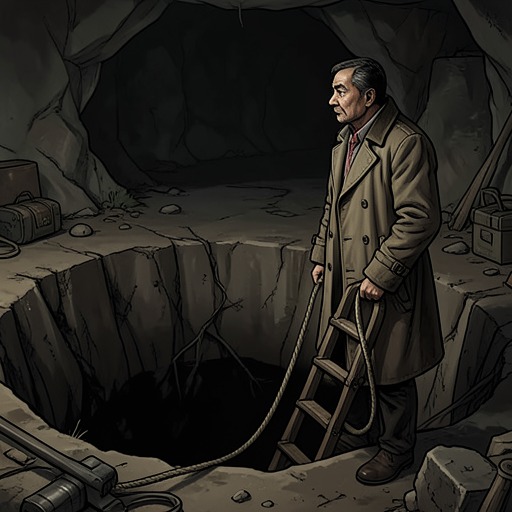
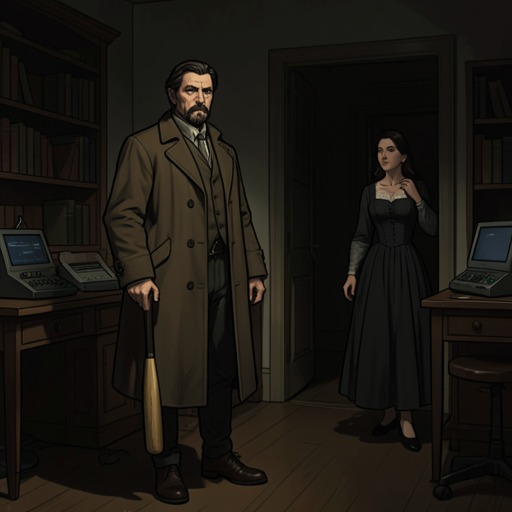
Event 1
Toru Okada quits his law-firm job

[Toru Okada quits his law-firm job](entity:event-recall-event-toru-okada-quits-his-la-e419a95b3582) at the beginning of April, ending a stable but unchosen career just as he turns thirty. The decision is neither a triumphant leap toward a new ambition nor a response to intolerable working conditions: he has no particular prospect in view, and he is good at the practical work he leaves behind. What changes is the direction of his days. With the firm’s routines behind him, he finds an interval for housework, reading, and thought—and, soon, for questions about how much one person can truly understand another.
## A capable worker who does not want the career
The job Toru leaves is the law-firm position he has held since graduating. He does not dislike the work, and the pay is adequate; the office atmosphere is friendly. His place in the father-and-son firm is modest but clear: he performs the practical errands and supporting duties of a professional gofer. He is quick to learn, efficient, realistic, and not given to complaint. His competence makes the resignation more pointed: he is not forced out by failure or hostility, and the firm’s senior partner even offers him a small raise when he says he intends to leave.
That counteroffer cannot alter Toru’s conclusion. He is more certain than before that he does not want to become a lawyer, and the prospect of staying in the same job feels less like security than a decision to remain there for the rest of his life. Nor does he imagine that leaving will immediately deliver a better future. He has no particular hopes or prospects to pursue, and studying for the bar exam is the last thing he wants. At thirty, he treats the timing itself as decisive: if he is going to quit, now is the moment, before staying becomes permanent through inertia.
## The decision at home
Toru tells [Kumiko](entity:character-recall-character-kumiko-d41c446d91d6) at dinner that he is thinking of resigning. Her first response is brief: “I see.” After a silence, she tells him that if he wants to quit, he should, because it is his life and he should live it as he wants. The exchange offers no elaborate plan or dramatic confrontation. Its weight lies in the permission Kumiko gives him—and in the ordinary gesture that follows, as she picks fish bones from her meal and moves them to the edge of her plate.
The decision is possible in material terms because the household is not dependent on Toru’s salary alone. Kumiko earns a good income as an editor at a health-food magazine and sometimes supplements it with illustration assignments from editors at other magazines. She studied design and had hoped to work as a freelance illustrator. Toru, meanwhile, expects to have unemployment insurance for a while. Together, these resources mean that even if he stays home and takes care of the household, they can still afford extras such as eating out and the cleaning bill. Their lifestyle, he judges, will hardly change. The resignation is therefore both a personal break from a career he does not want and a choice made possible by the couple’s existing financial arrangements.
## A newly available life
After leaving the firm, Toru discovers that unemployment has an immediate, everyday texture. At home, he can do the laundry, make the bed, wash dishes, and vacuum; he can sit on the veranda with the cat, check want ads and sales, shop for groceries and household supplies, prepare dinner, and read while he waits for Kumiko to return from work. These tasks do not constitute a new vocation. They fill the time released by the old one, while leaving open the question of what he will do next.
At first, that open interval feels refreshing. He no longer has to commute on packed subways or attend meetings with people he does not want to meet, and he can read whichever book he likes whenever he likes. He has no idea how long the arrangement will last, but for the first week he tries not to think about the future and treats the period as his one great vacation. The freedom is explicitly temporary in his mind: it will have to end sometime. Its significance lies in the fact that he chooses, for now, to inhabit it rather than immediately replace his former job with another fixed purpose.
## A pause for questions
A week after resigning, Toru begins thinking seriously about whether one person can ever achieve perfect understanding of another. He considers the effort people invest in knowing someone and the possibility that apparent familiarity still misses what matters most. He had never grappled with such questions before—not because he had solved them, but because living had kept his hands full. The newly available time gives thought room to emerge from the ordinary movement of the day.
The transition is deliberately small in scale. A morning of chores, a quiet interval on the veranda, shopping, dinner preparations, and a book on the sofa form the setting in which Toru becomes aware of both his new freedom and its limits. The resignation does not itself answer his questions or promise a destination. It interrupts the life he had been performing competently, leaves the future unresolved, and creates the stillness in which his attention can turn toward himself and the distance between people.
Event 2
Noboru Wataya the cat goes missing
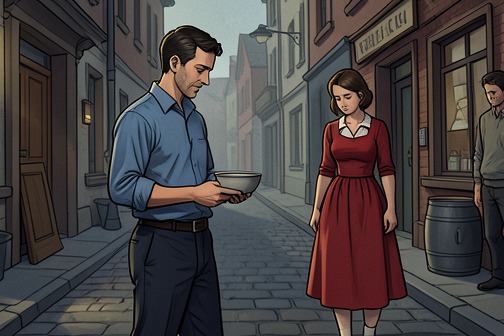
The disappearance of the Okadas’ cat is an early domestic crisis that opens into a larger uncertainty: the animal is not merely absent from its dish but, according to [Malta Kano](entity:character-recall-character-malta-kano-bc918ff919fe), beyond the reach of a search in the neighborhood. The episode gives [Toru Okada](entity:character-recall-character-toru-okada-2150189ce853) a modest, concrete task while establishing the cat as the first missing presence around which the novel’s obscure currents gather. It also exposes an indirect chain of consultation linking [Kumiko](entity:character-recall-character-kumiko-d41c446d91d6), her brother [Noboru Wataya](entity:character-recall-character-noboru-wataya-24272146e8e7), and [Malta](entity:location-recall-location-malta-24a59bb3fa9f).
## A Household Disturbed
After Kumiko asks whether the cat has returned, Toru realizes he has not thought about it all morning. The sardines left in its dish remain untouched, and Kumiko asks him to look around the neighborhood because the cat has been gone for more than a week. Toru likes cats and cares about this one, but initially treats its absence according to an ordinary feline logic: a cat may choose to live somewhere else, and if it becomes tired and hungry, it may come home. He agrees to search chiefly because Kumiko wants him to, and because, newly out of work, he has little else to do.
That practical response does not relieve the unease. One evening Kumiko sits in the darkened living room and says she is sure the cat is dead. Toru argues that it may be enjoying itself somewhere and could return hungry, as it had after an earlier disappearance when they lived in Koenji. Kumiko rejects the comparison: this time, she says, it is dead and rotting in grass, and asks whether Toru has searched the vacant house. Her certainty turns a routine absence into a threatened loss, while the vacant house gives the search a specific, unsettling destination.
## The Search and Its Limits
The cat’s absence recurs in the couple’s conversations even when other matters occupy them. During a later discussion, Kumiko tells Toru that a Miss Kano will call; Toru replies that she has already phoned, said their names—his, Kumiko’s, and Kumiko’s brother’s—and hung up without explaining herself. Kumiko’s advance notice and Malta’s cryptic call place the missing cat inside a network of concern that Toru does not yet understand.
When Toru meets Malta, she clarifies that the consultation is specifically about the cat. Noboru Wataya had sought her advice after Kumiko consulted him about the animal’s disappearance. Toru understands Malta to be a clairvoyant or channeler and notes that the Wataya family is interested in divination and the supposed physiognomy of houses. The route from a missing household pet to Malta therefore passes through both Kumiko and her brother, connecting an intimate domestic problem with the Watayas’ spiritual inquiries.
Malta does not resolve the mystery by locating the cat. She says she does not yet know whether it is alive, but is certain that it is no longer near the Okadas’ house and that Toru will never find it in that neighborhood. Her answer sets a firm limit on the search without explaining what has happened: the cat’s condition remains unknown, while its departure from the local area is presented as certain. In the tearoom, Toru hears this as rain falls beyond the windows and people move along the footbridge beneath low clouds.
## Meaning of the Disappearance
The disappearance shifts the cat from a familiar household animal into an uncertain presence that resists both ordinary reassurance and expert prediction. Toru’s practical expectation—that hunger may bring it home—meets Kumiko’s conviction that it is dead, then Malta’s narrower but decisive claim that it cannot be found nearby. These accounts do not settle the animal’s fate; they establish competing limits on what the characters can know.
The episode also introduces Malta’s vocabulary of flow and obstruction. Asked why the cat has vanished, she says the flow may have changed or something may have obstructed it. She cannot yet confirm whether the animal is alive, but the altered flow offers a possible frame for its absence. The cat’s loss thus marks the point at which an everyday problem begins to touch the novel’s less visible order, without making that order—or the animal’s final fate—clear.
Event 3
Toru Okada and Kumiko marry
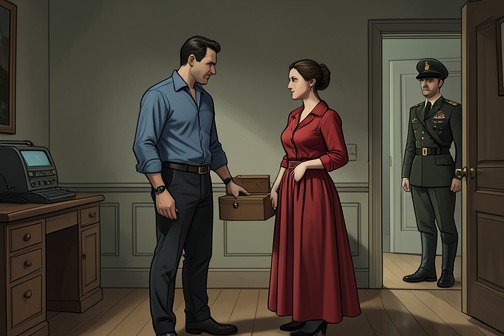
[Toru Okada and Kumiko marry](entity:event-recall-event-toru-okada-and-kumiko-m-54ce2c9ea8dc) after [Okada](entity:character-recall-character-okada-6667d796391a) approaches her brother, [Noboru Wataya](entity:character-recall-character-noboru-wataya-24272146e8e7), hoping to gain support before seeking her father’s approval. Okada presents marriage as a bond in which the couple can give each other strength and comfort; the novel’s later revelations place that promise against [Kumiko](entity:character-recall-character-kumiko-d41c446d91d6)’s estrangement from her family and her decision to confront her brother at the cost of her freedom.
## The Family Behind the Marriage
Kumiko’s connection to Noboru is a blood tie without a corresponding sense of closeness. He is nine years older, and she spent several years living with her paternal grandmother in [Niigata](entity:location-recall-location-niigata-bb4c74211f8a) after being sent away from [Tokyo](entity:location-recall-location-tokyo-0b4edfa3fe2f) at the age of three. Her parents explained the separation as a response to her supposedly delicate health, but Kumiko doubted that account. She had no memory of being seriously ill and suspected that her parents had sent her to her grandmother as part of a family accommodation: a way to ease a feud between her mother and grandmother. In her account, she had been treated like a hostage in that settlement.
After Kumiko returned to her parents’ home, she struggled to feel at home there. Her older sister was the one family member who patiently reached out to her, sharing her room, reading and talking with her, walking her to school, helping with lessons, and comforting her when she cried. The sister died of food poisoning the year after Kumiko’s return. Kumiko later connected that loss to her sense of guilt and isolation, while her parents’ repeated praise of the dead girl—and their decision to put Kumiko into piano lessons after the sister’s death—deepened her feeling of being measured against someone she could not replace.
## Choosing a Shared Life
Before the marriage, Kumiko tells Okada that she had wanted a cat but that her mother would not allow one. She describes a life in which she had not been able to obtain what she wanted, until she no longer knew what she wanted at all. Okada answers by telling her that, as an adult, she can choose her own life and begin again. Her agreement is followed, some months later, by their conversation about marriage. The exchange makes their choice more than a change in household status: it frames marriage as an opportunity for Kumiko to claim preferences and possibilities she felt had been denied her.
Okada first meets Noboru when he decides to marry Kumiko. He seeks the brother out before approaching her father, reasoning that a man closer to his own age might help smooth the way. Kumiko cautions him that Noboru is unlikely to help. Noboru agrees to meet only briefly, at a coffeehouse near Ochanomizu Station. At the time he is a college instructor, years before publishing his book or changing his public image.
Okada tells Noboru that he works at a law firm but does not believe the job suits him, and that he is still trying to understand what he should do with his life. He nonetheless says he loves Kumiko and believes the two of them can make each other happy by offering mutual strength and comfort. Noboru listens without responding in any apparent engagement. The encounter gives Okada no sign of the support he had hoped for; instead, it leaves him with an unsettling distrust of Noboru that he cannot explain by any particular remark or action.
## Estrangement and Consequences
The marriage does not bring the siblings closer. Okada’s hostility toward Noboru is clear, and Kumiko considers it reasonable; she herself is not fond of her brother. Their blood relationship complicates an otherwise distant connection, while Okada’s later, violent break with Kumiko’s father further separates the couple from her family. Okada tells Kumiko she may visit her parents without him, but she makes no attempt to do so.
The marriage’s significance is ultimately sharpened by [Kumiko’s final message](entity:object-recall-object-kumiko-s-final-message-20ff35ccc106) to Okada. She admits that she should have told him the truth earlier, but says she lacked the courage and had continued to hope their circumstances would not become so bad. She then explains that she intends to go to the hospital room where Noboru is receiving life support, disconnect the system, wait until he is dead, and surrender to the police. She plans to plead no explanation or defense. Her message transforms the family estrangement that shadowed the marriage into an irrevocable act: the sister who had once seemed distant from her brother now intends to end his life and accept the consequences herself.
## Significance
The marriage begins with an ideal of mutual care, but the family histories that surround it resist any simple idea of marriage as a route to belonging. Kumiko’s childhood separation and bereavement help explain why choosing a life with Okada matters to her, while her continued distance from Noboru shows that kinship alone does not guarantee intimacy. The novel returns to the marriage through later disclosures rather than a simple account of its ceremony, setting Okada’s early promise of shared strength beside Kumiko’s final decision to act alone.
Event 4
Toru Okada meets May Kasahara
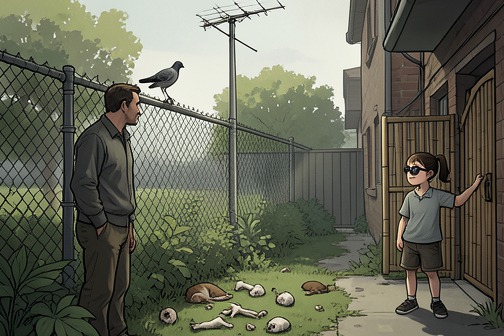
[Toru Okada meets May Kasahara](entity:event-recall-event-toru-okada-meets-may-ka-e7227a4d124e) while searching for his missing cat, and the encounter grows from a chance conversation across an alley into an enduring, unconventional connection. May’s offer to help him look for the cat leads him into the neighboring garden and, eventually, to the abandoned well on the Miyawaki property. Their first meeting thus joins an ordinary search to the book’s strange, recurring landscape of absence, curiosity, and descent.
## A Chance Meeting During the Cat Search
Toru is standing by a chain-link fence, looking into a garden that seems suited to cats but holds none. A pigeon cries from a television antenna, and the shadow of a stone bird breaks across the undergrowth. As he lingers, May calls to him from the opposite side of the alley. She is a small girl with a ponytail, amber-framed sunglasses, and a light-blue sleeveless shirt; one hand is in her pocket, the other resting on a low bamboo gate. Their separation is only a few feet, but the crossing between them begins as a mildly absurd exchange about the heat.
When May asks whether he lives nearby, Toru tries to point toward his house and realizes that the route he took has left him unsure which way it is. He explains that his large, brown-striped cat, whose tail tip bends slightly, has been gone for a week and was reportedly seen in the neighborhood. The details make the meeting part of a concrete search rather than a planned introduction: May enters Toru’s life because the cat has disappeared and because he has come looking for it.
May proposes that he wait in her yard. [Cats](entity:creature-recall-creature-cats-b2c04560ade4) pass through her property on their way to the Miyawakis’, she says, and someone might call the police if Toru continues hanging around outside. She assures him that she is alone and will help watch for the animal, adding that she has excellent eyesight. Toru considers the practicalities of his afternoon, then follows her through the gate and across the lawn. The search has not yet found the cat, but it has given him a reason to enter a place that will acquire a significance beyond the immediate errand.
## From Waiting to the Well
A later meeting at the same yard resumes their acquaintance in a new situation. Toru is sitting quietly with his eyes closed when May calls to him; the gate stands wide open, and she has come inside. She is wearing the same light-blue Adidas shirt and short pants, walks with a slight limp, and has removed her sunglasses. The scene repeats the intimacy of the earlier garden encounter while shifting its balance: May is no longer a stranger across the alley, but someone who can appear at Toru’s side and address him directly.
In conversation, May asks Toru’s name and repeats it to herself, judging it unremarkable. She also says that she does not care whether he is gay, a pervert, or anything else. Her bluntness establishes the teasing, unceremonious mode in which the two speak; she declines to make social respectability a condition of their acquaintance. The narrative’s central label for Toru’s role in her life, Mr. Wind-Up Bird, also emerges from this relationship, turning his identity into a private form of address.
May later reflects on the difference between curiosity and courage after Toru describes how curiosity can draw someone into another person’s backyard. Curiosity, in his account, may spark action but can disappear, while courage has to last. May listens, stands, brushes dirt from her shorts, and asks whether he would like to see the well. Her invitation converts their exchange from talk about entering forbidden or unfamiliar places into a specific act of looking at one.
[The well](entity:object-recall-object-the-well-2ab9c5510397) lies beside the house, under a round wooden cover held down by two concrete blocks. Its curb rises about three feet above the ground, and an old fruit tree stands nearby. The structure is roughly four and a half feet across and appears older than the house and surrounding objects; its concrete coating and antique wooden cap suggest successive efforts to reinforce or close something that belongs to an earlier age. May’s casual invitation therefore opens onto a place whose physical age and abandonment exceed the immediate scene.
## A Relationship of Curiosity and Work
The meeting establishes an asymmetry that remains productive: May is younger, more direct, and willing to draw Toru toward experiences he has not sought out, while he answers her questions and follows her invitations without claiming to understand where they will lead. Their connection does not begin with a declared purpose. It develops through repeated conversations, teasing, and small acts of accompaniment, with May’s curiosity repeatedly turning an ordinary setting into a threshold.
That pattern later becomes practical. When Toru says he is unsure whether he is ready to work and needs time to think, May suggests that he join her at the wig company for a day. The work is not well paid, she says, but it is easy and allows him to choose his hours; a change of pace might help him work out what he needs. Toru accepts that she has a point, and May promises to collect him the next time she goes. The proposal extends the original offer to wait together: she does not solve his uncertainty, but gives him a concrete way to move through it.
## Significance of the Encounter
The first meeting links three strands that will continue to matter: the absent cat that brings Toru into the neighborhood, May’s companionship, and the well that draws him toward the novel’s deeper spaces. The cat remains out of sight in the opening encounter; instead of resolving the search, May’s presence redirects it into a relationship and a landscape. The displacement is consequential: what begins as looking for a missing animal becomes a route into conversation, work, and repeated attention to the old well.
The scene also gives curiosity a double force. It is playful and social in May’s approach, but it is not merely a passing appetite for novelty: it carries Toru from the alley into the yard and from the yard to the well. His distinction between curiosity and courage anticipates the persistence demanded by the search and by the more difficult experiences that follow. May’s invitation does not explain the well or turn it into a simple symbol; the old, capped structure remains materially present, at once an abandoned feature of the property and a place toward which their conversation has led them.
Event 5
Toru Okada meets Malta Kano
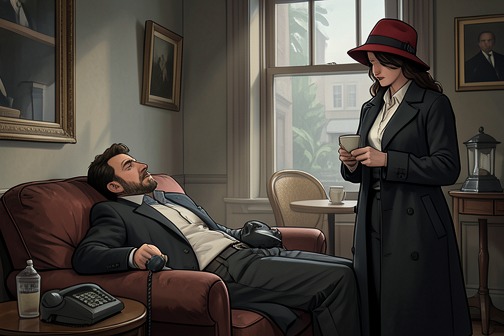
[Toru Okada](entity:character-recall-character-toru-okada-2150189ce853)’s meeting with [Malta Kano](entity:character-recall-character-malta-kano-bc918ff919fe) turns a search for a missing cat into the first explicit warning that the disturbance in his ordinary life is widening. [Malta](entity:location-recall-location-malta-24a59bb3fa9f) arrives as an enigmatic adviser connected to the Wataya family; her revelation that [Noboru Wataya](entity:character-recall-character-noboru-wataya-24272146e8e7) raped her younger sister gives their conversation a second, darker current, even as she insists that she has come to discuss the cat. The encounter ends with a prediction of upheaval: the cat is gone from the neighborhood, and its disappearance is only the beginning.
## The Sudden Appointment
At two-thirty in the afternoon, Toru Okada wakes from a nap on the couch when the telephone rings. Disoriented, he first mistakes it for an alarm clock and reaches for a button that is not there. The caller is the woman who had contacted him earlier that morning. She confirms his identity and asks whether he can meet that afternoon; when he realizes she means immediately, he agrees.
The appointment is arranged with little explanation and a tight deadline. Toru goes out to meet her, but he does not have to identify her himself. At the tearoom, he looks for the red hat he has been told to expect and finds no one wearing one. He orders coffee, and moments later the woman speaks from behind him, recognizing him before he has noticed her.
## Malta Kano’s Appearance and Disclosure
The woman is Malta Kano. Her carefully tailored white jacket and yellow silk blouse, gold feather brooch, and conspicuous red vinyl hat make her appearance an odd combination of polish and deliberate visibility. Toru finds her more beautiful than he had imagined from her voice; the bright hat seems especially calculated to make her easy to spot among strangers. The meeting begins in an ordinary public room, but Malta’s bearing and presentation set her apart from the social scene around them.
Malta shows Toru a photograph of herself with her younger sister, who is five years her junior. She then tells him that Noboru Wataya violently raped her sister. The disclosure abruptly alters the stakes of the appointment: Toru is not simply speaking with a specialist about a lost pet, but with a woman whose family has been grievously harmed by his brother-in-law. Toru reacts with shock and discomfort, offers condolences, and stresses that he has virtually nothing to do with Noboru.
Malta does not ask Toru to punish Noboru or hold him responsible. She says that the sisters want to understand more precisely what caused the assault, because until they understand what happened, something worse might follow. Toru is relieved that she is not demanding an arrest or a public trial. He fears that a case involving the well-known Noboru would become a scandal and cause further pain to his wife, [Kumiko Okada](entity:character-recall-character-kumiko-okada-3ae65bada8a7). His relief does not erase the gravity of Malta’s disclosure; instead, it exposes the tension between the violence she names and Toru’s wish to keep its consequences from spreading into his own life.
## The Missing Cat and the Changed [Flow](entity:concept-recall-concept-flow-373c4e6284b0)
Malta clarifies that she requested the meeting purely about the missing cat. Noboru had sought her advice after [Kumiko](entity:character-recall-character-kumiko-d41c446d91d6) consulted him about the animal, and he had in turn referred the matter to Malta. This chain of consultation places Toru’s private domestic worry inside the Wataya family’s interest in divination and the interpretation of houses. Toru understands Malta as some kind of clairvoyant or channeler, though he is skeptical of the practice and puzzled that Noboru would consult someone whose sister he had raped.
Asked whether finding things is Malta’s area of expertise, she does not offer a simple account of how she works. Instead, she speculates that the flow may have changed or been obstructed. She is more definite about the cat’s location: she cannot yet tell whether it is alive, but she is certain it is no longer near Toru’s home, and says he will never find it in that neighborhood. The answer gives the disappearance a boundary. The cat is not merely hiding somewhere nearby; the familiar domestic terrain has ceased to be a place where Toru can recover it.
## [The Empty House](entity:concept-recall-concept-90eb8b025d64) and the Warning
During the meeting, Malta asks Toru to give her his hand. Their hands remain together for about five minutes. He finds her touch unsettling: neither intimate like a lover’s nor functional like a doctor’s, it makes him feel emptied out, like a vacant house stripped of furniture, curtains, and rugs. The image gives physical form to the meeting’s central uncertainty. Malta does not explain what she perceives in him, but Toru experiences the contact as a temporary loss of substance, as if he has become an empty container.
After withdrawing her hand and taking several deep breaths, Malta tells him that he is entering a phase of life in which many different things will happen, and that the cat’s disappearance is only the beginning. When Toru asks whether those things will be good or bad, she answers that both kinds are coming, including bad things that initially seem good and good things that initially seem bad. Her forecast refuses a reassuring division between fortune and disaster: appearances may reverse, and the consequences of change may not be clear when they first arrive.
## Significance in the Narrative
The meeting links three disturbances without resolving any of them: the cat’s disappearance, the violence done to Malta’s sister by Noboru, and Malta’s prediction that Toru’s life is entering a period of change. The missing animal provides the stated reason for the appointment, while the rape revelation makes the Wataya family’s spiritual consultations inseparable from a concealed human injury. Malta declines to turn that revelation into a demand for immediate justice, but her warning that something worse could occur leaves the threat open.
The scene’s movement from a mundane phone call to a prophecy is also carried by its concrete details: the confused awakening on the couch, the red hat in the tearoom, the photograph of the sisters, the coffee cooling while rain falls outside, and the handclasp that leaves Toru feeling like an empty house. The meeting does not explain the cat’s fate or establish what Malta means by a changed flow. Instead, it converts an everyday search into a threshold. Toru leaves with no recovery of the cat and no settled account of the violence, only the unsettling knowledge that the loss already at hand may be the first sign of a much larger change.
Event 6
Kumiko is sent to live with her grandmother in Niigata
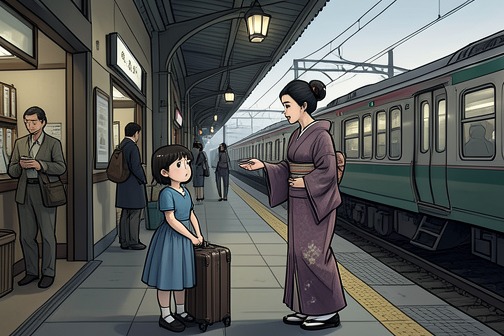
[Kumiko](entity:character-recall-character-kumiko-d41c446d91d6)’s childhood separation from her parents began at age three, when they sent her from [Tokyo](entity:location-recall-location-tokyo-0b4edfa3fe2f) to live with her grandmother in [Niigata](entity:location-recall-location-niigata-bb4c74211f8a). Although her parents explained the move as a response to her poor health, Kumiko later suspected it had served as a family bargain: a temporary transfer of a child that eased a feud between her mother and grandmother. The separation lasted until she was six, but its consequences reached beyond the move itself. Her return to Tokyo followed a wrenching farewell, a period she could not remember, and the death of the sister who had helped her find a place in the family.
## The decision to send her away
Kumiko’s parents told her that she had been a sickly child and would benefit from the countryside’s clean air. Her own memories did not support that account: she remembered no major illness, and she recalled no particular concern about her health in her grandmother’s household. She therefore regarded the medical explanation as an excuse rather than a convincing reason for the move.
A relative’s account gave her doubts a family context. Kumiko heard that her mother and grandmother had been engaged in a long-standing feud, and that sending the child to Niigata had been part of a truce. Her presence gave her grandmother tangible confirmation of her connection to her son, Kumiko’s father, while her parents’ decision appeased the older woman. In Kumiko’s understanding, she had been used as a kind of hostage in a dispute between adults.
The fact that Kumiko was the youngest of three children sharpened her interpretation. An older sister and [Noboru Wataya](entity:character-recall-character-noboru-wataya-24272146e8e7) remained in the household while she was sent away; Kumiko later suggested that her parents may have thought losing the company of their third child would be an easy solution. She did not describe the decision as a deliberate plan to abandon her, but as one made without sufficient thought for what separation might mean to a young child.
## Three years in Niigata and the return to Tokyo
From the age of three until six, Kumiko was raised by her grandmother in Niigata. She did not portray that period as unhappy: her grandmother doted on her, and she enjoyed playing with cousins who were closer to her age than her own siblings. Her return was prompted by her parents’ growing anxiety about how long she had been away. They brought her back to Tokyo in the year she was to begin elementary school, believing that the separation had gone on long enough.
The return, however, was not a simple restoration of the old family arrangement. Once the decision had been made, Kumiko’s grandmother became increasingly distressed. Her behavior swung between clinging affection and rejection, and she sometimes struck Kumiko hard enough to leave welts. She alternately said she could not bear to lose the child and demanded that she go away; she also directed bitter words at Kumiko’s mother and attempted to harm herself. Kumiko was too young to understand the upheaval around her. The return to her parents’ household was therefore accompanied by a second rupture: the loss of the close daily life she had known with her grandmother, in an atmosphere she could not make sense of.
## Withdrawal and the loss of her sister
Kumiko’s response to that distress was to shut herself off from the world. She stopped thinking and hoping, and the following months became a blank in her memory. When that blank ended, she was back in the household she was supposed to have belonged to all along: her parents, Noboru Wataya, and her sister. Yet the place did not feel like home to her; it felt like a new environment to which she had not found a way to belong.
In the returned household, Kumiko became taciturn and difficult to reach. She did not feel unconditionally safe with her parents, and even their embrace could leave her uneasy. Her sister was the one family member she slowly began to trust. The sister stayed with her, shared a room, talked and read with her, accompanied her to school, helped with homework, and comforted her when she cried alone. Where the rest of the family struggled to get through to Kumiko, her sister tried to meet her confusion and loneliness with steady companionship.
That relationship ended when the sister died of food poisoning the year after Kumiko returned from Niigata. Kumiko later believed that, had her sister lived, home might have become a more normal and bearable place. She also carried guilt about surviving her, asking herself why she had not died in her sister’s place. The family’s repeated praise of the dead girl’s beauty, intelligence, piano playing, and popularity made the comparison harder to escape. When Kumiko was made to take piano lessons on the grand piano her sister had used, the instrument became associated with being measured against someone she could neither replace nor equal.
## Significance in Kumiko’s family history
The episode shows the difference between formal family membership and experienced belonging. Kumiko is returned to her parents and siblings, but that physical reunion does not undo the separation or make the house feel like hers. Her early removal is framed not as a journey into an idyllic countryside or as a single, easily explained act of parental care, but as a decision entangled with adult conflict and followed by a distressing return.
The years in Niigata also form part of a chain of losses: separation from her parents, the destabilizing farewell to her grandmother, a blank in memory, and then the death of the sister who had made the Tokyo household more habitable. The account links Kumiko’s later distance from her family to specific experiences of divided care and failed understanding without reducing that distance to one cause. Even her relationship with Noboru Wataya bears the mark of a household in which she could not settle into an easy sense of closeness. The childhood episode thus establishes a history of displacement within a family that, by blood, was always hers.
Event 7
Kumiko's older sister dies of food poisoning
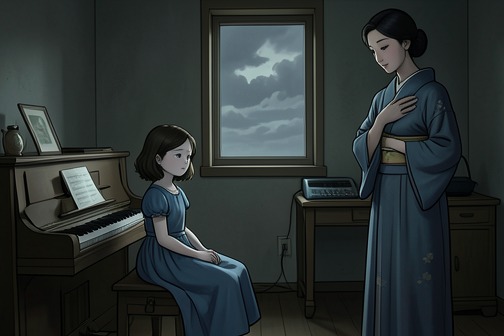
[Kumiko](entity:character-recall-character-kumiko-d41c446d91d6)’s older sister dies of food poisoning the year after Kumiko returns from [Niigata](entity:location-recall-location-niigata-bb4c74211f8a). Her death removes the family member who had worked patiently to reach Kumiko, and its aftermath binds grief to guilt, comparison, and a lasting aversion to the piano.
## Circumstances and Family Bond
After returning from Niigata, Kumiko shuts herself off from the outside world for months, recalling nothing from that period. Though reunited with her parents, brother, and sister in the home where she had been expected to live, she does not experience it as home. She becomes taciturn and distrustful, unable to feel wholly at ease even with her parents.
Her older sister is the exception. She recognizes the loneliness beneath Kumiko’s difficult moods and makes sustained efforts to comfort and include her: they share a room, talk and read together, walk to school, and work on homework. When Kumiko retreats to her room in tears, her sister stays beside her. The account presents the sister not merely as a sibling but as the household’s principal source of understanding for Kumiko.
## Death and Its Immediate Aftermath
The sister dies of food poisoning the year after Kumiko’s return from Niigata. Kumiko later says that the household might have been different had her sister lived, describing her as the heart of the family despite being only a sixth grader. In Kumiko’s view, her sister’s presence might have helped the family become more normal and might have spared Kumiko some of her own sense of hopelessness.
Instead, Kumiko responds to the loss with survivor’s guilt, wondering why she had not died in her sister’s place. Her parents and brother know how she feels but do not comfort her. They repeatedly praise the dead girl’s beauty, intelligence, kindness, popularity, and piano playing, making the loss a continuing point of comparison rather than a grief the family helps Kumiko bear.
## The Piano as a Consequence of Loss
After the sister’s death, the family expects Kumiko to take piano lessons so that someone will use the large grand piano. Kumiko has no interest in playing and believes she could never equal her sister; the lessons therefore feel like another demand that she demonstrate her inferiority. She says she cannot take her sister’s place and does not want to try, but the family does not listen.
Kumiko’s resulting hatred of the piano persists into adulthood: she says she still hates both the sight of one and hearing anyone play. The instrument links ordinary family life to the dead sister’s remembered excellence and to Kumiko’s sense that her own grief and refusal were disregarded.
## Later Recollection and Significance
Kumiko recounts the loss to [Toru Okada](entity:character-recall-character-toru-okada-2150189ce853) before their marriage, when they have known each other for only a little over two months. During a quiet Sunday morning in bed, she tells him more about her childhood and family than she had previously shared. Toru listens, feels anger toward her family for what they did and failed to do, and holds her as she cries.
The recollection makes the sister’s death consequential beyond the event itself: it illuminates the isolation Kumiko carried from childhood and the absence of comfort that followed her sister’s death. Kumiko’s final description of her sister as someone everybody loved preserves both the force of the attachment and the painful contrast between the affection her sister inspired and the loneliness Kumiko experienced afterward.
Event 8
Battle of Nomonhan
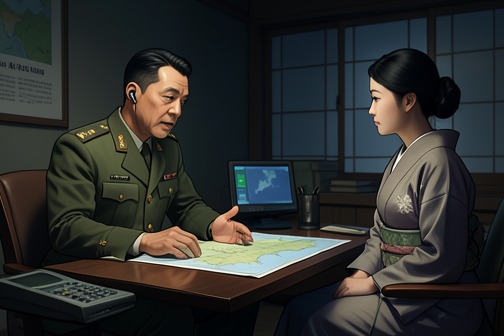
The [Battle of Nomonhan](entity:event-recall-event-battle-of-nomonhan-0a0c1680d6c3) appears in the novel both as a military disaster and as a story that returns through the memories of its survivors. [Mr. Honda](entity:character-recall-character-mr-honda-02e3a5ceba1c), a former soldier who lost his hearing in the fighting, recounts a battle shaped by isolation, inadequate supplies, and overwhelming Soviet mechanized power. His account turns a neglected historical defeat into a lasting lesson about waiting, water, and the human cost of decisions made far from the front.
## The Battle in Mr. Honda’s Recollections
For roughly a year after their marriage, [Toru Okada](entity:character-recall-character-toru-okada-2150189ce853) and [Kumiko Okada](entity:character-recall-character-kumiko-okada-3ae65bada8a7) visited Mr. Honda monthly. Their visits were arranged by the Wataya family, but neither spouse went because of a strong belief in his spiritual powers. Mr. Honda was hard of hearing even with a hearing aid, and his war-damaged hearing became part of the strange arrangement through which he spoke as a practitioner of divination. Rather than offer frequent predictions, he repeatedly returned to [Nomonhan](entity:location-recall-location-nomonhan-b10de6dc40a0), telling his visitors about the battle and his wartime experiences.
Mr. Honda described being with [Japan](entity:location-recall-location-japan-2b426de89e42)’s Manchurian garrison, the [Kwantung Army](entity:organization-recall-organization-kwantung-army-e1965355cff6), when an explosion in the fighting damaged his eardrums. The novel connects this injury to the battle’s physical and historical aftermath: after he lost his hearing, he was sent home with an honorable discharge and became a diviner. He later regarded his impairment as having possibly spared him from being sent to the South Pacific, where many Nomonhan survivors were dispatched and killed.
The battle also enters the story through [Lieutenant Mamiya](entity:character-recall-character-lieutenant-mamiya-8b163bf82669)’s account of the 1938 border mission involving [Yamamoto](entity:character-recall-character-yamamoto-a83bb41da631). Mamiya was assigned to command a small escort and conduct topographical work near the [Khalkha River](entity:location-recall-location-8478c304145b), where the army’s maps were incomplete. The border had been kept deliberately vague because the Kwantung Army wanted to avoid provoking the Soviet Union and [Outer Mongolia](entity:location-recall-location-cfbd103e8ce5) while Japan was committed to its war in China. Yet the same uncertainty made accurate military maps essential if a conflict began. Mamiya’s recollection identifies Nomonhan as the following year’s realization of that danger: a border left obscure for political convenience became a setting where combat maps and logistical knowledge mattered.
## [Water](entity:concept-recall-concept-water-4fc31c0064e2), Firepower, and Defeat
In Mr. Honda’s telling, the immediate ordeal was a scarcity of basic supplies. He recalled that the front had become disorganized and supply lines were cut: his men lacked water, rations, bandages, and bullets. For three days he had almost nothing to drink. Dew collected on a washing cloth offered only a few drops, while a large river flowed within sight of the Japanese position but remained inaccessible.
The river was blocked by Soviet defenses: tanks equipped with flamethrowers, machine-gun positions, and sharpshooters on high ground. At night, flares exposed movement. The Japanese soldiers had Model 38 infantry rifles and twenty-five bullets each, a stark contrast with the force confronting them. Desperate for water, many of Mr. Honda’s companions tried to reach the river; none returned. In his account, the visible abundance of water intensifies the deprivation: survival depends not on whether a resource exists, but on whether people can reach it through the military conditions surrounding them.
Mr. Honda reduced that experience to a lesson in restraint. When circumstances required a person to remain still, he said, the person should stay still; when the flow had not begun, waiting could be unavoidable. He linked the advice to Nomonhan and to the idea of being, for the time being, as if dead. The lesson is not a denial of the battle’s suffering but a rule formed from the consequences of action under conditions where movement could be fatal.
## A Defeat Remembered and Repeated
Mr. Honda’s stories included the death of a lieutenant beside him, his own attack on a Soviet tank with a Molotov cocktail, and the shooting of a downed Soviet pilot. Because he repeated these accounts, Toru and [Kumiko](entity:character-recall-character-kumiko-d41c446d91d6) sometimes heard them seven or eight times. He did not recount them quietly: his damaged hearing made him shout, and the couple could hear little for a while after leaving his home. The repetition gives the battle a double place in the novel—as a historical event and as a survivor’s testimony that returns, loses some of its novelty, but remains difficult to forget.
Toru reflects that he had known little about Nomonhan before hearing Mr. Honda’s account. The Japanese forces had fought Soviet mechanized troops on the Manchurian-Mongolian border and were crushed. Units were destroyed one after another. Some officers attempted to retreat to prevent further losses, but their superiors ordered them to commit suicide. Many captured Japanese soldiers refused to join the postwar prisoner exchange because they feared prosecution for desertion; they remained in [Mongolia](entity:location-recall-location-425ce2533ee8) and died there. The defeat’s consequences therefore extended beyond the battlefield, into the treatment of survivors and the fates of those who could not safely return.
Mr. Honda’s interpretation places the defeat within a wider institutional injustice. Nomonhan embarrassed the [Imperial Japanese Army](entity:organization-recall-organization-imperial-japanes-5a68d10f963d), he says, yet the officers responsible for the failure later advanced in central command, and some entered politics after the war. The soldiers who had fought for them were, in contrast, mostly killed or sent into further danger. Mr. Honda’s account makes the contrast between bravery and institutional reward central: courage among the troops did not prevent defeat, and sacrifice did not ensure that those who ordered or endured it would be treated equally.
## Logistics and the Larger War
Lieutenant Mamiya’s recollections widen the context beyond the battle itself. The Kwantung Army’s border surveys were constrained by an immense, sparsely marked region, the absence of clear political boundaries, and the risk of an international incident. Yet a modern army required maps that could guide camps, artillery, marches, water supplies, and provisions for horses. The mission’s topographical work was therefore not merely administrative: it addressed practical needs that would become urgent if the border dispute turned into war.
The novel also sets Nomonhan against the deceptive calm of [Hsin-ching](entity:location-recall-location-hsin-ching-31562ea5efd0) in the late 1930s. Japan’s war in China was expanding, casualties were rising, and relations with the United States were worsening, while officers in the capital could still live as though peace continued. The contrast helps explain why the battle’s logistical failures matter: the apparent distance between comfortable routines and the frontier concealed an increasingly unstable military situation.
A later account of Japanese planning reinforces the point. As early as 1920, the Imperial Army studied the possibility of war with the Soviet Union and recognized that its equipment was inadequate for a Siberian winter. Tests of clothing on Sakhalin suggested that frostbite could incapacitate a large proportion of frontline infantry, and planners calculated the resources needed to equip ten divisions. This preparation concerned a possible winter campaign rather than the specific shortages Mr. Honda describes at Nomonhan, but together the episodes depict a military organization aware of severe logistical vulnerabilities without being able to overcome them.
The same concern with material supply recurs in the later story of the [Siberian coal mine](entity:location-recall-location-6245aad4c635) where Lieutenant Mamiya is held as a prisoner of war. The mine’s leadership treats laborers as replaceable inputs, diverting food, clothing, and medicine while pursuing production figures. Boris’s business operation includes appropriating a substantial share of supplies sent to the camp and selling them for profit; the resulting shortages fall on powerless prisoners. These episodes are not part of the battle, but they echo its governing disparity between resources, command, and the people exposed to danger. Nomonhan’s lesson about water and waiting thus sits within a wider narrative in which logistics are never neutral: decisions about supply determine who can endure and who is abandoned.
## Narrative Significance
The battle is not presented as a single continuous battlefield scene. Its meaning accumulates through distinct acts of recollection: Mr. Honda’s repeated stories to Toru and Kumiko, Lieutenant Mamiya’s account of border mapping, and later reflections on military planning and wartime institutions. This structure makes the event’s consequences more prominent than a simple chronology. The reader encounters Nomonhan as an episode that continues to shape how survivors understand waiting, risk, and the fate of those sent into impossible conditions.
Water is the most concentrated link between the historical memory and the novel’s wider language of warning. Mr. Honda’s men can see a river but cannot reach it; his conclusion is a caution about acting before circumstances permit movement. His separate warning to Toru about water gives that wartime lesson an unsettling resonance in the novel’s present, without reducing the battle to a supernatural prediction. The river remains at once a concrete military obstacle and the source of a rule learned through loss.
The account also resists a triumphal version of military history. Mr. Honda remembers the soldiers’ resistance, but does not let courage erase their defeat or the unequal aftermath. Mamiya’s memories add the administrative pressures and uncertain borders that surrounded the conflict, while the later episodes of abandonment and exploitation show the persistence of systems that place ordinary people at risk. Nomonhan therefore functions as remembered history, a caution about action and supply, and an early instance of the novel’s scrutiny of how institutions distribute danger and responsibility.
Event 9
Toru Okada's break with Kumiko's father
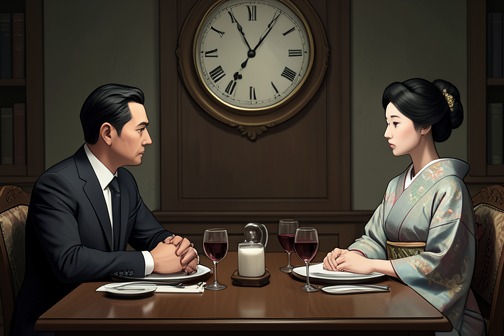
[Toru Okada](entity:character-recall-character-toru-okada-2150189ce853)’s break with [Kumiko](entity:character-recall-character-kumiko-d41c446d91d6)’s father was the decisive rupture that ended his formal connection to the Wataya family. It grew out of a marriage initially permitted on the authority of [Mr. Honda](entity:character-recall-character-mr-honda-02e3a5ceba1c), but culminated in a violent argument after a year of dutiful family dinners; Toru’s relief at ending the relationship was accompanied by the loss of access to Mr. Honda’s monthly counsel.
## Background and Family Conditions
Toru and Kumiko had not sought out Mr. Honda because they believed in his spiritual powers. They visited him because Kumiko’s father made it a condition of their marriage. Toru expected little welcome from the family: he was twenty-four, without professional standing or prospects, while Kumiko’s father had risen from a modest farming family in [Niigata](entity:location-recall-location-niigata-bb4c74211f8a) to become an elite Ministry of Transport official after studying at the [University of Tokyo](entity:organization-recall-organization-university-of-to-0c0d086ab1cf). Toru regarded him as arrogant and rigidly committed to hierarchy.
The reception Toru received when he formally asked for Kumiko’s hand was exceptionally cold. The eventual permission to marry came through Mr. Honda, who questioned the family about Toru and judged him the best possible partner for Kumiko. Because her parents trusted Mr. Honda, they accepted the match despite their reluctance. The marriage therefore began with Toru admitted into the family on someone else’s authority, not through any warmth between him and Kumiko’s father.
## The Break
For a year after the marriage, Toru and Kumiko visited her parents for dinner twice a month. Toru experienced these meals as humiliating and isolating: the dining table seemed to stretch like a railway station, leaving him separated from the family’s conversation at the far end. The visits continued with mechanical regularity until Toru and Kumiko’s father had a violent argument.
The argument made the separation complete. Toru later described himself as someone who rarely argued, but who went all the way once he did. After saying what he needed to say, he found that his anger had disappeared; what remained was relief, as though a long-carried burden had been lifted. He even felt some sympathy for the difficulties his father-in-law had faced, though he continued to regard the life he had made as repellent.
## Consequences for Kumiko and the Wataya Family
Toru told Kumiko that he would never see her parents again, while leaving her free to visit them without him. She made no effort to do so, saying she had never particularly enjoyed the visits. The break thus became more than Toru’s personal estrangement: it also coincided with Kumiko’s withdrawal from her parents.
[Noboru Wataya](entity:character-recall-character-noboru-wataya-24272146e8e7) was living with his parents when the argument took place. He withdrew without speaking, a response Toru did not find surprising; Noboru had generally avoided personal contact with him unless necessary. Once Toru stopped visiting the family, there was no practical reason for the two men to meet. Kumiko and Noboru were not close, and neither made a point of maintaining contact, so the family rupture also left the siblings with little occasion to see one another.
## The Lost Link to Mr. Honda
The break also ended the visits to Mr. Honda. Toru could not continue attending when he knew his father-in-law was paying, and he and Kumiko could not afford to pay for the visits themselves. They gradually forgot about Mr. Honda amid the demands of young adulthood, and Toru later recalled that the monthly meetings had been among his least painful obligations to his wife’s family.
That forgotten connection acquired renewed significance in Toru’s thoughts. After Mr. Honda and [Malta Kano](entity:character-recall-character-malta-kano-bc918ff919fe) had both spoken to him about water, Toru recalled Mr. Honda’s warning and began to worry about the repeated subject. His thoughts turned to the battlefield at [Nomonhan](entity:location-recall-location-nomonhan-b10de6dc40a0), the river beyond the Soviet positions, and the thirst associated with the scene. The severed family relationship had ended the routine through which Mr. Honda’s counsel reached Toru, but it had not erased the warning from his memory.
Event 10
Creta Kano’s 1978 suicide attempt
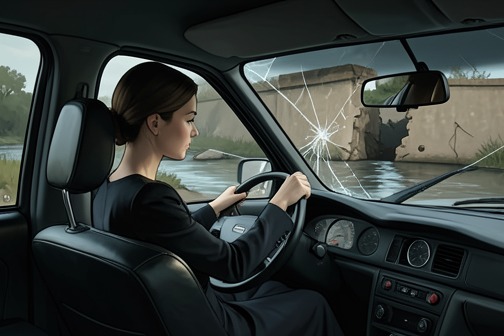
[Creta Kano’s 1978 suicide attempt](entity:event-recall-event-creta-kano-s-1978-suici-8a07eb8c5fc1) began as a carefully chosen attempt to die and ended in an unintended survival that changed her experience of living. Driving her brother’s new Toyota MR2 into a condominium wall near the [Tama River](entity:location-recall-location-efc08c0bfe8b), she escaped with a broken rib when the poorly anchored wall gave way; afterward, she found herself without pain and, eventually, without sensation. The failed attempt thus became both a turning point in her physical life and a source of estrangement from her body and the world.
## Background and the Attempt
At twenty, and only six months after obtaining her driver’s license, [Creta Kano](entity:character-recall-character-creta-kano-31722cf4ec94) borrowed her brother’s car on the night of [May 29, 1978](entity:time-recall-time-may-29-1978-2c152af61314). He had been reluctant to lend it, but she had previously given him money to help buy it, and she took the key. The car was a nearly new Toyota MR2 with barely a thousand miles on it. Her account makes clear that the drive was not an accident: she selected a substantial wall at the end of a dead-end street by the Tama River, allowed herself room to accelerate, and drove toward it at close to one hundred miles an hour.
The intended fatal impact did not happen as she had imagined. The condominium wall had not been properly anchored; it crumbled under the collision, absorbing enough of the force that the car’s front end was crushed but Creta survived. In the confusion, she had also forgotten to unfasten her seat belt. The attempt’s outcome therefore depended not only on her intention and the car’s speed but on the unexpected weakness of the structure she had chosen as the means of her death.
## Survival and the Loss of Pain
Creta was taken to hospital and treated for one broken rib. When police questioned her, she said she could remember nothing and suggested that she might have confused the accelerator and the brake. They accepted this account, in part because she was young and did not seem to them like someone who had tried to kill herself. The discrepancy between her deliberate preparation and the explanation she gave investigators leaves the attempt concealed behind an ordinary account of a driving mistake.
The most consequential change came after the crash: Creta felt no pain, including from her injury. At first, she decided to keep living for the time being, wanting to discover what life without pain meant and believing she could die whenever she chose. Her survival was therefore followed not by a return to ordinary life but by a period of inquiry into an unfamiliar bodily condition.
Each morning she checked her body from head to foot, trying to determine whether nothing hurt or whether pain existed without her being able to feel it. She could not distinguish between those possibilities. The absence went beyond pain: she described having no sensations at all. Her body seemed so light and unfamiliar that she felt as if her spirit had taken up residence in a body that was not her own. Looking at herself in the mirror did not restore a sense of connection; instead, a distance remained between her and the body she saw.
## Estrangement and Significance
The life without pain that Creta had once wanted did not give her a secure place in the world. She described a gap separating her from that life and said that the world she had previously hated for its unfairness had also been the world in which she knew who she was. After the crash, she felt unanchored: the world no longer seemed to be the world, and she no longer felt herself to be herself. The reversal makes the attempt significant beyond its immediate physical outcome. What she had sought as release from suffering became a condition in which sensation and belonging were both disrupted.
Elsewhere, [Toru Okada](entity:character-recall-character-toru-okada-2150189ce853) describes an experience of bodily uncertainty in darkness: he grows less convinced that he exists, imagines his body losing density, and recognizes Creta Kano’s phrase “Prostitute of the mind.” These later passages are not part of the 1978 crash itself, but they echo its concern with separation between body and self. The connection is thematic rather than a claim that Creta’s accident caused Toru’s experience.
The attempt also stands in contrast to Creta’s later account of being unable to remember how she came to wake up naked in Toru Okada’s bed. That later memory gap is distinct from the crash and should not be treated as a direct consequence of it. The 1978 episode is nevertheless an early, clearly narrated rupture: Creta sets out to end her life, survives because the wall fails to behave as expected, and continues in a body that no longer gives her the sensations through which she had understood living.
Event 11
Khalkha River incident
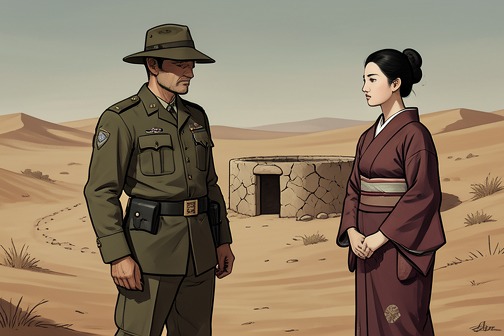
The [Khalkha River incident](entity:event-recall-event-khalkha-6fe6ab94fa83) is the failed secret mission that transforms [Lieutenant Mamiya](entity:character-recall-character-lieutenant-mamiya-8b163bf82669)’s life: an assignment to gather military intelligence and improve maps becomes a border violation, the capture and death of [Yamamoto](entity:character-recall-character-yamamoto-a83bb41da631), and Mamiya’s confinement in a desert well. Corporal Honda ultimately saves him, but Mamiya remembers the well not as a narrow escape from death so much as the place where his inner life ended. The incident’s consequences extend beyond the expedition, shadowing his later captivity, return to [Japan](entity:location-recall-location-japan-2b426de89e42), and encounter with [Toru Okada](entity:character-recall-character-toru-okada-2150189ce853).
## Mission and Border Crossing
In 1938, as Japan’s war in China intensified, Mamiya was living what seemed like a peaceful officer’s life in [Hsin-ching](entity:location-recall-location-hsin-ching-31562ea5efd0). That calm existed alongside a widening war and growing concern about the limits of Japan’s occupation. The army’s uncertain borders in western [Manchukuo](entity:location-recall-location-manchukuo-8d341997bd4e) reflected a larger political hesitation: making an official map could provoke the Soviet Union or [Outer Mongolia](entity:location-recall-location-cfbd103e8ce5), while a future conflict would require detailed military maps. Mamiya’s assignment joined topographical work to that strategic need.
The escort was deliberately small. Mamiya was its only officer; Sergeant [Hamano](entity:character-recall-character-hamano-3b891517e935) had combat experience, while Corporal Honda appeared to be an unlikely choice for a dangerous mission. Their leader, Yamamoto, was presented as a civilian investigating Mongolian life and customs, but Mamiya recognized him as a professional soldier. After five days of preparation, the group traveled from Hsin-ching to [Hailar](entity:location-recall-location-565ad3f71559) and onward to a border observation post near the [Khalkha River](entity:location-recall-location-8478c304145b). The vast, featureless steppe made Mamiya’s mapping work difficult: he had few landmarks against which to check his maps, and the empty terrain unsettled his sense of himself and his surroundings.
After two days of travel along the river, Yamamoto told Mamiya that the party would cross before dawn. The opposite bank was Outer Mongolian territory, where their presence would constitute an unmistakable border violation. The Khalkha was swollen with snowmelt, and the current made the crossing dangerous. Mamiya also had no direct authorization from his superior for such an action. Yamamoto said the matter had been cleared at the highest levels and that a concealed crossing point made the operation possible, but the expedition proceeded under a risk Mamiya could not independently verify.
## Capture and the Loss of the Document
Before the crossing could take place, Mongolian soldiers discovered the party’s tents. Mamiya awoke to armed captors; Yamamoto lay nearby under guard, while Hamano and Honda were missing. The group’s plan had collapsed before it could reach the far bank, leaving Mamiya and Yamamoto in the hands of the troops whose territory they had intended to enter.
Yamamoto was pressed to disclose the location of a classified document. He did not speak, and a Russian officer directed a Mongolian officer to torture him in an attempt to make him reveal what he knew. Mamiya was forced to witness Yamamoto’s death. The scene establishes the document’s central importance to the mission and makes the cost of its secrecy immediate: Yamamoto dies without yielding it, while Mamiya is kept alive and taken away.
Honda’s absence had a different explanation from Mamiya’s initial fears. Honda had sensed that the Mongolians were coming and slipped away before the capture, taking the document from Yamamoto’s bag. He judged that the group could not defeat or escape the attackers together; protecting the document and surviving to act later required him to leave alone. He concealed it with supplies previously buried in the desert, then followed the captors on foot. Hamano’s fate is not established in Mamiya’s account of the rescue.
## The Well and Honda’s Rescue
After traveling north for more than two hours, the captors stopped at a Lamaist devotional mound and brought Mamiya to a stone-curbed well. A rock dropped into it struck sand below, revealing that it had long been dry. [The well](entity:object-recall-object-the-well-2ab9c5510397) had once served as a desert water source, but a change in the underground water vein had left it empty. Mamiya was made to look into its darkness and then faced with the possibility of being killed there.
On the third morning, Honda found and rescued him. He had watched the capture and Yamamoto’s death, but had to reach the well without a horse and without knowing which direction the captors had taken. The rescue followed a chain of resourceful decisions: Honda secured the document, hid it, and pursued Mamiya despite the uncertainty of finding him. His success turned the well from Mamiya’s presumed execution site into the place from which he emerged alive.
Mamiya later remained unsure about parts of the mission. He wondered who the Mongolian officer encountered in the desert had been, why Yamamoto had not crossed the river alone, and whether Yamamoto might have intended to use the escort as a decoy. He also entertained the possibility that Honda had suspected such a plan. These remain questions in Mamiya’s recollection, not established explanations for the expedition’s events.
## Aftermath and the Meaning of Survival
Mamiya and Honda were separated after reaching Hailar and forbidden to meet or speak. They later served on different paths: Honda was wounded at [Nomonhan](entity:location-recall-location-nomonhan-b10de6dc40a0) and sent home, while Mamiya remained in Manchuria until the end of the war and was then sent to Siberia. They eventually met again after Mamiya’s repatriation and corresponded, but neither readily discussed what had happened by the Khalkha. Their silence becomes part of the incident’s aftermath: the experience was shared, yet too overwhelming for ordinary conversation.
Mamiya describes the short-lived light at the bottom of the well as the point at which his real life may have ended. He recalls that it shone for only ten or fifteen seconds a day, and says that he felt his capacity for emotion had been consumed there. Honda’s prediction that Mamiya would not die on the continent proved accurate, but survival did not restore him. Mamiya later lost his left hand, endured Soviet internment, and returned to Japan after twelve years away. His parents and sister were dead, and the woman to whom he had been secretly engaged had married someone else. He found his own grave in a cemetery and came back to a life he experienced as empty.
The incident also shapes Mamiya’s distrust of political conviction. In later reflection, he connects the well, Yamamoto’s death, and the violence he witnessed to his inability to believe in ideologies or the people and systems claiming to enact them. The Khalkha mission’s military purpose was tied to the practical demands of maps and intelligence; its human consequences expose how official secrecy, disputed borders, and war turn individuals into expendable instruments. For Toru Okada, hearing Mamiya’s account brings the desert well and its brief light into the novel’s recurring pattern of descent, survival, and emotional vacancy.
Event 12
Mr. Honda's death
[Mr. Honda's death](entity:event-recall-event-7e4de160dff4), learned through a carefully formal letter rather than witnessed directly, turns a past acquaintance into a final obligation: [Toru Okada](entity:character-recall-character-toru-okada-2150189ce853) is asked to accept a keepsake from the man who had once offered him guidance. The news also brings [Tokutaro Mamiya](entity:character-recall-character-tokutaro-mamiya-0373130da350) into [Okada](entity:character-recall-character-okada-6667d796391a)'s life, linking Honda's quiet death in [Tokyo](entity:location-recall-location-tokyo-0b4edfa3fe2f) to the military history Mamiya shared with Honda's comrade, Corporal [Oishi Honda](entity:character-recall-character-oishi-honda-c11c0453729c).
## The Report of Honda's Death
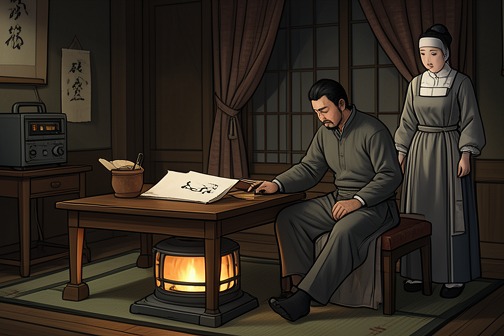
A thick registered envelope arrives at Okada's home from Tokutaro Mamiya, addressed in brush-written characters on heavy rice paper. Inside, Mamiya explains that [Mr. Honda](entity:character-recall-character-mr-honda-02e3a5ceba1c), the fortune-teller whom Okada and his wife had visited in the past, died of a heart attack at his home in Meguro two weeks earlier. Honda lived alone. A maid found him in the morning, slumped at the low table of his foot warmer; the doctors believed he had died quickly and without much suffering.
The letter's material form gives the news a gravity quite different from an ordinary notice. It is written on rolled rice paper in a flowing hand, in a markedly formal style that Okada struggles to decipher. Its old-fashioned appearance, the detailed account of Honda's death, and the care taken over the message make the report feel like a deliberate passage from the dead man's life into the lives of those he had known.
## The Keepsake and Mamiya's Connection
Mamiya writes that he had served in Manchuria as a first lieutenant and shared the dangers of war with Corporal Oishi Honda. At Mr. Honda's strong request, and because Honda had no surviving relatives, Mamiya has taken responsibility for distributing his keepsakes. Honda left unusually minute instructions, including an explicit request that Okada receive a particular item in remembrance of him. The request makes Okada not merely a recipient of the news but one of the people Honda chose to remember.
The detailed will suggests to Mamiya that Honda anticipated his approaching death. Rather than treating the keepsake as an incidental possession, the letter presents its transfer as the execution of a considered final wish. Mamiya closes with his own appeal: as an old comrade of Honda's, with few years left to him, he would be deeply glad if Okada accepted the item.
## Okada's Response and the Last Visit
Okada answers that he had been fortunate to know Honda and had benefited from their brief acquaintance. Though the two men were very different in age and had known each other for only about a year, the news brings their meetings back to mind. The reply begins as a short postcard but becomes more reflective once Okada starts writing, showing how the formal task of acknowledgment opens into personal remembrance.
Three days later, Mamiya telephones at seven-thirty in the morning while Okada is having breakfast with [Kumiko](entity:character-recall-character-kumiko-d41c446d91d6). During his visit, he tells Okada that he has spent two weeks in Tokyo distributing Honda's belongings and that Okada is the final recipient. He can now return to [Hiroshima](entity:location-recall-location-d3fc2c404022). Okada asks whether he might visit Honda's home and burn incense in his memory, but Mamiya explains that Honda's family has already returned to [Asahikawa](entity:location-recall-location-60de83264010) after clearing the Meguro house. There is nothing left there to visit. The keepsake and Mamiya's account thus become the remaining means by which Okada can mark Honda's absence.
## Narrative Significance
Honda's death is conveyed retrospectively through a letter and a follow-up visit, so the event reaches the reader as both a fact and an act of remembrance. Its consequences are practical—the distribution of belongings—and relational: it reunites Okada with Mamiya and places Honda's deliberately chosen keepsake in Okada's hands. The episode also gives Honda's death a restrained, domestic setting, emphasizing his solitude while recording that it was swift and apparently not prolonged by suffering.
Event 13
久美子一夜未归

[Kumiko’s overnight disappearance](entity:action-recall-action-kumiko-s-overnight-dis-b1e12f035f7a) transforms an ordinary morning into the first unmistakable sign that her marriage and home life have broken open. Toru finds no trace of her in the house, then eats breakfast alone for the first time in years; the absence gives material form to a separation whose causes he does not yet understand, while later revelations disclose the history of family estrangement surrounding her and the lethal decision she eventually makes about her brother, [Noboru Wataya](entity:character-recall-character-noboru-wataya-24272146e8e7).
## The Morning After
Toru stays awake until midnight, reading, listening to music, and waiting for [Kumiko](entity:character-recall-character-kumiko-d41c446d91d6), then falls asleep with the light on. At six in the morning he wakes to full daylight and birds outside the window. Her side of the bed is empty, but the white pillow appears undisturbed, and her freshly washed summer pajamas, folded by Toru, remain on the night table. These details make her absence feel deliberate in its stillness: nothing in the room tells him where she has gone or when she left.
He searches the kitchen and living room, looks into Kumiko’s room and the bathroom, and checks the closets. She is nowhere in the house. The rooms seem unusually hushed, and his movement through them feels like an intrusion into a quiet he cannot explain. The search yields no answer; it only confirms that the familiar household has become a place from which one of its two occupants is missing.
## A Broken Domestic Ritual
With nothing else to do, Toru fills the kettle, makes coffee, and sits at the kitchen table. He eats toast and potato salad alone, the first solitary breakfast in years. Since their marriage, he and Kumiko had maintained breakfast together as a tacit ritual, keeping it even when lunch or dinner fell away. Its interruption makes the disappearance legible not only as physical absence but as the collapse of a daily form of companionship.
The empty chair becomes the focus of Toru’s thoughts. He recalls the cologne Kumiko wore the previous morning and imagines that another man may have given it to her. His suspicion and imagined scenes of her with that man arise as he sits alone; they are Toru’s conjectures, not an explanation established by what he has found. The ordinary meal therefore becomes an intimate scene of uncertainty, in which the missing person is present only through objects and the thoughts they provoke.
Even the coffee fails to restore routine. It tastes unmistakably of soap or perhaps moisturizing lotion, though Toru has washed the pot and finds nothing wrong with the water. He discards the coffee and drinks tap water instead. The unexplained taste accompanies the morning’s other unsettlement: familiar domestic acts continue, but no longer provide their usual assurance.
## Family Distance Behind the Absence
The account of Kumiko’s family gives the disappearance a longer context of separation. She and Noboru Wataya are siblings nine years apart, and she spent several years living with her father’s family. At three, she was sent from [Tokyo](entity:location-recall-location-tokyo-0b4edfa3fe2f) to [Niigata](entity:location-recall-location-niigata-bb4c74211f8a) to live with her grandmother. Her parents later explained that she had been a sickly child who needed country air, but Kumiko doubted that account; information from a relative suggested that the move had served as a truce in a feud between her mother and grandmother. In Kumiko’s understanding, she had been used as a kind of hostage in that family arrangement.
When she returned, she struggled to feel at home. Her elder sister became the person who tried to reach her, sharing a room with her, talking and reading with her, accompanying her to school, helping with homework, and comforting her when she cried. The sister died of food poisoning the year after Kumiko’s return. Kumiko later connected that loss to her own guilt and to the distance she felt from the rest of the household. This history does not itself explain where she went on the night she disappeared, but it shows that kinship and home had long been marked, for her, by separation, bereavement, and difficulty trusting others.
Her relationship with Noboru Wataya was correspondingly distant. Toru recalls that Kumiko’s expression changed whenever her brother came up, while he himself felt no positive regard for Noboru; Kumiko considered that hostility reasonable and was also far from fond of her brother. The blood tie complicated a relationship that otherwise offered little reason for closeness. Toru had first met Noboru when he and Kumiko decided to marry, hoping that her brother might help smooth the way with their father, but Kumiko warned him not to count on Noboru’s help.
## Retrospective Consequence
A later message from Kumiko reveals the grave action toward which the family conflict has moved. She tells Toru that she intends to go to Noboru Wataya’s hospital room, disconnect his life-support system, remain until she is sure he is dead, and then surrender to the police. She says she will not offer a broader explanation or defense. This disclosure does not establish that the night she first failed to come home was the beginning of that plan; rather, it changes how her absence sits within the larger account, by showing the extreme outcome of a sibling relationship already defined by alienation.
The event’s significance lies in the contrast between its quiet evidence and its eventual stakes. A folded pair of pajamas, an unoccupied place at breakfast, and coffee Toru cannot drink mark the immediate break in married routine. The later revelations widen that break into a history of family dislocation and estrangement, while leaving the original night’s circumstances unresolved.
Event 14
Kumiko Okada’s disappearance
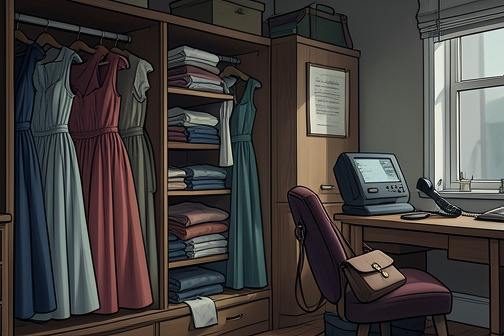
[Kumiko Okada’s disappearance](entity:event-recall-event-kumiko-okada-s-disappea-3c6ddebf4ba4) turns a departure without explanation into the central uncertainty of Toru’s life. The decisive clue is mundane—a blouse and skirt collected from the cleaner at eight in the morning—but it transforms an apparently ordinary trip to work into evidence that [Kumiko](entity:character-recall-character-kumiko-d41c446d91d6) had prepared not to come home. Her whereabouts remain unknown, and the explanations supplied by others cannot replace the conversation Toru insists must take place between the two of them.
## The Departure and Its Clues
Kumiko had left the house the previous day in her usual work clothes, carrying the shoulder bag she took to the office. When Toru called her workplace at eleven the next morning, he was told that she had not reported for work; the same office had no knowledge that she planned to be absent. Her colleagues regarded her unexplained absence as a serious problem and said she was not the sort of person to disappear without a word. The matter is therefore not presented as a known journey or an announced separation: its first form is a gap in the day’s expected routine.
Toru searched the closet and dresser for signs that Kumiko had packed. Almost all her dresses, blouses, skirts, accessories, and other belongings remained in their usual places. He knew her clothing reasonably well because he often took things to the cleaner’s and collected them, but her shoulder bag had been too small for a change of clothes. At first, the untouched wardrobe offered no clear account of what she intended. It also made the absence harder to read: Kumiko was gone, while the objects that might ordinarily document a departure stayed behind.
A routine call from the liquor store sharpened that uncertainty. The employee had delivered two cases of beer and a case of juice and mentioned that a little girl had been seriously injured by a reversing van near the station that morning. After the employee left, Toru found that he could no longer remain in the house. He went out without locking the door, leaving the windows open and the kitchen light on, and wandered toward the cleaner’s after remembering that Kumiko’s blouse and skirt were still there. The domestic setting he left behind was not secured or put in order; his discovery begins in a sudden flight from it.
At the cleaner’s, the owner checked his notebook and told him that Mrs. [Okada](entity:character-recall-character-okada-6667d796391a) had already picked up the blouse and skirt. When Toru asked whether this had happened the previous evening, the owner insisted that it was the previous morning, at eight o’clock, and that Kumiko had been his first customer of the day. The detail supplied a tangible trace of her last known movements, but it made the apparent routine of her departure less convincing rather than more so.
Toru reasoned that carrying freshly pressed clothes on crowded commuter trains would have been inconvenient and would have wrinkled them. Kumiko, who was particular about such things, could easily have collected them on her way home or asked Toru to do it. He concluded that she must have known she would not return that evening and had collected the clothes to give herself at least one change of clothing. She had her credit cards, an ATM card, and her own bank account, so she could go wherever she wished. The conclusion that she had left with a man was Toru’s inference, not something he had witnessed; at this point, neither the man’s identity nor Kumiko’s destination was known to him.
## A Separation Explained at a Distance
The account Toru received from [Noboru Wataya](entity:character-recall-character-noboru-wataya-24272146e8e7) supplied a reason for the separation without resolving its circumstances. At a gathering with [Malta Kano](entity:character-recall-character-malta-kano-bc918ff919fe) present, Toru rejected the idea that others could decide the marriage for him and argued that only he and Kumiko could talk to each other and settle what would happen. He wanted to know where she had gone, what she was doing, and whether she was with the other man. Noboru said he did not know the man’s identity or Kumiko’s location, and that even if he knew, he would not tell Toru. He also said that she did not want to speak to her husband.
Noboru reported that Kumiko had told him she was involved with another man and wanted to settle everything once and for all. He had advised her to divorce Toru; she had said she would think about it. This information confirmed that the departure concerned a relationship and a possible decision about the marriage, but it reached Toru through her brother rather than through Kumiko. The distance between what Toru needs to know and what he can establish is part of the event: her absence is accompanied by explanations, but not by direct communication.
Later, Toru described the departure to [May Kasahara](entity:character-recall-character-may-kasahara-5358fdf6516c) as the culmination of clues he had failed to understand. He said that, for months while Kumiko was still living with him, she had been sleeping with another man. Looking back, he recalled her coming home at unusual hours and flinching when he touched her, signs he had not interpreted because he trusted her and had not considered that she might be having an affair. He told May that Kumiko had left after breakfast in her ordinary outfit, with only her handbag, and had neither said goodbye nor left a note. This retrospective account makes the silence at departure part of a longer period of concealed change, while remaining Toru’s reconstruction of what he had previously missed.
## The Alley, Memory, and the Changed Neighborhood
The disappearance is framed by Toru’s repeated movement through a narrow alley as he searches for the missing cat, an errand that also gives him a reason to leave the house and its unanswered phone. The passage had once served as a shortcut between two streets. During the rapid economic growth of the mid-1950s, new houses squeezed it into a narrow path; neighbors who disliked strangers passing close to their yards screened one end with a fence, while another resident sealed the other with a cinder-block wall. Barbed wire blocked the remaining end. With no through passage and no one needing it, the alley became an abandoned canal-like strip between back gardens, where spiders spread webs through the overgrowth. Its blocked route gives physical form to movement that cannot simply proceed from one place to another.
On one rainy outing, Toru noticed how unusually quiet the alley was. He heard neither birds nor street noises, and the gray sky seemed to absorb not only sound but perception. He slipped between walls and obstacles in shoes that made no sound on the grass; a radio talk show faded behind him until it seemed as though the callers themselves might have vanished with it. In the context of Kumiko’s absence, this passage makes ordinary surroundings feel unreliable: familiar houses remain nearby, but the world beyond them seems to recede from reach.
The darkness of the well later becomes a setting in which Toru’s memories acquire an unfamiliar vividness. There he recalls meeting Kumiko eight years earlier in a university hospital waiting room, where she was visiting her mother, who was being treated for a duodenal ulcer. Toru had been at the hospital to meet a client about an inheritance. This remembered meeting sets the abrupt disappearance against the earlier beginning of their relationship, but memory does not disclose where Kumiko has gone or restore the conversation missing from their separation.
After emerging from the well, Toru finds the neighborhood altered in feeling, as if a new reality had taken the place of the old one while he was below ground. In winter he returns to the alley and looks through gaps in a high plank fence at the site of the vacant [Miyawaki house](entity:location-recall-location-miyawaki-house-4664b4427ba2). The house, yard, well, trees, antenna, and bird sculpture are gone; there is only bulldozer-compacted earth and scattered weeds. May Kasahara is no longer at her house, either. The physical changes do not explain Kumiko’s disappearance, but they extend the story’s pattern of absence: places once associated with people and events become inaccessible, emptied, or difficult to recognize.
## Narrative Significance and Unresolved Outcome
The episode develops through a shift in the meaning of small objects and routine actions. A cleaner’s notebook and two garments, initially just a record of a transaction, become stronger evidence of intention than the nearly untouched wardrobe. The contrast between the ordinary breakfast and workday departure and the absence of a goodbye or note lets the separation arrive first as a break in routine, then as an inference about preparation, and finally as information relayed by Noboru. The story slows down to examine what Toru can verify, what he reconstructs after the fact, and what remains beyond his knowledge.
The outcome remains unresolved within these scenes. Toru believes Kumiko may never return of her own accord, and he suspects that she is with the man with whom she had an affair, but he cannot confirm either her location or their present circumstances. His insistence that the decision belongs to him and Kumiko confronts the limits of the information delivered by her brother. The disappearance is thus more than physical absence: it suspends the marriage between a private history Toru revisits, an explanation he receives secondhand, and a conversation that has not occurred.
Event 15
Toru and Noboru Wataya meet
The meeting between Toru and [Noboru Wataya](entity:character-recall-character-noboru-wataya-24272146e8e7) takes place over lunch, but it is no civil negotiation: Noboru arrives with a family position and a ready-made account of [Kumiko](entity:character-recall-character-kumiko-d41c446d91d6)’s marriage, while Toru insists that the decision belongs to Kumiko and himself. The conversation becomes a confrontation when Toru refuses to let Noboru’s authority substitute for his wife’s voice. His story of the monkeys of the shitty island gives the encounter its governing image: a closed cycle of stagnation that reproduces itself, and a warning that Noboru’s apparent composure does not make him invulnerable.
## Setting and First Impressions
Toru arrives at the tearoom ten minutes early, only to find that Noboru and [Malta Kano](entity:character-recall-character-malta-kano-bc918ff919fe) are already seated. [Malta](entity:location-recall-location-malta-24a59bb3fa9f) wears a red vinyl hat, a short-sleeved white linen jacket, and a collarless cotton top; a small yellow leather handbag rests beside her hat. The conspicuous hat sets itself against the otherwise restrained, immaculate outfit. Noboru, in green sunglasses and a white polo shirt beneath a navy cotton sports coat, has an untouched glass of iced tea in front of him. Malta’s tonic water, too, remains untouched. The tableau is orderly and watchful: both visitors seem to have come prepared, and Toru enters a conversation whose terms they have already begun to arrange.
Before the discussion turns to Kumiko, Toru registers the change in Noboru since they last met more than three years earlier. Media exposure has made Noboru’s face familiar despite their separation, but in person it now appears different: a slick, artificial surface has displaced the muddy, stagnant impression Toru remembers. He reads the new face as a mask, perhaps even a new skin, and compares Noboru’s movements and manner of speaking to a television image separated from its audience by glass. That image establishes the distance between the men before Noboru tries to dictate what Toru should do.
## Noboru’s Proposed Settlement
Noboru opens by defining the subject as Kumiko, Toru, and their future. When Toru asks him to be concrete, Noboru says that Kumiko has taken a lover and left Toru; he presents continuation of the marriage as undesirable for everyone involved. His blunt formulation makes a private rupture sound like a settled public fact, although Toru immediately asks how Noboru knows about the alleged lover. Noboru answers that Kumiko told him herself.
Noboru then lays out a practical divorce arrangement. With no children and, in his view, no need for money to change hands, Kumiko would withdraw from the family register; Toru would sign and seal forms prepared by a lawyer. Noboru stresses that this is the final view of the entire Wataya family. The proposed procedure reduces a marriage and a separation to paperwork, while the invocation of the family attempts to turn one brother’s intervention into a collective decision. Toru does not accept that framing merely because it has been presented as final.
## Toru Rejects the Proxy Conversation
Toru asks what purpose the meeting serves: whether it is meant to secure his agreement to divorce or to achieve something less explicit. He points out that Noboru has offered conclusions without answering the practical questions that matter to him: where Kumiko has gone, what she is doing, whether she is alone or with the other man, and why she has not contacted her husband. Toru says he will not believe the affair on Noboru’s word alone; he wants to hear directly from Kumiko. The distinction is central to his refusal. Whatever Noboru claims to know, he is not one of the two people who must decide what becomes of the marriage.
Noboru calls the meeting an effort to inform Toru of the situation and explains that he asked Malta to attend as a third party. He says he does not know where Kumiko is or who the other man is, and that even if he did know, he would not tell Toru. He adds that Kumiko is an adult who can do as she pleases and has not contacted Toru because she does not want to speak to him. Toru’s challenge is not answered with new information about Kumiko; instead, Noboru asserts her refusal while controlling access to her. Toru counters that Kumiko apparently wanted to speak with her brother and questions how much she could have told him, given their lack of closeness.
## The Monkeys of the Shitty Island
Noboru accuses Toru of blaming someone else for his wife’s departure and says the meeting is a waste of his time. In the silence that follows, Toru asks whether Noboru knows the story of the monkeys of the shitty island. Noboru has never heard it and shows no interest. Toru nevertheless tells of an unnamed island where foul-smelling coconuts, monkeys, and accumulating dung feed an endless cycle: what the monkeys produce nourishes the palms, whose coconuts sustain the monkeys in turn.
Toru makes the fable an interpretation of the man before him. Some forms of shittiness, stagnation, and darkness, he says, propagate themselves in a sealed cycle until they pass a point at which no one can stop them, even if the person involved wants to. The story answers Noboru’s attempt to cast Toru as the source of the problem with a different account of culpability: Toru sees a self-reinforcing darkness in Noboru, not an isolated quarrel that can be tidied away through divorce papers. The tale also gives the scene a circular structure of its own. Noboru insists the meeting is pointless; Toru turns that dismissal into evidence of the stagnation he is naming.
## Bluff, Reaction, and Departure
Toru tells Noboru that he knows what is under the smooth, television-ready mask and claims that he and Kumiko both know Noboru’s secret. He warns that he could bring it into the light, insists that being treated as garbage does not make him a sandbag, and makes explicit that he will hit back if someone hits him. The speech is a threat, but its factual basis is unstable: Toru does not actually know what Noboru’s secret is. He can imagine that something is profoundly warped within him, but he has no concrete knowledge to expose. The confrontation therefore turns on a bluff that Toru himself recognizes as such.
Noboru does not answer with his usual televised tactics of sneering, exploiting an opening, or trying to trip an opponent up. He sits silently. His face then reddens unevenly: some patches become deep red, others only faintly so, while the rest turns pale. The mottling suggests a mask losing its smoothness, but it does not reveal what Toru says he knows; the narration makes clear that the secret remains unknown to him. Toru can read the visible effect without possessing the hidden truth he has threatened to disclose.
At last Noboru stands without a word, takes his sunglasses from his pocket, and puts them on. The blotches remain visible beneath them. Malta stays motionless and says nothing; Toru maintains an expression of indifference. Noboru seems about to speak, changes his mind, and walks away into the crowd. Afterward Toru feels exhausted. He declines the waiter’s offer to refill his coffee, while Malta picks up her red hat, studies it for several minutes, and sets it on the chair beside her. The meeting ends without a divorce agreement, an explanation of Kumiko’s whereabouts, or a direct reply from Noboru. Its decisive result is narrower but real: Toru has refused the settlement on Noboru’s terms, and Noboru has left without controlling the final word in their exchange.
Event 16
Noboru Wataya violates Creta Kano
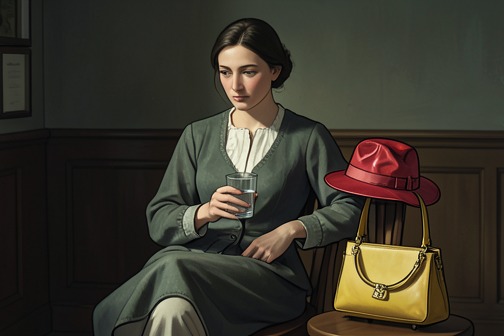
[Noboru Wataya](entity:character-recall-character-noboru-wataya-24272146e8e7)’s violation of [Creta Kano](entity:character-recall-character-creta-kano-31722cf4ec94) is revealed through Creta’s retrospective account to [Toru Okada](entity:character-recall-character-toru-okada-2150189ce853). Although relations with Noboru had originally been arranged, she says what happened was against her will and left her changed; the distinction between prior arrangement and actual consent is central to her testimony and to the encounter’s lasting significance.
## Disclosure and Circumstances
During a conversation with Toru Okada, Creta says she wants to know more about Noboru, then explains that he had violated her long before. She does not recount the incident in detail, saying she will speak about it on another occasion. Her account nevertheless establishes the essential circumstances: an encounter had been arranged, but what Noboru did was not wanted by her. She therefore rejects the idea that the arrangement made the violation acceptable, even as she distinguishes it from rape in the ordinary sense of the word.
## Consequences for Creta
Creta says the experience changed her in important ways and describes the danger that she might have been lost forever. She also says she eventually recovered, with help from [Malta Kano](entity:character-recall-character-malta-kano-bc918ff919fe), and reached what she calls a higher level. Recovery does not erase her judgment of the act: she identifies Noboru’s conduct as wrong and dangerous. Her account holds harm and later transformation together without making the transformation a justification for what was done to her.
## Contrast with Toru Okada
Creta distinguishes her past experience with Noboru from her later relations with Toru Okada. She says the latter took place for a proper purpose and did not defile her. [Okada](entity:character-recall-character-okada-6667d796391a) is startled by the disclosure that they had been intimate, and Creta explains that a woman in his second dream had taken her place. She presents the dream as a message intended for him, though he says he does not understand it. The contrast makes her account depend on consent, purpose, and her own interpretation of what happened, rather than on the mere fact of sexual relations.
## Telling, Witness, and Significance
The violation reaches the reader through Creta’s testimony rather than a dramatized account of the original encounter. Her measured disclosure names the harm while withholding its details, and Okada’s failure to understand her underscores the limits of his immediate comprehension. Later, Creta asks him to hold her; he does so despite uncertainty, and she cries silently in his arms. The scene offers a moment of physical comfort, not a claim that the earlier violation has been undone. The episode’s significance lies in Creta’s insistence that an arranged encounter can still be against a person’s will, and that the effects of violation remain hers to describe and interpret.
Event 17
Toru与Kumiko的水族馆初次约会
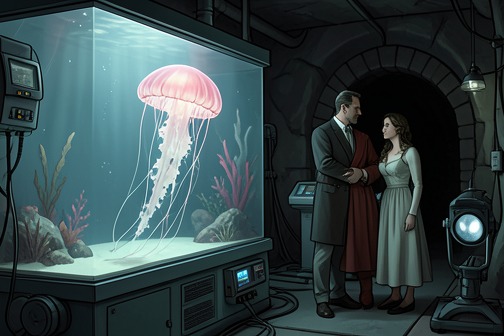
Toru and [Kumiko](entity:character-recall-character-kumiko-d41c446d91d6)’s first date takes place at the [Ueno Zoo aquarium](entity:location-recall-location-40e9ed2cfc07) after their meetings in a hospital waiting room have made their attraction quietly apparent. The excursion begins as a deliberate attempt to leave behind the patients and clients around them, but its defining scene is Kumiko’s absorption in a jellyfish display that unsettles Toru. His discomfort, her attention, and her reflection on the mostly unseen ocean turn an ordinary date into an early statement of their distinct ways of perceiving the world. Remembered in the darkness at the bottom of a well, the afternoon also brings an intimate beginning into contact with the novel’s larger imagery of hidden depths and recovered memory.
## From the Waiting Room to a Date
Eight years after the afternoon, Toru recalls first meeting Kumiko in the family members’ waiting room of a university hospital in Kanda. He was there almost daily to meet a wealthy client about an inheritance; Kumiko came between classes to care for her mother, who was being treated for a duodenal ulcer. Their early encounters were shaped by waiting and boredom. They exchanged small talk, magazines they had finished reading, and fruit from a gift basket brought for Kumiko’s mother. Toru remembers their attraction not as a sudden shock but as a quiet, gradual closeness: each meeting made the stranger feel more like an old friend.
Eventually Toru wanted to meet Kumiko somewhere other than the hospital, away from patients and clients. He proposed going out for a change of air, and, after considering it, she suggested the aquarium. Her choice sets the destination and the terms of the day: rather than a broad tour of the zoo, the date will center on the marine creatures that hold her attention. Kumiko first returned to the hospital that Sunday morning with a change of clothes for her mother, then met Toru there. They traveled together to Ueno on a warm, clear day.
## The [Jellyfish](entity:creature-recall-creature-jellyfish-ea1af4c09aa5) Display
At the aquarium, a special display brought together rare jellyfish from around the world. The specimens ranged from tiny, fingertip-sized forms to animals more than three feet across, suspended and trembling in their tanks. Toru had hoped the fine weather might make a walk through the zoo more appealing, but Kumiko had already settled on the aquarium, and he accepted her preference. The relatively empty galleries made the contrast sharper: while other visitors might have chosen the elephants and giraffes on such a pleasant day, the two of them moved through a long sequence of jellyfish tanks.
Toru concealed a strong aversion to jellyfish. As a boy swimming in the ocean, he had once found himself surrounded by a school of them. Though he was not stung, their cold, slimy touch and the panic of being caught among them remained with him. At the exhibition, that remembered bodily fear returned as mounting distress. He tried to keep looking alongside Kumiko, but his attention broke away: he repeatedly counted the change in his pocket and wiped the corners of his mouth with a handkerchief. After about half an hour, he could no longer remain at the railing and slumped onto a nearby bench.
Kumiko noticed the change in him and led him out of the dim, dank aquarium into the sunlight. Toru told her honestly that the jellyfish had made him dizzy. She examined his unfocused eyes, then took him outside; after ten minutes in a nearby park, breathing slowly in the autumn sun, he had regained his composure. Her response is part of the date’s intimacy: she does not simply share her enthusiasm, but recognizes that his experience has become physically overwhelming and helps him leave the display.
## Kumiko’s View of the Hidden World
When Toru asked why she liked jellyfish, Kumiko could only say that she found them cute. But she also described an idea that had come to her while she watched them closely: the visible world was only a tiny part of what existed. Most of Earth’s surface was ocean, and people could see only its skin; beneath it lay a world they barely knew, much of it occupied by jellyfish and other creatures. She treated the tanks not merely as an unusual exhibit but as a glimpse of a reality that human habits of attention usually forget.
The scene sets Kumiko’s fascination against Toru’s fear without making their difference an obstacle to the relationship. His response is shaped by an old physical memory, while hers moves from sustained looking toward a broader sense of the unseen. Toru nevertheless stays with her through the display, and the afternoon gives their emerging connection room to deepen. After a long walk, he accompanied her back to the hospital at five. Her smile at parting had a quiet glow he had not seen before, and he understood that they had drawn closer during the day, thanks in part to the jellyfish.
## Memory, Place, and Narrative Significance
The aquarium date is narrated as a recollection that surfaces while Toru sits in darkness at the bottom of the well. As his eyes adjust only enough to distinguish dim outlines, his memories acquire an unusually vivid, almost graspable force; he closes his eyes and returns to meeting Kumiko eight years earlier. The shift links the claustrophobic present of the well to an afternoon that began their courtship, making memory a route through which an earlier intimacy re-enters the story’s present.
The date’s images also resonate beyond the encounter itself. Kumiko’s insistence that the visible surface conceals a much larger, darker world echoes the novel’s recurring movement between what can be seen and what lies beneath perception. Toru’s childhood panic gives that idea a bodily counterpart: depth is not only an intellectual proposition but a remembered vulnerability that overtakes him in the aquarium. The date therefore establishes both an emotional connection and a difference in perception that the later well-side recollection makes newly significant.
Event 18
Miyawaki family murder-suicide
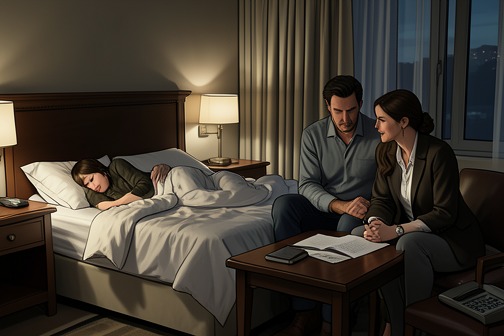
The [Miyawaki family murder-suicide](entity:event-recall-event-miyawaki-family-murder-291db3ea7165) is the latest tragedy in a string of events associated with a reportedly cursed property in Setagaya. The family’s deaths follow financial ruin and the loss of their home, renewing public attention to the land and reinforcing its reputation as jinxed.
## Background and Family Circumstances
Kojiro Miyawaki owned the long-established Rooftop Grill restaurant chain, headquartered in Ginza. After selling all the restaurants and declaring bankruptcy in the face of massive debt, he was pursued by several nonbank lenders with ties to organized crime. The family’s financial collapse thus preceded the tragedy, though the evidence does not establish it as a direct cause of the deaths.
## The Family’s Deaths
In January, Miyawaki killed his fourteen-year-old daughter, Yukie, while she slept at an inn in Takamatsu City. He and his wife, Natsuko, then died by suicide. Their eldest daughter, who was a college student at the time, remained missing. The account presents the deaths as a murder-suicide, distinguishing Yukie’s killing from her parents’ suicides and leaving the eldest daughter’s fate unresolved.
## The Property and Its Reputation
The deaths became part of the property’s public story because they were reported alongside its history. Miyawaki had bought the land in April 1972, despite ominous rumors, which he dismissed as coincidences. He demolished the long-vacant house, had the lot graded, and called in a Shinto priest to exorcise any lingering evil spirits before building a new, two-story home. The family then appeared to lead a tranquil life, and neighbors remembered the daughters as bright and happy. After ten years, however, the family’s fortunes took a sudden and disastrous turn.
Miyawaki lost the house, which he had used as collateral, in the fall of 1983. Disputes among creditors delayed its final disposal until a court-mediated settlement the following summer opened the way for the land to be sold. The later murder-suicide renewed attention to the site: news reports mentioned the land, strengthening the association between the family tragedy and the property’s already troubling reputation.
Event 19
Cinnamon’s loss of speech
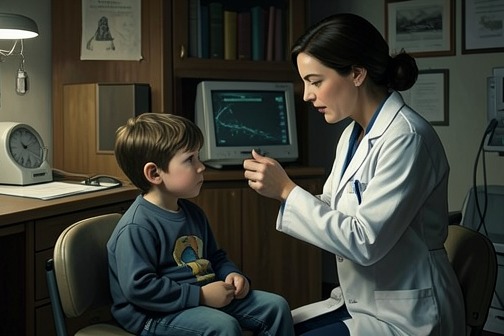
[Cinnamon’s loss of speech](entity:event-recall-event-cinnamon-s-loss-of-spee-55306ed2489f) is an unexplained and permanent change that begins just before his sixth birthday. The sudden silence resists medical and psychological explanation, leaving Nutmeg and the doctors with no remedy beyond waiting and observation.
## The Sudden Silence
Nutmeg recalls that [Cinnamon](entity:character-recall-character-cinnamon-7ef584b9377b) stopped speaking in February, shortly before the age when he would have entered elementary school. The change went unnoticed until nightfall: although he was never especially talkative, she realized that he had not said a word all day. She tried speaking to him and shaking him, but nothing prompted a response. She could not determine whether he had lost the ability to speak or chosen to stop. From then on, he never spoke or made another sound; even pain and tickling elicited neither a cry nor laughter.
## Attempts to Find a Cause
Nutmeg took Cinnamon to several ear, nose, and throat specialists. They found that his hearing was intact and that the condition was not physical. A psychiatrist likewise found no clear explanation. Cinnamon’s IQ was unusually high, and the doctor found no evidence of emotional problems. The possibility that he had experienced a shock or witnessed violence was raised, but Nutmeg could recall no such incident.
The change followed an ordinary day. Cinnamon had eaten, talked with Nutmeg, and gone to bed as usual; he had had no trouble falling asleep. Nutmeg and her mother watched over him, and neither had struck him. With no identifiable cause, the psychiatrist could offer no treatment: Nutmeg was asked to bring Cinnamon for weekly observation, while the family waited to see whether his speech might return on its own.
## A Silence That Endures
The hoped-for recovery never came. Nutmeg describes Cinnamon as never rising again to the surface of his deep ocean of silence. The image gives shape to a condition that the examinations could describe only by what they ruled out: his hearing remained intact, his intelligence was not impaired, and no cause emerged, yet speech did not return.
The episode also establishes the defining contrast in Cinnamon’s presence: he is perceptive and highly intelligent, but cannot communicate through speech or vocal sound. Its unexplained onset and permanence leave the event unresolved, while the family’s waiting becomes the only response the doctors can recommend.
Event 20
Hsin-ching Zoo Cadet Executions
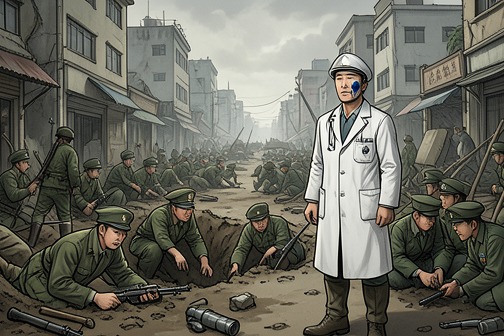
The [Hsin-ching Zoo Cadet Executions](entity:event-recall-event-hsin-ching-zoo-cadet-ex-401538d1017f) are a wartime killing represented in a story by [Cinnamon](entity:character-recall-character-cinnamon-7ef584b9377b): Japanese soldiers execute Chinese military cadets and bury them at the zoo, where the veterinarian is drawn into the violence. The episode’s decisive significance lies not only in the deaths but in its uncertain status as history. Nutmeg knows nothing of what happened to her father after their last meeting, while Cinnamon’s account supplies a possible fate without establishing it as fact.
## Historical setting and uncertain record
The embedded story is set at the [Hsin-ching](entity:location-recall-location-hsin-ching-31562ea5efd0) zoo in [August 1945](entity:time-recall-time-august-1945-944f6855bbc1), as Soviet forces approach and the collapse of [Manchukuo](entity:location-recall-location-manchukuo-8d341997bd4e) becomes imminent. The Japanese military’s dwindling equipment and ammunition form the background to a broader episode in which soldiers are ordered to kill zoo animals judged capable of attacking people. That slaughter leaves the veterinarian, marked by a blue-black stain on his cheek, amid a city and institution already overtaken by wartime emergency.
Cinnamon’s “[The Wind-Up Bird Chronicle](entity:object-recall-object-wind-up-bird-chronicle-12a8f2f74ba0) #8” takes place at the same zoo on the following day and again centers on the veterinarian, who is Cinnamon’s grandfather. The sequence makes the cadet executions a continuation of the earlier zoo story, not a fully independent historical account. Its connection to Nutmeg’s memory is especially fraught: she had said that “absolutely nothing” was known about what became of her father after she last saw him. The narrative therefore cannot be treated as an uncomplicated record of his fate.
The account nevertheless leaves room for historical fragments. The narrator considers it possible that [Manchukuo Army](entity:organization-recall-organization-d52d2f7781a1) cadets were executed and buried at the zoo during the disorder of the final days of the war, and that the Japanese officer responsible was later executed. Such incidents of desertion and rebellion were not unusual, but the story’s details—including the cadets’ baseball uniforms—remain unverified. Cinnamon may have joined possible historical material to his image of his grandfather, leaving the reader unable to separate record from invention.
## The execution and its immediate aftermath
During the execution, one of the Chinese cadets suddenly sits up and grips the veterinarian’s wrist. The veterinarian cannot understand how a man he believed dead can still hold on, and the soldiers are too stunned to respond at first. The lieutenant recovers, intervenes, and orders the other soldiers to fill in the grave after the veterinarian and the lieutenant have been pulled clear. The veterinarian is left with red marks on his wrist and a feeling of coldness that he believes will not leave him.
For the lieutenant, the killing is also a threshold: it is the first time he has fired a gun at a human being. He puts the experience aside rather than dwell on it, reasoning that the war will continue and that people will continue to die. The contrast between the lieutenant’s effort to defer reflection and the veterinarian’s enduring reaction gives the scene two different aftermaths: one man proceeds under the demands of military duty; the other cannot regard his survival as emotionally neutral.
A young soldier stands apart, still holding a baseball bat, apparently unable to release it. Although the lieutenant and corporal leave him alone, he has not truly been attending to the events in front of him. He has been listening to the [Wind-up bird](entity:character-recall-character-wind-up-bird-8df240eae284), whose call recalls its appearance the previous afternoon. As he listens, he sees fragmentary glimpses of later deaths and misfortunes: the lieutenant’s eventual execution, the corporal’s death in a Siberian camp, and the veterinarian’s later death in a mine. The vision does not show the young soldier his own future. The episode thus places the grave’s immediate violence inside a larger, still-unfinished chain of wartime consequences.
## From zoo killings to burial and historical violence
The cadet executions belong to a broader pattern of wartime killing and disposal. In Cinnamon’s account of the zoo, soldiers also shoot the dangerous animals, while the elephants are spared because the men recognize that their rifles are inadequate against them. The corpses are carried away by Chinese workers, but the veterinarian has no practical means to arrange their disposal: the city is bracing for battle, people are fleeing, and the summer heat makes delay dangerous. The zoo’s dead make the problem of burial unavoidable even before the cadets’ grave becomes the scene of a human execution.
The novel later places the mass grave alongside the disposal of bodies in Siberian mines. There, prisoners who die under brutal labor conditions are thrown into abandoned shafts; living men may also be thrown in as punishment. Boris’s administration treats the camp’s labor force as replaceable, reducing rations for weaker prisoners and using the food for those expected to produce more. The scenes are distinct, but together they show how institutions turn burial places into instruments of concealment and how decisions made by those in command govern whose lives are protected, expended, or erased.
## Narrative form and significance
The reader encounters the cadet episode not as a verified historical account but as one of the stories stored on [Cinnamon’s computer](entity:object-recall-object-cinnamon-s-computer-132c6e16d6b6) under “The Wind-Up Bird Chronicle.” Its numbering suggests a possible sequence, yet the narrator considers other arrangements: the stories might run in reverse or represent parallel versions. The form withholds a single settled relation between chronology, testimony, and invention, just as the content withholds certainty about the veterinarian’s fate.
This uncertainty makes the execution scene more than a revelation about what may have happened to Nutmeg’s father. Cinnamon’s story gives shape to a gap in family knowledge while openly leaving its truth undecidable. The cadet who grips the veterinarian’s wrist, the lieutenant who tries not to think about his first killing, and the young soldier who listens to the unseen Wind-up bird remain elements in a narrative assembled from memory, possible history, and imagined connection. The grave is both the site of an execution and the point where the novel’s questions about historical knowledge, inherited memory, and the making of stories converge.
Event 21
Hailar Battle and Mamiya’s Capture
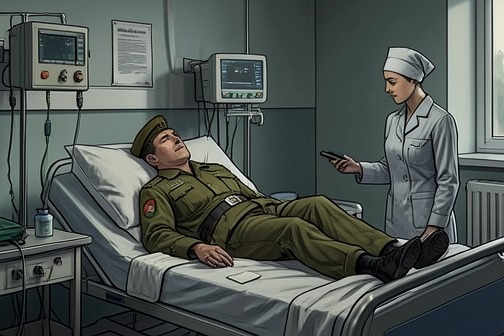
[Lieutenant Mamiya](entity:character-recall-character-lieutenant-mamiya-8b163bf82669)’s wounding and capture near [Hailar](entity:location-recall-location-565ad3f71559) turned a deliberate attempt to die in battle into the beginning of a long captivity. On [August 13, 1945](entity:time-recall-time-1945-8-13-eedce1fbf8ab), he joined a suicidal attack on a Soviet tank, lost his left hand beneath its treads, and survived after speaking Russian while unconscious. His survival carried him from the collapsing front into a Soviet military hospital and, ultimately, forced labor in Siberia.
## Assignment and the Coming Battle
Before the fighting, Lieutenant Mamiya served with the Military Survey Corps of the [Kwantung Army](entity:organization-recall-organization-kwantung-army-e1965355cff6) General Staff in [Hsin-ching](entity:location-recall-location-hsin-ching-31562ea5efd0). He was responsible for topographical work along the western border of [Manchukuo](entity:location-recall-location-manchukuo-8d341997bd4e) near the [Khalkha River](entity:location-recall-location-8478c304145b), where incomplete maps had both military and diplomatic significance. In a region where borders remained politically sensitive, more detailed terrain information could support combat planning without immediately forcing an official settlement of the boundary.
That mapping work reflected the army’s wider logistical vulnerability. Combat maps needed to identify routes, encampments, artillery positions, water sources, and the time required for infantry and supplies to move. Earlier planning for a possible winter war with the Soviet Union had likewise exposed inadequate preparation: army researchers concluded that Japanese forces lacked equipment for a Siberian winter and estimated that frostbite could disable a large share of front-line infantry. These details frame the Hailar battle not as an isolated test of courage but as part of a war shaped by the army’s limited preparation and resources.
## The Attack and Survival
By [August 1945](entity:time-recall-time-august-1945-944f6855bbc1), the Kwantung Army was being pushed toward collapse as Soviet forces advanced into Manchuria. Although Lieutenant Mamiya had been assigned to withdraw with the Military Survey Corps, he arranged to transfer to the Hailar unit near the border, intent on dying in battle. On August 13, he attacked a Soviet T34 tank with a land mine in his arms. The attack was futile: his small portable mine could not damage the tank, and the men under his command were killed. Mamiya was struck by machine-gun fire and lost his left hand beneath the tank’s treads, but he survived—contrary to the prediction [Mr. Honda](entity:character-recall-character-mr-honda-02e3a5ceba1c) had made by the Khalkha River that Mamiya would not die so easily.
## Capture and Forced Labor
Unconscious, Lieutenant Mamiya was taken to a Soviet military hospital in Chita, where surgeons saved his life. His ability to speak Russian proved decisive: he had studied the language before the war and developed his fluency while serving in Hsin-ching, practicing with Russian residents and waitresses. The [Soviet Army](entity:organization-recall-organization-soviet-army-14768f2c3510) needed interpreters for the Japanese prisoners it planned to send to Siberia as forced labor. When Mamiya spoke Russian while delirious, the soldiers recognized a use for him and sent him to the hospital rather than leaving him to die near Hailar.
After an interrogation and months of ideological training, Mamiya was sent to a [Siberian coal mine](entity:location-recall-location-6245aad4c635) as an interpreter, acting as a liaison between Japanese prisoners and their Soviet captors. There, he witnessed a system in which prisoners died from hunger, overwork, accidents, disease, cold, and violence; deaths were handled by placing bodies in abandoned mine shafts. The mine’s leadership treated workers as replaceable units, bringing in new prisoners as the labor force dwindled. His capture thus extended the consequences of the Hailar defeat well beyond the battlefield: survival depended on a linguistic skill acquired during military service, but it led into another coercive wartime system.
## Political Collapse and the Camp System
The battle at Hailar occurred as the Soviet advance exposed the disintegration of Japanese power in Manchukuo. The Kwantung Army, weakened by the transfer of troops and equipment to other fronts, evacuated its main force and left border garrisons and Japanese civilian settlers exposed. Chinese soldiers assigned to defend the capital deserted or rebelled rather than die fighting the Soviet Army. The retreat and collapse formed the larger setting for Lieutenant Mamiya’s capture: military defeat brought Japanese prisoners into the Soviet labor system, where his language skills first preserved his life and then determined his role.
Mamiya’s experience of that system also shaped his understanding of political authority. He could not accept communist principles as practiced by a government responsible for repression in [Mongolia](entity:location-recall-location-425ce2533ee8) and the Soviet Union, and he drew a parallel with Japanese actions in Manchuria. He knew that Chinese laborers had been deliberately killed to conceal the construction of the secret base at Hailar. In his account, the rival regimes’ claims and ideologies could not be separated from the violence used to maintain them.
## From Interpreter to Witness
The Siberian mine treated prisoners as expendable labor. Its director pursued rising production figures, authorizing work in dangerous coal seams despite mounting accidents; when workers died or the labor force declined, new prisoners arrived by train. Mamiya served as an intermediary between Japanese prisoners and their Soviet captors, but his position did not shield him from witnessing the mine’s routine deaths and punishments. The episode extends the meaning of his survival at Hailar: being spared on account of his Russian did not release him from wartime violence, but drew him into a role from which he could observe its machinery at close range.
Years later, Mamiya returned to the Hailar battle in a sequel to the story he had previously told [Toru Okada](entity:character-recall-character-toru-okada-2150189ce853). He explained that practical limits had kept him from recounting everything earlier, but that he had also not been emotionally prepared to tell the rest fully and honestly. The delayed account makes the capture more than a military turning point: it is a remembered wound whose consequences reach from the battlefield into captivity, and whose full narration itself comes only afterward.
Event 22
Mamiya’s Reunion with Boris Gromov
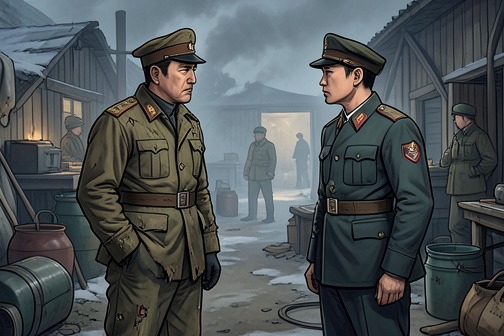
[Mamiya’s Reunion with Boris Gromov](entity:event-recall-event-mamiya-s-reunion-with-b-b5a79efca516) is the spring 1947 encounter in which [Lieutenant Mamiya](entity:character-recall-character-lieutenant-mamiya-8b163bf82669) recognizes the former Soviet officer who had ordered [Yamamoto](entity:character-recall-character-yamamoto-a83bb41da631)’s execution, now reduced to a prisoner in a Siberian mining camp. The moment turns a remembered wartime atrocity into a present-tense confrontation: Boris Gromov has lost his uniform and position, but not the danger he represents, and Mamiya’s recognition draws him into the camp’s corrupt system before he forms a plan to kill him.
## Background: From Border Mission to Captivity
Years earlier, Mamiya had been assigned to escort Yamamoto on a secret mission across the [Khalkha River](entity:location-recall-location-8478c304145b). Mamiya was selected in part because he was responsible for mapping the western border of [Manchukuo](entity:location-recall-location-manchukuo-8d341997bd4e). The maps were incomplete, but uncertainty over the border had political consequences: the [Kwantung Army](entity:organization-recall-organization-kwantung-army-e1965355cff6) wished to avoid provoking a clash with the Soviet Union or [Outer Mongolia](entity:location-recall-location-cfbd103e8ce5), while recognizing that a future conflict would require detailed military maps showing routes, campsites, water sources, and supplies. The mission’s geography work therefore existed at the intersection of military intelligence and a deliberately unsettled frontier.
Mamiya’s later service in Siberia brings that past into unexpected proximity with the present. By the time he sees Boris, he has been at the mining camp for a year and a half. The camp is administered as a strategic facility, with its labor force treated as replaceable: prisoners who die are replaced by new arrivals, and the director’s priority is rising production rather than workers’ survival. Against that institutional background, Boris appears not as an isolated former official but as someone whose earlier methods of violence have found a new setting within the machinery of imprisonment.
## The Recognition at the Station
Mamiya dates the encounter to around the beginning of May 1947, after the snow had melted. On his way back from delivering a report to headquarters, he passes the station, where a group of Russian prisoners is breaking rocks and spreading the crushed stone over the roadway. A noncommissioned officer stops Mamiya to check his pass. Unable to read it, the officer summons one of the prisoners to read it aloud.
The prisoner is the man Mamiya recognizes. Boris is emaciated and largely bald, with a missing front tooth; his prison clothes, damaged shoes, and altered appearance contrast with the spotless officer’s uniform Mamiya remembers. Yet Mamiya is certain of his identity. The recognition brings back the terror of the earlier encounter so abruptly that Mamiya struggles to breathe. Boris, too, recognizes Mamiya, and appears astonished: he had evidently assumed that Mamiya had died in the well in which he had been left during the earlier ordeal.
The exchange at the checkpoint is brief and outwardly controlled. Boris reads Mamiya’s pass aloud, identifying his name, his translator’s role, and his authorization to move among the camp’s areas. The officer returns the pass and lets Mamiya continue. When Mamiya looks back, Boris is watching him. Mamiya cannot be sure whether the faint smile he sees is real, but the recognition has already made the two men’s shared past active again.
## Boris’s Identity and the Camp’s Power Structure
A week later, Mamiya sees Boris again outside the station, still in chains and working with a hammer. Boris stands upright and smiles; Mamiya recognizes the expression from the earlier violence against Yamamoto. That second sighting gives Mamiya reason to ask a Russian officer named Nikolai about the prisoner. Nikolai identifies him as “Boris the Manskinner” and warns Mamiya to avoid him.
Nikolai supplies the name behind the nickname: Boris Gromov had been a major in the [NKVD](entity:organization-recall-organization-nkvd-439b3a603738). In 1938, he was sent to [Ulan Bator](entity:location-recall-location-5d7dee11c26a) as a military adviser and organized the Mongolian secret police on the NKVD model, taking part in the suppression of suspected counterrevolutionaries. After the [Battle of Nomonhan](entity:event-recall-event-battle-of-nomonhan-0a0c1680d6c3), he was recalled to Moscow and then sent to Soviet-occupied Eastern Poland, where he became notorious for torture. Nikolai’s account explains why Mamiya’s recognition matters beyond personal memory: Boris’s record connects the violence at the Khalkha River to a wider career serving coercive state institutions.
Boris’s fall from power has not made the mining camp safe. Mamiya initially imagines that internal political struggles in the Soviet Union may have brought Boris down, as officials who lost favor could be sent to prison camps. But Boris soon demonstrates that he can build power even as a prisoner. He recruits Mamiya to manage his affairs and places The Tartar over the violent side of his operation. Mamiya becomes indispensable to him, while Boris turns the camp and mine into territory he effectively controls.
## Recruitment, Exploitation, and Mamiya’s Plan
Boris’s offer draws Mamiya into the camp’s illicit economy. Boris has diverted a substantial share of food, clothing, and medical supplies sent from Moscow and the International Red Cross, storing and selling them. He has also arranged the movement of coal through the black market, using bribes to influence railway workers and the stationmaster. Boris claims that the profits finance secret-police activity, but Mamiya believes that most of the wealth is being converted into Boris’s private fortune, including money sent to foreign accounts and invested in gold.
The scale of that enterprise rests on the camp’s treatment of prisoners as expendable labor. Boris assesses prisoners according to their usefulness, reducing rations for those he considers weak and directing the food toward stronger workers to increase production. When the workforce dwindles, new groups arrive by train; many die in transit or soon after arrival. The mine’s officials likewise prioritize production figures and authorize dangerous work regardless of mounting deaths. Boris’s system is therefore an extension, rather than a rejection, of the institution’s underlying logic: people are consumed and replaced in the pursuit of output and power.
Mamiya accepts Boris’s offer outwardly, but the acceptance conceals a different objective. He has no intention of helping Boris at the cost of his fellow prisoners, and the moment Boris presents the opportunity, Mamiya begins forming a plan to kill him. He knows that removing Boris would not end the camp’s broader brutality. Even so, he concludes that Boris cannot be allowed to continue living unopposed. The reunion thus opens not with reconciliation or escape, but with a covert struggle inside a system where Boris has made himself powerful and Mamiya has become close enough to act against him.
## Narrative Significance
The scene is built around recognition delayed across years and radically changed circumstances. At the station, a pass check—an ordinary procedure in a camp divided by rules and controlled movement—forces Mamiya and Boris into direct contact. The identification proceeds through Mamiya’s memory, Boris’s altered appearance, and the account Nikolai later provides. This sequence makes the reunion both personal and historical: the man Mamiya remembers from the border mission is also a political operative whose career reaches across [Mongolia](entity:location-recall-location-425ce2533ee8), Poland, and the Soviet camp system.
The reversal is striking but incomplete. Boris has gone from military authority to chained prisoner, yet he rapidly establishes a new command through theft, bribery, and violence. Mamiya, meanwhile, moves from being the stunned witness to an apparent participant in Boris’s operations, while privately preparing to resist him. Their encounter therefore links Mamiya’s wartime memory to the next stage of his captivity and sets the terms of the conflict that follows: Boris’s power survives the loss of official rank, and Mamiya’s decision to act begins within the very system Boris has captured.
Event 23
Boris Gromov’s Takeover of the Siberian POW Camp
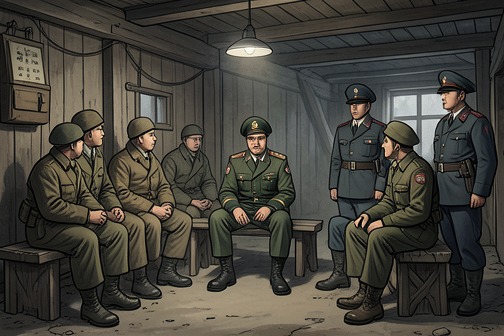
Boris Gromov’s takeover of the Siberian POW camp turns a secret bargain for limited Japanese self-government into a system of indirect control. [Lieutenant Mamiya](entity:character-recall-character-lieutenant-mamiya-8b163bf82669) helps arrange the bargain, but the promised autonomy proves temporary: Boris first reduces visible disorder, then uses the committee, camp production, and targeted intimidation to extend his authority over the prisoners. The episode makes political concession and coercion parts of the same mechanism, while leaving Mamiya with the knowledge that his attempt to improve conditions helped open the way for a more calculated form of domination.
## Causes and the Secret Bargain
The takeover grows out of the camp’s existing struggle for power. Boris approaches the Japanese prisoners through Lieutenant Mamiya, who has been working as an interpreter. Mamiya takes the proposal to a former lieutenant colonel who has become the prisoners’ unofficial leader. The colonel is interested in removing the incumbent political supervisor and securing some autonomy for the Japanese, while Mamiya warns that Boris is dangerous and cannot be trusted. The colonel’s calculation is that the situation can hardly worsen; Mamiya, too, believes the bargain may offer a practical way forward.
Mamiya then arranges a private meeting between the colonel and Boris and interprets their discussion. The thirty-minute meeting ends with a secret pact and a handshake. Afterward, the two men avoid direct contact and appear to communicate through coded messages. Mamiya’s role as intermediary ends, but he does not escape the consequences of the agreement: the bargain has connected the prisoners’ bid for self-government to Boris’s own contest for power.
## A Reform That Buys Time
About a month after the meeting, Party Central removes the Georgian political supervisor and appoints a replacement. Within days, three Japanese prisoners are found dead, their deaths made to resemble suicides. The prisoners understand that these were killings of suspected informers, but no investigation follows. By then, Boris has gained a powerful foothold in the camp.
Boris fulfills the part of his promise that the prisoners can see. The Japanese receive partial autonomy and form a representative committee, chaired by the colonel. Russian guards are told to stop their violent conduct, while the committee becomes responsible for maintaining order among the prisoners. The ostensible arrangement is conditional: if the Japanese keep order and meet their production quotas, they will be left alone. At first, the policy seems to offer meaningful relief from the guards’ previous violence.
For several months, the change brings a real, if limited, interval of calm. The committee obtains a slight reduction in the harshness of the work, and the prisoners no longer have the same reason to fear the guards. Some begin to hope that their circumstances may improve. In retrospect, however, this respite is also the time Boris uses to make the arrangement secure enough to turn against its beneficiaries.
## Control Through the Committee
While the Japanese manage their own affairs, Boris consolidates his power elsewhere in the camp and town. He chooses forceful men from among prisoners and civilian guards for a personal guard, giving them the means to intimidate and assault those who resist. Ordinary soldiers assigned to the mine keep their distance. The appearance of a representative committee therefore masks the growth of a separate coercive structure that the committee cannot control.
Boris also works on the Japanese committee members individually, using bribes and threats rather than immediate public confrontation. The initial autonomy helps lower the prisoners’ vigilance while he builds influence inside the body ostensibly representing them. After about six months of strengthening this arrangement, he moves against the colonel, the committee’s central figure and one of the few members not aligned with him. Boris orders the colonel’s killing and has Japanese prisoners carry it out; the death is attributed to illness. The committee then elects Boris’s chosen candidate to succeed him.
The transfer of the chairmanship changes what autonomy means in practice. Production quotas become progressively more burdensome, and the work grows harsher than before. Mining accidents increase, while prisoners who serve Boris receive lighter duties and privileges. Those outside his favor face greater hardship and the threat of punishment. The committee remains, but its authority is increasingly used to supervise the prisoners’ labor on terms imposed by Boris.
## Consequences and Narrative Significance
The camp’s earlier shared suffering gives way to unequal conditions, suspicion, and resentment. Prisoners cannot safely complain or resist openly; people disappear, and the darkness of the mine makes their fate difficult to establish. The system does not simply restore the former pattern of guard violence. It replaces it with violence that is selective and organized: favors secure cooperation, threats isolate opposition, and nominal self-government makes prisoners participate in administering their own increasingly severe conditions.
Mamiya feels responsible because he brought Boris and the colonel together. He recognizes that Boris might have found another route into the Japanese zone, but that possibility does not undo his sense that he made a terrible mistake. The takeover consequently has two linked outcomes: Boris turns a limited concession into durable control, and Mamiya is left to reckon with his part in the chain of decisions that made the concession possible. The episode’s central reversal lies in the word autonomy itself: what first appears to be a protection from outside force becomes the means by which that force is reorganized and extended.
Event 24
The Japanese POW Colonel’s Assassination
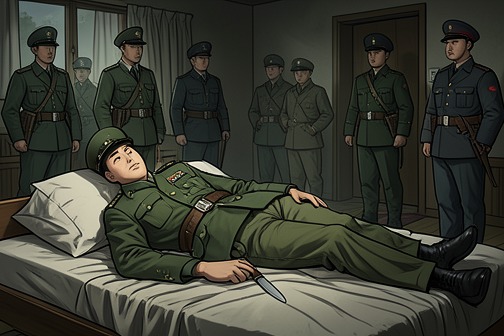
[The Japanese POW Colonel’s Assassination](entity:event-recall-event-the-japanese-pow-colone-64f1018502e5) is the turning point at which Boris Gromov’s carefully cultivated appearance of restraint gives way to overt control of the Japanese prisoners. Boris ordered the killing of the colonel, the central figure on their prisoner committee, and arranged for Japanese subordinates to carry it out. The death was attributed to illness, while the committee’s subsequent choice of Boris’s preferred replacement made the prisoners’ nominal self-government an instrument of the system ruling them.
## Background: autonomy under Boris
The murder followed a brief period in which the prisoners had been allowed to manage some of their own affairs. After gaining control of the Russian guards, Boris left the Japanese committee in place and permitted it to obtain a limited easing of the labor regime. The calm was genuine in its immediate effects, but it concealed a methodical effort to bring committee members individually under his influence through bribes and threats. Under the appearance of granting autonomy, Boris was building a more efficient structure of control.
The colonel stood in the way of that consolidation. He confronted Boris directly on several matters concerning the prisoners, and by the time Boris turned to him, the colonel and a few associates were among the committee members who had not come under Boris’s influence. After six months of strengthening his position, Boris began applying pressure. The colonel became its first victim.
## The killing and its concealment
Boris ordered the colonel’s death but did not carry it out himself. Japanese committee members acting under his direction killed the colonel, and the death was officially written off as illness. The prisoners understood what had happened, but Boris had spies among them, so they could not safely discuss the killing. The gap between the public explanation and what everyone knew turned silence into part of the camp’s system of control.
Afterward, the committee voted for Boris’s handpicked candidate to occupy the colonel’s chair. This replacement did more than fill a vacancy: it changed the balance of the committee and made it easier for Boris to govern through its members rather than through direct intervention alone. The assassination thus connected private coercion to an outwardly procedural transfer of authority.
## Consequences in the camp
As the committee’s composition changed, the labor conditions worsened. Production quotas were raised in stages, and the Japanese prisoners were made to oversee their own work in place of the Russian officials who had previously supervised it. The promised autonomy increasingly meant responsibility for enforcing a harsher regime without the power to resist it. Accidents rose, and prisoners died under increasingly dangerous mining conditions.
The prisoners’ shared hardship also gave way to distrust and resentment. Those who served Boris received lighter duties and privileges; those who did not faced severe conditions and the danger of being killed. Open complaint was unsafe. In this way, the colonel’s removal helped replace the committee’s limited collective representation with a divided community in which survival and privilege depended on accommodation to Boris.
## Mamiya’s responsibility and the event’s significance
[Lieutenant Mamiya](entity:character-recall-character-lieutenant-mamiya-8b163bf82669) felt responsible for having brought Boris and the colonel together. He acknowledged that Boris might eventually have gained influence by another route, but that possibility did not relieve his sense that he had made a terrible mistake. His response places the assassination within a broader pattern of constrained responsibility: a connection made under camp conditions could become part of a machinery of control, even when its consequences were not intended.
The event also extends the book’s account of political power beyond the battlefield. Earlier, Lieutenant Mamiya had served in the [Kwantung Army](entity:organization-recall-organization-kwantung-army-e1965355cff6) and witnessed the violence and coercion associated with the Japanese presence in Manchuria; his later testimony describes a camp where another regime uses administrative arrangements, labor quotas, secrecy, and selective violence to dominate prisoners. The colonel’s assassination is therefore both a specific murder and the decisive failure of the prisoners’ brief self-government. Boris’s control is advanced not only by the killing itself but by the committee’s continued existence after its independence has been hollowed out.
Event 25
The Miyawaki Family’s Disappearance
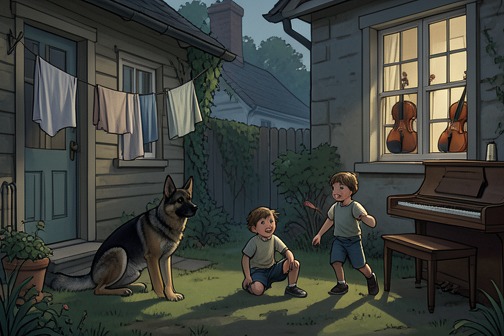
[The Miyawaki Family’s Disappearance](entity:event-recall-event-the-miyawaki-family-s-d-128a1ef55be5) is remembered first as the sudden loss of a seemingly happy household and then as the long transformation of its home into an empty ruin. [May Kasahara](entity:character-recall-character-may-kasahara-5358fdf6516c)’s account, written to [Toru Okada](entity:character-recall-character-toru-okada-2150189ce853), gives the vanished family a double presence: they were neighbors she barely knew, yet the years she spent watching their home made their domestic life part of her own memory. Their departure also left behind a house that seemed to disown the people who had made it a home.
## The Family Before Their Disappearance
May recalls the Miyawakis as an ordinary, cheerful family. From her bedroom window, she watched their house across the way: laundry hung outside on fine days, the two daughters were around the home and yard, and their German shepherd was part of the household’s visible life. The older girl took piano lessons and the younger one violin; birthdays and Christmas brought parties and visiting friends. At night, the house’s lights came on and later went out one by one. In May’s recollection, these repeated details made their home look warm and settled, especially beside her own sense of family life.
May did not claim to be close to the Miyawakis. She hardly spoke to them beyond greeting them in the street, and her knowledge of their daily life came largely from observing them at a distance. That distance matters: her account is not an explanation of the family’s private circumstances, but a record of how their visible routines formed an intimate part of the landscape she grew up with. She imagined them as happy and sometimes wished she had sisters like theirs; the household’s ordinary liveliness acquired force precisely because she watched it from outside.
## The Sudden Absence and the House Left Behind
One day, May noticed that the family had disappeared, with their dog gone too, while their house remained. For roughly a week, the neighborhood did not recognize that they were missing. The lights’ failure to come on struck May as unusual, but she initially supposed they were away on a family trip. Only after her mother heard neighbors say that the Miyawakis had absconded did May understand that they had run away. Her recollection supplies no definite account of where they went or what circumstances led them to leave at that time; the immediate fact available to the neighborhood was their absence.
The vacant house seemed to change character as soon as its residents were gone. May had expected an abandoned home to look merely forlorn, but this one appeared, to her, almost self-sufficient—as if it had never known the people whose lives had filled it. She resented the apparent separation between the building and the family: the house had been cared for and made lively by their presence, yet after their departure it seemed to have no connection to them. That response gives the disappearance an uncanny dimension without establishing that the house itself has agency. It records how strongly a familiar place can seem to alter when the people who made it familiar are no longer there.
## Years of Watching the Vacant House
The abandoned house remained in view from May’s window for years. She saw it in clear weather and in rain, snow, and typhoons; as time passed, she found it harder to look away. She could spend half an hour at her desk watching it, remembering the laughter, parties, and laundry that had once belonged to the place. Meanwhile, the yard grew over with weeds, and the contrast between its former domestic activity and its subsequent vacancy became a recurring image in her daily life. The house was not simply an episode she heard about and forgot: it became part of the view through which she experienced the passage of time.
May says the family’s disappearance sometimes feels as though a part of her disappeared with them. This feeling does not arise from close personal ties but from the sustained attention she had given their home. The family’s life had entered her memory through repeated observation, so their absence left a gap in her own sense of the neighborhood and of her childhood. The episode thus joins physical disappearance to a less literal loss: an observer can feel bereaved by a life that was never hers and by people she scarcely knew.
## Later Recollections and Narrative Significance
In a later letter, May returns to the Miyawaki family as a subject that keeps intruding into her thoughts. She remembers their former home as an ordinary, happy household and finds the contrast with its vacant aftermath difficult to reconcile. She also recalls hearing that debt collectors pursued the family and that they went away and killed themselves; she believes the eldest daughter was the only one who did not die, though she says the daughter’s whereabouts are unknown. This later information changes the remembered disappearance into a family tragedy, while May’s uncertainty about the surviving daughter’s fate preserves the limits of what she knows.
The account’s force comes from the difference between what May witnessed and what she learned later. As a child, she saw the lights stop, the family vanish, and the house remain; only in subsequent recollection does she connect the disappearance with the family’s reported deaths. Her memory therefore moves between an intimate view of ordinary routines and an incomplete understanding of their end. The vacant house becomes the material link between those two kinds of knowledge: it remains visible after the family’s shared life has disappeared, while May’s attention keeps that vanished life from becoming wholly forgotten.
The [Miyawaki house](entity:location-recall-location-miyawaki-house-4664b4427ba2) also enters the larger narrative as a place Toru Okada later encounters in its abandoned state. Its stone bird statue, overgrown garden, and apparent emptiness belong to the setting he visits, while May’s account supplies the remembered domestic life that cannot be read from the ruin alone. Much later, Toru finds the house demolished and the lot reduced to compacted earth. The progression from inhabited home to vacant house to cleared ground gives the disappearance a spatial afterlife: the place changes, but its history continues to surface through the people who remember it.
Event 26
Okada’s Knife Fight in Room 208
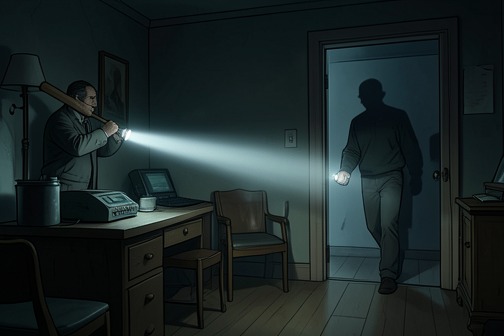
The [Room 208](entity:location-recall-location-208-05ed2f9d34f0) confrontation turns [Toru Okada](entity:character-recall-character-toru-okada-2150189ce853)’s attempt to reach [Kumiko Okada](entity:character-recall-character-kumiko-okada-3ae65bada8a7) into a struggle for survival against an intruder he cannot see. Armed with a baseball bat, [Okada](entity:character-recall-character-okada-6667d796391a) kills the attacker in the dark, but the apparent victory does not bring [Kumiko](entity:character-recall-character-kumiko-d41c446d91d6) home: her warning is followed by her disappearance, and Okada passes through the wall before awakening at the bottom of the well.
## The Intruder Enters
Okada approaches the door with a flashlight and the bat in his right hand. After a sequence of increasingly forceful knocks, he hides beside the door and listens. The other person is equally cautious: the key turns slowly, the door opens almost silently, and the intruder enters and locks it from within. Okada can sense a presence but cannot identify the person. He assumes the intruder has a knife, recalling its bright appearance, and prepares to meet him at close range.
The intruder switches on a penlight and surveys the room without immediately finding Okada. Its beam moves over the furnishings and eventually reaches the area by Okada’s shoes. As the man advances, Okada waits for him to come close enough to strike. Then the light goes out. Okada realizes that the intruder has detected him, but darkness leaves both men unable to locate the other reliably.
## The Fight in the Dark
When the knife first strikes, Okada’s legs will not move. The blow breaks his paralysis, and he shifts away and crouches, holding the bat. His shoulder is numb, though he does not yet feel pain. A second knife attack catches the mark on his right cheek. Okada swings toward the source of the attack but hits nothing; the sound of the bat cutting through the air nevertheless steadies him. Wounded but still able to fight, he waits in the darkness and listens for his opponent’s movements.
The intruder attacks again, cutting Okada’s sweater near the throat without touching his skin. Okada turns and swings toward the sound of the man’s breath. The first blow lands near the collarbone; he follows it with a higher strike to the neck and then another to the skull. The attacker falls and stops moving. Okada delivers one last blow, not out of hatred or fear, but because he believes he must finish the struggle. The encounter ends with the intruder dead and Okada left alone in the dark, trembling and unable to make himself look at what he has done.
## Kumiko’s Warning and Okada’s Departure
## Kumiko’s Warning and Okada’s Departure
As Okada reaches for his flashlight, Kumiko calls from the inner room, first telling him not to look and then pleading with him to stop if he wants to take her home. Her warning makes the apparent purpose of the fight explicit: Okada believes he has killed the intruder to reach her. Yet when he turns toward the inner room and asks her to leave with him, she does not answer; the room is empty. The promised rescue therefore fails at the instant the attacker is defeated. Okada is left with the consequence of his violence and no Kumiko beside him.
## The Return to the Well
After asking Kumiko to leave with him, Okada finds that she is no longer in the inner room. Exhausted, he sinks onto the sofa and closes his eyes. The wounds begin to lose their force, but the change is more than relief from injury: he feels his body surrender its weight and substance, and he gives himself over to a warm, enveloping presence. He understands that he is passing through the wall of jelly and tries to follow its gentle flow, believing that everything has ended and that he will not return to the room. Yet his thoughts circle back to Kumiko and the reason for the fight: he was supposed to bring her home. Unable to complete that purpose or sustain the thought, he sinks into nothingness; when he comes to, he is again seated in darkness against the wall at the bottom of the well.
## Aftermath and Return to the Well
The encounter leaves Okada with more than the attacker’s death: he recognizes that the act he believed necessary to rescue Kumiko has not brought her back. The emptied inner room and his unanswered appeal overturn the apparent logic of the fight. He has overcome the immediate threat, but the rescue for which he acted remains unfinished, and that failure is the last thought he can hold as his strength drains away.
As his wounds recede from awareness, Okada feels his body lose its weight and substance. He surrenders to a warm presence and understands that he is passing through the wall of jelly, carried by a gentle flow. He thinks he will never return to the room and that everything has ended, but his attention keeps circling back to Kumiko and the reason he fought. Unable to continue thinking, he sinks into nothingness. When he comes to, he is once again in darkness, seated with his back against the wall at the bottom of the well. The return recasts the room’s violence as a passage within the larger descent rather than a completed escape: Okada has survived the confrontation, but the hoped-for reunion has not occurred.
Event 27
Okada’s Rescue from the Flooded Well
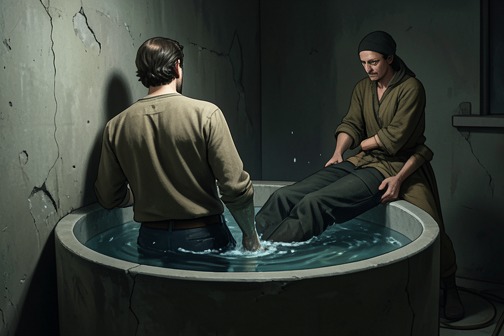
[Okada](entity:character-recall-character-okada-6667d796391a)’s rescue from the flooded well turns a seemingly final descent into survival. As the water rises around him and he loses consciousness, [Cinnamon](entity:character-recall-character-cinnamon-7ef584b9377b) carries him to safety; afterward, Nutmeg explains that the rescue came just in time and that his wounds, though requiring care, are not life-threatening.
## The Flood and Apparent Death
Okada regains awareness at the bottom of the well, in darkness with his back against the wall. [Water](entity:concept-recall-concept-water-4fc31c0064e2) surrounds him, and its level is rising. What had entered through an opening as a slow seep begins to pour in faster, climbing to his chest and then his throat. [The well](entity:object-recall-object-the-well-2ab9c5510397) that had been dry is filling with water, converting the place of Okada’s descent into an immediate threat to his life.
As the water reaches his neck, Okada believes he has only minutes before it covers his mouth and nose. He understands his predicament as the consequence of having brought the well back to life, and tries to meet the prospect of dying calmly. He closes his eyes, acknowledges his fear, and reflects that he has at least left a few things behind. When the water covers his face, he stops breathing and loses consciousness. The scene presents the rescue first as an apparent death, with survival withheld until he wakes.
## Cinnamon’s Intervention and Nutmeg’s Account
When Okada next becomes conscious, he is again sitting in darkness at the bottom of the well, but the narrative’s immediate return to that setting gives way to the fact that he has been brought out. Nutmeg tells him that Cinnamon carried him there. Her account establishes Cinnamon as the agent of the rescue, while leaving the events of the extraction themselves unexplained: Nutmeg says she was called in the middle of the night, took a taxi, and arrived without knowing what had happened beforehand. She had only seen Okada’s wet, bloodied clothes, which were thrown away.
Nutmeg reports that Cinnamon judged Okada to have been in the well too long and that the escape had been a very close call. She describes the shoulder wound as fairly deep but not affecting major blood vessels; the facial injuries are scrapes, and Cinnamon has stitched the other wounds. The information recasts the apparent drowning as a narrow survival, yet preserves a gap at its center: Okada is alive and tended, but the account does not show how Cinnamon reached or removed him from the flooded well.
## Cinnamon’s Foresight and the Limits of Prediction
Nutmeg’s explanation places the rescue within the limits of even Cinnamon’s unusual understanding. She says he thinks deeply about what may happen and considers many possibilities, yet had not imagined that water would return to the well so suddenly. Its unexpected return nearly cost Okada his life, and Nutmeg says this was the first time she had ever seen Cinnamon panic. The reversal is central to the episode: careful anticipation does not prevent disaster when the decisive change arrives outside the range of what was considered. Cinnamon’s actions nevertheless turn that failed prediction into a rescue, although the text leaves the rescue itself unseen.
## Aftermath and Narrative Significance
The rescue leaves Okada alive but temporarily dependent on others. Nutmeg tells him not to move or speak yet, and explains that Cinnamon has sewn up his wounds; he can remove the stitches himself after a few days or have a doctor do so. His wet, bloodied clothes have been discarded, a practical aftermath that also marks the break between the unseen crisis in the well and his recovery under care. Nutmeg’s account is deliberately limited: she knows that Cinnamon brought him out and that the situation was critical, but she cannot explain what happened before she received the late-night call.
The episode’s decisive turn is from presumed death to survival, while its central action remains partly hidden. The narrative follows the rising water and Okada’s expectation that he will die, then resumes with Nutmeg’s report rather than a description of the extraction. That gap gives the rescue its particular shape: its outcome is certain, its agent is identified, but the moment of deliverance is withheld. The well’s sudden return to life nearly overwhelms Okada; Cinnamon’s intervention makes survival possible, without resolving the danger that made the rescue necessary.
Event 28
Noboru Wataya’s Collapse in Nagasaki
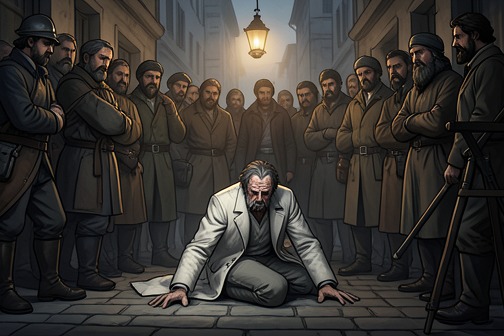
[Noboru Wataya’s Collapse in Nagasaki](entity:event-recall-event-noboru-wataya-s-collaps-b45ca334adaa) is a reported medical emergency that unsettles the boundary between [Toru Okada](entity:character-recall-character-toru-okada-2150189ce853)’s ordinary world and the other world in which he believes he attacked Noboru. The newspaper account says Noboru collapsed after a speech and was left unconscious; for Toru, the news resolves the immediate fear of being implicated in a crime while intensifying the question of whether the two events are linked. The collapse also leaves [Kumiko](entity:character-recall-character-kumiko-d41c446d91d6)’s freedom uncertain, since Toru wonders whether Noboru can still exert power over her while unconscious.
## Causes and Background
The news reaches Toru through Nutmeg, who brings a newspaper into the room and explains that [Cinnamon](entity:character-recall-character-cinnamon-7ef584b9377b) had delivered it. The report places the collapse in Nagasaki, not [Akasaka](entity:location-recall-location-akasaka-912bdb103a0a), where Toru had expected Noboru to be. That difference matters because Toru’s recent images of police and hospital scenes had seemed to point to an assault in Akasaka. The newspaper instead describes a public medical crisis, separating the event as reported in this world from the violent scene Toru associates with the other one.
According to Nutmeg’s account of the article, Noboru had delivered a speech in Nagasaki and was having dinner afterward with the organizers when he suddenly collapsed. He was taken to a nearby hospital. Doctors suspected a stroke, possibly arising from a congenital weakness in a blood vessel in his brain. The report said that he would be bedridden for some time and might not speak even if he regained consciousness. It also predicted that his political career was probably over. These details make the collapse more than a brief interruption: Noboru’s health, ability to communicate, and public future all appear imperiled, though his eventual recovery remains unknown.
## The News and Toru’s Uncertainty
Toru initially struggles to absorb the report as fact. The television images he had seen in a hotel lobby—Noboru’s office in Akasaka, police, a hospital entrance, and a reporter describing events in a tense voice—remain vivid enough to compete with Nutmeg’s newspaper. Gradually, Toru accepts that those images belonged to the other world, not to the events occurring around him now. In this world, Noboru collapsed in public from a suspected stroke; Toru had not beaten him with a baseball bat, and there was no actual assault for the police to investigate.
That distinction brings Toru considerable relief. In the other-world images, the suspected attacker looked strikingly like him, and Toru had no alibi. The report therefore removes an immediate fear of arrest: there is no crime in the account Nutmeg has brought. But relief does not settle the deeper question. Toru remains convinced that his act in the other world must have some connection to Noboru’s collapse, even though the newspaper supplies a medical explanation for what happened here.
## Consequences for Kumiko and the Story
Toru interprets the connection as an attack on something within Noboru, or on something powerfully linked to him, rather than as proof that he caused the real-world collapse. He considers the possibility that Noboru sensed what was coming, then recognizes that Noboru survived the event at the brink of death. His thoughts turn immediately to Kumiko: if Noboru remains alive, Toru fears, she may be unable to break free from his influence, which he imagines continuing to reach her from unconsciousness.
The episode thus sets two uncertainties beside one another. The public report offers a plausible cause for Noboru’s collapse and removes the prospect of a real-world crime by Toru; Toru’s own interpretation preserves a connection between the collapse and the other-world violence. Meanwhile, Noboru’s survival offers no clear resolution for Kumiko. Toru cannot determine whether his action altered Noboru’s power over her, and his thoughts fade before he can reach an answer.
## Narrative Frame and Significance
The collapse is disclosed indirectly, through Nutmeg’s reading of a newspaper report and Toru’s effort to reconcile it with images from the television news. The reader receives a concrete sequence of public events, but its significance is filtered through Toru’s uncertain understanding of the worlds he has experienced. The contrast between a suspected stroke and a remembered assault does not erase either account; instead, it leaves their relationship unresolved.
As the immediate fear of arrest gives way to relief, the episode redirects suspense from Toru’s legal exposure to Kumiko’s continued captivity and Noboru’s survival. Its ending offers no confirmation that the two worlds share a direct cause. It establishes only that Noboru is unconscious in the reported world, that Toru believes his other-world act may be connected, and that the consequences for Kumiko remain unknown.
Event 29
Kumiko’s killing of her brother
[Kumiko’s killing of her brother](entity:event-recall-event-kumiko-s-killing-of-her-d62d4e6e6c39) is presented through her final message to Toru and the aftermath he recounts to [May Kasahara](entity:character-recall-character-may-kasahara-5358fdf6516c). [Kumiko](entity:character-recall-character-kumiko-d41c446d91d6) leaves for the hospital intending to kill her brother and accept punishment; later, Toru explains that she has refused release from jail and plans to plead guilty. The episode turns a private decision into a deliberate acceptance of its legal consequences, while leaving Kumiko apart from Toru as she waits for the case to be settled.
## The Decision and Its Meaning
In her message, Kumiko says that time has run out and that a taxi is waiting to take her to the hospital. She states that she will kill her brother and take her punishment. The decision is not presented as an eruption of hatred: she says that she no longer hates him and feels calm about what she is going to do. She describes the act as being for his sake as well as her own, and as a way to give meaning to her life.
Her explanation joins an act against another person to a claim about responsibility and purpose. The message does not disclose further circumstances of the killing or explain precisely what she means by acting for her brother’s sake. Its emphasis instead falls on her stated resolve and on the punishment she expects to face.
## The Message to Toru
Kumiko’s note is sent from the computer in her brother’s office, after she has received its access password by special delivery. With the taxi waiting outside, she has little time to write. Her closing instructions are practical and intimate: she asks Toru to take good care of the cat, is glad that he has returned, and approves of the name [Mackerel](entity:character-recall-character-mackerel-8326d2e91104). She remembers the cat as a symbol of something good that grew between her and Toru and says they should not have lost him when they did.
The cat gives the message a second emotional register. Alongside the announcement of a killing and its consequences, Kumiko recalls a shared bond that survived the separation. Her goodbye ends the communication without resolving the distance between them or offering a promise of reunion.
## Imprisonment and the Pending Trial
Later, Toru tells May Kasahara that Kumiko refused to be released from jail. She believes she would be mobbed outside and prefers the quiet of confinement; she is not seeing Toru or anyone else until the matter is settled. Her refusal makes imprisonment, at least for the time being, a condition she chooses rather than an outcome she asks Toru to undo.
Toru says that Kumiko is pleading guilty and will accept the verdict, whatever it is. He expects a short trial, sometime in the spring, and believes that a suspended or otherwise light sentence is possible. Those expectations are Toru’s, not a final legal outcome: the account leaves the trial and its verdict pending.
## Consequences and Narrative Significance
The episode places Kumiko’s decision beside two forms of separation: her isolation in jail and her refusal to see Toru. Yet the message preserves a connection through the cat and through her memory of what was good in their marriage. Her stated acceptance of punishment gives the action a consequential ending without supplying a complete account of its circumstances or legal resolution.
Toru’s later conversation with May frames the aftermath as an unresolved wait. Kumiko will not see him, the trial has not yet taken place, and he expects to remain at home waiting for her. The contrast between her decisive departure for the hospital and his continuing uncertainty leaves their shared future open.
Event 30
Toru Okada’s final meeting with May Kasahara

[Toru Okada’s final meeting with May Kasahara](entity:event-recall-event-toru-okada-s-final-meet-2eff8a185411) is a winter farewell in which intimacy survives without becoming a promise of reunion. Beside a frozen pond, they speak about May’s need for time, [Kumiko](entity:character-recall-character-kumiko-d41c446d91d6)’s decision to remain in jail, and the possibility of a future child; then May takes Toru’s hand in her pocket and kisses the place where his cheek mark had been. Their parting gives bodily and seasonal form to a relationship sustained by letters and separation, while leaving both characters’ futures open.
## Setting and Circumstances
May has taken time off work specifically to see Toru on Monday morning. His intended Sunday visit was delayed by a train accident, so their meeting unfolds a day later than planned. The pond is sealed beneath a thick layer of ice scored by thousands of skate cuts, and the surrounding forest is bitterly cold. May wears a fur-lined coat and a bright-blue knitted hat topped with a pom-pom; Toru arrives in a duffle coat that is not warm enough, with a scarf pulled up to his cheeks and sneakers slipping on the hard snow.
The frozen pond also supplies a small, consequential absence: Toru cannot see the duck people May had hoped to show him. She says they have moved elsewhere since the pond froze and invites him to return in spring, when she can introduce them. The ordinary explanation of seasonal change sits beside May’s matter-of-fact confidence in these unseen beings, preserving the story’s uncertainty rather than resolving it. Her regret at missing this introduction frames the meeting as a visit to a world that Toru can glimpse but cannot fully enter.
## May’s Unsettled Future
When Toru asks whether she will stay where she is, May says she probably will, at least for now. She may eventually return to school, or she may not; she briefly mentions marriage only to dismiss it with a smile. What she wants is time to think about what to do and where to go. The answer is not a plan but a decision to defer one, and its calmness distinguishes this meeting from a conventional declaration of departure or a confident promise of return.
May asks whether Toru thought seriously about such choices when he was her age. He recalls that he assumed life would work itself out if he simply continued in the usual way, then recognizes that it did not. The exchange places her deliberate pause against his rueful hindsight: May is seventeen, with what Toru sees as ample potential for change, while Toru speaks from a life in which habitual forward motion has failed to guarantee security. Their conversation does not produce advice that settles her course; it lets her uncertainty remain hers.
## Kumiko and the Future Toru Imagines
May asks whether Kumiko has been allowed out of jail. Toru corrects the premise: Kumiko has refused release because she expects to be mobbed and prefers the quiet of confinement. She is not seeing him or anyone else until matters are settled. Her trial is expected to begin sometime in spring, and she intends to plead guilty and accept the verdict. Toru considers the possibility of a suspended sentence or, at worst, a light one, but the immediate reality is that the wife he hopes to see has chosen not to meet him.
Against this separation, Toru says he is thinking of naming a child Corsica if he and Kumiko have one. May likes the name. The remark does not establish that they will have a child; it reveals instead that Toru still imagines a shared future, even while reporting that Kumiko refuses contact and is awaiting trial. The tenderness of the possibility and the uncertainty of its fulfillment remain side by side. May’s warm response receives the hope without converting it into reassurance.
## Touch, Memory, and the Parting
Walking through the woods together, May removes her right glove and slips her hand into Toru’s pocket. The gesture recalls Kumiko, who used to do the same when she and Toru walked in winter, sharing a pocket against the cold. Toru holds May’s small hand there, warm against the chill. May observes that everyone will think they are lovers, and Toru agrees that they may. The scene acknowledges their closeness without naming it as a settled romance: the gesture carries the memory of his marriage even as it belongs to May and Toru in the present.
Late that afternoon, May accompanies Toru to the station. They take a bus into town, eat pizza near the station, and wait for a small three-car diesel train. Other people gather around the red-glowing woodstove in the waiting room, but the two remain outside on the platform. Beneath a sharply curved young winter moon, May rises onto her toes and kisses Toru on the cheek, where his mark had been. The kiss is a farewell rather than a claim: it touches a place defined by earlier bodily history while marking the end of this meeting.
May tells Toru goodbye and thanks him for coming all the way to see her. As the train arrives, she asks him to call out loudly to her and the duck people if anything ever happens to him. Toru answers with his own goodbye. The appeal binds human companionship to May’s peculiar, partly inaccessible world, offering care without pretending that she can accompany him back to his life.
## Aftermath and Significance
After the train leaves, the moon repeatedly disappears and reappears as the train rounds curves. Toru watches it when it is visible and the lights of small towns when it is not. His thoughts move from May, returning by bus to her factory in the hills, to the duck people asleep somewhere in the shadows, and finally to the world he is heading back to. The departure does not erase the connection; it places May, her imagined companions, and Toru’s ordinary destination in a single sequence of attention, each present and then receding.
Toru’s final whispered goodbye wishes that something may always watch over May. That wish gives the meeting its quiet resolution: he cannot determine where she will go, bring her back with him, or resolve [Kumiko’s imprisonment](entity:state-recall-state-kumiko-s-imprisonment-6eaac57e7b23), but he can leave her with an expression of enduring concern. The frozen pond, the absent duck people, the shared pocket, and the moon glimpsed from the departing train make separation tangible while resisting final closure. May remains in the hills, Toru returns toward his own world, and their relationship ends this visit not with certainty but with an invitation, a memory, and a call they may still answer.