
Courage: Moral vs. Physical
To Kill a MockingbirdThe redefinition of courage from physical bravery to moral endurance, as taught by Atticus and exemplified by Mrs. Dubose.
increasing Bearing strength in each event
 decreasing
Bearing strength in each eventdecreasingThe Early Misconception
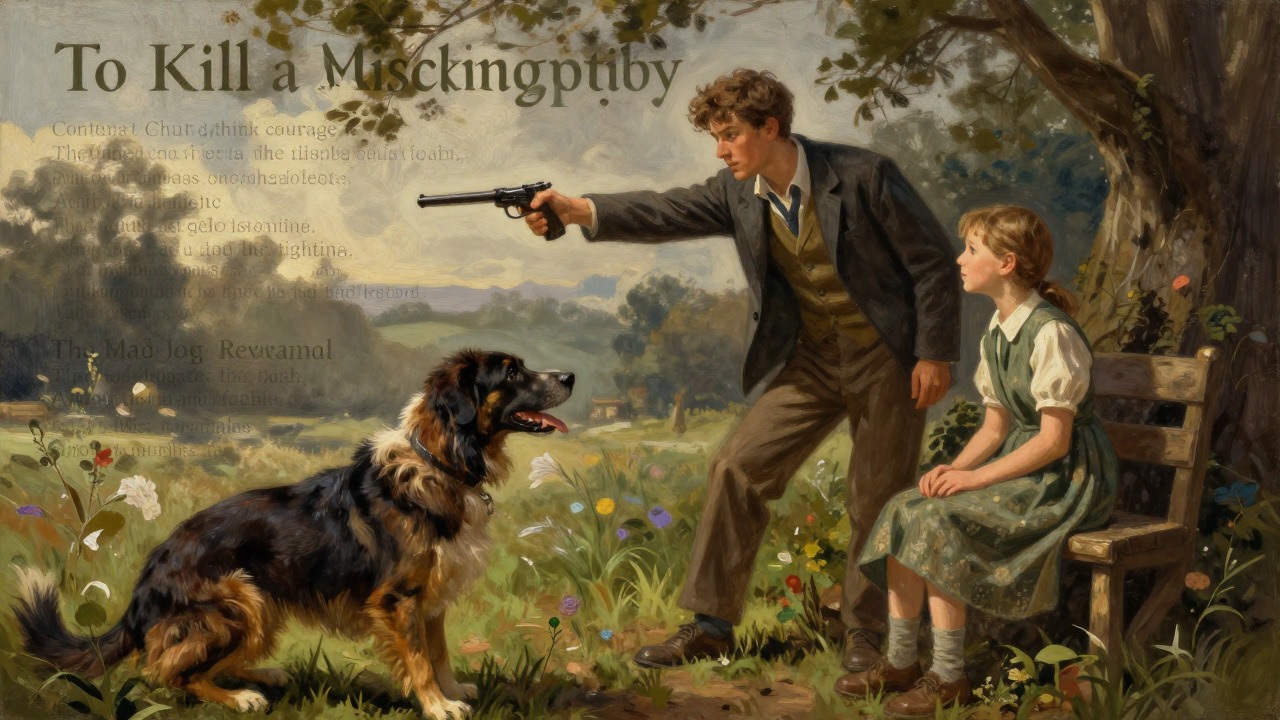
The Early Misconception
The Children's View
Jem and Scout think courage is about physical feats, like shooting a gun or fighting. They are disappointed that Atticus is old and feeble.
The Mad Dog Revelation
Atticus shoots the mad dog, and the children see his physical courage. But Miss Maudie says that he does not pride himself on it.
The Seed of Doubt
The children begin to question their definition of courage. There is more to it than just physical prowess.
Mrs. Dubose's Lesson
Mrs. Dubose's Lesson
The Explanation
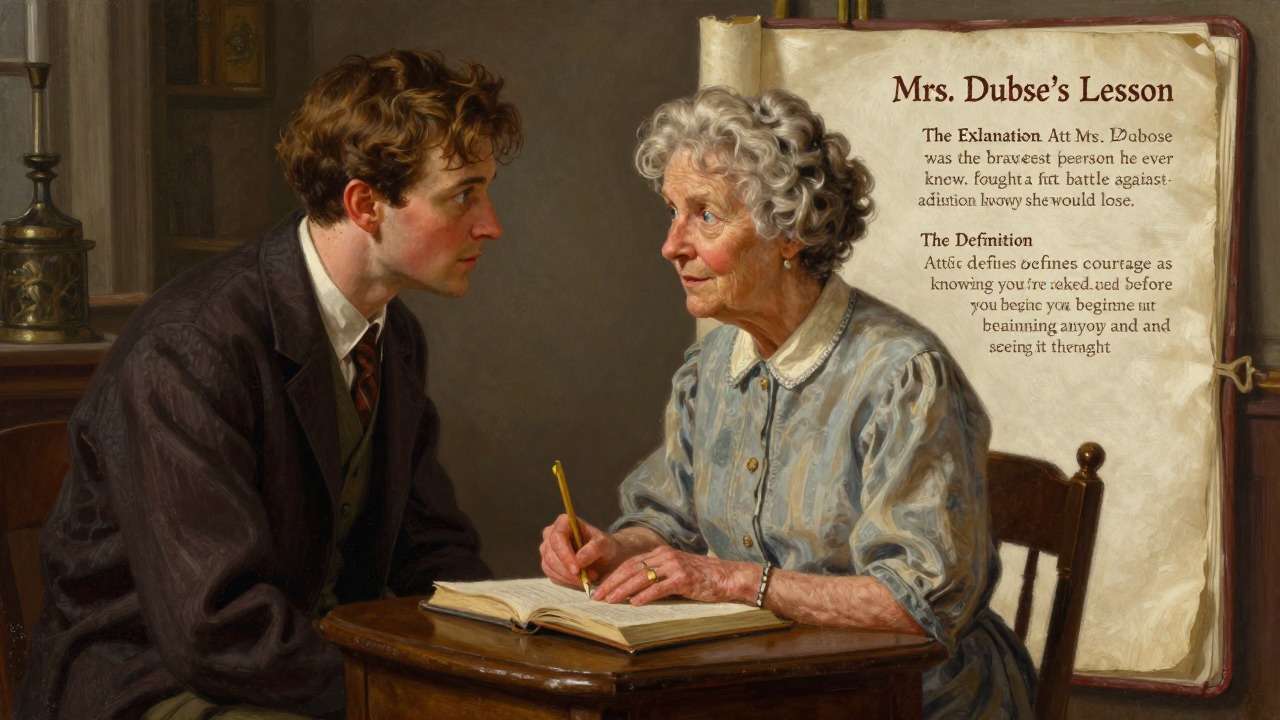
Atticus tells Jem that Mrs. Dubose was the bravest person he ever knew. She fought a battle against addiction knowing she would lose.
The Definition
Atticus defines courage as knowing you're licked before you begin but beginning anyway and seeing it through.
The Impact
Jem learns that true courage is moral, not physical. Mrs. Dubose's victory over her addiction is a greater act of courage than shooting a dog.
Atticus's Quiet Courage
Atticus's Quiet Courage
The Daily Stand
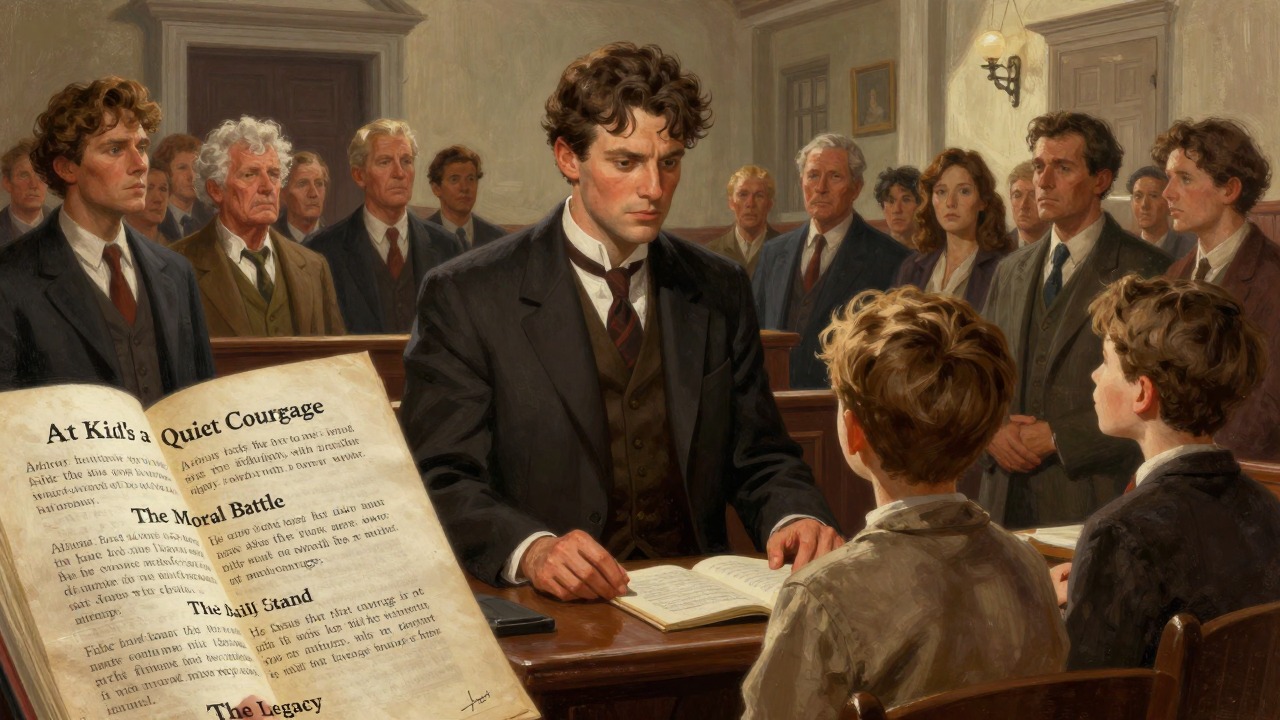
Atticus faces the town's hatred, the mob, and the courtroom with calm dignity. He does not waver.
The Moral Battle
He knows he will lose the case, but he fights anyway. He is a model of moral courage.
The Legacy
The children learn that courage is not about winning. It is about doing what is right, even when the odds are against you.
before the shooting incident
after her death
throughout the trial
