
The Limits of Justice
To Kill a MockingbirdThe failure of the legal system to deliver justice to Tom Robinson, and the lessons about systemic racism.
increasing Bearing strength in each event
 decreasing
Bearing strength in each eventdecreasingThe Ideal of Justice
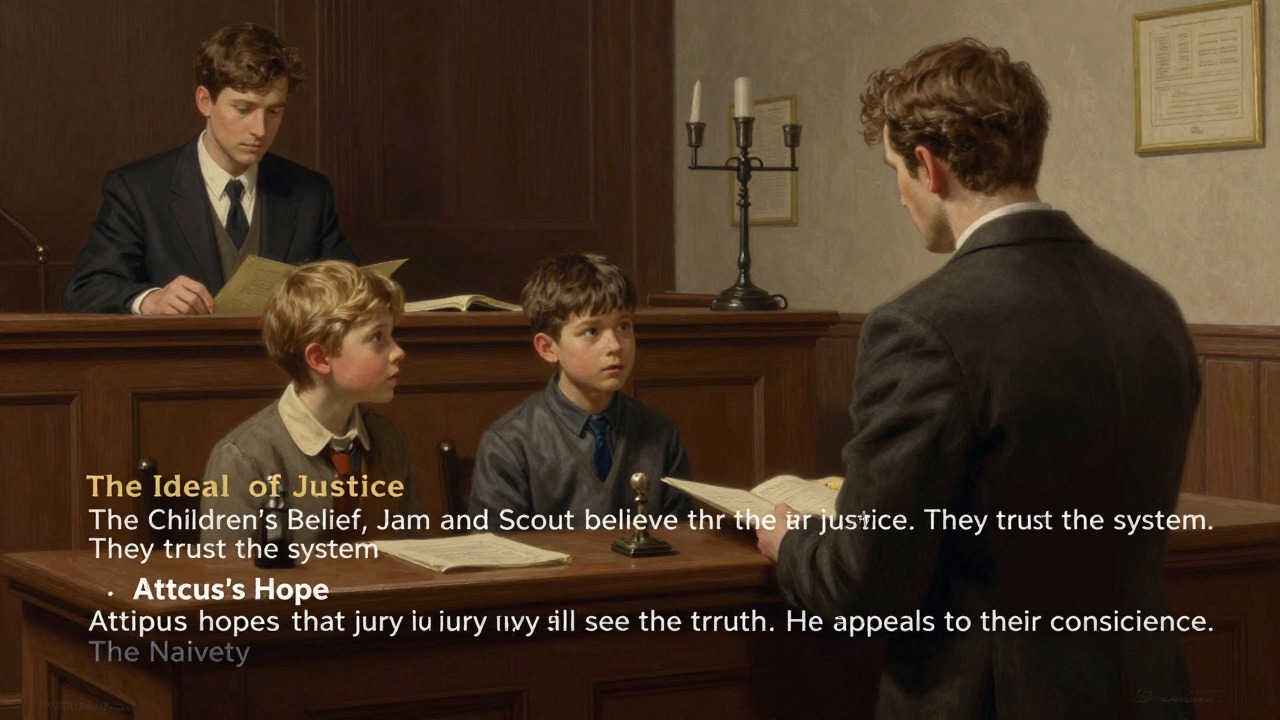
The Ideal of Justice
The Children's Belief
Jem and Scout believe that the court will deliver justice. They trust the system.
Atticus's Hope
Atticus hopes that the jury will see the truth. He appeals to their conscience.
The Naivety
The children's belief in a just outcome is naive. They are about to learn that the system is flawed.
The Verdict's Injustice
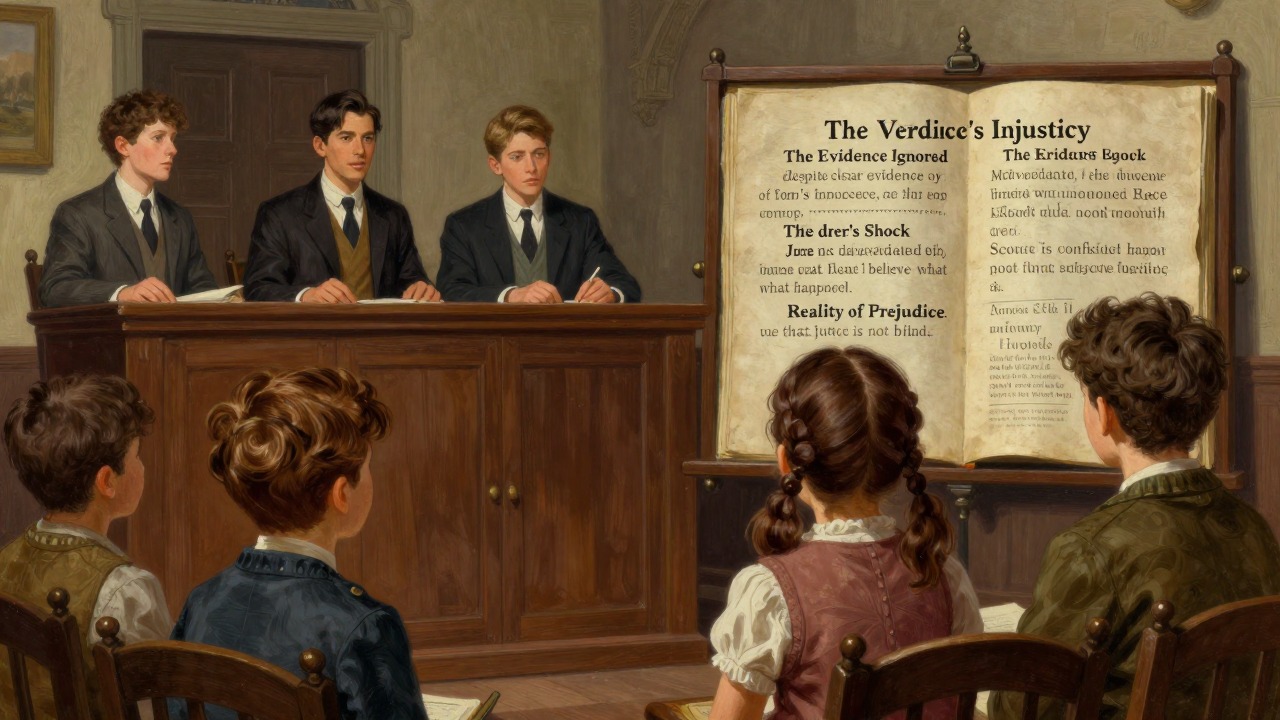
The Verdict's Injustice
The Evidence Ignored
Despite clear evidence of Tom's innocence, the jury convicts. Race trumps truth.
The Children's Shock
Jem is devastated. He cannot believe what happened. Scout is confused.
The Reality of Prejudice
The verdict shows that justice is not blind. It is influenced by racism. The children face the harsh reality.
The Aftermath of Injustice
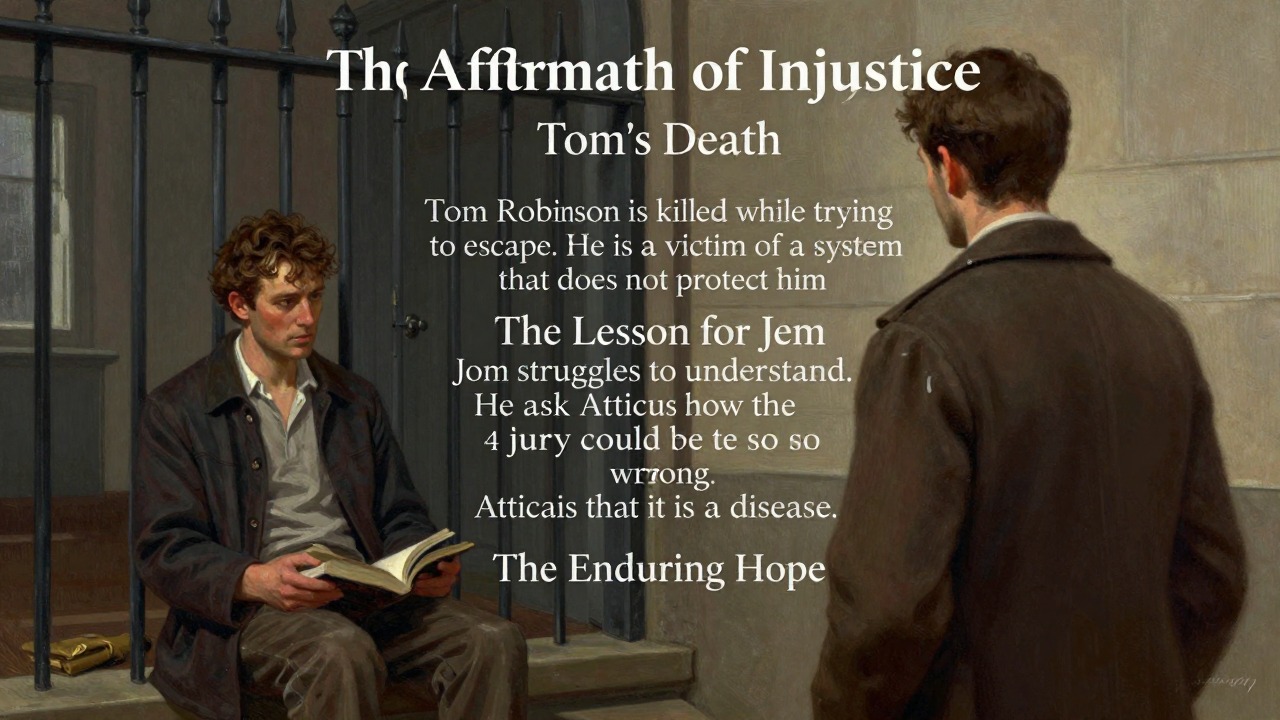
The Aftermath of Injustice
Tom's Death
Tom Robinson is killed while trying to escape prison. He is a victim of a system that does not protect him.
The Lesson for Jem
Jem struggles to understand. He asks Atticus how the jury could be so wrong. Atticus explains that it is a disease.
The Enduring Hope
Despite the injustice, Atticus does not give up. He plans an appeal. The children learn that justice is worth fighting for, even if it is not always achieved.
before the trial
during the trial
after the trial
