Miss Maudie's sunhat
Miss Maudie's sunhat is a modest, practical object that becomes a quiet emblem of its owner's character and the novel's themes of resilience, community, and loss. First seen as a working garment glistening with snow crystals while its owner wraps her azaleas against the cold, the hat later serves as a comic prop in Jem Finch's snowman, and finally survives as a frozen, suspended relic of the fire that destroys Miss Maudie's house. Through these appearances, the hat traces a trajectory from everyday use to symbolic artifact, mirroring Miss Maudie's own unflappable spirit.
Appearance and Practical Use
The sunhat is introduced on the morning of the first snowfall in Maycomb County since 1885. Miss Maudie is outside, bending over her small bushes and wrapping them in burlap bags to protect them from the freezing weather. Her old sunhat is described as glistening with snow crystals, a vivid image that combines the harshness of the cold with the warmth of her care for her plants. The hat is clearly a working garment, not a fashion accessory; it is worn for utility, to shield her face from the sun during her long hours in the garden. This practical use aligns with Miss Maudie's no-nonsense personality and her deep connection to her yard and flowers.
Comic Transformation in the Snowman
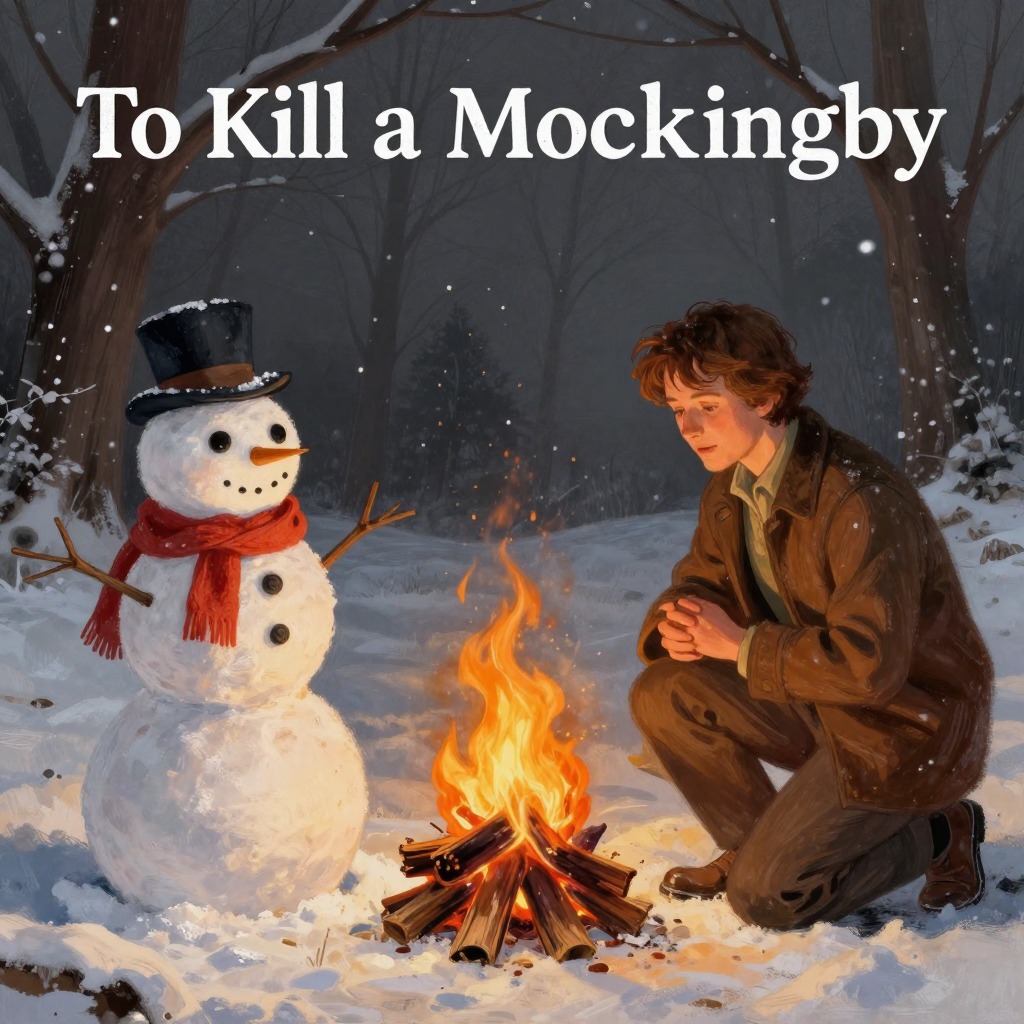
Later that same day, after Jem Finch has constructed a snowman that is a near-libelous caricature of their neighbor Mr. Avery, Atticus Finch insists the figure be disguised to avoid offending the neighbors. Jem, thinking quickly, races across the street, disappears into Miss Maudie's back yard, and returns triumphant. He sticks her sunhat on the snowman's head and jams her hedge-clippers into the crook of its arm. The transformation is immediate and comic: the snowman, which had been a recognizable portrait of Mr. Avery, now becomes an absurd hybrid figure. Miss Maudie, seeing the result from her porch, calls out, "Jem Finch, you devil, bring me back my hat, sir!" but her grin reveals that she is more amused than angry. Atticus explains to Jem that she is "really impressed with your accomplishments." The hat, in this moment, becomes a prop in a playful act of childhood creativity, and Miss Maudie's willingness to let the joke stand—even as she demands her property back—shows her good humor and her role as a tolerant, affectionate neighbor.
Destruction and Aftermath of the Fire
The sunhat's most poignant appearance comes in the aftermath of the fire that destroys Miss Maudie's house. During the blaze, the snowman—still wearing the hat—is caught in the heat. Scout watches as the "Absolute Morphodite" goes black and crumbles; Miss Maudie's sunhat settles on top of the heap. The hat, once a symbol of lively gardening and comic play, now rests on a pile of ruined snow and dirt. The next morning, when Jem and Scout go to clean up the front yard, they find the sunhat suspended in a thin layer of ice, "like a fly in amber." This image freezes the hat in a moment of loss, preserving it as a relic of the night's destruction. Yet even in this state, the hat is not merely a symbol of tragedy. When the children return it to Miss Maudie, she is standing in her back yard, gazing at her frozen, charred azaleas. She accepts the hat with characteristic resilience, joking about her plans to build a smaller house and have the finest yard in Alabama. The hat, returned to its owner, becomes part of her refusal to be defeated by loss.
Symbolic Significance
Throughout its appearances, Miss Maudie's sunhat functions as a tangible link between her identity as a gardener, her role as a neighbor and friend to the Finch children, and her response to adversity. It is an object that is both practical and symbolic: it protects her from the sun, it is borrowed for a child's prank, and it survives the fire as a marker of what was lost. Its final image—suspended in ice, then returned to its owner—captures the novel's broader themes of endurance and the way small, everyday objects can carry deep emotional weight. The hat, like Miss Maudie herself, is unpretentious, durable, and capable of weathering the harshest conditions without losing its essential character.