Jeffersonian agrarianism
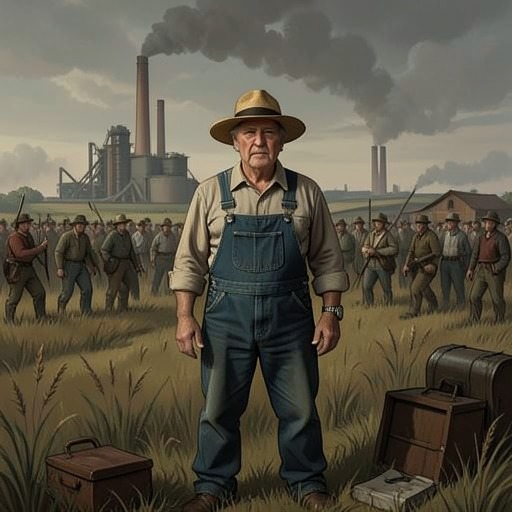
TrumanJeffersonian agrarianism joined an economic ideal to a civic one: the independent farmer, working the land, was understood to sustain both personal freedom and good citizenship. In the world that shaped Harry S. Truman, this was not an abstract doctrine. It was a practical faith in labor, land, and the standing of the people who cultivated it—and a standard against which the growth of cities, factories, and political power could be judged.
Origins in the farming community
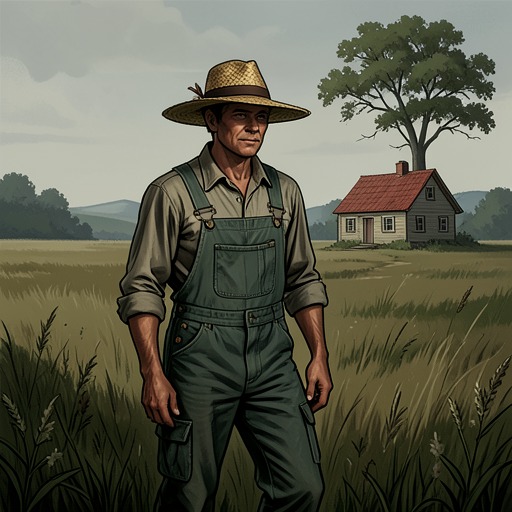
The settlers of Jackson County, Missouri, brought a sturdy rural outlook with them from Kentucky. Most were farmers, and many were Baptists and Democrats who believed, in a vein associated with Thomas Jefferson, that those who labored in the earth were God’s chosen people. Their admiration for Andrew Jackson joined this conviction to a democratic self-image: they regarded themselves as true Americans, independent and capable of standing on their own judgment. Their faith in hard work and common sense was reinforced by the hardships their families had endured in backwoods communities. The land itself gave the ideal a material foundation. Jackson County offered deep, fertile prairie soil, clear springs, rivers, pasture, and timber. Breaking the sod demanded six to eight yoke of oxen, but the dark loam beneath it could be two to six feet deep, and in river bottoms as much as twenty. Farming meant strenuous work, yet the richness of the country promised a livelihood built on the farmer’s own effort. The landscape made independence seem not merely a political principle but a daily possibility.
Truman’s statement of the ideal
When Harry S. Truman became a full partner in his father’s farm, the family printed new stationery identifying the enterprise as J. A. Truman and Son, Farmers. The partnership brought him a share of the farm’s possible earnings, but also equal responsibility for John Truman’s substantial debts. In the community’s terms, this was a moment of arrival: Vivian Truman later described being a good Missouri farmer as the finest thing that could be said of a man. Truman set out the civic argument behind that status in an October 1911 letter to Bess Wallace. He argued that a country composed of farmers made people more independent and better citizens, while factories and large cities produced depression and social classes. In his formulation, the farmer could consider himself the equal of the President, or even his superior. Agrarianism thus offered more than praise of rural work: it made independence a measure of political equality and treated the farmer as a guardian of the republic’s character.
An ideal carried into county politics
Truman’s farming identity remained useful beyond the homeplace. When the Pendergast organization sought him as a candidate for eastern judge of Jackson County, Missouri, its leaders could present him as a farmer’s son and a man able to talk farming with rural voters. The office was administrative rather than judicial, but its three judges controlled county funds, road overseers, road gangs, clerks, other employees, and county contracts. Truman’s rural reputation helped make him an attractive representative to the country vote within a political system that also distributed jobs and public work through party organization. That juxtaposition does not erase Truman’s stated belief in the farmer’s independence; it shows how the ideal traveled into politics. A candidate’s connection to farm life could establish trust among voters, while the county machinery that advanced him operated through appointments, contracts, and reciprocal support. The agrarian image therefore carried both a principle of equal civic standing and a practical political value.
Meaning and tension
Jeffersonian agrarianism in Truman’s formation rested on a contrast between the self-reliant farmer and a society organized around large cities and factories. Its promise was democratic: productive labor, rather than wealth or urban status, could ground a claim to equality. Yet the farming community behind that promise was not free of hierarchy or exclusion. The settlers’ world included enslaved people, and its inherited outlook could be narrow and intolerant. The ideal of independence was powerful, but it did not mean that independence and equal standing were extended to everyone. For Truman, the doctrine linked family labor, local identity, and political judgment. His account of farming made the farmer’s independence a model of citizenship; his later candidacy showed that the same identity could also be recruited by a political organization. That combination gives the ideal its enduring significance in his story: it was at once a sincere vision of democratic life and a language through which rural credentials acquired political force.