Work ethic
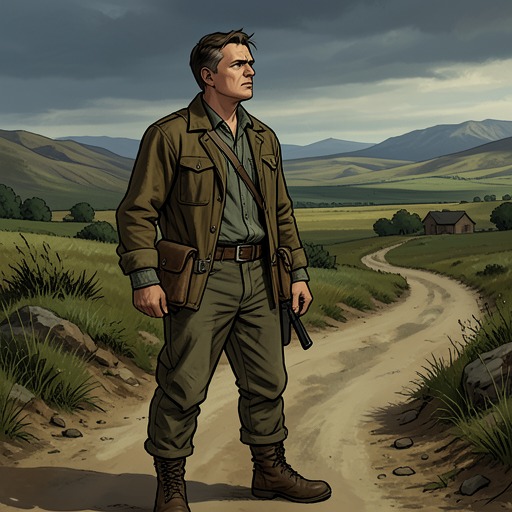
TrumanWork ethic in Harry S. Truman’s early life was both a community creed and a daily discipline: people were expected to make themselves useful, to expend effort, and to persist, even when labor did not guarantee success. On the family farm in Jackson County, Missouri, those principles took concrete form in long days, exacting instruction from John Truman, and the practical work of cultivating fields and caring for animals. The habits Harry acquired there linked effort to responsibility, while the story also makes clear that this ethic operated within a society whose accepted beliefs included racial inequality.
Rural Values and Inherited Precepts
The farming communities described in the book valued hard work as a condition of survival and self-reliance. Their confidence rested on what they called good, hard sense, and on the effort that had sustained families in difficult rural settings. They prized independence and labor on the land, while carrying other inherited convictions too: distrust of taxes and eastern ways, religious faith, and the possession of enslaved people. Their praise of work was therefore not an uncomplicated account of virtue; it belonged to a social order in which labor and inequality coexisted.
Several concise precepts expressed the ethic passed on to children: “Make yourself useful”; “Anything worthwhile required effort”; and, in John Truman’s repeated counsel, “Never, never give up.” Honesty also counted as practical discipline: telling the truth spared a person the trouble of keeping track of falsehoods. These sayings joined moral instruction to everyday efficiency. Work was not presented as a single heroic act but as a continuing obligation, while persistence was expected when the first attempt failed.
Children, in this outlook, reflected their parents. Harry’s mother repeatedly warned him to behave when he went out, and the book describes him as appearing not to question these directives. It also notes that he did not question the established inequality of Black people. The same formative world thus taught diligence and personal conduct while leaving racial assumptions unexamined—a significant limit to any idealized reading of its values.
The Farm as a School of Effort
The move from Kansas City to farm life brought a sharp change in Harry’s daily concerns. For five years, his attention centered on crops, seasons, weeds, insects, weather, livestock, equipment, and bank loans. The farm was the family’s livelihood and sole source of income; everyone worked, and idleness was frowned upon. A neighbor’s summary preserved the harder qualification behind the creed: a person could work a great deal and still fail to make it, but without working there was no chance of making it. Effort was necessary, not sufficient.
The working day began before daylight. In the spring of 1906, Harry’s first on the farm, Jackson County had unusually cold weather, mud, and heavy rain. At five in the morning, John called him downstairs and instructed him through the day, working intensely himself while warning Harry not to injure himself or lift too much. The father’s instruction combined high expectations with attention to his son’s physical limits; building up the farm and the inexperienced bank clerk was evidently part of the same concern.
Harry learned to drive an Emerson gang plow: two plows mounted on a three-wheeled frame and pulled by four horses. He had to distribute the load among the animals, and, with an early start, could plow five acres in a ten-hour day. On some mornings he walked to keep warm; even a sweater, two coats, and an overcoat could fail to keep out the cold. These details make labor a matter of endurance as well as skill, shaped by the season and the conditions of the work.
Precision, Persistence, and Practice
As spring advanced, Harry learned to operate a corn planter and wheat drill. John insisted on straight corn rows and complete sowing of the wheat, an important money crop; bare patches would bring criticism throughout the summer. His instruction was exact: adjust the planter before setting out, keep the horses under control, select an object across the field—often a quarter or half mile away—and steer toward it at a lively pace. The book presents this lesson in keeping a course toward a chosen point as a method Harry would carry into much of his life. Farm technique thus became a model of disciplined attention: prepare carefully, control what can be controlled, and maintain direction.
The demands did not end with plowing and planting. Harry hoed corn and potatoes in summer heat, made hay, doctored horses, repaired equipment, sharpened tools, and mended fences. He was better at some tasks than others; using an ax or saw left-handed exposed him to teasing. Yet he learned from observation as well as instruction, including local signs of weather, and grew knowledgeable about livestock. The farm raised registered short-horn cattle, sheep, mules, thoroughbred horses, and Hampshire hogs. Harry’s particular affection was for the hogs, which he named “Mud,” “Rats,” and “Carrie Nation.” His practical competence grew through repeated, varied responsibilities rather than through any single task.
Responsibility and the Limits of the Creed
Farm discipline also involved work that was less visible than field labor. Harry kept the books, recording which crops were sold, to whom, and for how much. The record-keeping connected physical production to the farm’s financial life: effort had to be accompanied by attention to what the work yielded and where the proceeds went. His mother could often tell where he was during the day because she heard him singing as he worked. A neighbor who helped at threshing time remembered that John Truman both urged people to move quickly and praised good work, making them want to do it well. The standard was demanding, but recognition could reinforce it.
The book’s account does not turn the ethic into a guarantee of prosperity or portray every aspect of farm life as simple. It presents work as unending and necessary, requiring perseverance and attention to priorities. In Harry’s case, the habits were taught through cold mornings, controlled teams, straight rows, animal care, repairs, and accounts. The farm made usefulness measurable in acres plowed, crops properly planted, and responsibilities completed; it also gave persistence a practical shape, without erasing either the possibility of failure or the social inequalities of the world in which the work was done.