Utopian Restrictions on Atheists
UtopiaUtopian Restrictions on Atheists define a boundary within Utopia’s broad policy of religious toleration. People who deny that the soul survives death or that Providence governs the world are not punished for holding those beliefs, but they are excluded from public office and trust, and their arguments are restricted in public. The rule protects freedom of conscience while treating certain beliefs as incompatible with full civic confidence.
Scope of the Restrictions
The restrictions concern people who hold that the soul dies with the body or that the world is governed by chance rather than by wise Providence. Utopians regard these beliefs as degrading the soul and as grounds for doubting whether a person will respect laws when private advantage invites their violation. Their concern is therefore not simply theological disagreement: they connect belief in posthumous reward and punishment to confidence in civic conduct.
The text does not make disbelief itself a punishable offense. Utopians reason that a person cannot make themselves believe whatever they choose, and they refuse to threaten people into concealing their opinions. Since compelled concealment would encourage deceit, the law withholds punishment even while imposing other limits. The distinction is deliberate: inward conviction is not coerced, but public standing and participation are regulated.
Limits on Civic and Public Participation
People who hold these views are not elevated to honors or offices and are not entrusted with public responsibilities. Utopians regard them as unfit for the obligations of a well-ordered commonwealth, on the assumption that someone who fears no consequence beyond the law may break it through fraud or force when doing so satisfies their appetites. The restriction thus makes religious and philosophical belief a qualification for civic trust.
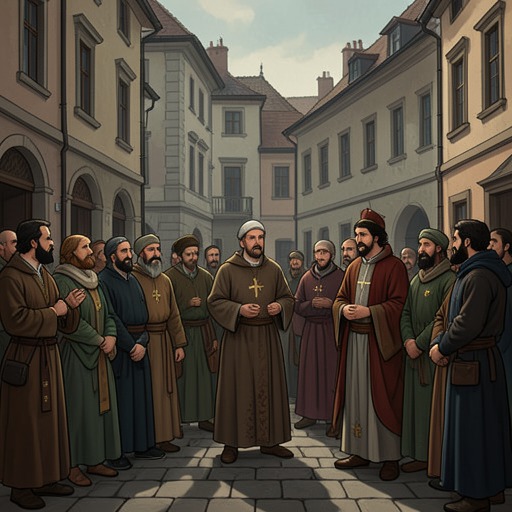
They are also prevented from disputing in defense of these opinions, especially before ordinary people. That limitation places a boundary on the public circulation of arguments the Utopians consider socially dangerous. Yet it is not an absolute ban on discussion: private disputation is allowed and even encouraged with priests and other grave men, who are expected to answer the views with reason. The policy channels disagreement into a supervised setting rather than suppressing all debate.
Toleration and Its Boundaries
Utopus established freedom of religion after finding that earlier disputes had divided the inhabitants and weakened their ability to unite. His law allowed people to follow the religion they preferred and to seek converts through argument and amicable, modest means, while prohibiting bitterness, reproach, and violence. Those who used force or inflammatory conduct against religious opponents could be condemned to banishment or slavery. Toleration therefore depends on peaceful conduct as well as on freedom of belief.
The treatment of a newly baptized man shows how the distinction works in practice. He was not punished for preferring Christian worship or condemning other rites as false; after repeatedly preaching in a heated manner, he was tried and banished for inflaming the people to sedition. The episode separates religious dissent, which the law protects, from conduct judged to threaten public order. The restrictions on atheists belong to this same broader structure: belief is not forcibly changed, but speech and civic participation remain subject to limits.
Religious Pluralism and Political Trust
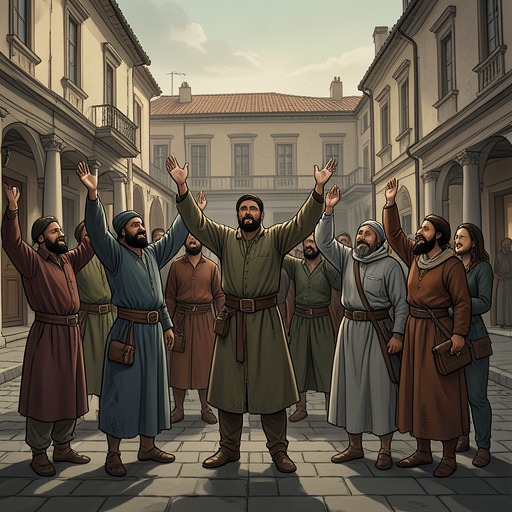
Utopian religious life includes varied forms of worship, while public temples are arranged so that different sects can share rites without contradicting their particular beliefs. The common name Mithras expresses a shared reference to divine essence, and public prayers are framed so that members of different religions can use them. This public accommodation makes the limits on atheists especially revealing: religious variety is welcomed, but denial of Providence is treated as a threat to the moral assumptions on which common life rests.
The rule consequently combines restraint with exclusion. It refuses to punish people for convictions they cannot simply alter and allows private argument intended to change their minds; at the same time, it denies them office, public trust, and unrestricted advocacy before the common people. Utopia’s toleration is broad but conditional, preserving peaceful religious difference while drawing a firm line around the beliefs its institutions regard as necessary to civic responsibility.