Utopian wartime bribery and subversion policy
UtopiaUtopian wartime bribery and subversion policy is the Utopians’ strategy for bringing wars to an end by turning an enemy’s leaders and alliances against one another rather than relying first on battle. It grows out of a stated aversion to war and a preference for victories won through understanding, but its promised rewards, inducements to betrayal, and cultivation of political conflict make that preference morally complicated.
Grounds and Purpose
The policy belongs to a military doctrine that treats war as a brutal practice and rejects glory won through it. The Utopians train men and women for military emergencies, yet say they take up arms only to defend themselves or friends against unjust aggression, or to help an oppressed people resist tyranny. When they assist a friend offensively, they require prior consultation and a finding that demands for reparation have been refused, leaving war unavoidable.
The nature of the alleged injury matters to their calculations. They regard oppression of merchants through unjust laws, or the perverse application of good laws, as a just cause for war; they consider this in some respects more serious than a public incursion because the injury is disguised as lawful conduct. By contrast, if their own trade suffers fraud without personal violence, they will withdraw from trade rather than retaliate with war: the loss, they reason, falls on public wealth they can spare and does not seriously threaten citizens’ subsistence. If one of their people is wrongfully killed or wounded, however, they demand that the responsible people be handed over; refusal leads to a declaration of war.
Within this framework, the Utopians describe their military aim as obtaining by force what timely concessions might have secured without war, or imposing such a deterrent cost that the injury will not be repeated. They say security, rather than fame or vanity, governs their plans. Their preference is for victory by dexterity and good conduct without bloodshed, which they regard as a more fitting expression of human reason than physical force.
Rewards and Induced Betrayal
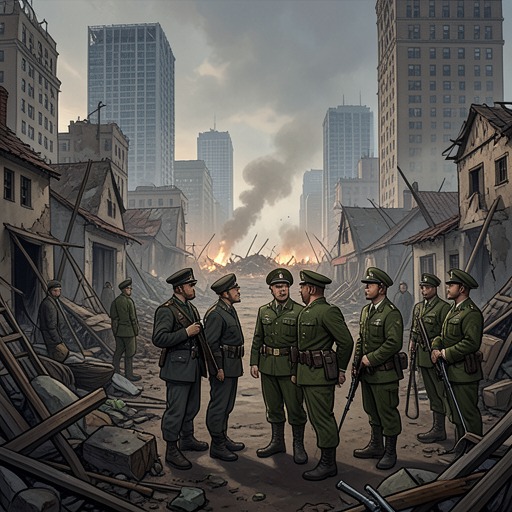
At the beginning of a war, the Utopians have sealed schedules posted secretly and simultaneously in conspicuous places throughout enemy territory. The notices offer large rewards for killing the enemy prince and smaller sums for eliminating other figures they regard as chiefly responsible for the conflict. The reward is doubled if a named target is captured alive and delivered to them instead. The policy thus combines incentives for removal with a premium on capture.
The same notices offer indemnity and rewards to the people named as targets if they will act against their own countrymen. The Utopians expect the offers to spread distrust: those identified in the schedules become suspicious of fellow citizens and wary of one another. Their account says that people in positions of trust, including princes, have sometimes been betrayed. To attract people to dangerous undertakings, the Utopians promise not only substantial gold but land revenues in friendly countries where recipients can live securely. They stress that they honor these promises scrupulously, making the inducement more credible as well as more potent.
They defend this practice as a means of ending a war that might otherwise continue at great cost, potentially without risking a decisive battle. Their stated humanitarian calculation is that the deaths of a few people they deem most guilty may prevent much larger losses among both armies. They also argue that many ordinary participants fight not by choice but under the pressure of a prince’s passions, and therefore present their strategy as sparing people on both sides. The policy’s moral claim rests on this comparison of harms; it does not remove the deliberate use of fear, self-interest, and betrayal as instruments of war.
Escalation Through Political Division
If bribery fails to achieve its purpose, the Utopians try to create divisions among their enemies. They may encourage a prince’s brother or a noble to claim the crown, turning an external conflict into a struggle over succession. If internal discord does not divide the enemy, they seek to draw neighboring powers into the war by reviving old claims against it.
They supply those neighbors generously with money but are sparing in the use of their own auxiliary troops. The account explains this restraint as care for Utopian lives: they are unwilling to exchange even one of their own people for an enemy prince. The strategy therefore shifts the costs of conflict toward political rivals and hired forces while preserving Utopian manpower. Its avowed concern for limiting deaths exists alongside a willingness to finance rivalries and encourage internal contest for power.
Limits and Moral Tensions
The wider conduct of Utopian war gives the policy a distinct contrast. They are ashamed of a bloody victory and make their greatest display of honor over success achieved without bloodshed. Yet their efforts to secure such an outcome can be severe: they offer vast incentives, seek betrayal among those closest to the enemy’s leadership, and deliberately widen domestic and international conflicts. They regard these methods as prudent and merciful because they may prevent a longer war, while others regard the corruption of an enemy as base and cruel.
Their declared restraints also shape the boundaries of their military practice. They observe truces even when provoked, avoid laying waste to enemy land or trampling crops, protect a surrendered town, and do not plunder a place taken by storm. They claim no share of the spoil, and after a war they seek reimbursement from the conquered rather than from their allies. These rules do not make the subversion policy benign; rather, they show the distinction the Utopians draw between reducing destruction and renouncing coercion. The policy’s central tension is that they pursue a less bloody victory through actions designed to make an enemy’s political and personal loyalties unsafe.