Correzione karmica
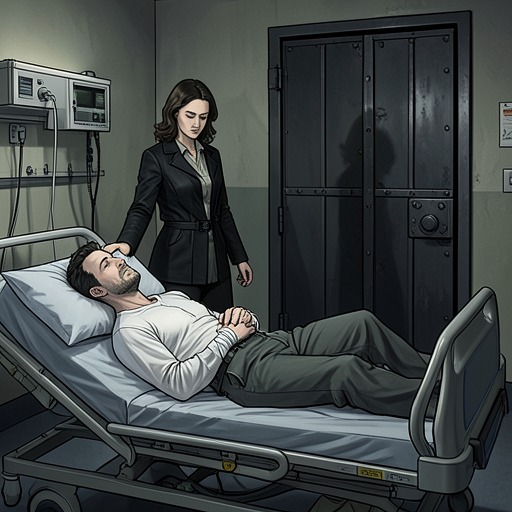
VinelandCorrezione karmica is both a service and an improvised theory of redress: a way for Takeshi Fumimota and DL to work on unresolved karmic imbalances in Shade Creek, a town populated by Thanatoids. Their practice turns suffering that ordinary channels cannot settle into cases for investigation and intervention. Its central contradiction is built into its modern method: the work concerns lives stalled in the shadow of death, yet its financial system is designed to remove death from the process.
Origins and Practice
The enterprise begins with an unexpected stop by Shade Creek, which Takeshi and DL later describe to Prairie as the start of their karmic-repair business. The town seems to offer an inexhaustible clientele: a whole city of Thanatoids, though inheritance claims and assigned rights leave most of them unable to pay much. As the case of the trampled laboratory becomes less urgent, the partners are drawn into further disputes involving expropriation and betrayal.
The cases widen beyond personal grievances. They touch land ownership and inland-water rights, gangs of thugs and extortionists, vigilantes, landlords, lawyers, and property speculators. The injustices they encounter are not safely confined to the past; they remain active in the present, alongside the prospect of continued protection from the sky promised by CAMP. Correzione karmica therefore operates where private injury meets disputes over property, authority, and who is entitled to redress.
A Business Built Around Unresolved Imbalance
DL initially doubts that karmic correction can be sold as a profession in Shade Creek. Takeshi answers by comparing it to sanitation and pest control: people pay others to undertake dirty, unpleasant labor they do not want to perform themselves. The partners, in his account, descend into the accumulated filth of time. Their work is framed as a service for those who cannot or will not face the past themselves, not as a conventional legal or financial remedy.
Takeshi also presents the service as resembling insurance, though different from it. He claims that his experience—and, more importantly, his immunity—qualifies him for the work. The claim alarms DL because it appears to concern the town’s inhabitants themselves. When she gestures toward the sleepless population outside and identifies them as ghosts, Takeshi warns that the word is taboo. He explains instead that they are victims of karmic imbalance: blows left unanswered, suffering without redemption, and guilty parties who escaped consequences. These unresolved accounts frustrate their daily excursions inward toward Death. Shade Creek serves as a kind of psychic launching point to less-charted regions where transient souls do not so much live as persist, attached to slender hopes.
Modern Correction and Its Debts
Takeshi explains the difference between traditional correction and the modern system to Ortho Bob Dulang, a returning client. Ortho Bob has sustained numerous injuries in Vietnam, carefully excluding death from his list of complaints, and ordinary channels offer him no relief. Although he says money is irrelevant and asks for revenge, he supplies six names. Takeshi has already investigated them and suggests that asking for money would be easier; the exchange shows how a client’s demand for vengeance can resist the practical forms of settlement the business offers.
Takeshi sets this problem against technological speed. A computer chip’s storage capacity doubles every eighteen months, he tells Ortho Bob, while traditional karmic correction can take centuries. In the older model, death drives the process: everything moves at the pace of birth-and-death cycles. That tempo is too slow for anyone seeking a share of a market. The modern system answers with payment deferrals and karmic mortgages, modeled on futures contracts in the stock market. By removing death from the process, it makes karmic correction available on a faster, more commercially legible schedule—but leaves the underlying imbalances to be handled through debt and deferred settlement.
Shade Creek as the Test of the Idea
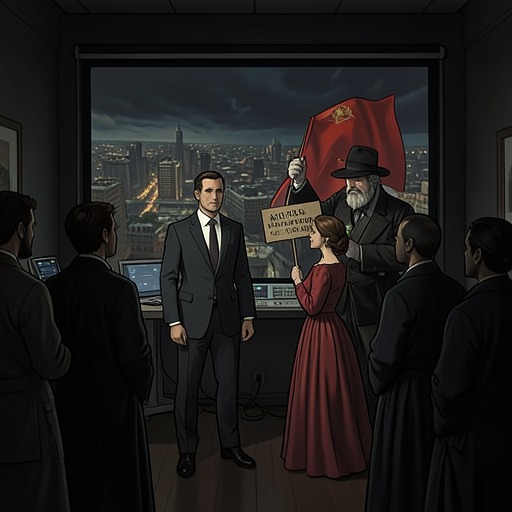
The partners’ work acquires a routine as well as a theory. They rent a meeting room at the Woodbine Motel on Saturdays and Sundays; on weekdays they meet in a back room at the Zero Inn, where anyone can enter and contribute testimony. The open arrangement suits a practice dependent on accounts of injury, betrayal, and claims that have gone unanswered. At dawn, Takeshi and DL look out over the town’s exposed streets and sleeping inhabitants, who seem startlingly close to the window. The image gives the business its peculiar setting: a public community of people suspended between ordinary life and death, and a pair of practitioners trying to make the unresolved past actionable. Correzione karmica is thus neither simple revenge nor conventional insurance; it is an attempt to organize redress in a place where the dead persist and the accounts between people remain open.