La cinepresa come arma
VinelandLa cinepresa come arma is the idea that a camera can act politically: not by physically injuring anyone, but by recording and circulating evidence that official power would prefer to keep unseen. The concept gives 24fps a working method and a theory of public truth. Its history also exposes a central risk: images made in opposition to authority can be appropriated, redirected, or turned into instruments of surveillance.
Origins and collective inheritance
The idea passes to 24fps from the remains of the Berkeley-based Kollettivo Cinematografico Nichilista “Morte ai Porci.” The group’s equipment included cameras, lights, an editing table, a hydraulic camera mount, and a refrigerator for film stock. Some former members carried elements of their manifesto into the new collective, framing the camera as a weapon and assembled images as a judgment on political violence. That uncompromising formulation met resistance within the group: members disputed how far the metaphor should be taken, even debating whether its logic implied violence against people. The disagreement shows that the slogan was not a settled doctrine but a live problem about what political filmmaking should do and what it might justify.
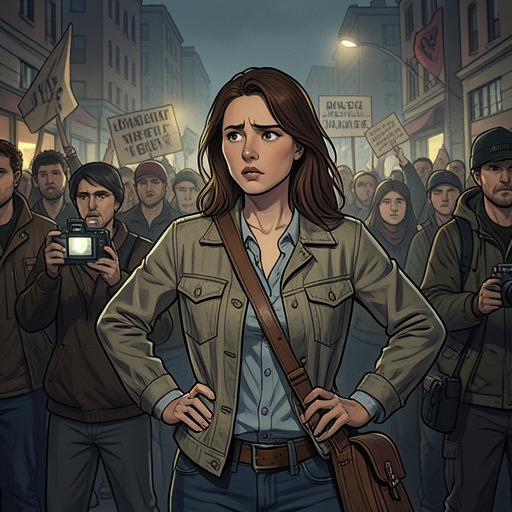
The practical inheritance was less abstract. Frenesi Gates and the Pisk sisters worked within a loose convoy of sedans, vans, an Econoline equipment truck, and a battered Sting Ray used as a fast scout car. Keeping in touch by CB radio, they sought out unrest, filmed it, and moved their documentary records to safety. The collective’s itinerant organization made recording and preservation parts of the same operation: footage had to be captured where events occurred, then carried away before it could be lost or seized.
The close-up as evidence
For 24fps, the close-up was central because a face could register what official explanations concealed. The collective believed that power left traces on the people it had bought or used, and that a viewer confronted with those faces might find it harder to accept familiar stories about war, the political system, or American freedom. The camera’s force therefore depended on attention to particular people, rather than on a general claim that an image was automatically truthful. A face, a voice, and the evasive language accompanying them could put official assurances under pressure.
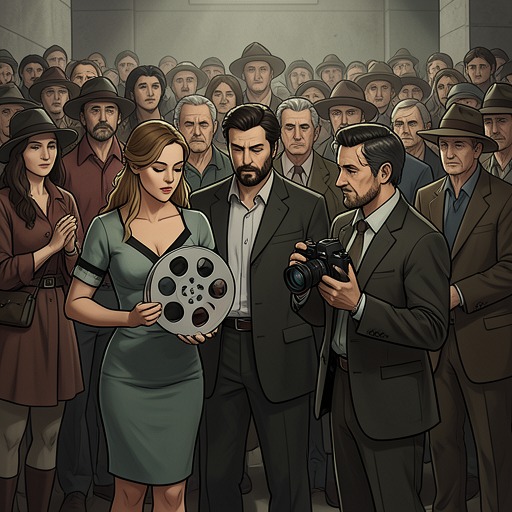
This method also distinguished the group’s work from the coverage of established television networks. At the College of the Surf, when a confrontation ended with the campus isolated and conventional media kept at a distance, 24fps had an exceptional opportunity to record events for itself. The episode sharpens the stakes of its practice: the group’s images could become a public account where other reporting was absent, but only if anyone survived and managed to get the film out. Recording was both an act of witness and a vulnerable material task.
Exposure, danger, and solidarity
The group’s awareness of risk was built into its working life. Its informal motto, attributed to Che Guevara, placed death wherever the filmmakers might choose to bear witness, not only in dramatic urban actions. Police, racist extremists, or an ordinary mistake could endanger them; over time, members also experienced crowd-control violence and accumulated pain medication. DL, responsible for security, regarded the young filmmakers as at times dangerously careless. The camera’s presence could illuminate what official outlets ignored, but it could not protect the person holding it.
The Republic of Rock and Roll episode connects filming to a wider political community. After students at the College of the Surf discovered that the institution’s educational purpose concealed a real-estate scheme, they declared independence and formed the People’s Republic of Rock and Roll. The 24fps convoy arrived after the declaration. Its cameras entered a landscape already under aerial observation, where filming could document a self-organized movement while also making that movement more visible to the state. The medium’s political value and its exposure risk arose together.
Appropriation and the limits of the metaphor
Frenesi’s relationship with Brock Vond gives the concept its sharpest reversal. She told herself that footage was for everyone and that Vond, who initially covered laboratory costs, had as much right to see it as anyone else. But he began to offer suggestions about what she should film. The exchange changed the camera’s role: material gathered under the banner of open circulation could also inform a government official’s attention and choices. The episode does not erase the footage’s documentary purpose; it shows how easily access to images can become a means of influence.
A related conflict emerges when Frenesi and Rex Snuvvle accuse Weed Atman of informing for the FBI. Howie’s response—that the group should convene and report the accusation to the collective—meets Frenesi’s anger. She argues that the People’s Republic of Rock and Roll exists as an open refuge, unwilling to exclude even hypocrites, double agents, and outcasts. In this setting, the collective’s commitment to inclusion complicates its ability to respond to suspected betrayal. The camera’s political promise depends on solidarity and shared judgment, yet the movement’s rules can make those conditions difficult to secure.
Significance
La cinepresa come arma is therefore less a claim that filming defeats power than a way to name a contested struggle over visibility. 24fps uses close-ups, recorded speech, mobile crews, and the preservation of film to challenge accounts that leave people and events out of view. The same records can travel beyond their makers’ control, while the act of making them exposes the crew and the community being filmed. Across the collective’s work, the camera is at once witness, political instrument, and vulnerable object: its force depends on who controls the images, where they circulate, and whether they can be carried safely into public view.