Truth in cinema: 24 frames per second
VinelandTruth in cinema: 24 frames per second is the belief that the camera can make reality more fully visible, a belief that first sustains Frenesi Gates and then collapses under the evidence of political violence. Its movement is not simply from faith to disbelief: the camera continues to record, but its images cannot undo what has happened or guarantee that seeing amounts to understanding.
The promise of the frame
When a gun enters the situation, Frenesi’s first response is to resist the simplified terms Brock Vond has imposed. She tells herself that the gun might open onto a more intense kind of truth, the truth at 24 frames per second in which she still believes. In her imagined sequence, the object is illuminated, its reflections controlled, and the frame first tightened around it, then pulled back to take in the whole gathering. The movement promises that a close examination of the gun can lead outward, from a particular object to the larger, invisible conditions around it.
That imagined camera movement also exposes the limit of Frenesi’s faith. She hopes that the image will make hidden presences and underlying terms legible, as if careful framing could bring the whole reality of a situation into view. But the gun is not only an image to be examined: it belongs to a material contest of power. The distinction between what the camera can show and what the people holding power can do becomes decisive. Frenesi’s cinematic ideal cannot itself change the balance between her and Brock Vond.
Filming Weed Atman
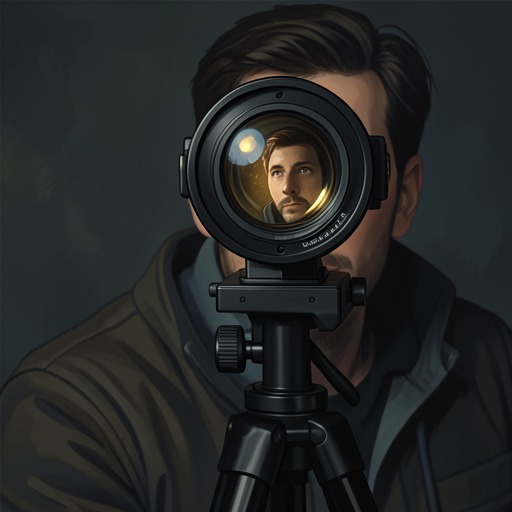
The contrast becomes concrete in the filming session with Weed Atman at Rex’s house near the beach. The operation has the practical apparatus of a small production: Sledge Poteet holds a giraffe boom and gives Krishna a cable, Howie tends the lights and recharges Frenesi’s camera, and Ditzah Pisk attends to the remaining arrangements. Frenesi crouches beside Weed and presents the forum as a place where he can explain what happened and how it might have happened. She reassures him that nobody is judging him and that the camera is only a machine, an assurance meant to make speaking possible.
The scene repeatedly fails to become the testimony Frenesi hopes to record. Howie switches on the lights and Frenesi begins filming; Weed seems ready to speak, then changes his mind, and the lights go out again. The start-and-stop rhythm makes the camera’s promise visible as a procedure, not a guarantee. Lights, camera, and an appeal to cinematic sincerity can arrange the conditions for a statement, but they cannot compel one or establish that the resulting image will equal the truth. When Jinx arrives with Penny and Moe, the session is interrupted; Moe heads for the television, while Penny turns toward the kitchen and stops beside the Indian sofa. The filming scene remains precarious, exposed to the ordinary movements and objects of the room rather than sealed off as a self-sufficient world of images.
The camera and the weapons
Later, speaking with DL, Frenesi revises the meaning of the work she and her companions once believed in. The Pisk sisters’ judgment now seems right to her: they had been like children making war with toy weapons, mistaking cameras for cannons and imagining that film gave them power of that order. Her question is no longer whether a camera can produce a persuasive image, but what difference their images made when actual guns appeared. She says that Weed was not the only person killed, that others on campus were rumored to have met the same fate, and that the FBI had covered it up. She cannot identify whom their filming saved.
This is a recognition of a mismatch between representation and force, not proof that recording is meaningless in every circumstance. Frenesi’s own accusation is more specific: their faith in the camera had allowed them to lose contact with reality and remain in a dream world. Once guns determined events, what she calls their carefully made cinematic gestures did not count for enough. The earlier reassurance that the camera was only a machine acquires a harder edge: a camera can be used to invite testimony, but it is neither a weapon equal to a gun nor protection against one.
Prairie sees her mother
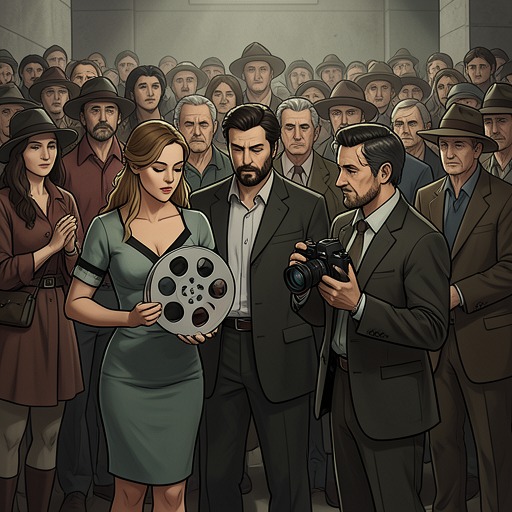
Prairie Wheeler’s encounter with the filmed material gives the concept its most intimate consequence. After watching Frenesi’s footage and other sequences, she remembers a scene outside the filmic space in which her mother holds a thousand-watt Mickey-Mole spotlight beside the body of a man who loved her. Frenesi is illuminating the dead man, the person who has just killed him, and the murder weapon that Frenesi herself had provided. Prairie compares her to the Statue of Liberty, a bearer of light: in this scene, illumination does not conceal the killing but makes its facts starkly visible.
For Prairie, this image reveals her mother more precisely and less mercifully than the other footage. The camera’s promise of truth has changed hands: Prairie is not simply accepting a film as transparent evidence but judging what she has seen against the scene it records. In the kitchen at Ditzah’s, while the others eat reheated food and drink coffee, Prairie feels like a baseball that has been expertly thrown about for hours—still alive and resilient, yet aware of the force exerted on her. Her response makes the act of viewing consequential without turning it into a neat resolution. DL tries to meet her eyes, Prairie gets up to go to the bathroom, and the recognition remains present in the space between them.
What the ideal can and cannot do
Across these moments, truth in cinema changes from an ideal of intensified vision into a measure of the distance between an image and the forces shaping the world it depicts. Frenesi first imagines that framing the gun can lead from visible detail to invisible causes; later she sees the camera as a toy weapon beside real guns. Prairie’s view of the spotlight supplies a different, more terrible kind of clarity: the light exposes the murder and Frenesi’s place in its circumstances, but exposure does not reverse them.
The concept therefore joins two questions that the scenes refuse to separate: what an image makes visible, and what visibility can accomplish. A recorded or illuminated scene may disclose a truth that was previously obscured, yet the act of seeing does not itself save Weed, restore power to Frenesi, or spare Prairie the knowledge of what her mother did. The camera remains capable of showing; its failure lies in the hope that showing, by itself, can prevail.