Erasure, identity, and life and death in electronic records
VinelandErasure, identity, and life and death in electronic records names a recurring idea in Vineland: a person’s safety and public existence can depend on whether a computer recognizes a record. When former federal collaborators disappear from an archive, the people themselves may be alive, dead, or newly exposed to danger; the screen cannot tell them which. Later, Prairie Wheeler finds that her mother remains retrievable in a sprawling dossier. The contrast makes electronic absence more than a technical failure: it is a power to alter who can be found, protected, remembered, or treated as though they still exist.
The disappearance of the collaborators
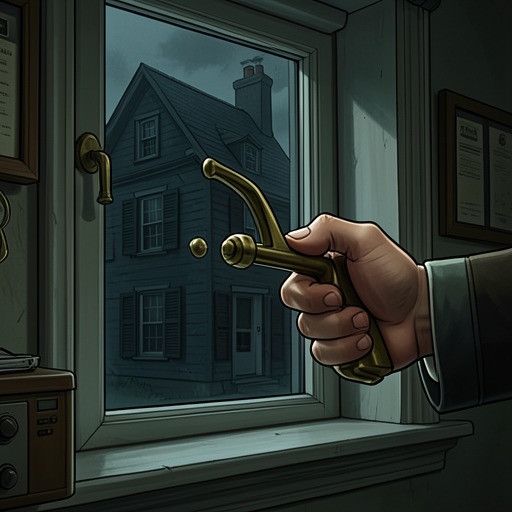
The idea first takes shape when Flash tells Frenesi Gates that Grace, a woman he knows at the terminals, showed him something alarming: many people they knew were no longer in the computer. Flash brings home a hastily compiled list of these “outside collaborators,” a label that gathers people whose pasts and vulnerabilities vary widely. It includes former prisoners from Long Bihn, people who had worked around grand juries or collected debts, high-end prostitutes persuaded to help entrap clients, informants, and people whose offenses ranged from bad checks to drug use and sexual misconduct. They had different reasons for seeking protection under federal law, but their names had been placed in a system that appeared to promise shelter.
At dinner, Flash explains how he confirmed the disappearance. He typed one name after another; each search returned the equivalent of no record in the archive. To him, the result is conclusive enough to call the situation extraordinarily serious. Yet the information proves only that the system no longer recognizes those names. It does not establish whether the people are dead, hiding from someone who wants them dead, or simply absent from the database. Frenesi and Flash therefore confront a gap between a machine’s answer and the human reality that answer is supposed to represent.
The list also makes clear that protection was never a simple guarantee. The collaborators had been encouraged to believe that federal shelter would keep them safe, but now their status is uncertain precisely because the record has vanished. Frenesi and Flash consider whether people missing from the archive might have died or gone into hiding, but do not voice that possibility in front of their son. Instead, Frenesi offers another possibility: that they have gone the other way, resurfacing and re-entering the world. Justin suggests that funding cuts may have removed them from the program. His guess links the disappearance to the public debate over spending between President Reagan and Congress, but it cannot resolve what has happened to any particular person.
Records as instruments of power
Frenesi recognizes a familiar political mechanism behind the possible withdrawal of protection. Informants, spies, and special collaborators can be set against one another, made to compete for a shrinking share of available funds, and left to understand that the list of names is negotiable. The Department of Justice’s continuing contact with what is still called organized crime makes that possibility especially chilling. In this arrangement, a database is not a neutral ledger: the records can be treated as bargaining pieces, and people dependent on them can be made insecure without an openly announced decision.
The apparent scale of the removals unsettles Flash. He calls the list a massacre, a word that registers the human stakes of an operation carried out through missing entries rather than a visible attack. The contrast matters: someone can be placed at risk by a string of keystrokes, with no confrontation and no need for the people affected to know what has changed. The computer’s impersonal output conceals the choices and institutional relations that give the output force.
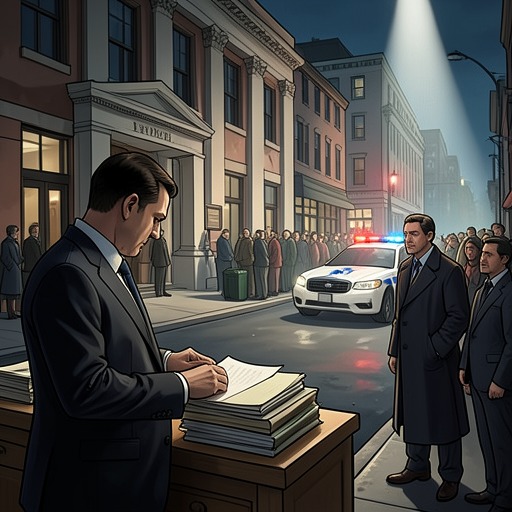
That impersonal power becomes immediate when Frenesi tries to cash a check. After a liquor store refuses it, she goes to another supermarket and waits while a manager makes a phone call. Looking at the dark shine of the shop windows, she understands that she and Flash may no longer be protected and could be abandoned to ordinary cause and effect. For years they have lived in a kind of timeless refuge; now, for reasons she cannot see, they may be returned to the exposed world and to matters left unresolved. The manager comes back with the check and explains that it has been blocked. When Frenesi points out that the banks are closed, he answers that the computer never sleeps: it stays open around the clock. The system’s continuous availability turns administrative status into a consequence that can arrive at any hour.
Binary lives and the computer of God
Frenesi’s insight at the supermarket expands from her own precariousness into a meditation on how computers represent human beings. If information about a person can be encoded as ones and zeros, she wonders what kind of being might be represented by an immense sequence of life-and-death entries. Such a being would require many human lives and deaths merely to form one letter of its name, and perhaps an enormous portion of world history for its full dossier. In her private hymnlike reflection, people become figures in God’s computer: the divine observer registers whether they are alive or dead, while their struggles, labor, and suffering may pass unnoticed.
The image makes two scales collide. At the human scale, a missing name can threaten an individual’s refuge and reactivate dangers that had seemed safely past. At the scale of Frenesi’s metaphor, lives and deaths are themselves entries in a vast record, their meaning reduced to what the system can register. The computer is at once the mundane authority that blocks her check and the model through which she imagines a remote, almost cosmic indifference. Her reflection does not settle whether electronic representation can contain a life; it makes the gap between the record and the person impossible to ignore.
Prairie and the recoverable archive
Prairie Wheeler later approaches the other side of that gap through the dossier on Frenesi Gates. Compiled over many years from scattered sources, the file resembles an eccentric scrapbook as much as a single official account. It combines stamped and numbered documents, Federal Bureau of Investigation memoranda marked in felt pen, clippings from underground newspapers that have ceased publishing, transcripts of Frenesi’s radio interviews, and material connected to 24fps, the filmmaking collective Frenesi had worked with alongside DL.
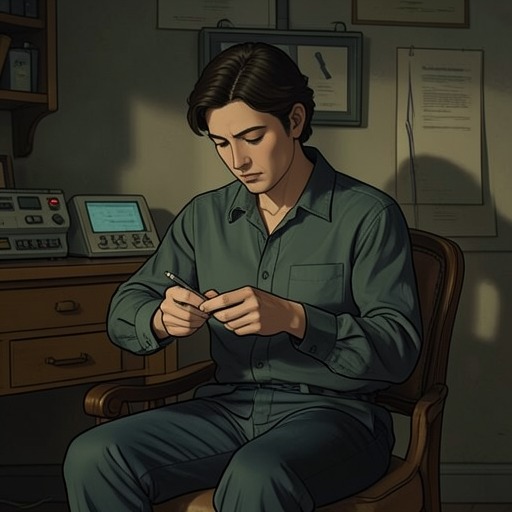
As Prairie moves through the dossier, she imagines entering a haunted house, guided from document to document by the faint presence of her mother. She already knows that even the spaces between characters matter to computers, and wonders whether a ghost should be taken as literally as a digital record. Could such a presence think independently, or does it respond to what the living seek from it: grief, nostalgia, or justice denied? The question shifts the archive from a storehouse of facts into a scene of reading, where the recovered record both supplies evidence and leaves the nature of the person it represents unsettled.
The dossier can also call up personal and published photographs. Prairie sees Frenesi carrying a camera at demonstrations, being arrested, and appearing beside recognizable figures from the Movement. In one image, Frenesi looks meaningfully toward a riot-equipped police officer beside a wire fence, while her hand seems to caress the barrel of an assault rifle. For Prairie, the photographs make a mother she has not known present in concrete, sometimes startling detail; at the same time, each image remains an incomplete trace, shaped by whoever took it and whatever the archive retained.
The computer’s gentle goodnight to Prairie, followed by the narration’s image of the two women still walking together in the archive’s depths, gives preservation a counterweight to disappearance. Frenesi and DL remain retrievable there, their friendship and shared history held among scattered ones and zeros. The archive can erase people from a list, but it can also preserve traces that a daughter can find and interpret. That double capacity is the concept’s central tension: electronic records do not simply reflect whether people exist. Their omissions can expose lives to danger, while their stored fragments can keep a past available to the living.