War on Drugs
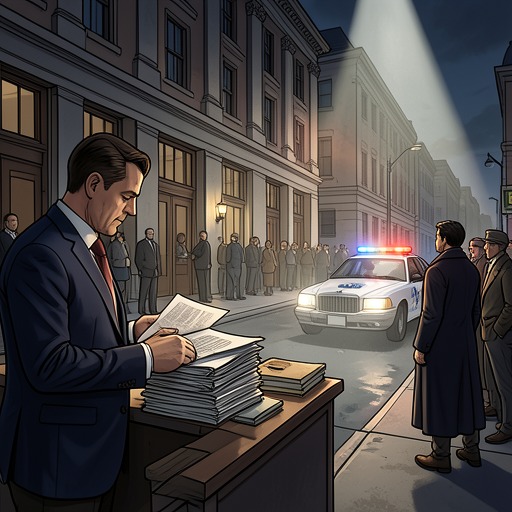
VinelandThe War on Drugs in Vineland is not confined to stopping drug sales: it supplies money, procedures, and public explanations for a widening apparatus of surveillance and force. Its reach connects informant payments and political policing to raids on dissident communities, media campaigns against cannabis, and the seizure of Zoyd Wheeler’s home. The campaign’s apparent simplicity—drugs as a public enemy—sits beside a more troubling pattern: anti-drug authority can serve objectives that extend well beyond drugs.
Funding, Informants, and Everyday Complicity
The campaign first appears in ordinary dealings between federal agents and people living on the margins of the drug economy. When Hector Zuñiga explains that his business concerns narcotics, Van Meter mistakes him for a source of supply and welcomes him as a potential connection. Hector instead offers money for useful information, making the informant system tangible: a new five-dollar bill is enough to buy a small quantity of marijuana, while accurate tips may bring further payment and lies earn nothing. The exchange turns surveillance into a local transaction, conducted amid the same drug culture the agents are meant to police.
The scale behind that transaction is much larger. Federal anti-narcotics agents are unusually numerous in the coastal communities, where a publicly funded pilot program distributes substantial sums among drug-enforcement bodies at different levels of government. Zoyd refuses to pocket informant money himself, though he eats food and smokes marijuana bought with it. His distinction is both comic and revealing: he rejects one form of personal payment while remaining materially entangled in the arrangement. He sometimes considers reporting dishonest dealers, but can always find a reason not to—among them that a dealer might be a desperate decent person, a distant cousin, or a dangerous killer. Hector’s frustration with Zoyd exposes the system’s dependence on cooperation that is never as clean or reliable as its rules imply.
The campaign also touches the family history of Zoyd’s former wife, Frenesi Gates. Hector says that the authorities had previously kept her under witness protection, describing a program administered by police officials and funded separately from his current work. The disclosure links official protection and drug enforcement through Hector’s continuing access to Frenesi’s story. Later, he tries to recruit her to direct a government-backed anti-drug film, turning her experience into material for a public message as well as a proposed route back into filmmaking.
Political Policing and the Fragility of Collective Action
The novel places drug enforcement alongside the suppression of political movements. The 24fps film collective grew out of a Berkeley group that imagined the camera as a weapon against fascism. Its members filmed events that official television networks would not cover, accepting the risks of police batons, water cannons, and tear gas. At the College of the Surf in Trasero County, the crew became trapped on a campus sealed off by blocked roads and waterways, isolated phones, and distant media. The threat surrounding this protest is not presented as a narcotics operation, but it establishes the atmosphere in which state power can close around a dissenting community while controlling what outsiders see.
The People’s Republic of Rock and Roll, or PR3, emerges from the students’ discovery that the College of the Surf was a property-development scheme disguised as a public gift. They declare independence after concluding that the state and the courts will not treat them fairly. The 24fps crew arrives the day after the declaration, filming a community under helicopter observation. Frenesi passes copies of her footage to Brock Vond, initially telling herself that the material is public and that he is entitled to see it like anyone else. Once Vond begins suggesting what she should film, however, the exchange becomes a means of drawing him further into her life and her work.
That vulnerability becomes more dangerous when Frenesi and Rex tell Howie that Weed Atman is an FBI informant. They say that Weed himself disclosed his role and accuse him of steering the collective toward a trap. Howie urges them to report the matter to the group, but Frenesi and Rex reject the idea that the danger can be handled as a minor internal dispute. Frenesi argues that PR3 exists as an open refuge for people whom other institutions reject, and that excluding members would betray its purpose. The scene makes the movement’s openness both an ethical commitment and a weakness that infiltration can exploit; it does not reduce the conflict to a simple claim that every internal division was orchestrated by anti-drug agents.
Enforcement, Detention, and Official Explanations
The danger of state action extends beyond arrests. After the College of the Surf confrontation, dozens are injured and hundreds detained; no deaths are officially reported, while several people are missing. The account leaves the disappearance unresolved. Brock Vond publicly suggests that those missing have gone underground, dressing the absence in a language that obscures rather than clarifies their fate. The episode’s uncertainty matters: official records and public statements can make an alarming outcome appear ordinary without dispelling the suspicion that something worse has happened.
DL names the feared possibility of a final roundup: people taken from their homes and confined in a camp where the authorities would classify them as livestock rather than human beings. She tells Prairie that Prairie’s mother was held in a prison of this kind and urges her to learn about mass-detention preparations associated with the Nixon and Reagan administrations. This warning broadens the novel’s account of coercive power beyond drug cases. The War on Drugs belongs to a political landscape in which detention and policing can be imagined, prepared, and normalized under different public rationales.
Raids, Cannabis Eradication, and the Home as Target
The later campaign is visible in the occupation of Zoyd’s neighborhood. Vond’s troops terrorize residents for weeks, march through the dirt roads, conduct public strip searches, kill animals, and pour herbicide into wells that could not be used to irrigate marijuana crops. The operation’s excesses make a domestic rural community resemble an invaded territory. When most of the troops leave, police remain to guard Zoyd’s house, keeping the pressure in place even after the large-scale deployment has moved on.
Cannabis eradication also becomes a televised performance. During the CAMP raids, smoke rises over Vineland’s green hills, while Sheriff Willis Chunko appears on the evening news cutting through mature cannabis with his gold-handled chainsaw. Zoyd is warned to stay away from Holytail, but continues helping move the harvest before the sheriff can destroy it. At night, he drives a battered Power Wagon along rough logging roads, trying to get crops to safety before encountering law enforcement. The contrast is sharp: the campaign presents eradication as a cheerful public spectacle, while the people caught in its reach face dangerous, improvised choices.
The state’s pressure reaches the structure Zoyd has built over years: a home expanded piece by piece from a used trailer and a well, with a room for Prairie, a kitchen, a bathroom, and a treehouse joined to the attic by a rope bridge. A new civil-forfeiture law enables the government to bring a case against the house in civil court. Zoyd later visits it furtively, listening from outside to his television while federal dogs patrol behind a wire fence. His attachment changes as the house becomes threatened: what he once regarded as a collection of repairs to be made eventually now feels like a living thing whose safety he fears for.
Television, Persuasion, and the Campaign’s Meaning
The campaign also works through stories. Hector’s proposed film about Frenesi’s life in hiding is meant to condemn drugs and inspire others, but Frenesi recognizes the familiar machinery of police television: dramas that recast agents of repression as humane professionals simply doing their jobs. She rejects Hector’s appeal to return to cinema, distinguishing his government-backed production from the filmmaking she values. His proposal shows how an anti-drug message can recruit personal history and entertainment conventions to make official authority emotionally acceptable.
The novel’s account of the War on Drugs therefore moves between material force and its polished public image. Informant money, raids, detention, and forfeiture are not interchangeable actions, but together they reveal how drug enforcement can penetrate political organizations, neighborhoods, and intimate lives. The campaign’s central irony is that it claims to protect the public while repeatedly narrowing the space in which people can organize, remain at home, or tell their own stories.