Matara
WatchmenMatara is a tiny farming village a few miles from the Carmeer Valley, but during the fighting it becomes an essential refuge for the wounded. Its only two-story building, the town hall, is converted into an emergency hospital, and the village’s ordinary civic space is transformed into a makeshift medical center where the consequences of battle can no longer be kept at a distance.
Setting and Transformation
Matara is introduced under a steadily worsening rain. After a brief shower at sunset, clouds gather through the night, and by dawn rain is falling continuously as the Mobile Force moves into the rolling open countryside. The weather turns the village’s surroundings into a muddy, rain-spattered landscape, intensifying the sense that the fighting has overwhelmed the normal boundaries of civilian life.
The town hall, the only two-story building in Matara, serves as the emergency hospital. Terrans, Komani, and the few Shinarians wounded in the battle are brought there for treatment. The building therefore becomes more than a local administrative structure: it is a shared shelter for people from opposing sides and for members of the population caught between them.
The Hospital and Its Burden
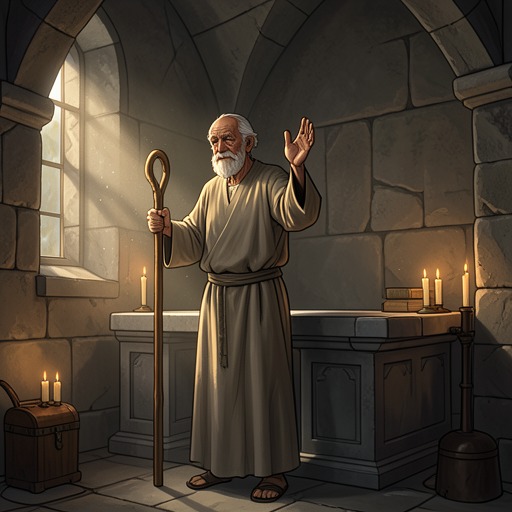
Sittas stands at an upper-floor window after spending an entire night dressing wounds and blessing the dead. From there he watches the maimed and shattered continue to arrive through the wet morning. The hospital is not described as a controlled institution with adequate resources, but as a makeshift infirmary assembled under pressure, drawing on every doctor and every available boy and woman from miles around.
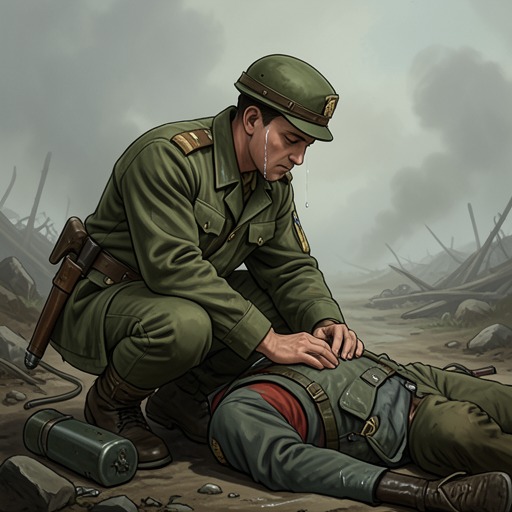
The repeated arrival of casualties gives Matara a rhythm defined by exhaustion and recurrence. The wounded do not arrive as a single completed aftermath; they continue to be carried in, extending the battle into the village and into the lives of its inhabitants. Through the hospital, Matara becomes a place of witnessing, where military action is measured in damaged bodies, sleepless labor, and the slow accumulation of grief.
Communal Response
Sittas asks the mayor to find homes for wounded foreigners. The mayor initially doubts that the villagers will agree to bring strangers into their houses, but promises to tell them that Sittas has made the request. The response is unexpectedly generous: nearly every family in the tiny village comes to the town square and takes at least one of the wounded men lying on the worn paving stones. Before nightfall, all the casualties are safely indoors.
This response changes Matara from a temporary treatment site into a community organized around collective responsibility. The villagers’ action crosses military and ethnic divisions that the war has made violent. Their willingness to receive foreign wounded into private homes also explains why the mayor tells Sittas that the people revere him: his authority rests not on command, but on the trust that enables him to mobilize care.
Return to Matara
Later, Matara remains closely associated with the hospital and with Sittas’s continuing relief work. After a solid week spent pleading and cajoling with rebel leaders at the Capital City, Sittas is already bone-weary when he travels back toward the village in an ancient, slow farmer’s truck. The farmer is too awed by the unexpected guest to speak during the long, hot, dusty journey, while Sittas is too tired to notice the flaming colors of the sky as Oran sinks behind the hills surrounding Matara.
At dusk the truck finally enters the town square. The village, normally placid, is still animated by the hospital’s activity. A Komani litter, buoyed by four versatile one-man flyers, hovers at the foot of the town hall steps, evidently carrying more wounded warriors inside. The scene confirms that Matara’s transformation is not momentary: even after the battle, the town hall continues to receive casualties, and the village remains suspended between peaceful rural life and the continuing demands of war.
Narrative Significance
Matara concentrates the human consequences of the conflict in a small civilian setting. The village has no apparent strategic grandeur; its importance comes from the way ordinary spaces and ordinary people absorb the war’s damage. The town hall becomes a hospital, the square becomes a staging ground for the wounded, and private homes become extensions of the infirmary.
The settlement also provides a contrast between military division and social cooperation. Terrans, Komani, and Shinarians meet in Matara not as abstract sides in a conflict but as injured people requiring care. The village’s repeated acts of sheltering and treatment do not erase the violence beyond it, but they create a local counterforce to that violence: a fragile, practical solidarity sustained by Sittas, the medical workers, the mayor, and nearly every family in the community.