Nicole
WomenNicole is a self-educated divorcee whose brief relationship with Henry Chinaski becomes a concealed parallel to his volatile relationship with Lydia Vance. Introduced through letters and an invitation to her apartment, she draws Henry with her intelligence, stories, and attentive response to his writing; their visits become a routine he admits is largely something to do. When Lydia discovers the affair, Nicole’s home turns into the scene of a public confrontation, and Nicole ultimately tells Henry to leave with Lydia before anyone is hurt.
Identity and Background
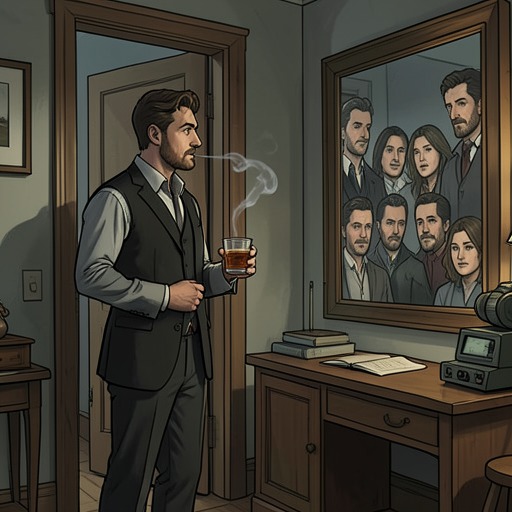
Nicole first reaches Henry by letter. She lives only about a mile from him, has read some of his books, and says she likes them. After he replies to one letter, she invites him to visit. He drives over without telling Lydia and finds Nicole in a flat above a dry cleaner’s on Santa Monica Boulevard, with a street entrance and a stairway visible through the glass door.
Nicole is presented as a cultured, self-educated woman with a difficult financial situation. She tells Henry that her family lived in New York City: her father was a communist, and her mother worked as a seamstress in a sweatshop, operating the front machine and regarded as the best worker there. Nicole grew up in New York, later met a famous doctor, married him, and lived with him for ten years before their divorce. Her alimony is only $400 a month. She says she cannot afford her apartment but likes it too much to leave, a tension that gives her independence a distinctly precarious economic basis.
Courtship and Intellectual Connection
Nicole praises Henry’s writing as raw, forceful, humorous, and tender. He answers tersely, but her stories hold his attention: as she talks and pours drinks, he thinks of the encounter as if it were a movie. He decides that some of her stories could become stories or poems of his own. Her conversation includes accounts of Huxley and Lawrence in Italy; Henry counters that Knut Hamsun was the world’s greatest writer. Nicole is astonished that he knows Hamsun and agrees with his assessment. Their exchange gives their attraction a literary dimension, though Henry also watches and evaluates her through the self-conscious language of a writer collecting material.
Their first visit ends with drinks and a kiss on the veranda, where they watch afternoon traffic. Henry knows they will not immediately have sex, but also expects to return; he understands that Nicole expects it too. The scene establishes a gradual approach that is soon overtaken by Henry’s drinking and the secrecy surrounding his other relationship.
The Affair and Its Routine
After a night of heavy drinking, Henry blacks out and later wakes in Nicole’s bed, facing a decorative letter N on the wall. He does not remember arriving at her apartment. In the morning, after making himself sick while using Nicole’s toothbrush, he returns to bed; the two kiss and begin a sexual relationship. Henry frames his conduct inwardly as a private version of fidelity to Lydia, even as the affair contradicts the relationship’s ordinary meaning.
The visits become frequent and habitual: Henry goes to Nicole’s two or three times a week, usually in mid-afternoon. They drink wine, talk, and sometimes make love. He acknowledges that he is not particularly interested in her and treats the encounters as something to do. Because he and Lydia make up soon after one of their fights, he conceals where he is going. When Lydia asks about his afternoons, he says he has been to the supermarket, making the statement technically true by stopping there first. The deception is thus built into a mundane errand rather than an elaborate cover story.
Henry eventually tells Lydia that he knows a woman named Nicole and gives her Nicole’s address, while insisting that not much is happening. He later describes this disclosure as something said while drunk and without a clear reason. The admission does not end the affair; instead, it leaves Lydia with enough information to recognize where Henry is going when she catches him outside Nicole’s apartment.
Confrontation at the Apartment
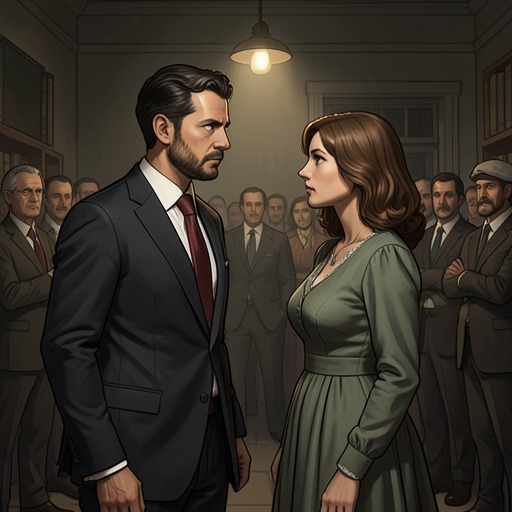
The affair is exposed after another fight between Henry and Lydia. Carrying two six-packs of bottled beer and a pint of whiskey from a liquor store, Henry is on his way to Nicole’s, having decided to stay the night there. Lydia runs up behind him on busy Santa Monica Boulevard. She takes the bag and smashes the beer bottles one by one on the pavement, then breaks the whiskey bottle after accusing him of planning to drink and have sex with Nicole.
Nicole’s door is open, and Lydia runs upstairs and strikes her with a large purse, shouting that Henry is her man and ordering Nicole to stay away. Lydia then runs out into the street. Nicole, still at the top of the stairs, asks Henry who Lydia is. The confrontation makes visible what Henry had kept divided: his affair is no longer an unseen routine but an immediate conflict between the two women.
The episode continues outside. As Henry bends to collect the broken glass, Lydia drives her Volkswagen Thing along the sidewalk toward him at about thirty miles per hour; he jumps aside as the car narrowly misses him. After she drives away, Henry finishes sweeping up the glass and finds one unbroken beer bottle in the paper bag. Lydia returns, takes it from him, and throws it through Nicole’s window, leaving a round hole. Nicole urges Henry to leave with Lydia before she kills everybody. Henry goes down to Lydia’s idling car and gets in; they drive away without speaking. Nicole’s final role in the episode is not to pursue the affair but to recognize the danger and send Henry out of her apartment with Lydia.
Narrative Significance
Nicole’s part in the story is brief but structurally consequential. Her letters and literary conversation provide Henry with a new connection that appears separate from his life with Lydia; the repeated afternoon visits show how easily he turns that separation into a habit of concealment. His supermarket explanation and drunken partial confession reveal the unstable boundary between secrecy and disclosure. Once Lydia arrives at Nicole’s door, that boundary collapses in a series of concrete acts: shattered bottles, a purse swung at Nicole, a car driven onto the sidewalk, and a beer bottle thrown through a window.
The contrast between Nicole’s attentive conversation and Henry’s stated lack of particular interest sharpens the episode’s account of the affair. She shares her history and stories, while he listens, drinks, and considers what might be useful in his writing; he returns regularly despite claiming little investment. The encounter therefore presents Nicole both as a person with a specific family history and precarious finances, and as someone drawn into Henry’s pattern of drinking, sexual opportunism, and divided attachments. Her warning at the end briefly interrupts that pattern, but the scene gives no further account of her relationship with Henry after he leaves.