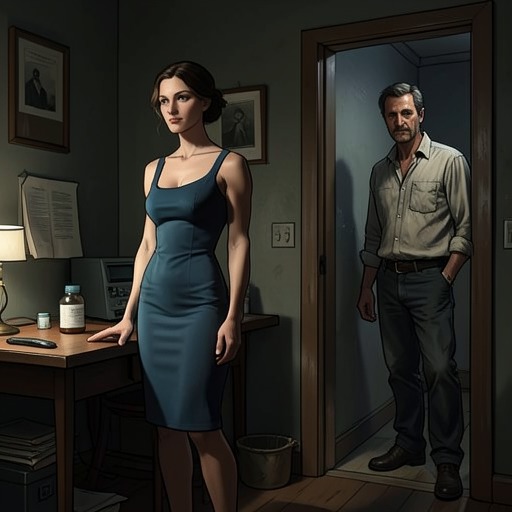
Marty Seavers
WomenMarty Seavers is a Manhattan Beach nightclub owner and poetry-reading promoter whose stories about his relationship make him a comic counterpart to Henry Chinaski: both men describe romantic conflict as recurring, disruptive, and difficult to escape. At Smack-Hi, Marty turns that affinity into work, hiring Chinaski to read and later proposing regular Friday and Saturday appearances.
Identity and Setting
Marty owns Smack-Hi, a nightclub in Manhattan Beach where Chinaski has read poetry before. He contacts Chinaski after the latter returns to Los Angeles, offering about $450 for a reading the following week. The call establishes Marty as both a local venue owner and an intermediary between Chinaski’s poetry and an audience large enough to make readings financially useful.
The club is also part of a wider performance circuit. Marty tells Chinaski that his readings draw larger crowds than rock groups, and he expresses interest in bringing him in every Friday and Saturday. His role is therefore not confined to arranging a single engagement: he sees Chinaski’s audience as a recurring attraction for the venue.
Relationship Stories and Comic Parallels
During their conversation, Marty describes a partner who checks whether he is sleeping alone and appears at his home unexpectedly. He recounts two separate incidents involving dresses he had given her for her birthday: on each occasion, she leaves dresses burning on his car, first on the roof and later on the hood. The episodes damage the car’s paint and bring the neighbors’ attention to Marty’s attempts to retrieve the clothes.
The repetition gives Marty’s story its particular rhythm: he believes the relationship has ended, only for another confrontation to follow. Chinaski recognizes the pattern as resembling his own experiences with women, and Marty confirms that he and the woman are back together even as he discusses the damage. The return to the relationship after the escalating incidents makes the story less a simple tale of separation than another cycle of conflict and reconciliation.
Work with Chinaski
Marty’s personal anecdotes lead back to business. After telling Chinaski that the woman is expected to arrive shortly, he asks whether Chinaski will accept the reading engagement. Chinaski agrees. Marty then offers the prospect of a more regular arrangement, citing the strength of Chinaski’s audiences.
The practical details complicate the boastful, comic exchange. At a later appearance, Marty makes Chinaski a check for $200, and Chinaski presents it to Tammie as a joke rather than the promised amount she expects. The mismatch reveals that an engagement’s announced earning potential and the money actually handed over do not necessarily coincide, while also placing Marty in the position of the person controlling payment.
Narrative Role
Marty’s stories work as a mirror held up to Chinaski’s turbulent intimate life. Chinaski’s response—recognizing the woman as resembling one of his own partners—turns the conversation into a brief recognition scene: the nightclub owner’s domestic disorder sounds familiar rather than exceptional. The burning dresses and blistered car paint provide concrete evidence of consequences, while the couple’s reunion preserves the pattern of recurrence.
At the same time, Marty links private chaos to the public economy of poetry. He can talk about relationship trouble, pay Chinaski for a reading, and evaluate the size of the audience in the same conversation. His character joins the book’s recurring worlds of intimate conflict and literary performance without becoming a poet himself in the evidence presented: he is the club owner who recognizes a crowd and knows how to book its draw.