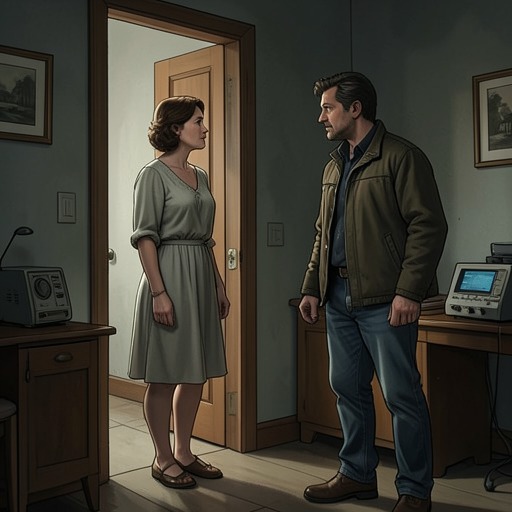
Dinky Summers
WomenDinky Summers is a folk-rock musician whose visit to Henry Chinaski brings the book’s contrast between public performance and private uncertainty into a small domestic scene. He arrives with his girlfriend Janis, asks Chinaski whether he had performed badly at an earlier show, and later sings a heartbreak song in Chinaski’s home. Chinaski acknowledges his voice and ability but sees an artist beginning to age, making Dinky’s confidence feel both real and precarious.
Identity and Introduction
Dinky is identified as a folk-rock man and a poet. He arrives unexpectedly at Chinaski’s door with Janis, greeting Chinaski as an old acquaintance. The visit is informal: Dinky says he and Janis thought they would drop by, then tells Chinaski that he has written about ten new pieces and believes he is improving. Janis backs him up, saying she thinks he is improving too.
Dinky’s earlier connection with Chinaski comes through performance. He had opened one of Chinaski’s acts, and during the visit he asks directly whether he had been that bad. The question makes clear that he is seeking an honest response about his work, not merely using the visit to perform.
Performance and Contrast
Chinaski tells Dinky that he had been drinking more than listening that night. He was preoccupied with having to go onstage himself and preparing to face the audience, an experience that made him feel sick. Dinky’s response reveals a markedly different relation to performance: he says he loves getting in front of a crowd and feels elated when the audience likes his material. The exchange sets Dinky’s enjoyment of public attention against Chinaski’s dread of it.
Dinky’s guitar is always with him, Janis says. He goes out to the car to retrieve it, sits cross-legged on Chinaski’s rug, tunes the instrument, and begins to play. His full, strong voice carries through the room. The song concerns a woman and heartbreak between Dinky and someone he had loved. Chinaski finds the performance more personal and embarrassing at close range than it might have been onstage before a paying audience, but he still concludes that Dinky is not bad. After the song, they applaud, and Chinaski tells him it was too much.
Relationship with Chinaski
The visit combines camaraderie with frank appraisal. Chinaski greets Dinky warmly and listens to his concern about the earlier performance, but does not pretend to have paid close attention at the time. His admission is rooted in his own performance anxiety: he had been concentrating on the ordeal awaiting him rather than evaluating Dinky’s set. Dinky, by contrast, can imagine an audience’s approval as a source of happiness.
Their differing attitudes do not prevent Chinaski from taking Dinky seriously. He listens to the song in the less forgiving setting of a living room, where the directness of the heartbreak material makes it awkward, and still recognizes its merits. The episode portrays their connection through the uneasy mixture of support, embarrassment, and candid judgment that accompanies artistic work shared among acquaintances.
Aging and Narrative Significance
As Dinky sings, Chinaski notices that his golden curls are no longer as golden and that his wide-eyed innocence has begun to droop. Chinaski judges that Dinky is aging and will soon be in trouble. This apprehension is not followed by a described outcome; it remains an impression formed during the visit, lending the scene a note of foreboding without specifying what will happen to him.
Dinky’s brief appearance brings together two pressures on an artist: the desire to be heard and the vulnerability of making personal experience into performance. He is comfortable in front of a crowd, unlike Chinaski, yet the heartbreak song feels exposed when played on a rug for a small audience. Chinaski’s observations of Dinky’s changing appearance add the passage of time to that exposure: the performer’s confidence persists, but the scene suggests it cannot keep age and difficulty at bay.