Dancy
WomenDancy, the six-year-old daughter of Tammie, appears in brief scenes that expose the precariousness of the adult world around her. She is not a participant in Henry Chinaski’s relationships, but her distress and appeals for help make the consequences of Tammie’s instability visible through a child’s direct, unguarded responses.
Identity and Home
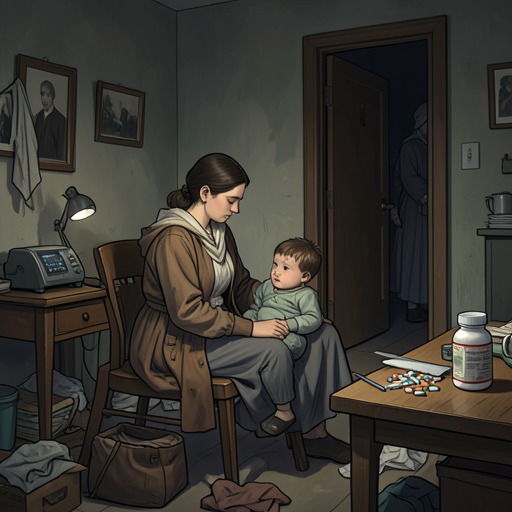
Tammie lives in a small bungalow behind a house. When Henry visits, she tells him to be quiet so he will not wake Dancy, who is asleep in the bedroom. The detail establishes Dancy as a young child in Tammie’s household and places her within the ordinary domestic routines that the surrounding narrative repeatedly disrupts.
Left Waiting
When Tammie prepares to leave, Henry asks what will happen to Dancy. Tammie says she will leave the girl there until her mother gets home from work. Dancy then wails, cries, and, after the tears stop, clenches her fists and screams, “I WANT A DING-DONG!” Her demand is small and immediate, but the scene’s emotional turn is not: the narrative presents a child reacting to a departure she understands but cannot control.
Tammie tells Dancy to remain until Grandma arrives, keep the door locked, and let no one in except Grandma. Dancy wails again and shouts, “I HATE YOU!” The instruction gives her a practical responsibility for her own safety, while her answer registers the hurt of being left behind. Her distress is not resolved before Tammie leaves; it remains the last exchange between mother and daughter in the scene.
Calling for Help
Later, nearby pistol shots break into the action. The surrounding area is described as poor and troubled by prostitution, drugs, and occasional murder. Dancy cries out from a window for Henry to come upstairs, repeating his name and urging him to hurry. He runs up to find Tammie stretched out on the bed, where she weakly says that she has been shot. Dancy’s urgent call makes her more than a witness to the danger: she becomes the person who summons help when the adults around her are unable to act normally.
Narrative Significance
Dancy’s scenes are limited, but their placement gives them weight. At home, she is told to wait alone for her grandmother and answers with a child’s food demand and anger; amid nearby gunfire, she calls for Henry with mounting urgency. These moments frame the instability of Tammie’s circumstances through concrete consequences for her daughter, without turning Dancy into a narrator of the adult conflicts themselves.