William Keesing
WomenWilliam Keesing is a poet and former Marine whose correspondence with the narrator began in 1966, long before they met in person. Their Illinois reunion brings together literary affinity and stark personal decline: Keesing has found temporary academic work, but his drug use has contributed to the end of his marriage, and he dies shortly after the narrator’s visit. His brief appearance turns a meeting between correspondents into an intimate encounter with separation and death.
Identity and Background
The narrator first encountered Keesing’s work in Bull, a mimeographed magazine edited by Doug Fazzick, whom the narrator describes as part of an informal literary world rather than the conventional literary establishment. Keesing was an ex-Marine who had served in Korea, had spent time in prison, and was supported by his wife, Cecelia. The narrator, then working eleven-hour nights as a postal clerk, began writing to him during a period of intense letter-writing, sending four- or five-page letters decorated with crayons. Keesing’s poetry and the exchange of letters established a relationship before face-to-face acquaintance.
Keesing’s history also includes drug addiction, particularly to codeine. Years after their correspondence began, he had managed to earn one or two degrees between drug busts and secured a temporary teaching position at a university in Illinois. The narrator warns him that the job could be dangerous for someone who wanted to write, while noting that Keesing introduced his students to plenty of the narrator’s work. His academic foothold therefore coexists with the instability of his drug use and the precariousness of his writing life.
Meeting in Illinois
The narrator flies to Illinois for a university reading, an engagement he dislikes but accepts because readings help pay the rent, may sell books, and take him out of East Hollywood. Keesing and Cecelia meet him at the airport, and the three leave directly by car. Keesing’s astonishment at the narrator’s appearance sets an unceremonious tone for a reunion shaped less by literary ceremony than by personal recognition.
That night, Keesing proves as engaging in person as he had been in his letters and poems. He sensibly keeps the conversation away from literature for most of the evening, an exception to the narrator’s disappointing experiences of meeting poets whose written work had impressed him. Their ease together makes the visit distinctive: the correspondence has translated into genuine companionship rather than another awkward encounter between writers.
Marriage, Drug Use, and the Visit
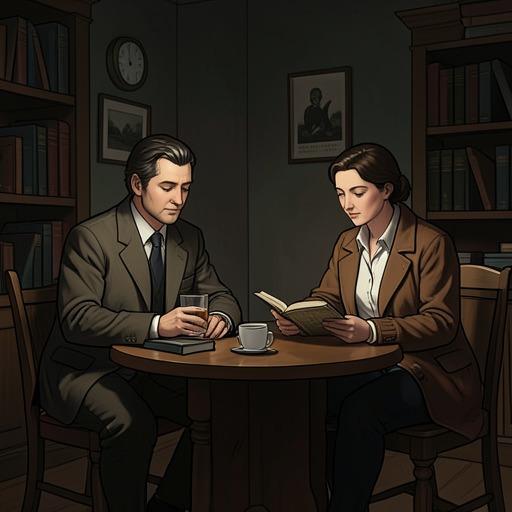
Cecelia goes to bed early because she has to work the next morning. Left with the narrator, Keesing explains that she is divorcing him and that he does not blame her: she has endured his drugs, his vomiting, and what he calls his whole way of life for years, but can no longer bear it. He says that he has moved out and has a room of his own. He also describes Cecelia as seeing a teenage boy and says he cannot blame her, presenting the separation without claiming that she owes him continued care.
Keesing offers several practical arrangements for the night: the narrator could stay at the house while Keesing sleeps in his room, or they could both go to the room. The narrator chooses for them both to stay at the house. Soon afterward, Keesing takes out a couple of pills and swallows them. The scene joins the ordinary logistics of lodging to the continuing presence of his addiction; his temporary teaching post and his wife’s departure have not displaced the drugs from his immediate life.
Death and Narrative Significance
About a week and a half after returning to Los Angeles, the narrator receives a nighttime phone call from Cecelia. Sobbing, she tells him that Keesing is dead and that he is the first person she has called. The narrator can only respond that he does not know what to say. Cecelia then tells him she is glad he visited: after he left, Keesing did nothing but talk about him, and the visit had meant more to Keesing than he knew.
The delayed news revises the meaning of the Illinois trip. What had seemed a short stop in the life of a traveling writer becomes, in Cecelia’s account, a lasting comfort to a man facing divorce and drug dependence. Keesing’s death arrives outside the visit itself, through a grieving call that confirms both the finality of his absence and the importance of the narrator’s presence shortly before it.