Horse racing gambling
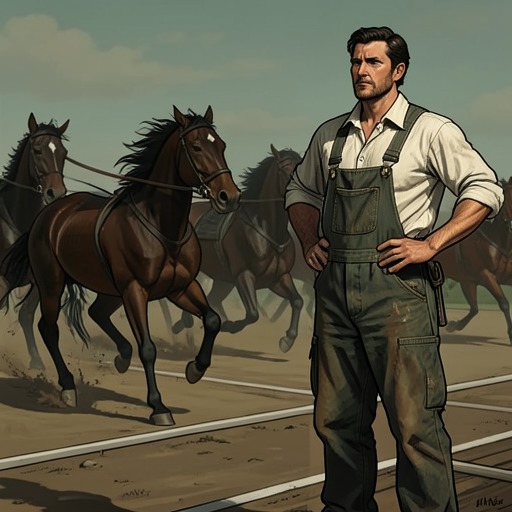
WomenHarness-racing gambling is a recurring activity in Henry Chinaski’s life, combining wagers on individual horses with repeated trips to the track. Its importance lies less in sustained success than in the pattern surrounding it: betting gives him something to anticipate, while wins and losses remain temporary turns within a life shaped by heavy drinking, strained relationships, and unease.
Betting and the Racecourse
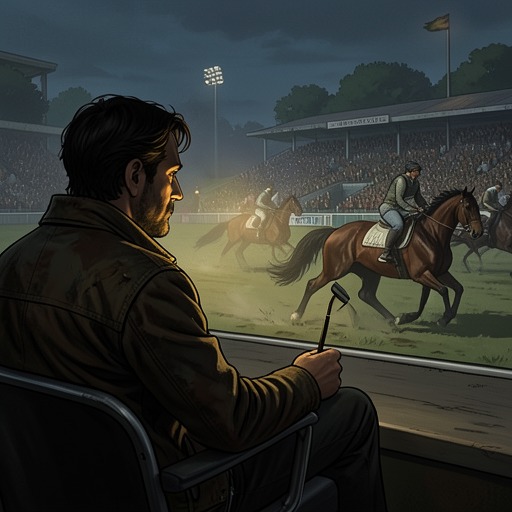
Chinaski’s visits to the harness races appear in sharply different circumstances. After a telephone exchange with Lydia Vance, he sleeps through much of the afternoon and drives to the track that night. The account gives no wager or result for that visit; the races are presented simply as the destination he chooses after the call, before he returns home to find his belongings displaced or missing. Gambling is thus one part of a larger sequence of distraction and personal upheaval, not an activity isolated from the rest of his life.
A later visit with Tammie shows the betting process in detail. They sit on the second deck, and Chinaski brings her a program whose past-performance charts provide information about the horses. Tammie tells him she takes pills and can become disoriented or lost, asking him to keep an eye on her. He offers her money to bet, but she declines. He then goes to the windows and places a five-dollar win bet on the seventh horse.
The seventh horse finishes at five to one, leaving Chinaski twenty-five dollars ahead. The gain is limited but concrete: a single wager has changed the evening’s immediate balance in his favor. Yet the result does not turn the outing into a lasting victory. Tammie has disappeared while he is away, and Chinaski decides to search for her rather than continue betting on the next race.
Tammie, Risk, and Distraction
The episode with Tammie makes clear that the track is both a gambling venue and a setting where Chinaski’s attention is divided. After winning on the seventh horse, he checks the grandstand, aisles, concession stands, and bar for her. He eventually finds her, but the search interrupts the sequence of races and wagers. The concern he expresses afterward confirms that the outing has acquired a personal stake beyond the money on the program.
Once Tammie is with him again, Chinaski returns to betting: he puts money on the fourth horse, which loses by a nose. The contrast with the earlier win is immediate. First he is twenty-five dollars ahead; then the final wager goes against him. Chinaski and Tammie leave the track together, and the account records the end of their visit rather than any recovery of the loss. The near miss makes the result especially close, but it remains a loss, not a win reclassified by proximity.
A Recurring Use of the Track
At another point, Chinaski goes to the racetrack for fresh air, sunshine, and walking. The stated purposes foreground the bodily routine of visiting the venue rather than any particular wager or race result. He continues to drink at night, wondering why he is still alive and thinking about Katherine, Lydia, and Tammie. The track offers activity and a change of surroundings, but the narrative does not present it as an escape that cures his distress.
This visit also places gambling within the broader rhythm of Chinaski’s drinking. Elsewhere he describes drinking in response to bad events, good events, or the absence of events: alcohol becomes a way to forget, celebrate, or provoke a change. The racetrack supplies a different kind of uncertainty, organized around horses, odds, and wagers, but it does not displace that habitual reliance on alcohol. The two recur alongside one another rather than forming a simple choice between restraint and excess.
Gambling Within a Life of Uncertainty
The available episodes resist a story of steady gambling success. Chinaski is twenty-five dollars ahead after one winning bet, then loses on the fourth horse; another trip is linked in the narrative to a broader personal crisis, without a specified wager or result. These details make the track a place of small, contingent reversals rather than dependable transformation.
The larger pattern reaches back to the period when Chinaski was trying to write his first novel after leaving a twelve-year postal job. His nights were organized around drinking and typing, with a goal of ten pages that he could only assess the next morning. The account connects that earlier life to the later recurrence of the racetrack without claiming that gambling caused his writing or solved his problems. Across both activities, routine coexists with uncertainty: pages may exceed the target, a horse may win or lose, and neither outcome supplies lasting control over what follows.
The track’s narrative function is therefore deliberately modest. It gives Chinaski a destination, a wager to make, and an outcome to register, but the sums remain small and the consequences brief. He returns for walking and fresh air, bets again when the opportunity arises, and carries the same personal unease away from the races. Harness-racing gambling becomes one more way he meets uncertainty through action, without making uncertainty go away.