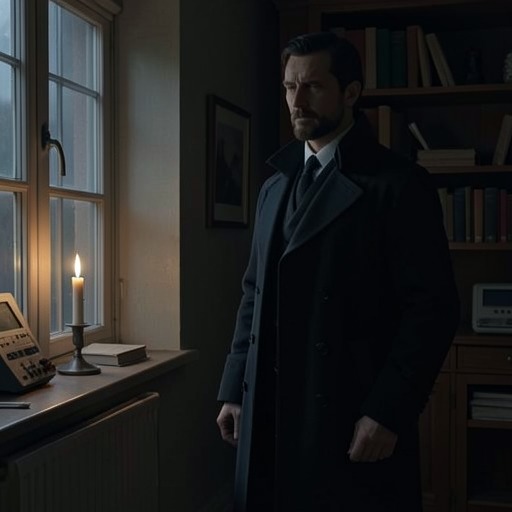
Andrew Milling and June’s father-daughter bond
WoodwalkersAndrew Milling and June’s father-daughter bond is remembered as part of a close, happy family life, then shattered when June and her mother, Evelyn, were killed during hunting season. Milling’s account makes their loss more than a private tragedy: the failure to recover June’s remains, and the hunter’s refusal to surrender her skin, become central to the grievance that shapes Milling’s resolve to retaliate against humans.
Family Life Before the Loss
Milling describes meeting Evelyn through one of his projects, where she worked as a production manager. She was a mountain-lion shapeshifter from Vancouver Island, and he says he fell in love with her within days. After they became a couple, their happiness deepened with June’s birth. The recollection establishes June not as a distant part of Milling’s past but as the child whose arrival completed a period he remembers as intensely joyful.
The family moved to Jackson Hole because Evelyn had tired of Los Angeles and wanted to live among the mountains. She loved snow, and Milling remembers her and June racing through it together, often in their animal forms. That shared activity gives his account its most vivid picture of their closeness: father, mother, and daughter had built a life around the landscape Evelyn longed for, and June’s childhood included the freedom of moving through it as a Woodwalker.
The Warning and the Separation
Milling dates the fatal outing to a sunny day in November, eight years before he tells the story. He had a work appointment, while Evelyn and June wanted to go out into the snow. He warned them to stay inside the national park because hunting season had begun. In his telling, their excitement over the beautiful day may have made them imprudent; the warning is remembered as a father’s attempt to protect them, but it could not keep them safe.
When Evelyn and June failed to return, Milling panicked and went out to search for them. He eventually found evidence of their deaths on a hunter’s website rather than through a reunion or a direct report. A hunter displayed Evelyn’s body, holding it beneath the arms to show off the size of his trophy; in the background Milling recognized June’s body. The account turns the family’s disappearance into a public display of the very loss Milling could not undo.
The Unrecovered Remains
Milling says he tried to recover the bodies, only to discover that the hunter had kept the skins. He managed to buy one back, but could not afford the other, which belonged to June. The hunter refused to give it to him. For Milling, this refusal prolonged the loss: he had found his daughter only as an image on a hunter’s homepage, and even afterward he could not reclaim what remained of her.
As he recounts the episode, grief becomes physically visible. His voice is low and rough; he clenches his fists, partly transforms, and leaves deep claw marks in the table. He says he wanted to tear the hunter’s arrogant smile from his face and smashed his computer, but recognizes that this act was not enough. The contrast between the violence of his reaction and his inability to recover June’s skin makes the limit of that moment unmistakable: anger could damage an object, but it could not restore his daughter.
June’s Lasting Place in Milling’s Resolve
Milling links June’s death directly to the purpose he gives his later life. He says that from that day he resolved to harm humans as much as possible, and that he needed to become rich and powerful enough that no one could stop him—not even for lack of money. He describes concentrating all his energy on one objective and working on it without pause or distraction. His ambition is thus framed not simply as a desire for power but as a response to the deaths of Evelyn and June and to the hunter’s control over the remains he could not afford to retrieve.
The bond is conveyed almost entirely through remembered ordinary happiness and the aftermath of its destruction: June’s birth, snow outings with Evelyn, a father’s warning, the frantic search, and the failed attempt to reclaim her skin. The sequence explains the emotional force behind Milling’s revenge while also showing how grief narrows into a declared campaign against humans. June remains at the center of that transformation, not as a participant in Milling’s later actions, but as the daughter whose loss gives his stated objective its origin.