Carag and Marlon’s bullying conflict and Yellowstone danger
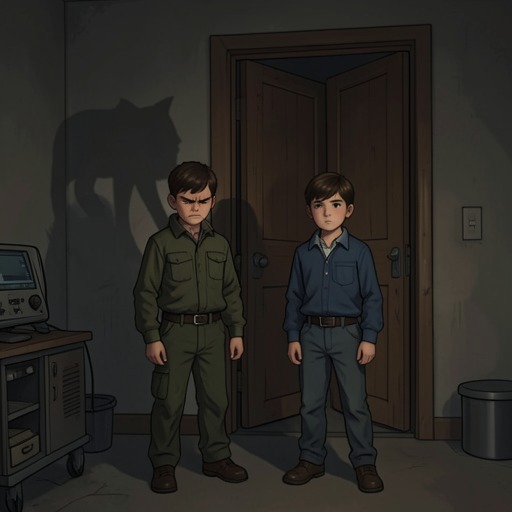
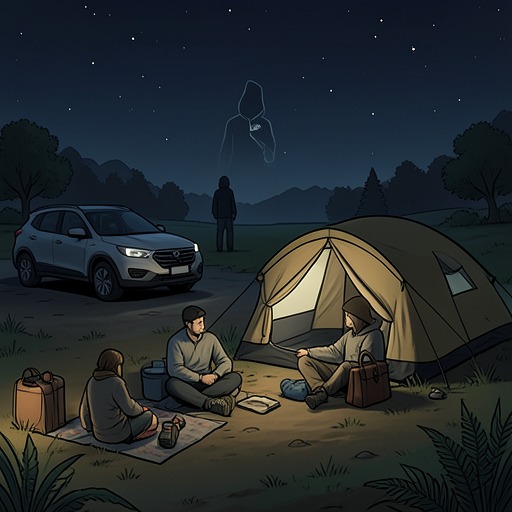
WoodwalkersCarag and Marlon’s adoptive-brother relationship is defined by a persistent imbalance: Marlon uses intimidation and control over Carag’s belongings to reinforce his bullying, while Carag struggles to resist without losing control of his own transformation. The stolen folding knife becomes the conflict’s tangible focus, and their confrontation over it in Yellowstone turns a domestic rivalry into a physical danger that could have killed Carag.
Adoptive Brothers and the Pattern of Bullying
Marlon is Carag’s adoptive brother, but their shared family does not prevent him from making Carag a target. Carag recalls Marlon’s bullying as a familiar source of anger, connecting the resentment he feels in one confrontation at Clearwater High to the treatment he has already endured at home. That association establishes the conflict as more than a single quarrel: Carag’s response is shaped by accumulated experience, even when Marlon is not present in the immediate scene.
The school’s rules make the tension between them legible within a formal order. Clearwater High Rule 3: Predators must not mistreat prey, and Clearwater High Rule 5: Student fights are allowed only in class, place explicit limits on intimidation and violence. When Carag is close to retaliating in the cafeteria, Bill Brighteye restrains him and warns him about the rule restricting transformations during school hours. The rules can curb an immediate escalation, but they do not erase the history that has made Marlon’s bullying so combustible for Carag.
The Knife as a Token of Control
The folding knife gives the brothers’ conflict a continuing physical object. It had been a prize from a supposed contest, but Marlon took it from Carag after threatening to discredit him. When Andrew Milling asks why he surrendered it, Carag explains that he did not want to be discredited and says he will reclaim it eventually. The exchange makes clear that the theft is not merely about possession: Marlon’s threat has pressured Carag into yielding, and the lost knife stands for a concession Carag regrets.
At Yellowstone, Marlon makes the knife visible again by using it to carve a wooden barrier while ensuring Carag sees him. With Donald, Anna, and Melody moving ahead, the brothers are left behind in tense silence. Carag tells Marlon he has kept the knife long enough and demands it back. He admits to himself that Andrew Milling was right about his earlier mistake: allowing Marlon to keep the knife has given Marlon another reason to bully him. Carag’s demand is therefore an attempt to recover both the object and some control over the pattern of humiliation attached to it.
Yellowstone: Retrieval and Reversal
Carag acts quickly, taking the knife back before Marlon can react. But the blade is still open. When Carag looks down to close it, Marlon seizes the moment and tackles him against the wooden walkway. Carag slips beneath the railing toward the muddy ground beside a hot pool; the danger of boiling water makes the fall more than a scuffle between brothers. Marlon shoves him again, and Carag’s feet sink into the hot, muddy shallows. He clings to a railing post, hauls himself free, and tries to climb back onto the walkway as other people begin shouting at them.
The unevenness of their contest becomes especially stark here. Marlon is taller, but Carag is faster; Carag’s speed first lets him recover the knife, then Marlon’s tackle and shove put him in peril. Marlon asks whether Carag can hold on with one hand and raises a foot, while Carag fears being knocked away from the post and into the pool. Carag warns that killing him would send Marlon to prison, but Marlon refuses to back down. When Marlon extends a leg, Carag turns the gesture to his advantage, using it as leverage to get upright and then twisting Marlon’s arm behind his back with a hold taught by Bill Brighteye.
The Knife Lost and the Conflict Unresolved
Even after Carag gains the upper hand, the knife remains the object around which the struggle turns. Marlon crouches, then kicks it into the foul turquoise water. It disappears into the pool, where it is likely to remain for years as a curiosity for tourists; as it hits the water, it gives off flashes and sparks. The recovered object is thus lost again, this time in a place where Carag cannot simply reach down and take it back. The odd, visible flashes sharpen the moment’s sense of consequence without changing the outcome: Marlon has denied Carag possession once more.
Donald finally reaches them and grabs both brothers by the arms, shouting at them to stop and asking what kind of animals they are. Carag’s inward response recognizes the animal truth behind the insult, but the scene has already shown that the danger is not metaphorical. Donald had earlier challenged the school’s safety after encountering a bison there; in Yellowstone, he intervenes when the brothers’ own violence places Carag beside scalding water. His intervention ends the immediate fight, not the underlying antagonism. Carag has shown that he can act decisively against Marlon, yet the knife’s loss and the peril of the encounter leave their relationship unresolved.