Allyson Clarke
AccidentAllyson Clarke is a restless, strong-minded teenager whose independence is tested by the car crash that leaves her comatose for almost four months. Before the accident, she is always making plans and pushing toward the next thing; afterward, her family must live with a prolonged uncertainty about whether she will wake and what life will be like if she does. Her return begins with a faint response to her mother, but recovery remains a process rather than an instant reversal.
Identity and Background
At fifteen, Allyson is described as striking in appearance and mature-looking, but still young in judgment and experience. She is energetic, focused, and inclined to think ahead about where she needs to be and what she wants to do. Her intensity recalls her father, Brad Clarke, while her temperament differs from Page Clarke’s gentler manner. Page sees Allyson as bright, capable of good ideas and intentions, but sometimes prone to teenage mistakes and arguments with her parents. Those conflicts are part of Allyson’s effort to establish an identity distinct from either parent, not simply to imitate them.
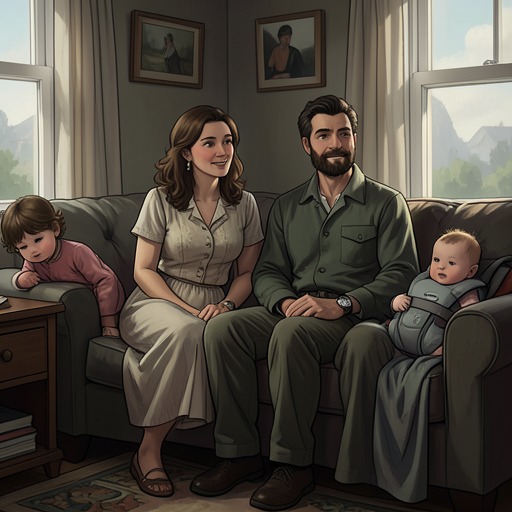
Allyson is also an older sister. She was eight when Andy Clarke was born and became devoted to him, carrying him from room to room and bringing him into her bed when she could not be found. Though she sometimes regarded him as a baby, her affection is enduring. The bond persists during her coma: when Page takes Andy to school, he asks her to kiss Allyson for him. His small message makes visible a family relationship that continues even when Allyson cannot answer.
Independence and the Accident
Allyson’s wish to test her freedom becomes consequential on the night she and Chloe Thorensen secretly meet dates without their parents’ knowledge. Chloe has arranged for Jamie Applegate, the boy she likes, to go out with her, and for Phillip Chapman, a senior, to take Allyson. Allyson has little experience with dates beyond outings arranged or supervised by parents, and she knows her mother would not approve of her going out with a senior. The plan therefore represents both a first serious date and a deliberate breach of parental limits.
The girls decide that asking permission would prevent the outing, so they conceal it as a one-time opportunity. Allyson is uncertain at first, but Phillip’s appeal and the prospect of a genuine date persuade her. The two couples arrange to meet around the corner from Chloe’s home. Later, as the car travels more than halfway across the Golden Gate Bridge, Phillip draws Allyson close while keeping her seat belt on after she begins to loosen it. He glances away from the road for an instant; a flash of light appears, and the cars collide before he can react. The crash abruptly turns youthful excitement and rule-testing into a life-threatening emergency. Allyson is unconscious when emergency services take her to Marin General Hospital.
Coma and Medical Crisis
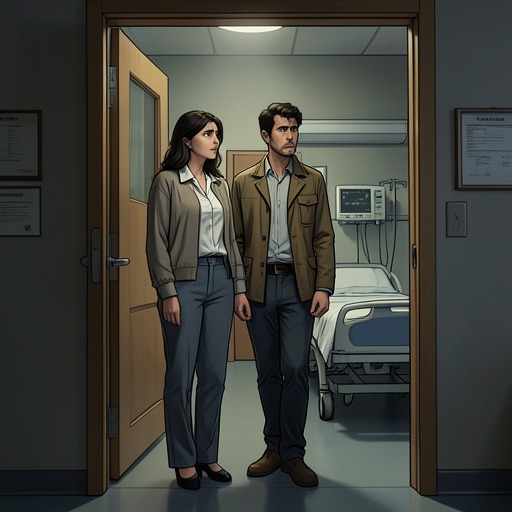
Page learns from the highway patrol that Allyson has been in an accident, is unconscious, and is seriously hurt. At the hospital, doctors explain that the crash caused a traumatic brain injury as well as an open head wound. The injuries pose different risks: the initial impact may have damaged nerve fibers and blood vessels, while the wound and skull fracture create further complications. Doctors are also concerned about blood loss and reduced oxygen to the brain. At this stage, they cannot predict whether the lasting effects will be slight or catastrophic.
The danger does not end with the initial treatment. Late at night, as Page and Trygve Thorensen check on Allyson and Chloe in the intensive care unit, a resident reports that swelling has begun and is increasing pressure around the wound. The team is also concerned about blood clots. Allyson’s blood pressure rises and her pulse slows; by around one o’clock, doctors fear she may not survive. Her apparently stable condition an hour earlier gives way to a new emergency, making the family’s hope contingent on developments they cannot control.
The next morning, there has been no improvement, and Page signs the papers for another operation. She sits beside Allyson while her daughter remains deeply comatose and connected to monitoring equipment. Page holds her hand, speaks to her, touches her cheek, and kisses her before the nurses take her away to be prepared for surgery. The operation is expected to last eight to ten hours. Page faces the possibility that Allyson may not survive it, while also knowing that continued pressure could cause further damage. Her vigil is defined by the inability to know the outcome, not by any assurance that persistence alone will produce a cure.
Awakening and Recovery
For almost four months, Allyson remains in a coma. When her pulse weakens after a medical crisis, Page says goodbye, believing her daughter may be dying. Then Dr. Hammerman notices that the pulse is strengthening and tells Page that Allyson appears to be turning around. The change does not settle what the long-term outcome will be, but it reverses the immediate expectation of loss and renews the possibility of recovery.
Allyson’s first unmistakable response comes during a quiet visit with Page. Page notices movement, takes her hand, and speaks softly, asking her to open her eyes. Allyson squeezes Page’s hand, and, after her eyelids flutter, opens her eyes for the first time in almost four months. Page is present when she returns to consciousness. The moment is powerful precisely because it begins with small, uncertain movements: a hand squeeze and a gradual opening of the eyes, rather than an immediate return to speech or independence.
Allyson is asleep when the family arrives from Lake Tahoe later that night, now sleeping normally rather than remaining comatose. She is still in intensive care and is being weaned off a respirator, so waking is the beginning of a long period of observation and rehabilitation, not proof that all danger has passed. Page tells the family that Allyson said Mama. In subsequent recovery, Allyson understands more than she can readily express. When she misnames her teddy bear Sam as Sandwich, the mistake is accompanied by laughter and then tears, a small episode that conveys both returning engagement and the emotional unevenness of rehabilitation.
Dr. Hammerman considers a 95 percent recovery realistic based on her tests and progress, while making clear that some abilities may remain affected. Her reflexes may or may not be fast enough for driving, and tasks requiring precise calculation or simultaneous translation may be difficult. The prognosis also leaves room for an ordinary, full life: college, work, family, reading, storytelling, and laughter. The narrative thus presents recovery as neither the restoration of an untouched past nor a simple medical victory. It is a hopeful estimate that includes uncertainty and possible limitations.
Relationships and Narrative Significance
Page’s care is central to Allyson’s return. During the coma, she repeatedly visits, speaks to her daughter, holds her hand, and watches for signs of response. Her presence does not make the outcome predictable, but it gives the awakening scene its intimate shape: Allyson’s first opening of her eyes occurs as Page addresses her directly. The family’s account of that first word, Mama, carries the event outward from the bedside to Chloe, Trygve, Bjorn Thorensen, and Andy, who listen together and are moved by the news.
Allyson’s story also remains connected to Chloe’s. They share the secret outing and the crash, but face different injuries and futures. Chloe’s recovery is associated with the loss of her ballet ambitions, while Allyson’s doctors discuss brain-injury effects and the possibility of a near-normal life. The contrast does not make either experience interchangeable: both girls have to reckon with consequences that cannot be undone simply by surviving.
As a character, Allyson moves from conspicuous motion and self-directed plans into a condition in which she cannot communicate, then begins the slow work of returning to interaction. Her arc makes the family’s hope concrete without erasing the time, danger, or uncertainty involved. The projected recovery matters, but so do the limits doctors acknowledge and the small signs through which Allyson re-enters her relationships. Her awakening changes the family’s immediate expectation from impending loss to cautious possibility; the rest of her recovery must still unfold one step at a time.