Mary Chapman
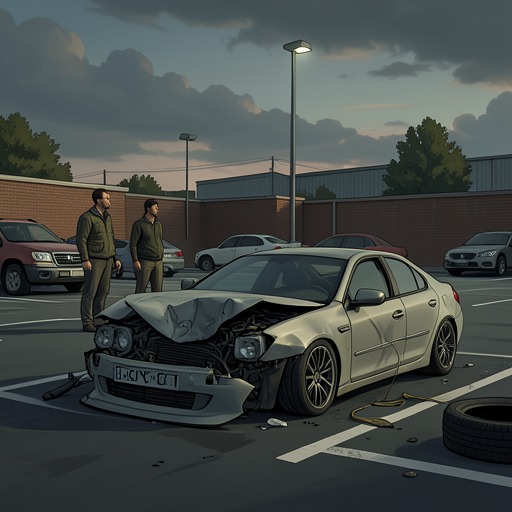
AccidentMary Chapman is Phillip Chapman’s mother and the wife of Tom Chapman. After Phillip is killed in the car accident, the Chapmans’ arrival at Marin General Hospital and their farewell to their son frame the loss not as an abstraction but as the end of a particular family future. Mary’s memories reach from the first moment she held Phillip to the ordinary milestones death has made impossible.
Identity and family context
Mary is in her late fifties when she and Tom arrive at Marin General Hospital at six in the morning, having driven from Carmel as soon as they were called. Phillip was their only child. They had him late and had never been able to have another, so the news concerns not only the death of their son but the loss of the family life centered on him. He had been the light of their lives, a description that makes clear how much of their shared future had gathered around him.
The couple had not wanted Phillip to go East for college. The distance felt unbearable to them, and they could not bear the thought of him being so far away. The account turns that earlier anxiety into bitter contrast: after his death, distance is no longer a question of college or separation, but an irrevocable absence. Mary’s few established biographical details therefore carry unusual weight; the narrative gives no broader history of her life, but shows how completely her identity as a mother is bound to the son she has lost.
At the hospital
When Mary and Tom reach the hospital, they are exhausted and worn. They listen as the doctor tells them Phillip died instantly and could not have survived the accident. Mary stands with her head bowed and cries softly. Tom puts an arm around her and cries openly. Their different outward responses do not lessen the shared shock: the hospital scene presents them receiving the same final news together, with no hope of changing what has happened.
Tom’s grief then surfaces as anger when he hears Phillip’s sobriety questioned. He insists that the accusation is slander, citing the blood test and his knowledge of his son’s habits; Mary is beside him, crying again. The narrative describes Tom’s anger as a buffer against grief and shows him wanting someone to blame before recognizing the enormity of the loss. Mary’s presence places her within this family confrontation, but the account does not give her a separate statement about blame or the accident. What it records directly is her distress beside her husband as their understanding of the death settles in.
Memory and bereavement
The Chapmans’ farewell to Phillip becomes the scene through which Mary’s grief is most fully expressed. She knows she will never forget the moment. As she and Tom mourn him, Mary bends to kiss her son. Her thoughts return to the first time she saw him, seventeen years earlier, when she held him and felt overwhelmed by the joy of becoming his mother. The memory does not undo the present; it measures the distance between the beginning of their relationship and its sudden end.
Mary understands that death cannot erase the fact that she was Phillip’s mother, or the love between them. But it has taken away every future version of him she might have known. She will not see him laugh, run across the lawn, slam the front door, or tell a joke. His harmless pranks and sweet surprises, and even the flowers he might have brought her, become small, specific absences. She will not see him grow old; in her memory, he will remain as he was when she last saw him. The narrative makes bereavement concrete through these familiar actions, each one a future that will not arrive.
Narrative significance
Mary’s role is concentrated in a brief but decisive sequence: the call brings her and Tom to the hospital, the doctor’s account confirms the death, and the farewell returns her to the beginning of motherhood. That structure connects the family’s first joy in Phillip with the finality of losing him. It also makes clear why the loss is irreducible for Mary: Phillip was not one child among several, but her only child, and the ordinary events she recalls are inseparable from the future she had expected to share with him.
The account does not extend Mary’s story beyond this immediate bereavement or supply a later resolution. Instead, it leaves her at the point where love remains but cannot restore the son who has died. Her grief gives the accident a human scale: alongside the question of responsibility, the narrative records what the sudden death means to the parents who must carry its consequences.