Laura Hutchinson
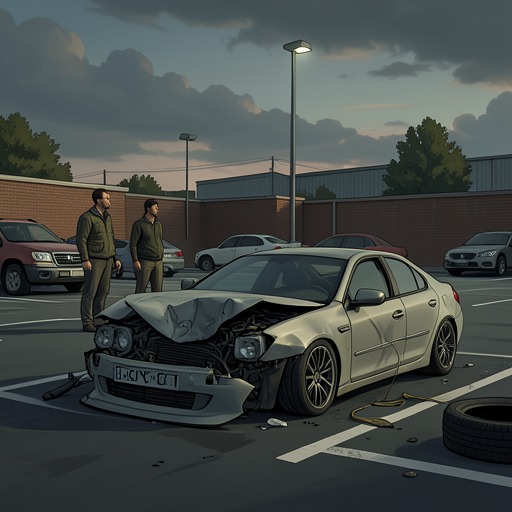
AccidentLaura Hutchinson is the wife of Senator John Hutchinson and a mother of three whose apparent respectability shapes how others interpret the Golden Gate Bridge collision. The crash kills Phillip Chapman and leaves Allyson Clarke and Chloe Thorensen severely injured, but investigators cannot determine which driver crossed the center line. Hutchinson’s apparent sobriety and political connections help her escape scrutiny at the time; a later fatal drunk-driving crash and newly uncovered history of alcohol treatment and accidents make the earlier uncertainty newly troubling, though they do not establish who caused it.
Identity and First Appearance
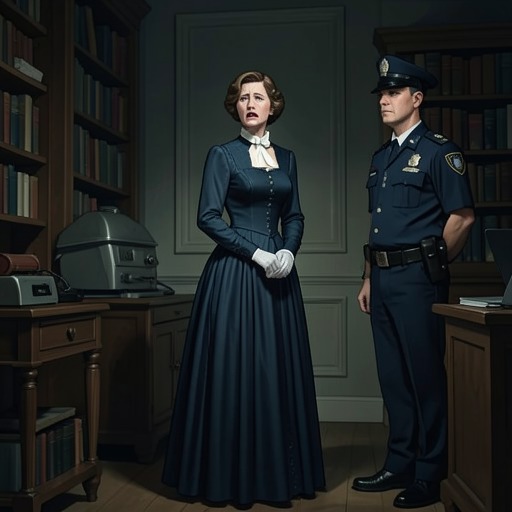
Hutchinson enters the story as the other driver in the collision involving the young people’s Mercedes and the Lincoln. At the roadside she is dazed and disheveled, wearing a black dress and white coat that remain unstained. She has no apparent injuries. In her early forties and expensively dressed, she is crying and receiving help from two women while a highway patrolman explains that she says she is all right. Her visible distress becomes part of the first account of her: she is not introduced through an admission of fault, but as a shaken woman who has survived a terrible accident.
The patrolman tells a fireman that Hutchinson feels terrible about Phillip’s death and that officers will take her home. She has three children, and the officers interpret her grief in light of her own experience as a mother. She has seen Phillip’s body removed and is deeply upset by the possibility that the injured teenagers may also die. At 12:30 a.m., officers take her to her Clay Street home in San Francisco. Her husband is in Washington, D.C., she has been at a party in Belvedere, and her children are asleep. The housekeeper cries when she sees Hutchinson’s disheveled state and hears what happened.
Hutchinson thanks the officers, declines to go to the hospital, says she will consult her own doctor the next morning if necessary, and asks them to call with news of the young people. She already knows Phillip has died but has not yet been told that Allyson may not survive the night. These details present her as attentive to the victims’ families, even as the circumstances that could explain the collision remain unresolved.
The Bridge Collision and Unresolved Responsibility
At the scene, a fireman relays the patrol’s preliminary account: both cars may have drifted across the center line, and the collision’s force and the cars’ final positions make it difficult to reconstruct exactly what happened. Hutchinson says she was not over the line. The fireman notes that she appears to have been farther over it, but also says there is no reason to disbelieve her. Her identity as Senator John Hutchinson’s wife is immediately recognized, prompting a response from the other fireman that underscores the political prominence attached to her name.
The investigation does not resolve the competing possibilities. Trygve Thorensen later tells Page Clarke that the patrol still considers the evidence inconclusive: the cars seem almost equally implicated, and the collision prevents investigators from determining with certainty who crossed the line or why. Phillip’s blood tests show alcohol, but not enough to classify him as drunk. Hutchinson appears sober to the patrol, and officers do not test her for alcohol. One patrolman considers an alcohol check, but his partner dismisses the idea after accepting Hutchinson’s assurance that she had not been drinking. He has also poured her a brandy, reasoning that she needs it after the shock of the crash. The choice to forgo a test leaves an important question unanswered; it is not proof that she had been drinking.
The uncertainty matters to the bereaved families, who have powerful reasons to want an explanation but no evidence that can settle blame. Trygve initially feels anger toward Phillip, Chloe, and Hutchinson, then acknowledges that no one can know for sure what happened. Page, focused on Allyson’s condition, also recognizes that identifying a driver would not reverse the injuries or bring Phillip back. The narrative distinguishes that unresolved responsibility from the later revelations about Hutchinson’s drinking: the later evidence makes suspicion more plausible, but cannot retrospectively supply a test that was never taken or establish the precise cause of the bridge crash.
Public Image and the Chapman Funeral
The first newspaper coverage gives Hutchinson a sympathetic public image. Although she refuses an interview, the article includes a photograph and statements from a senator’s aide, who emphasizes that she is too upset to comment and understands the grief of Phillip’s parents and the anxiety of the injured children’s families. The account does not directly accuse Phillip of being drunk, but it implies that the teenagers had been drinking and leaves readers with the impression that the young driver may have caused the crash.
Trygve objects to the article’s framing. He argues that reporters can select insinuations and details to fit a preconceived story, and that Hutchinson’s aides are also shaping the account in her favor. His criticism does not establish that she caused the collision; it draws attention to the unequal ability of an established political family and the family of a dead teenager to influence public perception. Phillip’s age and the general assumption that boys drive recklessly make it easier for an uncertain case to settle, in public imagination, on his presumed fault.
Hutchinson attends Phillip’s funeral, where Page Clarke sees her crying quietly in a pew. She appears to have come alone and seems as moved as the other mourners. Page cannot discern more than genuine-seeming grief from her presence. Outside, reporters follow Hutchinson to a limousine, but she leaves without speaking to them; they then turn their cameras toward the grieving teenagers and the Chapman family. Hutchinson has also made a large donation to Redwood High School in Phillip’s name. Later, Trygve wonders whether her conduct at the funeral made her look sympathetic, while Page considers that Hutchinson may simply have felt terrible whether or not she was responsible. The story preserves both readings rather than presenting the funeral or donation as proof of motive.
Reports of Alcohol Use and Hidden History
Before the La Jolla crash, Page hears two kinds of information that complicate Hutchinson’s public image but do not settle what happened on the bridge. Jane tells her that a friend who has known Hutchinson for years says Hutchinson had a drinking problem from her teens, received treatment years earlier, and, as far as that friend knew, had not relapsed. Page treats this as hearsay and conjecture, and answers in a spirit of fairness that Hutchinson is probably sober. The possibility of relapse troubles Jane, but neither woman can verify whether Hutchinson drank on the night of the collision.
Later, Trygve tells Page that someone reportedly saw Hutchinson extremely drunk at a party and that the incident was handled quietly. He recalls that she had seemed apologetic and distraught after Phillip’s death, and that her donation had given him the impression she might feel guilty. Page allows that she could have been expressing sorrow without being responsible for the crash; by then, she has stopped actively blaming Hutchinson. These reports remain secondhand, and the characters’ interpretations are explicitly uncertain.
After the later crash, Trygve obtains information from an investigative reporter. According to the source, Hutchinson had spent time in a well-known Los Angeles alcohol-treatment clinic four times in the previous three years, under another name, without successful treatment. A clinic source confirms that she had been there. The reporter also finds Department of Motor Vehicles records indicating at least six minor accidents and one more serious collision on Martha’s Vineyard, where Hutchinson spends summers. Those incidents had caused no deaths, though some involved minor injuries and Hutchinson herself had sustained a concussion in one. The records had been sealed or quietly suppressed where possible; Trygve’s source suspects that political influence and possible bribes helped keep them out of view, while the family’s lawyers and public-relations staff had worked to conceal her record. The suspected methods of suppression are reported allegations, not independently demonstrated facts in the account.
The La Jolla Crash and Retrospective Significance
The earlier questions return when a television report announces that Hutchinson has been arrested at the scene of a head-on collision in La Jolla. Tests show that she was driving while intoxicated. The crash kills a family of four, including a woman who was eight months pregnant; despite emergency efforts, the baby also dies. Hutchinson’s twelve-year-old daughter survives in stable condition with injuries. In the first report, a family spokesman argues that Hutchinson is probably not at fault despite the early evidence. The program also identifies her involvement in the Golden Gate Bridge collision eleven weeks earlier, where Phillip died and Allyson and Chloe were seriously injured.
The new report changes the meaning of the missing alcohol test. Page, crying with Chloe while Trygve turns off the television, concludes that Hutchinson must have been drunk on the earlier night and says she nearly killed all of them. Trygve’s suspicions now seem vindicated to Page, but the distinction between inference and established fact remains: the La Jolla tests prove intoxication during that later crash, not during the collision on the bridge. The later evidence strengthens the possibility that the earlier accident involved drinking while leaving its exact cause unresolved.
The La Jolla crash brings public accountability into sharper focus. Hutchinson is arrested for felony vehicular manslaughter; Trygve expects she will have to stand trial and doubts that her husband’s position can protect her from the scale of the deaths. The reported charge is four counts, since prosecutors cannot charge her for the death of the fetus. The account does not give the eventual legal outcome. It does report that the later collision killed six people when the baby is counted, while the earlier bridge crash had already killed Phillip and left Allyson in a coma and Chloe with severe injuries.
For Page, the news also changes how Phillip’s death may be understood by others. The later proof of Hutchinson’s intoxication seems to vindicate him, after the first article had tilted suspicion toward the teenage driver without conclusive evidence. Yet Hutchinson’s story is not simply a final identification of the bridge driver as guilty: it exposes how public status, a sympathetic image, untested assumptions, and concealed records can shape what is believed before decisive evidence appears. Her arc moves from a visibly grieving, apparently unharmed driver whose responsibility cannot be determined to a repeat offender whose later conduct confirms a grave danger, while leaving the original collision’s precise cause officially uncertain.