Chloe Thorensen
AccidentChloe Thorensen’s defining arc turns on the collision between an intensely imagined future and an accident that abruptly makes that future uncertain. At fifteen, she is an accomplished young dancer, newly accepted by the San Francisco Ballet School and preparing to pursue ballet more seriously. A secret date with Jamie Applegate leads to the crash that gravely injures her; after surgery, the prospect of returning to ballet is gone, while the possibility of walking remains. Her story holds those outcomes together without treating one as a substitute for the other.
Identity and Background
Chloe has just turned fifteen at Christmas and is the same age as Allyson Clarke. She is small, with dark hair, fair skin, and her father’s large blue eyes. Her appearance is described in contrast to Allyson’s, but the more consequential difference is the discipline visible in her movement: after eleven years of ballet, Chloe carries herself like a trained dancer.
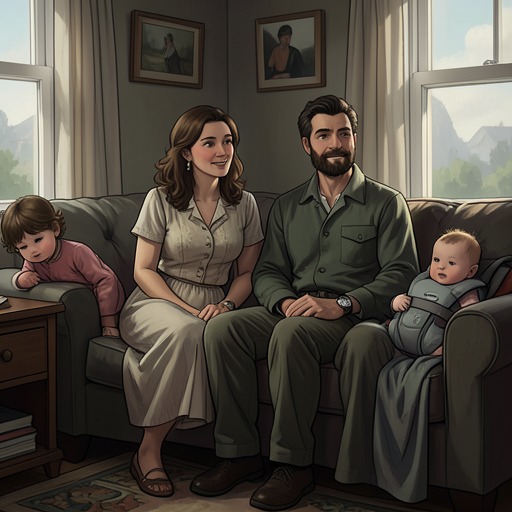
Her father, Trygve Thorensen, is a freelance political writer who works from home and takes an active role in raising his children. His two sons are college-aged, while Chloe and Allyson are teenagers. Since Chloe’s mother left, Trygve has managed the household and parenting with warmth, finding time for his work around the children’s schedules. Chloe’s family life is therefore presented through the practical care her father gives, rather than through an account of her own response to her mother’s departure.
Ballet, Friendship, and the Date
Ballet is not an incidental hobby for Chloe. She has completed eleven years of training, and after gruelling auditions she has been accepted to transfer to the San Francisco Ballet School in the fall. The acceptance gives her a clear next step just as she begins to imagine herself in a more adult social world.
That night, she meets Allyson dressed for a date in a borrowed black turtleneck, leather miniskirt, and tights. The clothes assemble a more sophisticated look from items borrowed from friends and left behind at home; beside Chloe, Allyson worries that she looks like Little Bo Peep. Their contrasting outfits express their different styles, but the scene also shows their closeness: they are preparing for the same outing, and Chloe’s expectation is visible as she repeatedly checks her watch and looks down the street.
The evening is a milestone for both girls. Chloe has been dreaming about Jamie since she was a freshman; he is now a junior, and he arranged the double date. Chloe organized it with Allyson, who is paired with Phillip Chapman, a senior. Both boys are on the swimming team. Allyson has had only tentative dates, usually in groups or with parental transport, and worries that her mother would not approve of her going out with a senior. This outing is different: the boys are to pick them up in a car and take them to dinner and a movie. Chloe’s excitement helps carry her friend past her sudden regret, even as the girls’ secrecy places them outside the safeguards their parents would have chosen.
The Crash and Its Immediate Consequences
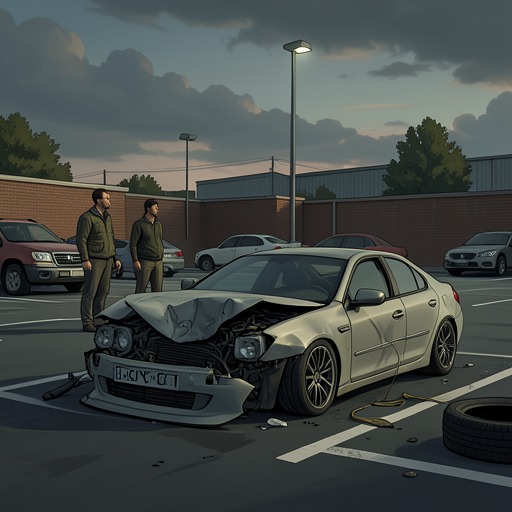
During the crash, Chloe is in the back seat beside Jamie. The force of the collision drives the front seat backward, trapping her between the seats. Rescuers cannot see her legs; she is unable to move and is in severe pain. Jamie, already in shock, initially appears unable to understand how she has ended up beside him. The scene’s confusion sharply interrupts the date’s adolescent anticipation: the car that made the evening feel newly independent becomes the site of an emergency neither teenager can control.
At the hospital, Trygve learns that Chloe has multiple compound fractures in both legs, a shattered hip, a broken pelvis, and internal injuries. Surgeons are removing her spleen and are concerned about possible liver damage. Her treatment requires replacing the hip and stabilizing the pelvis with pins. Trygve’s distress is bound to what the injuries threaten as well as to their immediate danger: Chloe had worked toward ballet school, and he fears she may never walk again. The accident thus puts her carefully prepared future in doubt before she has had a chance to begin the next stage of training.
Surgery, Recovery, and Narrative Significance
Chloe’s operation goes well, although she loses a great deal of blood and faces a long, uncomfortable recovery. The pelvis is put in place, the hip is replaced, and steel rods and pins are inserted in both legs; the surgeon expects those supports to be removed in a year or two. Chloe remains in recovery until at least noon, is expected to spend about a week in intensive care, and is projected to remain in hospital for a month or longer. Her brothers share her blood type, offering a practical source of help if transfusions are needed.
The medical prognosis is cautiously hopeful. The surgeon believes Chloe may regain the use of her legs, but makes clear that ballet is over. With a successful recovery, walking—and perhaps dancing in some form—may still be possible; the surgeon also imagines the more distant possibility of children. Those possibilities are not guarantees, and the next weeks matter. The distinction between losing ballet and retaining the chance of other forms of movement prevents the prognosis from becoming either an easy triumph or a declaration that her life is over.
Chloe’s injury gives the crash a personal measure beyond the immediate emergency: it threatens an ambition built through years of practice and a recent hard-won acceptance. Yet the operation’s outcome changes the family’s first fear of permanent immobility into an uncertain, extended recovery. Her arc, as presented here, ends not with a completed rehabilitation but with that uncertainty: the ballet future has closed, while walking and a life beyond the hospital remain possible.