Tom Chapman
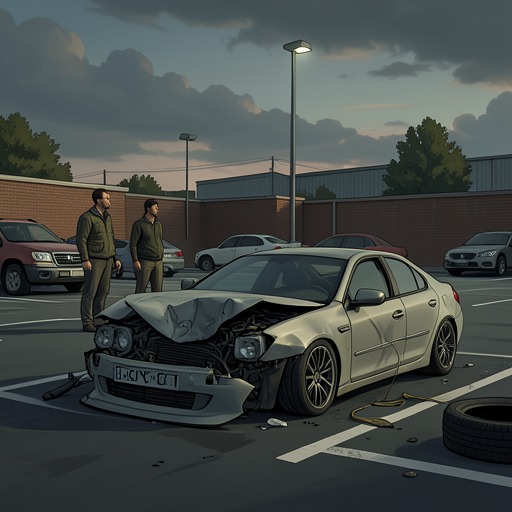
AccidentTom Chapman is Phillip Chapman’s father and a well-known attorney. After Phillip is killed in the collision, Tom’s grief takes the form first of anger at the implication that his son was responsible, then of a vow to protect his son’s reputation. His response makes the uncertainty over fault inseparable from a question of unequal scrutiny: Phillip’s blood was tested, while Laura Hutchinson was assumed to be sober and was not checked. The story does not resolve who caused the crash, but Tom refuses to let that uncertainty become an excuse to blame Phillip by implication.
Identity and Family
Tom arrives at Marin General Hospital with Mary Chapman at six in the morning, after they have driven there as soon as they were called. They are both in their late fifties. Phillip was their only child; they had him late and had never been able to have another. He was the light of their lives, and their wish to keep him close had shaped a consequential family decision: they had not wanted him to go away to college in the East because the distance felt unbearable. Now the separation is absolute, and no journey can bring him back.
The hospital scene establishes Tom not only as a father but as a man accustomed to argument and public standing. He is a respected attorney, and his professional identity becomes important when he hears how the crash is being discussed. Yet the account never makes his legal training a shield against grief. He and Mary listen to the doctor together, and Tom’s effort to dispute an implication about Phillip is also the effort of a father confronting the death of his only child.
The News and the Question of Blame
The doctor tells the Chapmans that Phillip died instantly and could not have survived the collision. He also explains that there was a small amount of alcohol in Phillip’s blood, below the legal threshold for intoxication, but potentially enough to affect someone his age. The doctor does not say that Phillip caused the crash: it remains unclear who struck whom or why. Even so, the mention of alcohol carries an insinuation that Mary and Tom hear as a threat to their son’s name.
Tom reacts with visible anger when he learns that Laura Hutchinson, the other driver, was not tested. The patrolmen had assumed she was sober. To Tom, the contrast is stark: a seventeen-year-old’s small amount of alcohol is recorded and made potentially suggestive, while an adult woman connected to a powerful political family is spared the same examination. He challenges the young doctor over what he sees as a double standard, insisting that the test does not establish that Phillip was drunk or responsible. His certainty about his son’s habits is personal testimony, not a finding about the collision; the facts available to the family still do not establish which driver crossed the center line.
Grief, Anger, and Resolve
Tom’s anger briefly works as a buffer against loss. He wants the other driver to be at fault, and he wants someone to answer for what has happened. But that demand for blame turns inward as well: he wonders why he and Mary went away and left Phillip on his own, and why they trusted him to manage the evening. The story presents these questions as expressions of a bereaved parent’s helplessness, not as evidence that the Chapmans caused the crash. When Tom takes Mary in his arms, the argument over responsibility falls away for the moment and both are crying.
Seeing Phillip at the hospital deepens that grief. Mary remembers him as the child she first held and as the son who had filled their life with ordinary pleasures and small surprises; she knows she will never see him grow older. Tom, too, is overwhelmed by the loss. The account does not give his grief a separate speech or resolution: his anger fades, and the couple’s shared mourning remains where certainty about blame cannot be found.
Defending Phillip’s Memory
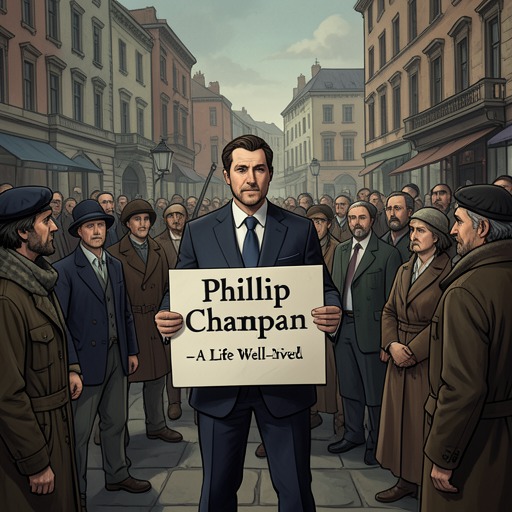
As the Chapmans leave the hospital, a photographer’s intrusion makes their grief public at the moment they are most vulnerable. Tom responds by vowing that Phillip will not be blamed for the disaster. If necessary, he will clear his son’s name; he will not allow Phillip’s memory to be stained by innuendo or used to protect Laura Hutchinson or her husband’s political position. The vow is directed against a possible public story, not backed by a definitive account of the collision. Tom believes his son was not at fault, but the evidence presented to him cannot settle the matter.
Mary is unable to take in his resolve. Her attention remains fixed on the last image of Phillip, while Tom turns toward the prospect of defending him from what others might say. The difference does not diminish their shared grief; it shows how differently each parent bears it. Tom’s insistence on his son’s reputation gives his anger a purpose when the loss itself cannot be repaired.
Narrative Role
Tom’s brief but consequential appearance links private bereavement to institutional and political inequality. The police decision not to test Laura rests on an assumption of sobriety, while the test of Phillip’s blood becomes part of the account his parents must hear. Tom’s professional status enables him to name the unfairness directly, but his authority cannot supply the missing facts or undo the loss. The narrative later reveals further information about Laura’s history that was hidden from public view; that disclosure broadens the reader’s understanding of the unequal scrutiny surrounding the crash, without establishing that Tom knew of it.
His arc therefore moves from outrage at an insinuation, through a fleeting wish to locate blame, to a specific commitment: Phillip will not be casually made responsible in the public aftermath. The collision remains unresolved, and Tom’s vow cannot turn grief into proof. Its force lies instead in his refusal to let an uncertain investigation, or a powerful family’s standing, determine what Phillip’s death is made to mean.