Dana Thorensen
AccidentDana Thorensen is Trygve Thorensen’s former wife and the mother of their children, whose departure ended a marriage shaped by sharply different expectations of work, family, and home. Once an aspiring actress, she struggled with the life she built after leaving Hollywood; the account presents her discontent not simply as a marital dispute but as a prolonged mismatch between the future she wanted and the domestic role she came to occupy.
Background and Early Marriage
Dana met Trygve in Hollywood when they were both very young. He was briefly trying to write scripts after leaving school, while she was beginning an acting career and loved her work. When Trygve asked her to move to San Francisco, she agreed because she loved him, but the move separated her from the friends and excitement she associated with L.A. She tried commuting and took repertory work with ACT in San Francisco; she also worked as an extra. None of these arrangements restored the life she had left behind.
Their family began sooner than Dana expected. She became pregnant unexpectedly, and Trygve insisted on marrying her. The account describes the marriage as deteriorating quickly after that decision. Dana had not been sure she wanted marriage and knew she did not want more children. She experienced the family life that followed as a part she had not chosen, while Trygve wanted a settled marriage and a large family. His hopes included a simple life and camping holidays; her aspirations remained associated with places such as New York, Paris, Hollywood, and London.
Family Life and Growing Estrangement
The birth of Bjorn Thorensen, who has Down syndrome, was an additional strain for Dana. The narrative says she struggled to relate to her children and seemed to blame Trygve for the circumstances of her life. When Chloe Thorensen was born, Dana regarded the family situation as having become still more unbearable. These descriptions locate her distress within the family’s history without making Bjorn or Chloe responsible for it.
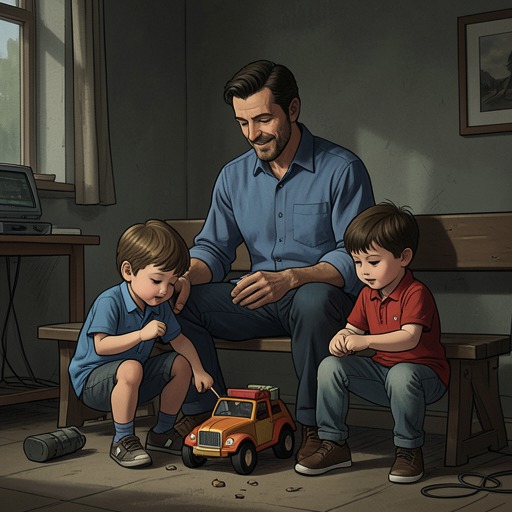
Trygve, by contrast, took readily to parenting. A freelance political writer whose work appeared in The New York Times, magazines, and foreign journals, he worked from home and arranged his work around the children. He included them in his activities, took groups of children camping and fishing, and helped organize the Special Olympics, where Bjorn excelled. Dana did not share Trygve’s apparent satisfaction in family life or his delight in Bjorn’s achievement. The contrast between his warm, active involvement and her alienation became a defining feature of their household.
The account also describes Dana as resenting the everyday labor of family life: after roughly twenty years in the suburbs, she was tired of being chauffeur, maid, and tutor to the children. Trygve’s commitment did not resolve the difference between them. He wanted the marriage to work and tried counseling and two trial separations; Dana wanted freedom from a life she experienced as constricting. Their conflict was therefore not only about particular disagreements, but about incompatible expectations that endured despite repeated efforts to preserve the relationship.
Affairs and the End of the Marriage
During the later years of the marriage, Dana had frequent affairs, including infidelity over the last couple of years before she left. The narrative says she appeared unconcerned about who knew, including Trygve, and suggests that she wanted him to end the marriage. Trygve remained deeply attached and made excuses for her unhappiness, attributing it to the difficulty of giving up her career, the move from Hollywood, the demands of marriage, and the shock of having a child with Down syndrome. He did not accept the seriousness of the estrangement until she finally left.
Her departure came after a long period in which, according to the account, she could barely be civil to him. The separation brought Trygve grief, but also the unexpected recognition that the end of the marriage had relieved a constant pain. He had spent years hoping Dana would adjust; afterward, he understood more clearly how unhappy the relationship had been. He did not want to marry again or begin another serious relationship, and at first avoided dating altogether.
Life After Leaving and Continuing Conflict
A year before the later hospital conversations in the novel, Dana left Trygve and took a job with a theatrical agent in England. She offered to take their three children with her and place them in English boarding schools, but Trygve had no intention of giving them up and kept them with him. Her offer and his refusal mark the practical as well as emotional consequences of the divorce: she sought a different life abroad, while he remained responsible for the children in Ross.
The divide remained visible during a crisis involving Chloe and Allyson Clarke. While in London, Dana returned from a weekend in Venice and was horrified by the accident. In a call to Trygve, she blamed him for allowing Chloe to go out, failing to know whom she was with, and not suspecting that something might go wrong. Trygve admitted that he might have been foolish to trust the girls, but defended the need to give them some freedom, noting that they were usually responsible and had acted foolishly on this occasion. He described the accident as exceptionally bad luck. The exchange shows the old pattern in a new emergency: Dana assigned blame to Trygve, while he acknowledged uncertainty without accepting that constant surveillance was possible.
Narrative Role
Dana is chiefly presented through the history of her marriage and through Trygve’s experience of her leaving. Her story supplies an important contrast to his patient, involved parenting, but it also gives her discontent concrete circumstances: an abandoned acting career, unwanted domestic responsibilities, and a family life she had not imagined for herself. The novel does not present those circumstances as undoing the harm caused by her affairs or her withdrawal from the family. Instead, her absence continues to shape the children’s lives, while Trygve’s decision to keep them with him makes his own role as their father still more central.