Phillip Chapman
AccidentPhillip Chapman is a seventeen-year-old high-school senior whose death in a head-on collision on the Golden Gate Bridge becomes both a personal catastrophe and a dispute over blame. A captain of the swimming team and a boy remembered for his promise, he is introduced on the evening of a date with Allyson Clarke; after the crash, his name is caught between uncertain evidence, a newspaper’s suggestive framing, and his family’s effort to defend his character. The book gives no direct access to Phillip’s thoughts. Instead, his brief presence and the accounts of those left behind make him the center of an unresolved question: how to remember a young person without turning incomplete evidence into a verdict.
Identity and Introduction
Phillip is a senior, seventeen years old and nearing graduation, and captain of his school’s swimming team. Allyson is nervous about the age and status difference between them: he is almost eighteen and will graduate in two months, while she has had only tentative dates arranged within familiar groups and under parental supervision. Chloe Thorensen reassures her that Phillip is fortunate to be going out with her, but Allyson remains unsure that he would choose her.
That uncertainty gives way when Phillip arrives with Jamie Applegate in an old gray Mercedes. The boys wear blazers, slacks, and ties, and the two girls see them as handsome and older. Phillip explains that they are late because he stopped for gas and had trouble finding a station that sold diesel. He asks everyone to wear seat belts, a small act of care that makes the outing feel more adult to the teenagers. He then tells Allyson she looks nice and that he is glad she came. The date is ordinary in its particulars, which makes its sudden end especially consequential.
The Collision and Death
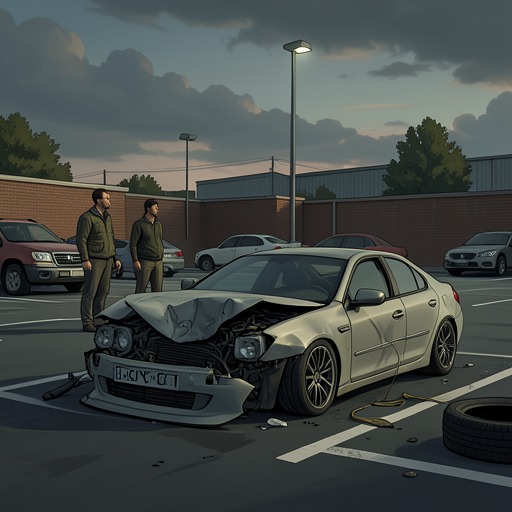
The teenagers are on an outing arranged through Jamie and Chloe’s plans. Allyson and Chloe have kept the date from their parents because they expect objections to going out with older boys and, in particular, to riding in a car driven by someone they do not know well. The group sets off toward Luigi’s. Later that night, the Mercedes collides head-on with a black Lincoln on the Golden Gate Bridge. The force of the crash leaves the cars entangled, and the rescuers’ first assessment is that survival is unlikely.
Phillip is found dead in the Mercedes. A doctor and a paramedic confirm that he has died; the account establishes that he was killed instantly, at seventeen, on a Saturday night in April. The same crash leaves Allyson critically injured, Chloe badly hurt, and Jamie in shock but expected to recover. Phillip’s death is therefore not an isolated loss in the narrative: it is the irreversible outcome around which the surviving teenagers’ injuries, their families’ uncertainty, and the later struggle over responsibility gather.
Uncertainty, Evidence, and Public Blame
The crash does not yield a clear answer about fault. The collision is so severe that investigators cannot determine from the cars’ positions which vehicle crossed the line or why. Phillip’s blood test shows some alcohol, but not enough to make him legally drunk. Jamie later says that Phillip had half a glass of wine and two cups of coffee; this account contributes to the discussion without settling what caused the collision. Trygve Thorensen hears that the highway patrol considers the evidence inconclusive and that the cars may be equally to blame.
The treatment of Laura Hutchinson, the other driver, sharpens the question of fairness. Police do not test her for alcohol at the scene because officers assume she is sober. Phillip, by contrast, is tested, and the information about alcohol in his blood reaches his parents with an implication that he may have been responsible. Tom Chapman, a well-known attorney, objects to the unequal assumptions and resists any suggestion that his son was drunk. His anger is bound up with grief: he wants someone to answer for the death, while also wishing the accident had never happened.
Public accounts further shape Phillip’s posthumous reputation. Reporters go to his school and ask about the kind of boy he was; his strong grades and standing as a swimming star become part of the coverage. A newspaper article centers Laura’s devastation and presents her as a respectable mother, while its presentation leaves readers with the impression that Phillip and his group had been drinking and that he may have caused the crash. Trygve recognizes how carefully selected details and insinuation can create a conclusion without explicitly stating it. The article’s imbalance matters because Phillip cannot answer it, and his parents have to contend not only with his death but with the possibility that the public will remember him as culpable.
Family, Friends, and Remembrance
At Phillip’s funeral at St. John’s Episcopal Church, the scale of the loss is visible in the hundreds of young people who attend. A photograph of him with the swimming team appears in the program, and members of the team serve as ushers. Jamie sits between his parents, visibly devastated and supported by his father. Phillip’s parents and grandparents enter to take their places in the front pew. The scene presents him not simply as the teenager implicated in an unresolved accident, but as a friend, teammate, child, and grandchild whose absence is shared across generations.
The consequences extend into the survivors’ lives. When Jamie visits Chloe Thorensen at home after her hospital stay, the date that had seemed exciting before the crash returns as a source of guilt and grief. He and Chloe talk privately while their families remain nearby. Jamie struggles with having survived without serious physical injury when Phillip and the two girls suffered so much; he sees a therapist and attends a group for people who survived accidents in which others were lost. Chloe helps him speak about feelings he has difficulty expressing elsewhere. Their conversations also make Phillip’s absence immediate: Jamie cannot call his friend, and Chloe cannot call Allyson while she remains unavailable to her.
Later Revelations and Narrative Significance
Later, Laura is arrested after an intoxicated-driving collision in La Jolla that kills members of another family. News of the arrest and the confirmed intoxication devastates Page Clarke and Chloe, and makes Page conclude that Laura had been drunk in the earlier crash as well. That conclusion is an emotional and retrospective reassessment, not a new finding that definitively establishes who crossed the line on the Golden Gate Bridge. The earlier collision remains officially unresolved in the evidence presented. Nevertheless, the later report changes how the survivors understand the initial assumptions that favored Laura and how readily suspicion settled on Phillip.
Chloe is especially angry that Phillip had been allowed to carry the blame while the other driver’s possible drinking went unexamined. A witness later reports that Laura had seemed to drink heavily before leaving a party; Chloe sees this as belated support for what the first investigation failed to pursue. Phillip’s parents, meanwhile, plan to sue the newspaper to clear his name. The novel does not report the outcome of that effort or a final determination of fault in the bridge collision. Phillip’s significance lies partly in this unresolved space: his death is certain, but the public story attached to it is shaped by assumption, status, grief, and incomplete proof. The later crash vindicates the survivors’ suspicion of unequal scrutiny without undoing the uncertainty surrounding the night Phillip died.