Page Clarke
AccidentPage Clarke is introduced as a loving, capable mother whose life is reorganized by a daughter’s life-threatening accident and the collapse of her marriage. As she keeps caring for her children, the crisis brings several kinds of vulnerability into view: Allyson Clarke’s uncertain recovery, Page’s discovery of Brad Clarke’s infidelity, and the childhood abuse her mother has long denied. Her eventual separation from Brad and commitment to Trygve Thorensen mark not an escape from hardship but a decision to build a different family future.
Identity and Family Life
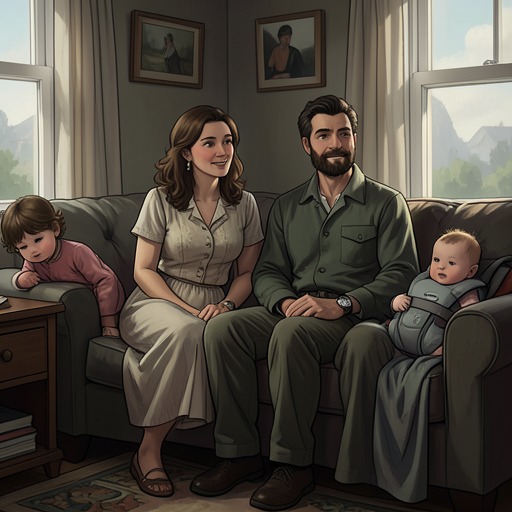
At the novel’s opening, Page is driving home across the Golden Gate Bridge into Marin County with her seven-year-old son, Andy Clarke, after his baseball game. She praises his catch, remembers his school plays and field trips, and delights in being present for him. The scene establishes her attentive, affectionate parenting through ordinary gestures: she ruffles his already untidy hair, shares his pleasure in the game, and recognizes that he knows how much she loves him. She is also presented as a good friend and wife, hardworking, artistic, and generous with the people important to her.
That portrait makes the later family crisis more than a series of external emergencies. Page’s identity is closely bound to showing up for others, and her care persists even when she is exhausted, frightened, or hurt. When Allyson is hospitalized, Page gives blood because it is the same type as her daughter’s. She also maintains Andy’s routines, picking him up from Ross Grammar School and taking him to familiar places while trying to keep his life steady.
Allyson’s Accident and the Strain on the Family
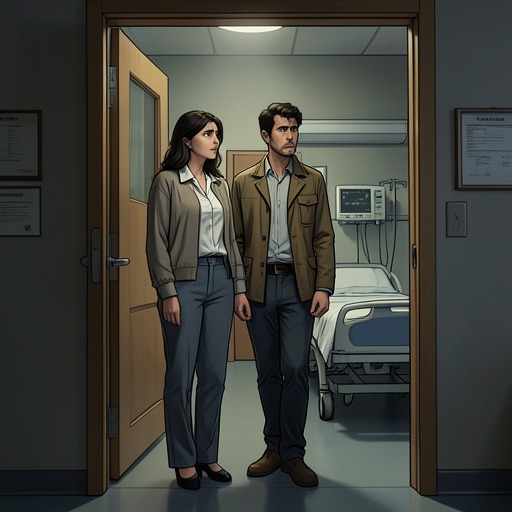
The highway patrol tells Page that Allyson has been in an accident and is unconscious on the way to Marin General Hospital. Page’s immediate concern is whether her daughter is alive. At the hospital, she tries to understand the injuries and asks whether Allyson might ever be normal again. The doctors explain that recovery could involve lasting effects on motor skills, reasoning, or personality, and that further complications may emerge after surgery. Page’s questions expose the terrible uncertainty she must live with: survival is possible, but no one can promise what recovery will mean.
Brad is initially away and calls Page after learning she is at the hospital. When she tells him that Allyson has had an accident, Page is so overcome that she struggles to speak. The emergency draws the parents together around their daughter, but it also intensifies the marital fracture already underway. During the family’s vigil, Page tells Trygve that Brad blames the other driver and seems also to blame her for not knowing what Allyson was doing. Page begins to accept that blame herself, wondering whether closer supervision might have prevented the accident. Trygve counters that they had no reason to suspect the young people and that trusting them was not itself a wrongdoing. His reassurance matters because Page’s grief repeatedly turns into an accusation against herself.
The crisis is visible to Andy as well. He asks why his parents are fighting when they never used to. Page explains that adults who are sad or frightened may take those feelings out on one another, while withholding the truth about Brad’s affair. Andy notices the meanness in her exchanges with Brad, and his distress makes clear that the marriage’s breakdown is affecting the children even when Page tries to shield them from its cause.
Marriage, Separation, and a New Attachment
Brad eventually tells Page that his relationship with another woman may be serious. Page understands from his hesitation and unhappy expression that this is not a passing fling; she fears that their marriage may already be over and asks how long the relationship has lasted. His disclosure gives a name to the distance she has been living with, but it does not immediately settle what she should do. In the hospital, she is angry, hurt, frightened, and lonely, yet continues to attend to Allyson and Andy.
Trygve becomes the person Page can depend on during the vigil. When she admits that she does not know what she wants after discovering that her marriage was not what she believed, she also tells him that he is the friend she can rely on and the man she wants to be with. Their first kiss follows this admission, but their bond is presented as more than an answer to Brad’s betrayal: Trygve has stayed beside her through the emergency and offers not to pressure her while she decides what to do about her marriage. Two weeks after the accident, they acknowledge the price both families have paid and allow themselves to hope that the upheaval might also bring blessings.
The separation becomes explicit when Page tells Brad to move out. By then, his absences, her hurt, the strain on Andy, and Brad’s difficulty facing Allyson have made their shared home untenable. Page recognizes that the marriage may have been over before she understood what Brad’s other life meant. The decision turns an unspoken breakdown into a practical change, though its consequences are immediately felt: Andy encounters Brad packing suitcases and is confused about whether his father is leaving again.
Childhood Trauma and Family Silence
A confrontation with her mother brings Page’s own childhood back into the present. When her mother minimizes the difficulties of her marriage to Page’s father and then acts as if she does not understand what Page means, Page challenges her denial. Later, Page tells Trygve that her father sexually abused her from the time she was thirteen until she was sixteen. She says that her mother knew and enabled the abuse in a household where her father was violent toward her mother. Page also explains that Alexis had been abused before her, making the family’s silence part of a wider history rather than an isolated secret.
Page left home at seventeen, worked as a waitress to pay for an apartment, and later married Brad after meeting him in New York. She found a therapist and made peace with what had happened, but her mother’s continuing denial remains deeply painful. When her father died, Page even wondered for a time whether she had caused his death. The old wound returns especially sharply amid Allyson’s accident and the strain with Brad: Page tries to maintain contact with her mother, but each encounter revives the memory of being thirteen and of a parent who still refuses to acknowledge the truth. Telling Trygve is a consequential act of trust. He listens without demanding more than she wants to say, and Page explains that she feels safe enough with him to be honest.
Recovery, Commitment, and Narrative Significance
Allyson’s progress remains uncertain, but a decisive change comes when she wakes from the coma and says Mama. The family has driven back from Lake Tahoe by the time she is asleep again, now sleeping normally rather than lying in a coma. She is still in intensive care and being weaned from the respirator, so the moment is a beginning rather than a full recovery. Page’s account of Allyson’s first word moves the family to tears, including Trygve and his children, and briefly gathers their separate grief into a shared response.
Page’s future with Trygve develops alongside that fragile recovery. She considers taking her artwork more seriously, perhaps finding a studio and earning money from murals once Allyson is out of intensive care or the family has a settled routine. Trygve encourages her ambition and intends to remain present for Page and Andy as Brad moves out. Their relationship therefore includes practical care and attention to Page’s own work, not only romance.
Near the end of the supplied events, Page asks Trygve how he would feel about marrying at Christmas if she were nearly six months pregnant. She explains that the pregnancy surprised her and that she had hesitated to tell him because of the children and the uncertainty surrounding their lives. She has wanted another baby, and Trygve is willing to wait if she needs time; her news transforms an imagined future into an immediate family decision. Page’s trajectory links care with self-recognition: she remains a mother through the accident and its aftermath, but she also confronts a denied past, ends a marriage that has ceased to hold, and chooses a new partnership and possible marriage on her own terms.