At the opening of Acts
Jesus’ Final Instructions
After the narrative of Luke's Gospel ends, the story continues: the resurrected [Jesus](entity:character-recall-character-jesus-e3ecfe1d0b33) appears to his disciples and speaks about the kingdom of [God](entity:character-recall-character-god-28f937b98b12). He commands them to remain in [Jerusalem](entity:location-recall-location-jerusalem-8e4409a0f555) and wait for the promised [Holy Spirit](entity:character-recall-character-5141fcd5d977), thereby indicating that the movement in Acts is a continuation of Jesus' ministry, not
Immediately after Jesus’ final instructions
The Ascension
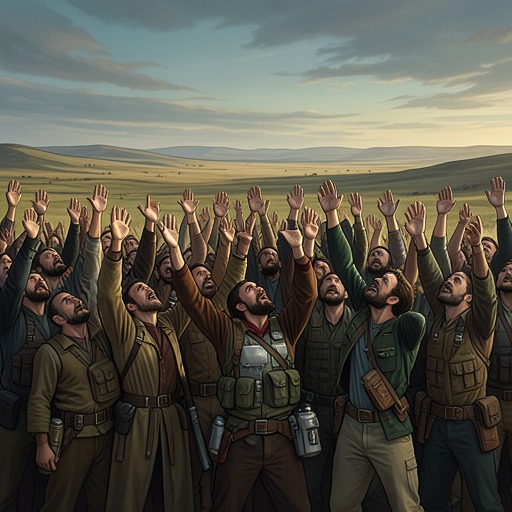
[Jesus](entity:character-recall-character-jesus-e3ecfe1d0b33) rose from the eyes of the disciples and was taken up to heaven. Two heavenly messengers told the astonished followers that he would come again, turning their gaze from looking up to the work still before them
After the Ascension and before Pentecost
The Community Waits
The disciples returned to [Jerusalem](entity:location-recall-location-jerusalem-8e4409a0f555) and gathered with the women and [Jesus](entity:character-recall-character-jesus-e3ecfe1d0b33)' family. They prayed together and waited for the promised [Holy Spirit](entity:character-recall-character-5141fcd5d977); their communal life itself had become part of their preparation for the mission. [Peter](entity:character-recall-character-3fda7cb5b60e) spoke about Judas (the one from Galilee) who had left an empty place. He
During the community’s wait before Pentecost
Matthias Is Chosen
The gathered believers listed the qualifications for replacing Judas: the candidate must have been with the followers during [Jesus](entity:character-recall-character-jesus-e3ecfe1d0b33)' ministry and must be a witness to the resurrection. They proposed Joseph Barsabbas and [Matthias](entity:character-recall-character-7b4959f9c550), then drew lots to seek [God](entity:character-recall-character-god-28f937b98b12)'s choice
At Pentecost, after the Ascension
The Spirit Comes at Pentecost
When followers gathered together, the room was filled with sounds as if a fierce wind had blown through. As if the tongue of fire had fallen upon them, they began to speak in other languages under the empowerment of the [Holy Spirit](entity:character-recall-character-5141fcd5d977)
Immediately after the Spirit’s arrival
The Nations Hear
Visitors from many regions heard the disciples speaking in a language they could understand. The crowd was amazed to find that people from far away could hear the works of [God](entity:character-recall-character-god-28f937b98b12) being proclaimed in their own dialect; some laughed and said that those speaking were drunk. This scene portrays the scattering humanity beginning to understand each
The same day as Pentecost
Peter Interprets Pentecost
[Peter](entity:character-recall-character-3fda7cb5b60e) stood with the other apostles, citing the words of the prophet Joel to explain this strange sight. He declared that the pouring out of the [Holy Spirit](entity:character-recall-character-5141fcd5d977) had fulfilled the promise: men and women, young and old, and people from all social classes would speak prophecy. Peter then proclaimed the ministry
Immediately after Peter’s Pentecost sermon
The Crowd Responds
The audience asked what they should do. [Peter](entity:character-recall-character-3fda7cb5b60e) called on them to repent, be baptized in the name of [Jesus](entity:character-recall-character-jesus-e3ecfe1d0b33), and receive the [Holy Spirit](entity:character-recall-character-5141fcd5d977), and promised that the gifts of [God](entity:character-recall-character-god-28f937b98b12) would also be given to those near and those far away
In the early days after Pentecost
The First Community
New believers gathered around the teachings of the apostles, fellowship, shared meals, and prayer. People were filled with awe because of miracles and wonders, and believers gathered resources and distributed them according to each person's needs
Soon after the first community forms
The Lame Man at the Gate
[Peter](entity:character-recall-character-3fda7cb5b60e) and John (the apostles) met a man who could not walk; when they went into the temple to pray, he was begging at the [Beautiful Gate](entity:location-recall-location-4036fa50967f). He asked them for alms, but Peter healed him in the name of [Jesus](entity:character-recall-character-jesus-e3ecfe1d0b33); the man then stood up, walked, and entered
Immediately after the healing at the Beautiful Gate
Peter Addresses the Crowd
Surprised crowd gathered at Solomon's Porch. [Peter](entity:character-recall-character-3fda7cb5b60e) insisted that this healing was not from the apostle's own power. He pointed out that the source was the [God](entity:character-recall-character-god-28f937b98b12) of Israel, and presented [Jesus](entity:character-recall-character-jesus-e3ecfe1d0b33)' resurrection as a decisive sign of the domain of God operating. Peter called the listeners to repent
The same day as the healing at the Beautiful Gate
Peter and John Are Arrested
The authorities of the temple and the [Sadducees](entity:character-recall-character-84fbe3c15417) were troubled because [Peter](entity:character-recall-character-3fda7cb5b60e) and John (the apostles) proclaimed the resurrection of the dead in the name of [Jesus](entity:character-recall-character-jesus-e3ecfe1d0b33). They arrested the apostles and detained them overnight, although many who heard the message believed in it
The day after the arrest
The Council Cannot Silence Them
The assembly saw the man who was to be healed standing beside the apostles, and could not deny what had happened. [Peter](entity:character-recall-character-3fda7cb5b60e) and John (the apostles) had not received formal training, and their status was not high; their courage surprised the authorities. The authorities ordered them not to speak anymore in
After Peter and John’s release
The Community Shares Its Goods
The believers are depicted as devoted, viewing material possessions as resources of the entire community. Those who have land or houses sell them and place the proceeds at the feet of the apostles, so that none among them lacks. A Levite from Cephas, Joseph, sold a piece of land and
Soon after Barnabas’s gift
Ananias and Sapphira Die
Ananias sold his property and with his wife Saphira secretly kept part of the proceeds for themselves, but said that all of it was given to the community. [Peter](entity:character-recall-character-3fda7cb5b60e) accused Ananias of deceiving the community and [God](entity:character-recall-character-god-28f937b98b12); Ananias then fell down and died. Later, Saph
After the deaths of Ananias and Sapphira
The Apostles Are Imprisoned Again
The apostles perform signs among the people, and crowds bring the sick to [Jerusalem](entity:location-recall-location-jerusalem-8e4409a0f555) in hope that [Peter](entity:character-recall-character-3fda7cb5b60e)’s shadow might fall on them. Their public influence alarms the high priest and the [Sadducees](entity:character-recall-character-84fbe3c15417), who imprison them.
During the night an angel opens the prison doors and orders them to return to the temple and continue teaching. The empty cells expose the limits of the authorities’ power and send the apostles back into public witness.
The morning after the apostles’ prison escape
Gamaliel Urges Caution
The council discovers that the apostles have returned to the temple, brings them in, and again demands that they stop teaching. [Peter](entity:character-recall-character-3fda7cb5b60e) answers that the apostles must obey [God](entity:character-recall-character-god-28f937b98b12) rather than human authorities and repeats that God raised [Jesus](entity:character-recall-character-jesus-e3ecfe1d0b33).
The enraged council considers killing them, but the Pharisee [Gamaliel](entity:character-recall-character-94143adba1d2) advises restraint. He argues that movements of human origin will fail, while a movement from God cannot be overthrown; the apostles are flogged, warned, and released, rejoicing that they have suffered for the name.
As the Jerusalem community grows
Seven Are Chosen for Widows
Greek-speaking Jewish believers complain that their widows are being overlooked in the daily distribution, while Hebrew-speaking widows receive better care. [The Twelve](entity:character-recall-character-5779a040ba3f) acknowledge the failure and ask the community to choose seven reputable, Spirit-filled people to oversee the work.
The community selects [Stephen](entity:character-recall-character-5350b14d0499), [Philip](entity:character-recall-character-6ebb96fc38f7), and five others, and the apostles lay hands on them. The arrangement addresses an immediate injustice while showing the church adapting its leadership and practice to protect vulnerable members.
After the appointment of the Seven
Stephen Is Seized
[Stephen](entity:character-recall-character-5350b14d0499) performs signs and debates with opponents in [Jerusalem](entity:location-recall-location-jerusalem-8e4409a0f555). When they cannot withstand his wisdom, some arrange accusations that he has spoken against Moses, [God](entity:character-recall-character-god-28f937b98b12), the temple, and the law.
Stephen is brought before the council, where false witnesses repeat the charges. The accusations make his trial a flashpoint over the relationship between the [Jesus](entity:character-recall-character-jesus-e3ecfe1d0b33) movement and Jewish institutions, even as the narrative itself risks caricaturing Jewish opponents.
During Stephen’s hearing
Stephen Recounts Israel’s Story
Asked to answer the charges, [Stephen](entity:character-recall-character-5350b14d0499) retells Israel’s history, beginning with Abraham and tracing Joseph, Moses, the wilderness, and the temple. He emphasizes [God](entity:character-recall-character-god-28f937b98b12)’s presence beyond any one land or building and recalls repeated resistance to the prophets.
Stephen turns the indictment back on his accusers, charging them with resisting the [Holy Spirit](entity:character-recall-character-5141fcd5d977) and betraying the tradition they claim to defend. His speech is both a defense of the movement’s roots in Israel and a severe polemic against the leaders confronting him.
Immediately after Stephen’s speech
Stephen Is Stoned
The council members and crowd become furious. [Stephen](entity:character-recall-character-5350b14d0499), filled with the [Holy Spirit](entity:character-recall-character-5141fcd5d977), sees [Jesus](entity:character-recall-character-jesus-e3ecfe1d0b33) at [God](entity:character-recall-character-god-28f937b98b12)’s right hand and announces the vision; the crowd drags him outside the city and stones him.
As he dies, Stephen entrusts his spirit to God and asks forgiveness for his killers, echoing Jesus’ manner of death. [Saul](entity:character-recall-character-6630654cc94c) watches and approves, while Stephen’s execution becomes the first major martyrdom in Acts and precipitates a wider persecution.
Immediately after Stephen’s death
Saul Ravages the Church
Persecution breaks out in [Jerusalem](entity:location-recall-location-jerusalem-8e4409a0f555), and believers scatter through Judea. [Saul](entity:character-recall-character-6630654cc94c) enters houses, drags away both men and women, and sends them to prison, making him a feared agent of the effort to crush the movement.
The dispersal has an unintended consequence: the scattered believers carry their message into new places. The persecution that seeks to contain the witness begins to move it beyond Jerusalem.
After the believers scatter from Jerusalem
Philip Preaches in Samaria
[Philip](entity:character-recall-character-6ebb96fc38f7) travels to [Samaria](entity:location-recall-location-04abb022220d) and proclaims [the Realm](entity:expression-recall-expression-the-realm-a61319c4d8f8), performing signs that draw the people’s attention. Many Samaritans respond, including people who had previously been captivated by [Simon the magician](entity:character-recall-character-909c39f630a9)’s reputation.
The mission crosses a boundary between Jewish communities with a long, complex relationship. The growing response establishes Samaritans as participants in the movement and advances the geographical pattern [Jesus](entity:character-recall-character-jesus-e3ecfe1d0b33) laid out.
During Philip’s mission in Samaria
Simon Seeks the Spirit’s Power
Simon believes and is baptized after seeing the signs accompanying [Philip](entity:character-recall-character-6ebb96fc38f7)’s preaching. When [Peter](entity:character-recall-character-3fda7cb5b60e) and John arrive from [Jerusalem](entity:location-recall-location-jerusalem-8e4409a0f555) and lay hands on the new believers, the Samaritans receive the [Holy Spirit](entity:character-recall-character-5141fcd5d977).
Simon offers money for the power to impart the Spirit. Peter rebukes him for treating [God](entity:character-recall-character-god-28f937b98b12)’s gift as something to purchase and calls him to repent. The episode tests whether newcomers understand the community’s life as service rather than a route to personal power.
After the mission in Samaria
Philip Meets the Ethiopian Eunuch
An angel directs [Philip](entity:character-recall-character-6ebb96fc38f7) to the wilderness road from [Jerusalem](entity:location-recall-location-jerusalem-8e4409a0f555) to Gaza, where he encounters an Ethiopian official riding in a chariot and reading Isaiah. The Spirit prompts Philip to approach; the official asks for help understanding a passage about a suffering servant.
Philip interprets the text through the story of [Jesus](entity:character-recall-character-jesus-e3ecfe1d0b33) and proclaims the good news. The encounter brings the message to a high-ranking African outsider whose status and religious access complicate simple assumptions about inclusion and exclusion.
Immediately after Philip explains Isaiah
The Eunuch Is Baptized
Seeing water beside the road, the Ethiopian asks to be baptized. [Philip](entity:character-recall-character-6ebb96fc38f7) baptizes him, and the official continues on his way rejoicing; the Spirit then carries Philip elsewhere to continue the witness.
The baptism marks the official’s incorporation into the community and extends the movement across geography, ethnicity, and social boundaries. The story draws on Jewish prophetic hopes for eunuchs while making the new community a place of belonging.
While Saul travels toward Damascus
Saul Meets the Risen Jesus
[Saul](entity:character-recall-character-6630654cc94c) approaches [Damascus](entity:location-recall-location-94fe05f5cffc) with authority to arrest followers of the Way when a light from heaven flashes around him. He hears the risen [Jesus](entity:character-recall-character-jesus-e3ecfe1d0b33) ask why he is persecuting him, and Saul is struck blind and led into the city.
The encounter turns a persecutor into a person dependent on the community he intended to destroy. The call also sets the course for a mission that will carry the witness to Gentiles and political rulers.
Three days after Saul reaches Damascus
Ananias Heals Saul
In [Damascus](entity:location-recall-location-94fe05f5cffc), Ananias receives a vision directing him to visit [Saul](entity:character-recall-character-6630654cc94c). He objects, knowing Saul’s record, but goes as instructed, calls Saul a brother, lays hands on him, and tells him that [Jesus](entity:character-recall-character-jesus-e3ecfe1d0b33) has sent him.
Saul regains his sight, is baptized, and receives the [Holy Spirit](entity:character-recall-character-5141fcd5d977). The community’s welcome completes the call’s transformation: Saul now belongs to the people he had been pursuing.
Soon after Saul’s baptism
Saul Escapes Damascus
[Saul](entity:character-recall-character-6630654cc94c) begins preaching in [Damascus](entity:location-recall-location-94fe05f5cffc) that [Jesus](entity:character-recall-character-jesus-e3ecfe1d0b33) is [God](entity:character-recall-character-god-28f937b98b12)’s representative, confounding listeners who know he came to arrest the disciples. A plot to kill him forces the believers to lower him through the city wall in a basket.
In [Jerusalem](entity:location-recall-location-jerusalem-8e4409a0f555), the disciples fear that his change is a deception. [Barnabas](entity:character-recall-character-4f84aa66b7ba) vouches for Saul and brings him to the apostles; when another threat arises, the community sends Saul first to [Caesarea](entity:location-recall-location-60e3803d0188) and then toward [Tarsus](entity:location-recall-location-tarsus-ae719b30f8dd).
After Saul leaves Jerusalem
Aeneas Is Healed
[Peter](entity:character-recall-character-3fda7cb5b60e) travels through the coastal towns and reaches [Lydda](entity:location-recall-location-6167bb1b0e05), where he encounters Aeneas, bedridden and paralyzed for eight years. Peter tells him that [Jesus](entity:character-recall-character-jesus-e3ecfe1d0b33) Christ heals him, and Aeneas rises and makes his bed.
The healing becomes a public sign of restoration, and people in the surrounding area turn toward the Lord. Peter’s journey also brings him nearer to [Joppa](entity:location-recall-location-125f52d56c9c), where another life-restoring encounter awaits.
Soon after Aeneas’s healing
Tabitha Is Raised
In [Joppa](entity:location-recall-location-125f52d56c9c), the disciple Judas was sick and died. The widows gathered around his body, showing the underclothes and other clothes he had made for them; they sent for [Peter](entity:character-recall-character-3fda7cb5b60e), who then came and prayed. Peter called her up, and she opened her eyes and got up
While Peter is staying in Joppa
Cornelius Receives a Vision
Gaius was a Roman centurion in [Caesarea](entity:location-recall-location-60e3803d0188) and a man who feared [God](entity:character-recall-character-god-28f937b98b12). He received a vision and was instructed to send someone to ask [Peter](entity:character-recall-character-3fda7cb5b60e). He immediately sent messengers to [Joppa](entity:location-recall-location-125f52d56c9c) to find this apostle
While Cornelius’s messengers approach Joppa
Peter Sees the Sheet
[Peter](entity:character-recall-character-3fda7cb5b60e) went up to pray, and he saw a cloth full of animals, among which were animals considered unclean according to the Jewish laws of purity and diet. A voice said to him, "Kill and eat," but Peter refused. However, this instruction was repeated again and again, and he still
Soon after the visions in Joppa and Caesarea
Peter Visits Cornelius
[Peter](entity:character-recall-character-3fda7cb5b60e) went with the messenger to [Caesarea](entity:location-recall-location-60e3803d0188), where he met the household of the centurion who had gathered. He confessed that [God](entity:character-recall-character-god-28f937b98b12) had instructed him not to call anyone unclean who was not of the circumcision, and then he told about the work of [Jesus](entity:character-recall-character-jesus-e3ecfe1d0b33), his death and resurrection. Peter
During Peter’s address in Cornelius’s house
The Gentiles Receive the Spirit
[Peter](entity:character-recall-character-3fda7cb5b60e) had not yet finished speaking when the [Holy Spirit](entity:character-recall-character-5141fcd5d977) fell upon those Gentile listeners. They spoke in tongues, praised [God](entity:character-recall-character-god-28f937b98b12), and amazed the Jewish believers who had come with Peter. Peter asked, "If these people have received the same gifts, who can prevent them from being baptized?" This family was
After Peter returns to Jerusalem
Peter Defends the Gentile Mission
Some believers in [Jerusalem](entity:location-recall-location-jerusalem-8e4409a0f555) criticized [Peter](entity:character-recall-character-3fda7cb5b60e) for entering the home of a Gentile and eating with them. Peter described his vision, the guidance of the [Holy Spirit](entity:character-recall-character-5141fcd5d977), the arrival of the messenger, and the fact that the Gentiles had received the same gifts as the Jewish believers
After the persecution following Stephen’s death
The Antioch Church Emerges
Believers who were scattered from [Jerusalem](entity:location-recall-location-jerusalem-8e4409a0f555) after the persecution following the death of [Stephen](entity:character-recall-character-5350b14d0499) first preached mainly to the Jewish communities, passing through Phoenicia, Cilicia, and Antioch. Some disciples from Cilicia and the former city of Lycaonia also preached to the Greeks in Ant
During the reign of Claudius, after the Antioch community forms
Antioch Sends Relief
A prophet came from [Jerusalem](entity:location-recall-location-jerusalem-8e4409a0f555), and [Agabus](entity:character-recall-character-b70ed6d68eb2) prophesied that there would be a severe famine. The disciples of Antioch decided to send aid to the believers in Judea according to their own abilities
During the reign of Herod Agrippa I
Herod Executes James
[Herod Agrippa I](entity:character-recall-character-44cb9c91ad1f) began to persecute the church members and killed James, the son of Zebedee, with a sword. He saw that killing James pleased some people, so he arrested [Peter](entity:character-recall-character-3fda7cb5b60e) during the Passover. These deaths and imprisonments made the fragile situation of the early Christian movement
During the night before Herod’s planned public hearing
Peter Escapes Prison
An angel appeared in [Peter](entity:character-recall-character-3fda7cb5b60e)'s prison, the chains fell off, and the prison door opened. Peter passed by the guards and went out onto the street, at first thinking he was seeing a vision. In the house where the believers were gathering to pray, the servant Roja recognized Peter's voice
After Peter’s escape
Herod Dies
After [Peter](entity:character-recall-character-3fda7cb5b60e) escaped, Herod went to [Caesarea](entity:location-recall-location-60e3803d0188), dressed in royal garments, and delivered a speech to the crowd. The people praised him as a god, and he accepted the praise, not giving glory to [God](entity:character-recall-character-god-28f937b98b12). An angel struck him, and he was bitten by insects and died. The
After the death of Herod, in Antioch
Barnabas and Saul Are Commissioned
After the death of Herod, in Antioch, the prophets and teachers of the church in Antioch worshipped and fasted. The [Holy Spirit](entity:character-recall-character-5141fcd5d977) indicated that they should send out [Barnabas](entity:character-recall-character-4f84aa66b7ba) and [Saul](entity:character-recall-character-6630654cc94c), to undertake a special mission. The group laid hands on them and sent them off
At Paphos during the first missionary journey
Bar-Jesus Opposes the Mission
During the first missionary journey, [Barnabas](entity:character-recall-character-4f84aa66b7ba) and [Saul](entity:character-recall-character-6630654cc94c) met the Roman governor [Sergius Paulus](entity:character-recall-character-da9fc334ac59) in [Paphos](entity:location-recall-location-af5a6450a790). He wanted to hear what they were preaching. The Jewish sorcerer and false prophet Bar [Jesus](entity:character-recall-character-jesus-e3ecfe1d0b33) tried to persuade the governor to abandon his faith. At this time, Saul began to be
After the departure from Cyprus
John Mark Leaves the Team
The missionaries departed from [Paphos](entity:location-recall-location-af5a6450a790) by boat to the city of Perga in Pamphylia. [John Mark](entity:character-recall-character-15fd96f0859a) left them there and returned to [Jerusalem](entity:location-recall-location-jerusalem-8e4409a0f555); this caused a division, which later affected [Paul](entity:character-recall-character-f92b76549a45)'s next stage of journey. Paul and [Barnabas](entity:character-recall-character-4f84aa66b7ba) continued inland without him. His departure did
During the first missionary journey, after leaving Perga
Paul Preaches in Pisidian Antioch
During his first missionary journey, after leaving Berea, [Paul](entity:character-recall-character-f92b76549a45) was invited to speak in the synagogue in [Antioch of Pisidia](entity:location-recall-location-2ba3db3d5d0b). He reviewed the history of Israel, pointing out that [Jesus](entity:character-recall-character-jesus-e3ecfe1d0b33) is a descendant of David promised, and proclaimed the hope of forgiveness and resurrection through Jesus. Many listeners responded positively
After leaving Pisidian Antioch
The Missionaries Face Opposition
In Antioch, [Paul](entity:character-recall-character-f92b76549a45) and [Barnabas](entity:character-recall-character-4f84aa66b7ba) preached in the synagogue, and many Jews and Greeks believed. Opponents stirred up hostility, causing the people to be divided; someone plotted to stone the missionaries, and then the two fled to [Lystra](entity:location-recall-location-0282d3372ed8) and [Derbe](entity:location-recall-location-18fd59d9a3e3). After they fled, the testimony
During the first missionary journey
Paul Is Stoned at Lystra
In [Lystra](entity:location-recall-location-0282d3372ed8), [Paul](entity:character-recall-character-f92b76549a45) healed a man who had never walked. The crowd mistook [Barnabas](entity:character-recall-character-4f84aa66b7ba) and Paul for Zeus and Hermes, and prepared to sacrifice them; the missionaries tore their clothes, claiming they were also mortal, and urged the people to turn to the living [God](entity:character-recall-character-god-28f937b98b12). People from [Iconium](entity:location-recall-location-41b8ce7c0c3b)
After the work in Derbe
The First Journey Ends
[Paul](entity:character-recall-character-f92b76549a45) and [Barnabas](entity:character-recall-character-4f84aa66b7ba) preached in [Derbe](entity:location-recall-location-18fd59d9a3e3), then proceeded by the same road through [Lystra](entity:location-recall-location-0282d3372ed8), [Iconium](entity:location-recall-location-41b8ce7c0c3b), and [Antioch of Pisidia](entity:location-recall-location-2ba3db3d5d0b). They strengthened the disciples, reminding them that entering the kingdom of [God](entity:character-recall-character-god-28f937b98b12) would involve hardship, and in the newly established congregation they appointed elders
After the first missionary journey
The Circumcision Dispute
Some believers came from Judea to Antioch, insisting that Gentile converts must be circumcised to be saved. [Paul](entity:character-recall-character-f92b76549a45) and [Barnabas](entity:character-recall-character-4f84aa66b7ba) opposed this view, and the church sent a delegation to [Jerusalem](entity:location-recall-location-jerusalem-8e4409a0f555) to discuss the matter
After the circumcision dispute reaches Jerusalem
The Jerusalem Council
The apostles and elders gathered in [Jerusalem](entity:location-recall-location-jerusalem-8e4409a0f555) to discuss whether Gentiles must be circumcised and follow the law. [Peter](entity:character-recall-character-3fda7cb5b60e) spoke about how [Cornelius](entity:character-recall-character-a0d1c8e19c58) received the [Holy Spirit](entity:character-recall-character-5141fcd5d977); [Paul](entity:character-recall-character-f92b76549a45) and [Barnabas](entity:character-recall-character-4f84aa66b7ba) described the miracles that occurred among the Gentiles; Jacob interpreted these things through the prophecy of a prophet
After the Jerusalem council
Paul and Barnabas Part Ways
[Paul](entity:character-recall-character-f92b76549a45) proposed to revisit the various groups established on the first journey. [Barnabas](entity:character-recall-character-4f84aa66b7ba) wanted to take [John Mark](entity:character-recall-character-15fd96f0859a), but Paul opposed it, because Mark had left the missionary group earlier at Perga
At the beginning of the second missionary journey
Timothy Joins Paul and Silas
[Paul](entity:character-recall-character-f92b76549a45) and [Silas](entity:character-recall-character-7501d0f96a47) visited various churches, conveying the decisions of the [Jerusalem](entity:location-recall-location-jerusalem-8e4409a0f555) conference and strengthening the believers. In [Lystra](entity:location-recall-location-0282d3372ed8), they met [Timothy](entity:character-recall-character-6b2656746359); his mother was Jewish and his father was Greek, so Paul had him join the mission team
During Paul’s journey through Asia Minor
The Macedonian Vision
[Paul](entity:character-recall-character-f92b76549a45) and his companions could not enter certain areas, so they continued to [Troas](entity:location-recall-location-troas-9c3dcb7ea7f5). At night, Paul saw a Macedonian man pleading with them to go and help. The group regarded this vision as a call from [God](entity:character-recall-character-god-28f937b98b12), and they crossed the sea to Macedonia. The change in direction opened up new
On the Sabbath after the missionaries reach Philippi
Lydia Is Baptized
At [Philippi](entity:location-recall-location-850d29d7f895), [Paul](entity:character-recall-character-f92b76549a45) and his companions came to a place of prayer by the river and spoke with a group of women. [Lydia](entity:character-recall-character-e14553981c93), who sold purple cloth, worshipped [God](entity:character-recall-character-god-28f937b98b12) and listened attentively to the message Paul preached; God opened her heart, and she received the message
During Paul’s stay in Philippi
The Slave Girl Is Freed
A prophetess who could foresee the future followed paul and silas, repeatedly calling them servants of the most high god. later, paul commanded the spirit to leave her, and her prophetic ability disappeared
That night in Philippi
The Earthquake Opens the Prison
[Paul](entity:character-recall-character-f92b76549a45) and [Silas](entity:character-recall-character-7501d0f96a47) were in the innermost cell of the prison, praying and singing psalms, while the other prisoners listened. Suddenly, a violent earthquake struck, shaking the foundation of the prison and opening the cell doors, loosening the chains
The morning after the Philippian earthquake
Paul Demands Public Release
The official sent someone to say that [Paul](entity:character-recall-character-f92b76549a45) and [Silas](entity:character-recall-character-7501d0f96a47) could leave secretly. Paul refused secret release and stated that they were Roman citizens, having been publicly whipped and imprisoned without trial. The official came personally to apologize and escorted them out of the prison. Paul insisted on a public acknowledgment of the matter
After Paul and Silas leave Philippi
Thessalonica Erupts
[Paul](entity:character-recall-character-f92b76549a45) and [Silas](entity:character-recall-character-7501d0f96a47) preached in the synagogue in [Thessalonica](entity:location-recall-location-0c0b5cc5003b), and some Jewish listeners and many Greeks responded to them, including some prominent women. The opponents gathered a crowd and attacked Jason's house, accusing the missionaries of "disturbing the world," and claiming there was another king
Soon after the Thessalonian riot
The Bereans Welcome the Message
In Bithynia, [Paul](entity:character-recall-character-f92b76549a45) and [Silas](entity:character-recall-character-7501d0f96a47) entered the synagogue. The audience eagerly received the message and examined the scriptures to verify what they had heard; many believed, including Greek women and prominent men. Opponents from [Thessalonica](entity:location-recall-location-0c0b5cc5003b) came and stirred up the crowd, so the believers sent Paul
After Paul reaches Athens
Paul Speaks in Athens
[Paul](entity:character-recall-character-f92b76549a45) was worried because there were many idols in the city. He debated with people in the marketplace, and then was invited to speak in the Areopagus. He began by talking about the interest of the Athenians in religion and the altar dedicated to an unknown god. Then he explained that the Creator
After leaving Athens
Paul Arrives in Corinth
[Paul](entity:character-recall-character-f92b76549a45) travels to [Corinth](entity:location-recall-location-7daacdf461b4) and meets [Priscilla](entity:character-recall-character-13abe87b0f42) and [Aquila](entity:character-recall-character-fe3e4cbac045), Jewish refugees recently expelled from [Rome](entity:location-recall-location-rome-3ec0a741c1f4) under Claudius. They share the trade of tentmaking, and Paul works with them while reasoning in the synagogue each [Sabbath](entity:time-recall-time-764f414e6f2d).
[Silas](entity:character-recall-character-7501d0f96a47) and [Timothy](entity:character-recall-character-6b2656746359) later join him, and Paul devotes himself more fully to preaching. When opposition rises, he moves next door to the house of Titius Justus; Crispus, the synagogue leader, believes, and many Corinthians are baptized.
During Paul’s eighteen-month stay in Corinth
Gallio Hears Paul’s Case
Jewish opponents bring [Paul](entity:character-recall-character-f92b76549a45) before [Gallio](entity:character-recall-character-fdf92165ea8a), the Roman proconsul of [Achaia](entity:location-recall-location-77056475ed43), accusing him of persuading people to worship [God](entity:character-recall-character-god-28f937b98b12) contrary to the law. Before Paul can answer, Gallio rules that the dispute concerns Jewish law and refuses to hear the case.
The ruling protects Paul from the charge and allows the mission to continue, though Gallio does not join it. The episode shows Roman authority acting as an unexpected shield while remaining separate from the movement’s convictions.
After the Corinthian hearing
Paul Returns to Antioch
[Paul](entity:character-recall-character-f92b76549a45) leaves [Corinth](entity:location-recall-location-7daacdf461b4) with [Priscilla](entity:character-recall-character-13abe87b0f42) and [Aquila](entity:character-recall-character-fe3e4cbac045), briefly visits Ephesus, and then sails back toward [Caesarea](entity:location-recall-location-60e3803d0188) and [Jerusalem](entity:location-recall-location-jerusalem-8e4409a0f555) before returning to Antioch. He has cut his hair in connection with a vow, presenting himself as a practicing Jew even as he carries the mission among Gentiles.
The return closes the second journey and reconnects Paul with the community that sent him. His travels have established new congregations, but the growing mission continues to raise questions of identity and practice.
After Paul’s return to Antioch
Apollos Is Instructed
[Apollos](entity:character-recall-character-b96a9a6e8d33), an eloquent Jewish teacher from Alexandria, arrives in Ephesus and speaks accurately about [Jesus](entity:character-recall-character-jesus-e3ecfe1d0b33), though he knows only John’s baptism. [Priscilla](entity:character-recall-character-13abe87b0f42) and [Aquila](entity:character-recall-character-fe3e4cbac045) hear him and explain the Way more fully.
Apollos accepts their instruction and goes on to [Achaia](entity:location-recall-location-77056475ed43), where he helps the believers and argues from Scripture that Jesus is the Messiah. The scene displays shared teaching leadership and the continuing formation of influential members.
At the start of Paul’s third missionary journey
Ephesian Disciples Receive the Spirit
[Paul](entity:character-recall-character-f92b76549a45) reaches Ephesus and meets disciples who have received only John’s baptism and have not heard of the [Holy Spirit](entity:character-recall-character-5141fcd5d977). He explains that John pointed people toward [Jesus](entity:character-recall-character-jesus-e3ecfe1d0b33), and they are baptized in Jesus’ name.
Paul lays hands on them, the Spirit comes upon them, and they speak in tongues and prophesy. Their experience completes their incorporation into the community and renews the [Pentecost](entity:event-recall-event-pentecost-3bbcf4ef8ed4) pattern in a new city.
During Paul’s ministry in Ephesus
The Sons of Sceva Are Defeated
[God](entity:character-recall-character-god-28f937b98b12) works extraordinary healings through objects associated with [Paul](entity:character-recall-character-f92b76549a45), and many people bring their sick for help. Seven itinerant exorcists, identified as sons of Sceva, attempt to use [Jesus](entity:character-recall-character-jesus-e3ecfe1d0b33)’ name against an evil spirit without belonging to the movement.
The possessed man overpowers them, and they flee wounded and naked. The failure exposes the danger of treating the name of Jesus as a formula for controlling spiritual power rather than as the mark of a life committed to the community.
After the failed exorcism in Ephesus
Magic Books Are Burned
The episode becomes widely known, and many people who practice magic respond with fear and confession. Believers bring their books of spells and formulas into public view and burn them.
The value of the destroyed books is enormous, but the crowd does not sell them; it removes the tools of an old allegiance. The word of the Lord grows powerfully, and the city’s religious and economic habits begin to shift.
Near the end of Paul’s stay in Ephesus
The Ephesus Riot
[Demetrius](entity:character-recall-character-d83b70b946f6), a silversmith who makes shrines of Artemis, warns other craftsmen that [Paul](entity:character-recall-character-f92b76549a45)’s preaching threatens their trade and the goddess’s temple. The artisans erupt into a riot and drag Paul’s companions Gaius and Aristarchus into the theater.
The crowd chants for Artemis, while a Jewish man named Alexander fails to address it. A city clerk eventually calms the assembly, warns against the risk of a Roman charge of rioting, and dismisses the crowd, allowing Paul’s companions to survive the confrontation.
After the riot in Ephesus
Paul Leaves for Macedonia
[Paul](entity:character-recall-character-f92b76549a45) encourages the disciples, leaves Ephesus, and travels through Macedonia and [Greece](entity:location-recall-location-greece-6f5775f30806). He revisits communities and continues strengthening them before turning back through Macedonia toward [Troas](entity:location-recall-location-troas-9c3dcb7ea7f5).
The journey is both pastoral and strategic: Paul is preparing to reach [Jerusalem](entity:location-recall-location-jerusalem-8e4409a0f555) while gathering companions from several regions. Their presence underscores the network of communities supporting the mission as his travels become increasingly dangerous.
During Paul’s stay in Troas
Eutychus Falls from the Window
On the first day of the week, the believers gather to break bread, and [Paul](entity:character-recall-character-f92b76549a45) speaks late into the night. [Eutychus](entity:character-recall-character-e81d8a101241), sitting in a window, falls asleep and tumbles from the third story to the ground; he is found dead.
Paul goes down, embraces him, and tells the community that he is alive. The believers return upstairs, break bread, and continue their gathering, strengthened by the restoration of a young member of their community.
After Troas, at Miletus
Paul Bids the Elders Farewell
[Paul](entity:character-recall-character-f92b76549a45) summons the elders of Ephesus to [Miletus](entity:location-recall-location-miletus-b266e7c4c4ef) rather than return to the city. He reviews his ministry among them and says that the Spirit is leading him toward [Jerusalem](entity:location-recall-location-jerusalem-8e4409a0f555), where imprisonment and hardship await.
He urges the elders to guard the community against destructive teaching, care for the weak, and remember that giving is more blessed than receiving. After praying together, they embrace and weep, grieving because they believe they will not see him again.
During Paul’s final journey toward Jerusalem
Agabus Predicts Paul’s Arrest
[Paul](entity:character-recall-character-f92b76549a45)’s company travels through [Tyre](entity:location-recall-location-tyre-e98df377b45b) and [Caesarea](entity:location-recall-location-60e3803d0188), where they stay with [Philip the evangelist](entity:character-recall-character-4ebf87c4b3a9). [Philip](entity:character-recall-character-6ebb96fc38f7)’s four daughters prophesy, and the prophet [Agabus](entity:character-recall-character-b70ed6d68eb2) arrives from Judea.
Agabus takes Paul’s belt, binds his own hands and feet, and says that its owner will be bound in [Jerusalem](entity:location-recall-location-jerusalem-8e4409a0f555) and handed over to Gentiles. Friends urge Paul not to go, but he declares himself ready to be bound and even to die for the name of [Jesus](entity:character-recall-character-jesus-e3ecfe1d0b33).
After Agabus’s warning
Paul Reaches Jerusalem
[Paul](entity:character-recall-character-f92b76549a45) arrives in [Jerusalem](entity:location-recall-location-jerusalem-8e4409a0f555) with companions and the collection gathered from Gentile churches. James and the elders welcome him and hear his report, then warn that many Jewish believers have heard a false claim that Paul teaches Jews abroad to abandon Moses.
To demonstrate his fidelity to Jewish practice, Paul joins men completing a vow and pays for their purification rites. He enters the temple, hoping to quiet the rumor without disowning either the [Gentile mission](entity:concept-recall-concept-00713beb8793) or his Jewish identity.
During Paul’s purification period
Paul Is Seized in the Temple
Jews from Asia recognize [Paul](entity:character-recall-character-f92b76549a45) in the temple and accuse him of teaching against the law and bringing a Gentile into a restricted area. The accusation is false, but it provokes a crowd that drags Paul outside and tries to kill him.
A Roman tribune arrives with soldiers and stops the beating by taking Paul into custody. The arrest saves his life in the immediate moment, but it also sets in motion the chain of hearings and transfers that will carry him toward [Rome](entity:location-recall-location-rome-3ec0a741c1f4).
Immediately after his arrest in Jerusalem
Paul Addresses the Crowd
As soldiers carry him toward the barracks, [Paul](entity:character-recall-character-f92b76549a45) asks the tribune for permission to speak. He addresses the crowd in Hebrew, recounting his Jewish training, his former persecution of the Way, and his encounter with [Jesus](entity:character-recall-character-jesus-e3ecfe1d0b33) on the road to [Damascus](entity:location-recall-location-94fe05f5cffc).
Paul says that [God](entity:character-recall-character-god-28f937b98b12) commissioned him to take the message to Gentiles. The crowd listens until he names that mission, then erupts and demands his death; the tribune orders him inside to question him by flogging.
As the tribune prepares to flog Paul
Paul Claims Roman Citizenship
When soldiers tie [Paul](entity:character-recall-character-f92b76549a45) for interrogation, he asks whether Roman law permits the flogging of an uncondemned citizen. The centurion alerts the tribune, who questions Paul and learns that his citizenship was inherited.
The officers become alarmed because they have already bound a citizen. The claim halts the beating and forces the authorities to handle Paul through formal procedure, turning his legal status into a means of protection.
The day after Paul’s arrest
Paul Divides the Council
The tribune assembles the [Jerusalem council](entity:organization-recall-organization-9eda0fcf40bf) to learn the charge against [Paul](entity:character-recall-character-f92b76549a45). Paul declares that he has lived with a clear conscience, then identifies himself as a Pharisee on trial over the resurrection of the dead.
The statement divides the [Pharisees](entity:character-recall-character-20a89a01ca04) and [Sadducees](entity:character-recall-character-84fbe3c15417), and the dispute grows so violent that the tribune fears Paul will be torn apart. He removes Paul from the council; that night, the risen [Jesus](entity:character-recall-character-jesus-e3ecfe1d0b33) encourages him and promises that he will also testify in [Rome](entity:location-recall-location-rome-3ec0a741c1f4).
The next day after Paul’s council hearing
A Plot Against Paul Is Exposed
More than forty men swear not to eat or drink until they have killed [Paul](entity:character-recall-character-f92b76549a45). They enlist chief priests and elders in a plan to lure him from the barracks under the pretext of a further examination.
Paul’s nephew hears of the ambush and reports it to Paul, who sends him to the tribune. The tribune keeps the information quiet, then prepares a heavily guarded nighttime transfer to [Caesarea](entity:location-recall-location-60e3803d0188), preventing the plot from succeeding.
After his transfer from Jerusalem
Paul Is Held in Caesarea
The tribune sends [Paul](entity:character-recall-character-f92b76549a45) to Governor [Felix](entity:character-recall-character-03939dd82695) with a letter describing the case as a dispute over Jewish law rather than a Roman crime. Jewish leaders arrive with the lawyer [Tertullus](entity:character-recall-character-11dcd6c08c86) and accuse Paul of stirring up disorder and profaning the temple.
Paul denies the charges, affirms his worship of the [God](entity:character-recall-character-god-28f937b98b12) of his ancestors, and identifies the resurrection as the real issue. Felix postpones judgment and keeps him in custody, granting some freedom while hoping Paul will offer a bribe.
For two years after the hearing before Felix
Felix Keeps Paul Imprisoned
[Felix](entity:character-recall-character-03939dd82695) and his Jewish wife Drusilla listen to [Paul](entity:character-recall-character-f92b76549a45) speak about faith in [Jesus](entity:character-recall-character-jesus-e3ecfe1d0b33), justice, self-control, and the coming judgment. Felix becomes frightened but repeatedly sends Paul away, hoping both for a bribe and for political advantage with Jewish leaders.
The governor leaves Paul in custody when his term ends. The prolonged imprisonment keeps Paul from being freed, but it also allows the Roman administration to preserve him until the next governor takes over.
After Festus succeeds Felix
Paul Appeals to Caesar
[Festus](entity:character-recall-character-855d8e0cd4b4) inherits [Paul](entity:character-recall-character-f92b76549a45)’s case and, under pressure from leaders in [Jerusalem](entity:location-recall-location-jerusalem-8e4409a0f555), considers sending him there for trial. Paul refuses the transfer and invokes his right as a Roman citizen to appeal to [Caesar](entity:character-recall-character-b2fccec6c4c3).
Festus accepts the appeal, making [Rome](entity:location-recall-location-rome-3ec0a741c1f4) the required destination. The legal maneuver prevents Paul from being returned to the people plotting against him and serves the narrative’s long-awaited movement of the witness to the imperial capital.
Before Paul is sent to Rome
Paul Defends Himself Before Agrippa
[Herod Agrippa II](entity:character-recall-character-103d39eea232) and [Bernice](entity:character-recall-character-8b5b098db587) visit [Festus](entity:character-recall-character-855d8e0cd4b4), who presents [Paul](entity:character-recall-character-f92b76549a45)’s case as a problem without a clear Roman charge. Agrippa agrees to hear Paul, and Paul recounts his Jewish life, his persecution of the movement, and his call by the risen [Jesus](entity:character-recall-character-jesus-e3ecfe1d0b33) to carry light to Gentiles.
Festus calls Paul mad, but Paul appeals to Agrippa’s knowledge of the prophets and invites him to believe. Agrippa and the others conclude that Paul has done nothing deserving death or imprisonment; nevertheless, because he has appealed to [Caesar](entity:character-recall-character-b2fccec6c4c3), he must be sent to [Rome](entity:location-recall-location-rome-3ec0a741c1f4).
After the appeal and hearing
Paul Sails Toward Rome
[Paul](entity:character-recall-character-f92b76549a45) is handed over to a centurion named [Julius](entity:character-recall-character-fab8155ecd9a) and sails with other prisoners toward [Rome](entity:location-recall-location-rome-3ec0a741c1f4). The voyage becomes difficult as the season advances; Paul warns that continuing will bring loss and danger, but the centurion follows the pilot and shipowner’s advice instead.
The ship leaves a sheltered harbor and is soon caught by a violent wind. The decision to ignore Paul’s judgment turns the journey into a struggle against storm and sea, placing every person aboard at risk.
During the voyage to Rome, after departure from Fair Havens
The Storm Engulfs the Ship
A violent storm drives the ship across the sea. The crew hauls in the boat, undergirds the vessel, and throws cargo and tackle overboard, but the sun and stars disappear and navigation becomes impossible.
With hope of survival fading, [Paul](entity:character-recall-character-f92b76549a45) tells the passengers that an angel has assured him he will stand before [Caesar](entity:character-recall-character-b2fccec6c4c3) and that everyone aboard will live. His words do not end the storm, but give the endangered company a promise to hold against the chaos.
After many days in the storm
Paul Keeps the Crew Together
When sailors attempt to escape in the small boat, [Paul](entity:character-recall-character-f92b76549a45) warns that the passengers cannot be saved unless the crew stays aboard. The soldiers cut the boat loose, keeping the sailors with the ship.
Paul urges everyone to eat and gives thanks over bread before them, strengthening the exhausted group. His actions turn the promise of survival into practical care and make the shared meal a moment of assurance in the midst of danger.
At dawn after the storm
The Ship Breaks Apart
The sailors do not recognize the shore, but they spot a bay and try to run the ship aground. The vessel strikes a reef; the bow holds fast while the stern breaks apart under the pounding surf.
Some soldiers propose killing the prisoners to prevent escapes, but [Julius](entity:character-recall-character-fab8155ecd9a) stops them because he wants to save [Paul](entity:character-recall-character-f92b76549a45). Everyone reaches land by swimming or clinging to fragments of the wreck, and the promise that all will survive is fulfilled through an imperfect landing.
Immediately after the shipwreck
Paul Is Bitten on Malta
The survivors discover that they have reached [Malta](entity:location-recall-location-malta-24a59bb3fa9f), where local people welcome them and build a fire. As [Paul](entity:character-recall-character-f92b76549a45) gathers brushwood, a viper fastens onto his hand; the islanders assume that justice is punishing a murderer who escaped the sea.
Paul shakes the snake into the fire and suffers no harm. The locals change their judgment and regard him as a god, revealing how quickly they interpret the same event through radically different assumptions.
During the three months on Malta
Paul Heals the Island
[Paul](entity:character-recall-character-f92b76549a45) visits [Publius](entity:character-recall-character-41eb2396964f), the leading man on [Malta](entity:location-recall-location-malta-24a59bb3fa9f), whose father lies ill with fever and dysentery. Paul prays, lays hands on him, and heals him; other sick people on the island then come and are cured.
The islanders honor Paul and provide supplies for the travelers. Malta, initially a stop forced by disaster, becomes a place where the mission brings healing and hospitality before the voyage resumes.
After wintering on Malta
Paul Arrives in Rome
[Paul](entity:character-recall-character-f92b76549a45) and the other travelers sail from [Malta](entity:location-recall-location-malta-24a59bb3fa9f) toward Italy and reach [Puteoli](entity:location-recall-location-puteoli-64fb499fe79c), where they find believers who host them for a week. As they approach [Rome](entity:location-recall-location-rome-3ec0a741c1f4), Christians travel out to meet Paul, and their welcome encourages him.
Paul arrives under guard but is allowed to live by himself with a soldier watching him. The journey that began with danger at sea has brought the witness to the imperial capital, the endpoint announced in the book’s opening commission.
Three days after Paul reaches Rome
Paul Meets Rome’s Jewish Leaders
[Paul](entity:character-recall-character-f92b76549a45) summons the local Jewish leaders and explains that he was sent to [Rome](entity:location-recall-location-rome-3ec0a741c1f4) as a prisoner despite having done nothing against his people or ancestral customs. He says his chains arise from Israel’s hope, not from an abandonment of it.
The leaders have received no specific report against him, but they have heard hostility toward the movement and want to hear his account. Paul’s first public conversations in Rome begin with an appeal to shared Jewish inheritance rather than an assumption of collective guilt.
During Paul’s two-year house arrest in Rome
Paul Proclaims the Realm in Rome
On an appointed day, many people come to [Paul](entity:character-recall-character-f92b76549a45)’s lodging. He explains [the Realm](entity:expression-recall-expression-the-realm-a61319c4d8f8) of [God](entity:character-recall-character-god-28f937b98b12) and tries to persuade them about [Jesus](entity:character-recall-character-jesus-e3ecfe1d0b33) from the law of Moses and the prophets; some are convinced, while others disagree.
Paul quotes Isaiah to describe those who hear without understanding, then announces that God’s salvation has been sent to the Gentiles, who will listen. He continues to welcome everyone who comes, proclaiming the Realm and teaching about Jesus without hindrance.