Attack and Sinking of the Falcon Patriot
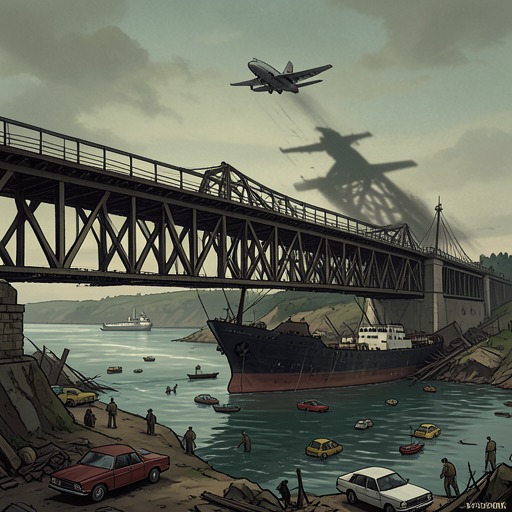
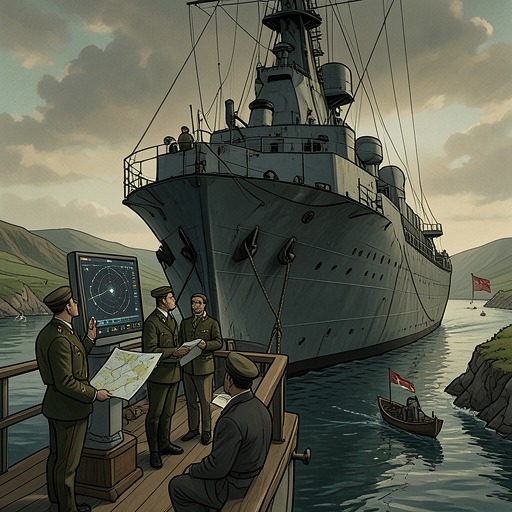
AfterburnThe attack and sinking of the Falcon Patriot tanker turns a sudden missile strike into a race to control fire, flooding, and the ship’s movement through a shipping channel. The impact ruptures a fuel compartment and sets aviation gasoline alight; amid smoke and confusion, Calvin takes over the helm and attempts to keep the damaged tanker moving. The incident later acquires a political explanation when Dmitriev says the tanker was attacked by accident during the assault on the Bosphorus Bridge, though the available account does not identify the missile’s origin or explain how the attack occurred.
The strike
From the bridge, Calvin and Brady first notice something small, dark, and moving very fast across the water. Brady points it out; Calvin recognizes it only as it flashes past the port side of the bridge and hits the hull amidships. The explosion follows almost at once, shaking the ship. The brief interval between sighting and impact makes the attack a sudden emergency rather than a confrontation the crew can assess in advance.
The missile ruptures Three-port, releasing a torrent of JP-5 that catches fire. A second missile may also have struck, but Calvin cannot be certain in the immediate confusion. The blast and the ensuing roar of burning aviation gasoline overwhelm the bridge; visibility inside the ship worsens as smoke spreads, while debris makes the deck treacherous. The damage is therefore not confined to the initial hole in the hull: burning fuel and impaired visibility compound the danger as the crew tries to respond.
Calvin’s response
Calvin orders the helmsman, Johnson, to bring the ship to port at full speed. Johnson does not respond intelligibly, so Calvin heaves himself up, staggers to the wheel, and shoves him aside to take control. The scene gives the emergency a physical sequence: an order, no usable response, and a direct transfer of control at the helm while the ship remains in motion.
Calvin’s immediate aims are practical and interdependent. Turning the bow to port may slow the flooding caused by the damage on the port side and may keep the hull afloat; the tanker also has enough way on, he calculates, to get clear of the shipping channel. The maneuver offers no assurance of survival. It is an attempt to preserve the ship’s remaining mobility and reduce the consequences of a breach while fire and smoke restrict the crew’s ability to act.
The loss and its public explanation
The account later identifies the tanker as sunk during the attack on the Bosphorus Bridge. In a recorded address seen by the President in Washington, Dmitriev says that his forces have not intentionally fired on American ships and characterizes the tanker’s sinking as accidental. His statement supplies an official explanation for the loss, but the excerpt does not establish what caused the accident or independently resolve responsibility for the missile strike.
The event thus has two sharply different scales. On the ship, its meaning is immediate and material: a missile hits amidships, fuel burns, and Calvin tries to steer a flooding vessel clear. In Washington, the sinking becomes part of Dmitriev’s public account of the attack on the bridge and of his forces’ conduct toward American ships. The contrast between the crew’s urgent, limited response and the later political characterization leaves the precise circumstances of the strike unresolved.