Boychenko proposes transferring Crimea’s military control to the United Nations
AfterburnGeneral Boychenko’s proposal to place Crimea’s military control in United Nations hands was a diplomatic appeal made under the pressure of a widening crisis, but it carried immediate military consequences. It offered Washington and the UN a way to intervene at the request of the peninsula’s de facto ruler; it also threatened to recast that intervention, in the eyes of his Russian opponents, as a surrender of responsibility to foreigners. The proposal thus joined two questions that the crisis had made difficult to separate: who would control Crimea, and who would command the forces sent there.
Crisis and the offer
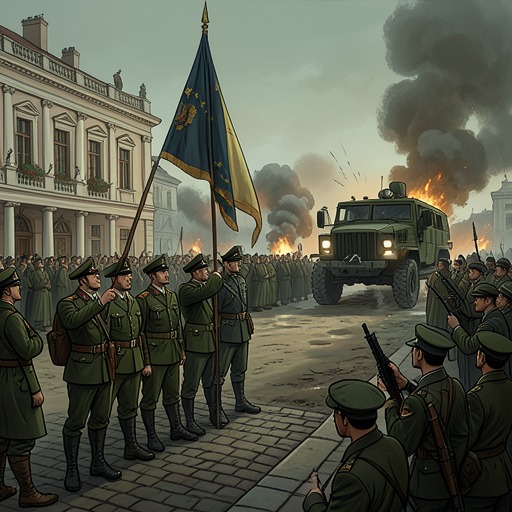
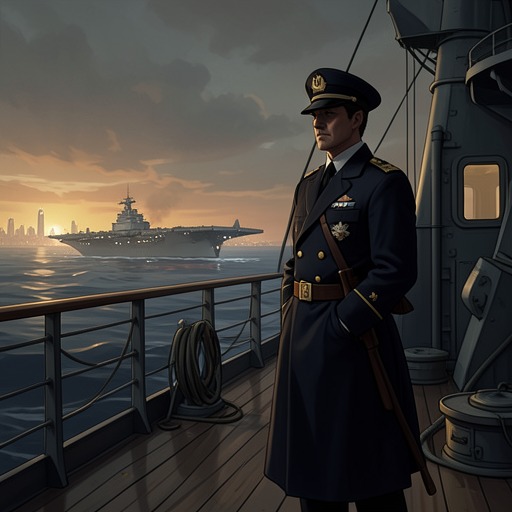
The proposal emerged as the Black Sea was becoming more dangerous by the day. Three days after a Russian submarine sank accidentally in the southern Black Sea, the prospect of fighting spreading across the northern part of the sea raised the risk that UN and U.S. forces would be unable to remain outside the conflict. General Boychenko, described as the peninsula’s de facto military ruler, offered to surrender Crimea’s military control to the United Nations. The timing made the appeal part of an active crisis, not a distant constitutional negotiation.
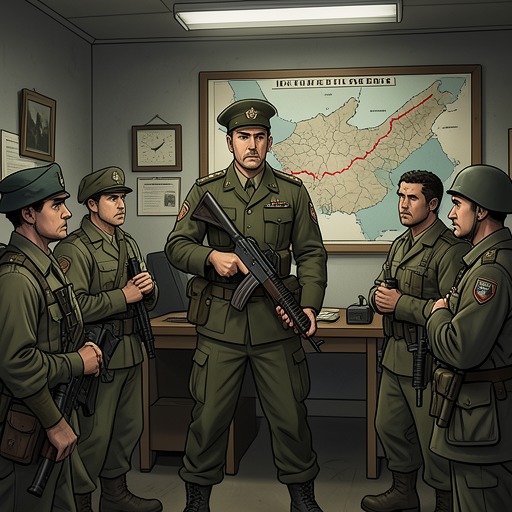
Boychenko’s representatives approached the U.S. ambassador to the UN while officials were discussing the return of Russian submariners aboard the Jefferson. The exchange connected the political proposal to a concrete issue already requiring negotiation between the parties: the fate of Russian personnel rescued or held after the submarine incident. The request was also not an isolated gesture. In the account of the proposal, Boychenko had opposed the Krasilnikov regime and had been associated with at least one substantial mutiny within the fleet. His outreach to both the United Nations and Washington placed him in opposition to that regime while seeking outside backing for a transfer of authority.
A contested invitation
Boychenko’s offer created an opening for intervention while leaving its meaning sharply disputed. Supporters could treat it as an invitation from the authority actually governing Crimea and as a means of establishing an international presence amid mounting danger. Opponents could describe the same act as abandonment: General Boychenko had been responsible for defending the territory against the Blues, Ukrainians, or Americans, Dmitriev argued, and proposed handing that responsibility to the United Nations. He framed the transfer as treason, specifically because it entrusted authority to foreigners.
That accusation exposes the proposal’s central political risk. The request did not merely add another force to the existing contest; it challenged who could legitimately exercise military responsibility for Crimea. For Boychenko, seeking UN control offered a route away from reliance on the contested Russian command. For those loyal to Krasilnikov, the same transfer could be represented as a betrayal of the duty to defend the peninsula. The proposal therefore did not settle Crimea’s status by itself. It supplied a basis for external involvement, while giving its opponents a language with which to condemn that involvement and Boychenko’s role in it.
From request to operational authority
Washington and the United Nations decided to honor General Boychenko’s request. The decision carried the issue beyond diplomatic discussion: U.S. forces in the Crimean Peacekeeping Operational Zone would operate under UN operational authority. A senior U.S. commander explained that the UN had asked for that authority and Washington had granted it. For the duration of the mission, his immediate superior would therefore be a UN commander; U.S. personnel were instructed to operate under United Nations command until the President decided otherwise.
This arrangement made the proposal consequential for the command structure as well as for Crimea. Debate over whether American forces should serve under UN commanders had lasted for years. The transfer put that institutional question into practice: Washington retained the ability to determine the mission’s duration, but accepted UN operational authority over its forces within the designated zone. The distinction mattered. The United States was not simply endorsing Boychenko’s proposal in principle; it was authorizing a command relationship that changed how its forces would act during the mission.
The decision also sat uneasily beside an existing restriction on the U.S. role. The National Command Authority had directed that American forces were not to become involved in fighting between the Reds and the Blues. Marines were to go ashore at Poti only under the specified limits. The later acceptance of UN operational authority in the Crimean Peacekeeping Operational Zone therefore belonged to a mission already bounded by national instructions, even as events created pressure for a stronger international role. The proposal’s practical importance lay partly in this tension between the appeal for UN control, Washington’s decision to grant operational authority, and the limits imposed on American participation.
Stakes for the peacekeeping mission
The proposal also fitted the United Nations’ broader hope that a substantial military presence could defuse problems elsewhere in the region. The organization’s ambition to act with military force gave the Crimean request significance beyond the peninsula: accepting it could demonstrate that the UN could take on operational responsibility rather than merely call for restraint. At the same time, the rapidly deteriorating situation made such a presence vulnerable to being drawn into the fighting it was meant to contain.
The episode’s importance rests on that unresolved double edge. Boychenko’s request gave the United States and the UN a formal opening to assume military authority in Crimea, and the decision to honor it established UN operational command over U.S. forces in the peacekeeping zone. But the transfer remained politically combustible: Dmitriev could call it treason, while the broader conflict threatened to make neutrality harder to sustain. The proposal was therefore both an instrument of peacekeeping and a new point of contest over allegiance, responsibility, and command.