Charlie drowns at Cledwyn Heath
AsylumCharlie’s drowning at Cledwyn Heath is the decisive catastrophe in the relationship between him and Stella Raphael: on an outing meant to bring mother and son together, Stella watches him struggle in a pool without calling for help, and Hugh Griffin’s rescue comes too late. The scene turns Stella’s depression and detachment into an irreversible public fact. In its aftermath, sympathy gives way to condemnation, and she is remanded on a manslaughter charge.
The outing and its setting
Charlie and Stella set out by bus at half past nine. Charlie is grateful that his mother is coming, and talks excitedly about the day ahead. Stella, after a bad night, regrets agreeing to go; she is hollow-eyed and silent, and thinks of herself as the person who has destroyed the joy of her child’s childhood. Yet Charlie’s excitement allows him, for the time being, to forget her recent lack of tenderness. His hope for the outing and her sense of failure occupy the same journey.
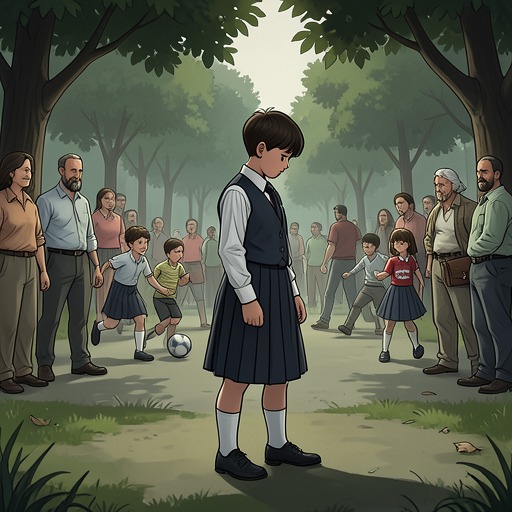
On the bus, the other passengers watch them take the last empty seats. Hugh Griffin makes a friendly effort, but no one else speaks to them. Stella recognizes that Charlie’s unhappiness, like her own, has left him isolated from the community. They sit together at the back while the Welsh schoolchildren and adults resume their conversation around them. This quiet exclusion precedes the more exposed isolation of the walk: the pair are already outsiders before they leave the bus.
The track is steep and stony, with low cloud overhead and rain threatening. Charlie walks ahead, his satchel bouncing as he looks around and turns to check that Stella is keeping up. His eagerness contrasts with her growing sense that she cannot continue. After they reach the prospect of the sea, the group eventually stops at a sheltered picnic site. While the other children gather and the adults drink tea, Stella wanders away. Charlie joins her, shares his sandwiches, and asks whether she wants to see what lies beyond the hill. She agrees, and the two go out of sight of the others.
At the pool
Charlie descends the steep slope to a pool with weeds thick in its shallows. Stella sits some distance behind him as the first rain falls. When Charlie calls out that he thinks there are newts, Stella has lowered her head onto her knees and covered her face. The narration presents her experience as an episode of overwhelming mental disturbance: black waves sweep through her, the ground seems to undulate, and the air appears veiled with fine black specks. The pool and Charlie’s movements become distant and indistinct to her.
Stella takes out a cigarette and lights it, shielding the lighter’s flame with her hand. Charlie reaches for something in the shallows and loses his balance. As the rain intensifies, he is in deeper water, struggling to get upright and shouting. Something in his cries brings Stella to her feet, but she does not go to him. She watches for a few moments, then turns her head aside and brings the cigarette to her lips. She sees his head break the surface and an arm claw at the air before both disappear again. Her movements remain tight and controlled: she turns away, smokes, and looks back.
Hugh Griffin appears over the hill behind her. Stella neither sees him arrive nor hears him shout. She becomes aware of him only when he runs past her into the water. The sequence makes the failure to call for help central to the event: Stella is not simply absent from the scene, but is there, watching, while her attention and action seem separated. The account gives no retrospective explanation that resolves that separation.
Rescue and immediate aftermath
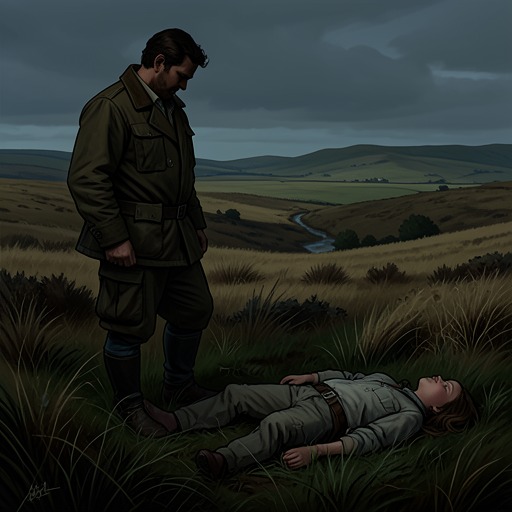
The rescue is confused. Hugh comes out of the water carrying Charlie, lays him on the ground, and tries to revive him. The others hurry over; the children are taken back to the bus and the police are called. In the commotion Stella is forgotten. One of the women gives her tea and puts a rug around her shoulders, describing her as being in shock. After the bus has left, the police arrive. At the station, Max Raphael is there; later, he drives Stella home, gives her a pill, and she goes to bed and sleeps.
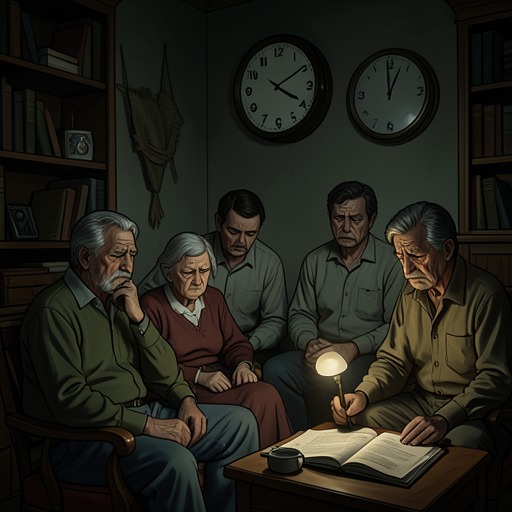
Stella sleeps through the following day. When she comes downstairs, Mair tells her that Max is with the police and will return at lunchtime. After Mair leaves, Max sits across from Stella and asks, in bafflement, why she did not shout. Stella finds the question amusing, but does not offer an answer. Max points out that she made no sound and did not open her mouth. At the police station she is asked again why she did not shout when she saw Charlie in trouble. She still has no answer.
Public judgment and remand
In the days after Charlie’s death, the initial sympathy disappears. Hugh Griffin insists that he found Charlie in the water screaming while Stella stood nearby smoking, and says she did not try to help. He also says that an alarm might have saved the boy, although this is disputed because of the distance between the hilltop and the pool. What horrifies the community most, however, is that Stella neither called out nor moved. The story of the drowning becomes a story about what a mother did not do.
People call her unnatural and evil; some say she has no feelings, is not human, or is a monster. Others conclude that she must be mad, because they cannot otherwise explain a child’s death and his mother’s inaction. The authorities first charge her with manslaughter, and she is remanded and placed in a cell once more. During repeated questioning and the movement from room to room, she feels numb, empty, and detached from the woman being interrogated. She experiences herself both from within a barricaded part of her psyche and, seemingly, from a point above and to the side. The account thus places the public demand for an intelligible explanation against Stella’s inability to give one. When Peter Cleave comes to see her, she has not expected him; his arrival brings the first faint stirring of emotion she has felt for days.