Psychiatric hospital
AsylumThe Psychiatric hospital is a maximum-security institution on a ridge, enclosed by a perimeter wall and organized around discipline, surveillance, and controlled movement. For Stella Raphael and Edgar Stark it is not merely a backdrop: its parole system brings them into contact, its security failures enable Edgar’s escape, and its wards later become the setting for Stella’s return and treatment. The institution promises care while also determining where its patients may go, what they may do, and how their conduct is judged.
Setting and Architecture
The hospital dominates the surrounding country from a high ridge, with dense pine forest to the north and west and marshland to the south. Its Victorian linear plan sends wings out from the main blocks, giving wards a view over terraces and open country beyond the Wall. The layout makes order visible: doors open outward so they cannot be barricaded, and the windows are barred. Stone steps descend through planted terraces, grassy banks, trees, and flower gardens to the perimeter wall. These softer grounds temper, but do not undo, the severity of the carceral design.
The deputy superintendent’s house stands about a hundred yards from the Main Gate. Built of the same grey stone, it is a large residence hidden among pines; before the Raphaels arrived, it had stood empty and its garden had grown wild. Max Raphael took an immediate interest in restoring it, cleaning and restocking its goldfish pond and cutting back the rhododendrons. The house and garden sit close to the hospital’s controlled boundary, yet they are also a domestic space where family life unfolds under institutional pressure.
Administration and Parole
In the summer of 1959, shortly after the Mental Health Act had passed into law, Max Raphael came from London to interview for the deputy-superintendent’s position. Superintendent Jack Straffen was impressed and offered him the job despite Peter Cleave’s advice against it. Max’s appointment placed his family in a residence within the hospital grounds and made domestic and professional life unusually close to one another.
The hospital allowed groups of parole patients to work outside its Main Gate on the estate grounds, under attendants’ supervision. In summer, the workers wore yellow corduroy trousers and blue shirts, with white canvas jackets over their shoulders. Edgar Stark was assigned to work in the Raphaels’ garden, including the restoration of their conservatory. He was supervised by John Archer, but when Archer was not visible, Stella could sit and talk with Edgar. The work party therefore functioned both as a controlled privilege and as the circumstance that made their relationship possible.
That arrangement also exposed a weakness in security. Edgar absconded after telling John Archer that he was wanted in the chaplain’s garden. He retrieved Max’s clothes, which he had hidden in the woods at the end of the Raphaels’ garden, put them on, and made his way away from the estate before continuing towards London. Staff later recognized that the outside work parties had been inadequately secured. Max’s delay in establishing where Edgar was—nearly three hours passed between the discovery of the missing clothes and the alarm—further reduced the chance of finding him quickly. The escape turned a routine grounds assignment into a public test of the hospital’s safeguards.
Patients, Treatment, and Public Scrutiny
Edgar had been at the hospital for five years after murdering his wife, Ruth Stark, with a hammer. His apparent recovery and high level of functioning did not persuade Peter Cleave that he was ready for release. Edgar continued to insist that Ruth had betrayed him and that the murder had been provoked, although the supposed evidence he offered consisted of ordinary details to which he assigned extravagant meanings. His delusion persisted even when other signs suggested that his sanity had recovered. For Cleave, that unshaken justification made the question of release a clinical and public-safety concern rather than a simple measure of outward composure.
After Edgar’s escape, the press revived his case. At his trial, two psychiatrists testified that he suffered from paranoid psychosis, and the court accepted the insanity defense. Cleave admitted him to the hospital the following day. Public attention then focused not only on Edgar’s violence but on how a man with his history had been permitted to work in the estate gardens every day. The hospital’s parole practice, its clinical assessment of risk, and the legal outcome were thus drawn together in a controversy that also threatened the Raphael household.
Stella Raphael’s Return
After Charlie Raphael drowned, Stella was remanded and held in a cell while she was questioned. Hugh Griffin’s account—that she had stood smoking while her son struggled in the water and had not called for help—changed the community’s response to her. The possibility that she was mentally ill became, for those around her, an explanation for conduct they otherwise called monstrous. Cleave believed she needed treatment and used his authority to arrange her return to the hospital, while recognizing that bringing her back under these circumstances could seem unorthodox and dangerous.
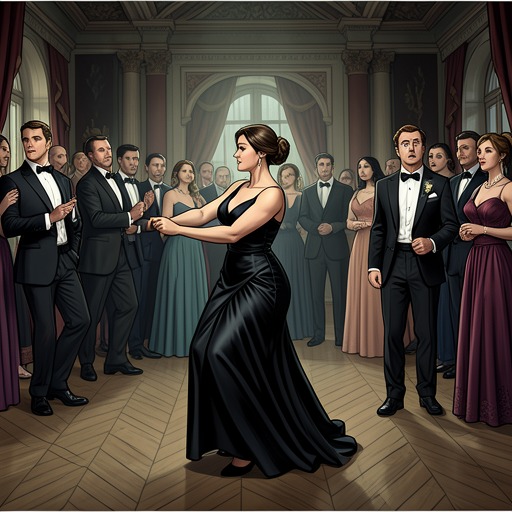
Stella arrived by police car with three suitcases, including most of her evening clothes and her black silk dress. She entered not through the Main Gate but through the gate of the female wing. After a formal interview, a physical examination, and a bath, she was taken to a room with a barred window and a barred grate in the door. The route into the institution, the handover of her paperwork, and the admission routine recast her from deputy superintendent’s wife into a patient under the hospital’s custody. By then Jack Straffen had retired and Cleave had reluctantly taken over as superintendent; Stella learned of the change informally from a member of staff.
Ward Hierarchy and Meaning
The female wing contains two blocks with enclosed yards, flower beds, lawns, and benches, opening south onto the terraces. The women’s grounds connect to the wider landscape while an internal wall keeps the sexes apart. Stella first entered the admissions ward, where medication left her so sluggish that she could barely stay awake over breakfast. Later, Cleave moved her to a downstairs ward. There patients could wear their own clothes and had greater privacy and freedom of movement than on admissions.
The move downstairs depended on a patient’s conduct. From Stella’s perspective, people were considered mad upstairs whatever they did; improvement downstairs meant behaving as if confinement were acceptable and keeping distress from the attendants. Cleave understood that self-control as a necessary first step in recovery. The gap between these interpretations reveals how the hospital’s progression system could reward the appearance of adjustment even as patients continued to suffer. Stella learned to manage boredom and suppress visible frustration because an outburst might undo weeks of restraint. Her calm could be both an effort at recovery and a performance shaped by the prospect of remaining on the admissions ward.
The hospital’s clinical authority is also presented through Cleave’s interpretations, which do not erase the limits of what he can know. He saw Stella’s nightmares and headaches as signs that guilt over Charlie’s death was beginning to return, and understood her earlier dissociative experience at the pool through a clinical account of her attachment to Edgar. The institution offers a language and sequence for treatment, but Stella’s own experience—numbness, panic, and the sound of screaming—does not become fully transparent simply because it is classified. The hospital is therefore both refuge and confinement: a place where care is organized through rules, observation, and ward movement, and where the meaning of a patient’s behavior remains disputed.