Cledwyn
AsylumCledwyn is the town at the center of the Raphaels’ life after their move to North Wales after the move, a place where the family’s attempt to begin again unfolds against rural isolation and mounting strain. Its local school brings Charlie into contact with an unfamiliar community, while the nearby Cledwyn Heath becomes the site of his drowning.
Setting and the family’s arrival
The story places Cledwyn within a wet, agricultural landscape of muddy roads, hills, lanes, hedges and stone walls. Stella’s walks take her past sheep, rain-darkened trees and fields furrowed with water; the country feels both strange and, to her, unexpectedly familiar. The weather and terrain are not a refuge from the family’s troubles so much as the setting in which Stella continues to carry them.
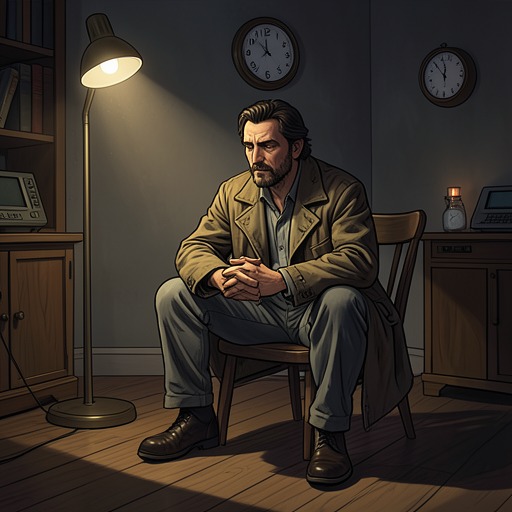
The family’s new life is tied to Max’s work in Cledwyn. At Plas Mold, the house where Max lives after the move, Peter Cleave finds him still in his post and withdrawn from company. The neat kitchen and sparse study, with photographs of Charlie on the desk but none of Stella, give a concrete measure of the family’s separation. Cledwyn is therefore more than a new address: it is where the Raphaels’ shared household has given way to lives increasingly lived apart.
School and the effort to begin again
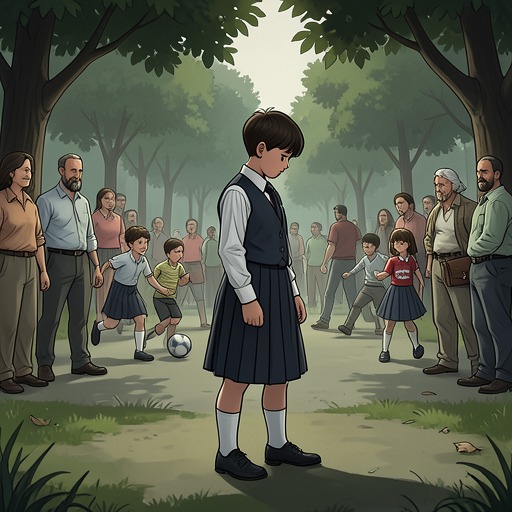
Charlie’s local school makes the disruption of relocation immediate. He comes home miserable, describing the other children as rough and unfriendly and struggling with unfamiliar classroom routines and loneliness in the playground. Stella listens and tries to reassure him that starting over is difficult but a skill he will need throughout his life. His question about why they have to begin again exposes how little control he has over the changes imposed by his father’s job.
The school also becomes a point of renewed contact between Charlie and Stella. When a staff member calls to say that Charlie is unwell and asks her to collect him, Max has the car, so Stella goes herself, with Mair offering to accompany her. Their battered white Jaguar, splashed with mud and dung from the roads and scraped against a wall, carries Stella into a school she has never visited. The children waiting near reception look at her and whisper, making the encounter another moment in which she feels conspicuous in the community.
Hugh Griffin later invites Stella to join a class outing to Cledwyn Heath as part of a project on local flora and fauna. She initially doubts that she will go, but raises the invitation at supper. Charlie is excited, having evidently feared that no parent would come; Max, seeing his son’s response, is encouraged too. The invitation briefly draws the family toward a shared activity, even as their strained household remains precarious.
Work, isolation and the surrounding community
Max’s employment gives the family’s settlement in Cledwyn its practical cause, but not the fulfilment he had hoped to find in his work. He is responsible for a block housing many middle-aged and older women with long-standing schizophrenia, cases he finds unstimulating. He would have preferred the wards with younger, more acutely disturbed patients, but John Daniels had taken those cases. The disappointment contributes to the depression Max experiences over the winter, alongside the strain of life at home.
By the time Peter visits, Max has kept his job in Cledwyn but has become something of a recluse at Plas Mold. His circumstances connect the town to the larger institutional world of the hospital, while the household’s isolation makes clear that employment has not restored the family’s earlier unity. The school, meanwhile, is one of the few places where Charlie’s needs prompt a response beyond the family: Hugh Griffin’s invitation gives Stella an opportunity to show up for her son.
Cledwyn Heath and narrative significance
Cledwyn Heath lies a few miles west of the town and first enters the family’s immediate story as the destination of the school’s natural-history outing. That ordinary purpose gives the place an especially grave significance: Charlie drowns there. The heath thus marks the catastrophic end of the family’s fragile attempt to establish routines and connections in a new place.
Cledwyn’s settings trace a narrowing of possibility. The school offers Charlie a chance to belong, and the outing seems to promise a moment of parental participation; the surrounding landscape, however, cannot protect him from the tragedy that follows. The town and its nearby countryside hold both the everyday details of the family’s resettlement and the loss that makes those details, in retrospect, part of a broken beginning.