Murder of Professor Richard Lovell
BabelMurder of Professor Richard Lovell is the decisive rupture between Robin Swift and the father who has treated him as an asset rather than a person. The killing exposes the racial hierarchy governing Professor Lovell’s affection, transforms years of suppressed injury into irreversible violence, and leaves Robin confronting a death he cannot fully remember as either deliberate self-defence or cold-blooded murder.
Confrontation and Racial Denial
The immediate cause of the murder is a confrontation over Robin’s mother. Robin asks Professor Lovell who she had been to him, but the professor refuses to discuss her. Robin then accuses him of allowing her to die: Professor Lovell had remained in Macau for two weeks while Asiatic Cholera was spreading, and Mrs Piper had told Robin that he knew she might have been saved. Professor Lovell rejects the accusation by attributing her death to the disease, but his response reveals a deeper contempt when he dismisses her as “just some Chink.”
The insult strikes at Robin’s own divided identity. Robin answers that he is also Chinese and her son, forcing Professor Lovell’s contempt for his mother back onto the son he has claimed as his own. The scene makes clear that Professor Lovell’s recognition of personhood depends on European blood and racial status. Little Dick and Philippa count as persons in his eyes; Robin, despite being his son and despite having been educated and used by him, remains an asset expected to be grateful for humane treatment.
Robin has survived by holding incompatible truths together: he is English and not English, Professor Lovell’s son and not fully his son, a participant in Babel and also someone marked by the people Babel treats as inferior. His hatred of Babel exists beside his desire to remain within its embrace. The confrontation makes that strategy of divided survival impossible to sustain. The killing follows when the contradiction between belonging and exclusion becomes physically immediate.
The Match-Pair and the Killing
Professor Lovell stands abruptly and reaches toward his pocket. Robin mirrors or provokes the movement by reaching for the front pocket where he keeps the bar that killed Eveline Brooke. The moment is shaped by uncertainty even before the weapon is activated: Robin will later be unable to determine who moved first, and he will spend the rest of his life questioning whether the act was self-defence or murder committed in cold blood.
Robin speaks the match-pair because it is the only language that comes to mind for the magnitude of the moment. His thoughts gather the injuries that have brought him there: Professor Lovell’s poker striking his ribs while Robin lay helpless on a library floor; Griffin Lovell being brought to England young and discarded after failing to remember enough of his native language; the men in the opium den; and his mother. The bar is therefore not used in an abstract quarrel. It is activated amid accumulated memories of bodily violence, colonial exploitation, linguistic judgment, and abandonment.
The relevant word is Bào, meaning to explode or burst forth with what can no longer be contained. Silver bars respond not merely to spoken syllables but to intention: words activate them only when the speaker means them. Robin sees the character etched into the shining silver and speaks the word and its translation aloud. The effect is immediate and catastrophic. Professor Lovell falls, and the salty scent of blood fills the room before Robin understands what he has done.
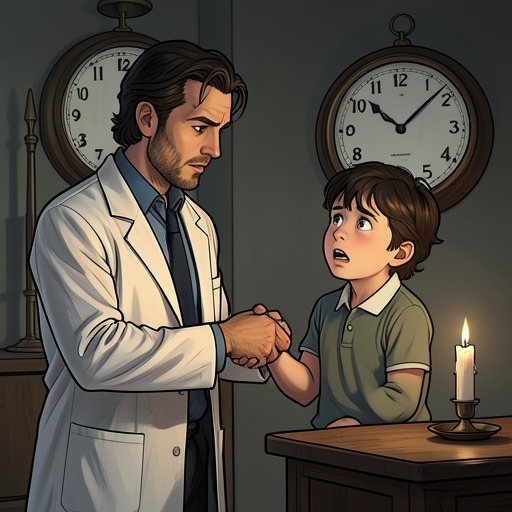
Robin drops to his knees and tries to address the fallen professor as “Sir?” When that produces no response, he grasps Professor Lovell’s shoulders and calls him “Father?” Hot blood spills over his fingers without stopping, pouring from the ruined chest. Robin then says “Diē,” the word for father, apparently hoping that naming the relationship they have never named might bring Professor Lovell back. It cannot. Professor Lovell is limp and dead, and the act of naming arrives only after the relationship has become irretrievable.
Immediate Witnesses and Concealment
Robin’s companions find him struggling to breathe, with blackness pressing at the edges of his vision and the floor covered by a spreading pool of blood. He can barely explain that he and Professor Lovell quarrelled. Ramiz Rafi Mirza tells the others not to look, but nobody obeys. They remain frozen, their attention fixed on Professor Lovell’s still body while Ramiz kneels to check for a pulse.
Ramiz confirms the death through touch rather than dramatic declaration. He holds two fingers against Professor Lovell’s neck, murmurs the prayer “Inna lillahi wa inna ilayhi Raji’un,” and closes the dead man’s eyelids with his hands. The prayer and gesture give the scene a form of ritual recognition that Professor Lovell himself denied in life: the body is treated as a dead human body even though the group must immediately handle it as dangerous evidence.
The companions decide that the body must be removed without attracting suspicion. They place Professor Lovell in a trunk and attempt to move it toward the upper deck in small increments. Victoire Desgraves goes ahead every few seconds to check whether anyone is watching, then signals Robin and Ramiz to drag the trunk farther up the stairs. Letitia Price guards the top deck while pretending to take a nighttime stroll for fresh air. Their different roles turn the aftermath into a coordinated operation, binding the witnesses to Robin’s secret and making the murder a collective risk rather than a private act.
Disposal at Sea and Lasting Consequences
At the railing, Robin removes the trunk’s lid. Throwing away the entire trunk had initially seemed simplest, but Victoire points out that the wood would float, so the body must be taken out. Robin is afraid to look down and hopes to avoid seeing his father’s face. Ramiz then realizes that the corpse must be weighted or it will bob on the surface and attract sailors and seagulls. The practical problem turns the emotional horror of the killing into a sequence of material demands: concealment, transport, weight, timing, and silence.
Robin and Ramiz each take one end of the corpse, Robin holding the shoulders and Ramiz the feet. On the third swing they lift Professor Lovell over the railing and release him. The delay before the splash seems endless. Ramiz studies the dark waves until he can say that the body is gone and will not rise again. The sea removes the physical evidence, but it does not resolve Robin’s responsibility.
The murder remains psychologically unfinished because Robin cannot recover a reliable account of the instant of decision. He knows that Professor Lovell reached for his pocket and that he reached for the bar; he knows that Bào required intention; and he knows that the bar destroyed his father’s chest. Yet he cannot tell whether he acted first, whether the movement was defensive, or whether later explanations are inventions meant to make the death bearable. The result is not exoneration but permanent uncertainty: Robin has killed his father, and the word for father is spoken only when the blood can no longer be stopped.