Shooting of Ramiz Mirza
BabelThe Shooting of Ramiz Mirza is the moment when a desperate confinement in the Reading Room becomes an irrevocable tragedy. Letitia Price enters armed and apparently aligned with the force attacking the building; when Victoire Desgraves reaches for an envelope, Letitia fires, and Ramiz Rafi Mirza takes the bullet. The scene’s decisive value shift is from the expectation of survival to sudden death, while the apparent distinction between captor and rescuer collapses in the space of a single gunshot.
Immediate Setting and False Rescue
The incident occurs after Anthony Ribben has kicked the door shut while fighting erupts outside. Booms, crashes, gunshots, and shouts suggest that the postgraduates are defending the people trapped inside, but the Reading Room itself offers no escape: it has no other doors and no windows. Robin Swift, Ramiz Rafi Mirza, and Victoire Desgraves can only shelter behind a table. Their attempt to barricade the entrance fails when the door swings open.
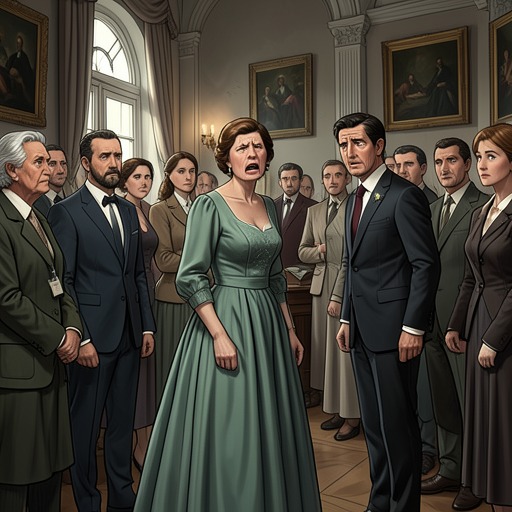
Letitia Price stands in the doorway holding a revolver. Her arrival briefly produces relief, especially for Robin Swift, who assumes that she might have come to rescue them. That hope is immediately overturned. Letitia raises the weapon and aims at each of them in turn, displaying a calm and practised command of it. The sight is so incompatible with Robin’s familiar image of her as their “prim English rose” that he momentarily wonders whether he is hallucinating. The contradiction is then given a concrete explanation: Letitia is an admiral’s daughter and knows how to shoot.
Letitia orders them to put their hands above their heads and promises that the attackers will not hurt anyone if they surrender quietly. She says that the others have been killed but that the captors will take those in the room alive and unhurt. Her voice, high and clear, sounds to Robin like the voice of a stranger. The promise of safety therefore carries an immediate threat: survival is offered only through submission, and Letitia’s familiar identity has become inseparable from the weapon she carries.
The Shot
The confrontation tightens around an envelope. Victoire Desgraves and Letitia Price glare at one another, and Victoire responds to Letitia’s warning by lunging for it. Letitia whips the revolver around. Robin Swift rushes toward Letitia by instinct, certain that she is about to hurt Victoire, but Ramiz Rafi Mirza shoves him aside. Robin falls forward against a table leg, while Ramiz places himself between the danger and the others without any clear opportunity for deliberation.
The action then contracts into two stark sounds: a click and a bang. Ramiz collapses. Victoire screams. The sequence gives the shooting the force of a violent rupture rather than a prolonged exchange; movement, intention, and protection are replaced almost instantly by the fact of a body falling. Letitia’s earlier composure and precision make the discharge unmistakably consequential, even though the scene does not present it as a carefully described execution. The gun turns a struggle over an envelope into the death of the person who intervenes.
Recognition of Death
Robin Swift drops to his knees and tries to turn Ramiz over. At first, he cannot accept what has happened. Ramiz had been upright, moving, and alive only a second earlier, so Robin imagines that the collapse might be a pretence or a joke. He searches for a response by patting Ramiz’s cheek and neck, but Ramiz’s eyes do not open. The absence of visible blood delays recognition until Robin notices a tiny red mark over Ramiz’s heart spreading rapidly through his shirt and coat.
The detail of the wound converts disbelief into certainty. The death is not merely announced; it is made undeniable through the failed attempts to awaken Ramiz and the expanding stain over his heart. The surrounding characters become motionless, staring at Ramiz, who is “undeniably, irreversibly still.” The repeated emphasis on stillness opposes the speed of the shot: the bullet acts in an instant, while the survivors require time to understand that life has ended.
Letitia’s Collapse and Consequences
While Robin confronts Ramiz’s death, Victoire Desgraves steps back from the fireplace, where the papers inside the flames crackle and blacken into ash. Letitia Price makes no attempt to retrieve them. The destruction of the papers and the shooting occur together, joining the loss of documentary or strategic material to the loss of a human life. Letitia remains standing with the revolver hanging limply at her side, her eyes wide and her earlier control gone.
Letitia’s response reveals shock rather than continued authority. She touches her fingers to her mouth and says that she did not intend what has happened, but the scene presents the claim through her broken composure: her voice has become shrill and childlike, unlike the polished, commanding voice with which she ordered surrender. Victoire Desgraves answers with a soft, anguished reproach, asking what Letitia has done. The exchange makes the consequence personal and immediate. Letitia may have entered as an agent of coercion, but the sight of Ramiz’s body forces her to confront the result of her own firing.
Narrative Significance
The shooting is a betrayal scene, a recognition scene, and a point of no return. Robin Swift’s naive relief is reversed into horror; Letitia Price’s familiar identity is exposed as compatible with armed enforcement; and Ramiz Rafi Mirza’s protective intervention ends in death. The scene also dramatizes the instability of promises made under force. Letitia offers the others survival and claims that they will remain unhurt, yet her own weapon produces the fatal violence before that promise can have any protective meaning.
Its tragedy lies partly in the narrow gap between intention and consequence. Robin rushes forward without knowing exactly what he means to do, Ramiz shoves him aside by instinct, Victoire reaches for the envelope, and Letitia reacts with the gun. No extended plan is shown at the decisive instant; instead, a chain of bodily impulses produces an irreversible result. The contrast between Letitia’s steady arm before the shot and her limp revolver afterward marks the scene’s moral reversal: control is revealed not by the absence of violence but by the burden left when violence cannot be undone.