Hermes Society silver thefts
BabelHermes Society silver thefts begin as Robin Swift’s first practical entry into the Hermes Society and develop into a model of resistance built on secrecy, repetition, and institutional knowledge. Their immediate targets are Babel’s silver, manuscripts, engraving materials, and linguistic reference works; their larger purpose is to obstruct the material system that turns language and silver-working into instruments of imperial expansion. What first appears to Robin as a dangerous adventure becomes something more disciplined and politically consequential: a hidden redistribution of resources whose effects reach from Oxford to the threatened invasion of Canton.
Recruitment and Political Purpose
Griffin Harley Lovell recruits Robin Swift after revealing that he and his colleagues regularly steal silver, manuscripts, and engraving materials from Babel before funneling them across England to associates throughout the world. He describes Robin’s previous assistance as treason punishable by imprisonment in Newgate for at least twenty years, with torture intended to extract information about the organization. The threat is immediately joined to a justification: the stolen silver is needed more by oppressed or impoverished people than by wealthy Londoners. Griffin therefore presents theft not as private enrichment but as an intervention in the unequal circulation of resources.
The recruitment soon becomes an explicit invitation. Griffin asks Robin whether he would like to steal for the Hermes Society, clarifying that Babel is the target. Robin’s participation places him between two systems: Babel’s official academic order, which presents its materials as scholarly property, and the Hermes Society’s clandestine network, which treats those materials as resources that can be redirected against empire. The action is thus both burglary and political education. Robin learns that knowledge, silver, and imperial power are materially connected rather than belonging to separate spheres.
Method and Repetition
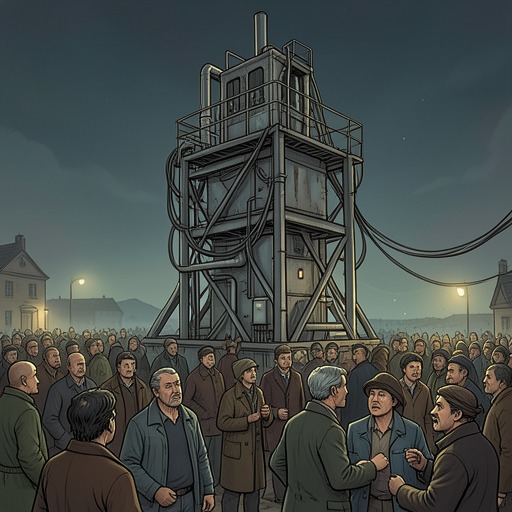
In the last weeks of November, Robin assists in three further thefts. Each follows the same clockwork pattern: a note appears on his windowsill, a rainy night supplies cover, a midnight rendezvous brings the operatives together, and the participants exchange little beyond a quick glance and nod. Robin never gets a close look at the other agents, does not know whether the same people return, and remains ignorant of what they steal or where the materials go. His trust rests largely on Griffin’s claim that the work contributes to a broadly defined fight against empire.
The fourth theft nearly exposes him when Cathy O’Nell enters through the front door while Robin waits in the foyer. This danger reveals the central vulnerability of the operation: its members must move through ordinary academic spaces without allowing routine contact to become evidence. The thefts depend less on daring improvisation than on controlled anonymity, plausible movement, and the ability to appear unremarkable at precisely the moment when suspicion might attach itself to a person.
After Griffin decides that Robin is unlikely to betray the Hermes Society, Robin’s assignments increase sharply. Many are not thefts in the narrow sense but requests for etymological handbooks, pages from Grammatica, and orthography charts. Robin acquires, copies, and returns them, timing each removal so that his interests seem academically plausible. When Ilse Dejima questions his possession of an Old German Grammatica, he invents an explanation involving the attempt to trace a Chinese word back to Hittite origins, despite being in the wrong section of the library. His success depends not on a convincing scholarly argument so much as on appearing sufficiently foolish to be believed.
The organization’s effectiveness lies in concealment even from its own members. Robin expects coded conversations and dramatic rendezvous, but discovers a bureaucracy whose coordination is so complete that it seems almost boring. Babel’s professors do not notice that anything is missing because the Hermes Society removes silver only in quantities small enough to conceal through accounting adjustments. Griffin explains that a humanities faculty is an ideal target because its members are poor at numbers, singling out Jerome Playfair’s inability to keep tidy accounts as an especially useful weakness. The thefts are therefore designed to disappear into administrative error rather than announce themselves as spectacular acts of rebellion.
From Stolen Materials to Strategic Resistance
The stolen books and reference materials serve the same broader struggle as the silver, although their function is less immediately visible. By copying linguistic and orthographic resources and returning them before their absence attracts attention, Robin helps the Hermes Society preserve access to knowledge while denying Babel complete control over it. The campaign makes Babel’s own scholarly infrastructure permeable: its catalogues, silver stores, and academic routines become channels through which resistance can operate.
The political stakes become clearer when Griffin explains that the opium-burning disaster has intensified the crisis between Britain and China. Commissioner Lin has banned English trade from Canton, while Jardine & Matheson use the hostility as an argument for war. The House of Lords has begun debating a military expedition, and Griffin identifies silver as the decisive issue. A British victory would open access to China’s enormous reserves, accelerating the empire’s naval, military, and colonial capacities; a defeat would cause the British silver supply to dry up and substantially weaken imperial power.
For that reason, Griffin insists that the Hermes Society must concentrate on stopping the invasion of Canton before attempting a global revolution. He studies the parliamentary division on the blackboard, noting that the House of Commons has not yet voted and that antiwar figures including Sir James Graham, Viscount Mahon, and William Gladstone may provide an opening. The thefts are consequently part of a political opportunity structure: clandestine extraction buys time and resources while parliamentary hesitation, antiwar sentiment, and disputes within the government create possible leverage.
Coalition and Wider Consequences
The Hermes Society cannot defeat entrenched commercial power through theft alone. Anthony Ribben argues that the organization must build a coalition including unlikely sympathizers, even men who accept the sale of people like him at auction. Such allies will not be moved by justice or human dignity, but they might be persuaded that global British expansion founded on silver threatens their own interests. The campaign therefore seeks to translate a moral and anticolonial struggle into a material argument about profit, class, and national power.
This argument connects the poor family in Canton to the unemployed weaver in Yorkshire. The silver industrial revolution produces inequality, pollution, and unemployment in Britain while drawing on colonial labor, Indian weaving, and cotton picked by enslaved people in America. The Hermes Society’s small acts of theft acquire their full significance within this larger network: they interrupt, however incompletely, an imperial system that extracts a little from many places and distributes suffering so widely that no single community initially bears enough of it to force a collective response.
That fragmentation begins to fail when white British factory workers crowd Westminster Hall to protest a war in a country they have never visited. The workers’ action suggests that the antisilver disturbances are connected rather than isolated, joining earlier unrest among tailors, shoemakers, weavers, dock workers, factory employees, and gasworks stokers with the Rebecca Riots, the Bull Ring Riots, and Chartist uprisings. The secret thefts have not created this discontent by themselves, but they belong to the same contest over who controls the resources and consequences of industrial empire.
Narrative and Historical Significance
The thefts move the story through a progression from individual complicity to collective resistance. Robin first acts because Griffin has exposed the danger of refusal and offered a political rationale. He then becomes useful through repetition, learning that resistance is sustained by copying, returning, disguising, accounting, and withholding information as much as by physical courage. The action’s recurring structure turns secrecy into an organizational technology: the less each member knows, the harder it is for Babel or the state to destroy the whole network.
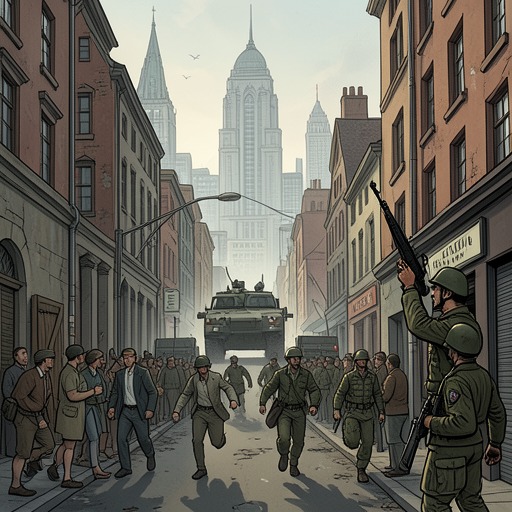
At the same time, the campaign exposes the limits of clandestine action. The British Army eventually marches into Oxford, with red-coated troops advancing along High Street and halting at barricades. Their arrival transforms the atmosphere around the scholars’ resistance: the imperial state that the Hermes Society has challenged through invisible subtraction now appears openly in the city. The polite, almost parade-like entrance of the troops contrasts sharply with the hidden rain-soaked thefts, but the contrast is deceptive. Both scenes concern control of space and resources; one works through concealment and incremental removal, the other through visible force.
Hermes Society silver thefts therefore function as more than a series of burglaries. They reveal how empire depends on mundane systems of property, scholarship, bookkeeping, and material supply, and how opposition must often enter those systems before it can confront them publicly. The campaign’s deepest achievement is to connect the apparently minor disappearance of silver or a copied page with the immense political question of whether Britain can convert Chinese wealth into a new phase of imperial power. Its method is small-scale, distributed, and nearly invisible, but its intended consequence is historical: to prevent the resources of Canton from financing the expansion of the British Empire.