The sale of the Buddenbrook family house to Hermann Hagenström
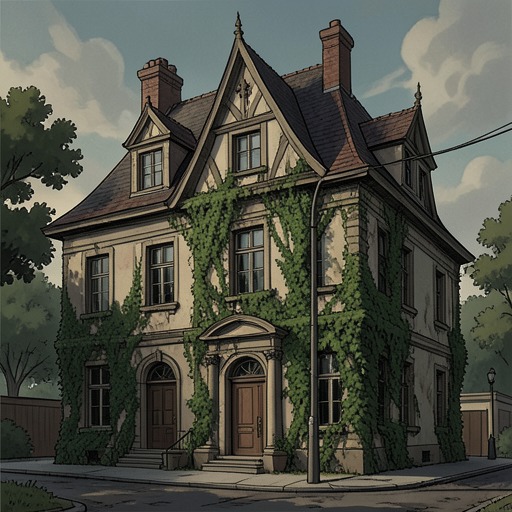
BuddenbrooksThe sale of the Buddenbrook family house to Hermann Hagenström marks a decisive transfer of both property and inherited memory. Thomas Buddenbrook accepts 29,000 thalers, or 87,000 marks courant, for the old house on Meng Strasse; the family’s long association with the building gives way to its rival’s ownership, redevelopment, and name. The transaction turns the decline of a commercial dynasty into a visible change of address and landscape, while Tony’s response reveals what the sale cannot account for: the house’s place in the family’s lived history.
The house and the family’s past
The old house is bound to a family story recorded across generations. In the family chronicle, the consul reads of ancestors, marriages, children, business, and daily events, while the papers kept with it include business correspondence and other family records. The family’s beginnings as a grain business and its later financial fortunes are likewise traced through inheritance, dowries, and profits. Against that history, the house on Meng Strasse is not simply an asset to be priced. Its rooms and accumulated associations have made it a setting for family continuity, even as its ownership remains subject to the same financial pressures as the firm.
The records also show how the Buddenbrooks imagine continuity: successive generations add their lives to a chronicle, and individual events acquire importance as parts of a shared history. Tony, reading the entries about her own birth, schooling, illnesses, and confirmation, understands herself as one link in that chain. The house’s sale therefore carries a particular weight for her. The family may persist after a property changes hands, but the physical place that held its daily life and memories will no longer belong to it.
Negotiation and price
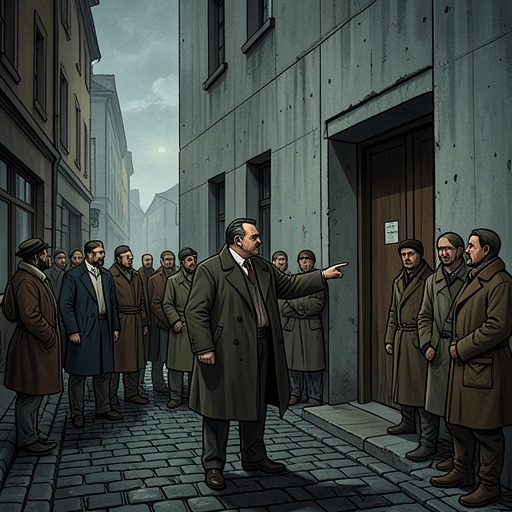
Eight days after Thomas stands in the receiving line at a family funeral, Siegismund Gosch visits him in his private office to discuss the asking price. Gosch, the broker for the firm of Johann Buddenbrook, considers an offer of 28,000 thalers courant already high: he argues that asking for even one silver penny more would be reckless, emphasizing the difficulty of reselling such a large property. Thomas counters with the house’s central location and unusually extensive lot. The negotiation sets commercial valuation against the family significance of the property without allowing that significance to determine the price.
Gosch eventually proposes 29,000 thalers, equivalent to 87,000 marks courant, for Thomas’s mother’s house. Thomas accepts. The decision is his, and the terms are concrete, but the transaction is larger than a simple exchange between seller and buyer: it transfers a house associated with the Buddenbrook family’s past to a competitor whose success makes the change especially visible.
The sale also belongs to a history of strained family finances and disputed priorities. Earlier generations had divided capital through dowries and payments to relatives, while losses, political unrest, and changing business conditions affected the family fortune. Thomas had often measured these withdrawals against the firm’s need to preserve working capital. The house thus stands within a family economy in which memory and property are repeatedly exposed to calculation, even when their personal meanings cannot be reduced to figures.
Transfer and redevelopment
The sale is followed by the breakup of the household on Meng Strasse. At the beginning of 1872, the maids depart and the furniture is moved out. A large carved chest and gold-plated candelabra, among other furnishings, go to Thomas and Gerda’s home on Fischergrube. Christian relocates to a three-room bachelor apartment near the Club, while Tony and her family take possession of a sunny apartment on Linden Platz. Its plate identifies her as A. Permaneder-Buddenbrook, widow, giving the family transition a new domestic setting as well as a changed name and household arrangement.
Hagenström’s ownership quickly alters the property. Workers begin by demolishing the rear building; by early spring, Hagenström and his family have moved into the main house, making minor repairs and installing electric bells in place of the old bell ropes. The rear building disappears altogether, replaced by an airy structure with high-ceilinged storage rooms and shops facing Becker Grube. The house is neither left untouched as a monument nor erased entirely: its main building remains, but its use and surroundings are reshaped for the new owner’s purposes.
Tony and the meaning of the loss
Tony had sworn that no power would make her look at the old parental home again. The promise proves impossible to keep. Her route sometimes takes her past the shop windows in the new rear building or the old gabled façade, now bearing the name of Consul Hermann Hagenström beneath the inscription Dominus providebit. When she sees the familiar building under its new ownership, she weeps in the street despite passersby and her daughter’s attempts to admonish her. Her grief makes the sale’s emotional consequence public: the property has changed hands, but the memories attached to it have not been transferred or extinguished.
The scene also sets commercial improvement against personal bereavement. The shops are promptly leased at handsome rents, and Hagenström modernizes the property with evident practical success. For Tony, the same changes make the loss harder to avoid. The contrast does not undo the sale or restore the house to the family; it shows instead that profitable reuse and remembered belonging can occupy the same address while meaning radically different things to its new owner and its former residents.
Significance in the family’s decline
The transaction gives material form to the Buddenbrook family’s changing position in Lübeck. A house that had embodied inherited status passes to the family’s rival, who can afford not only to acquire it but to alter and exploit its site. Tony’s tears register the force of that reversal more directly than the negotiated sum does, while Hagenström’s redevelopment records the new owner’s capacity to make the property productive.
The sale anticipates a broader separation between family continuity and business continuity. Later, Thomas’s testamentary instruction requires the firm to be dissolved within a year, a decision Tony mourns because it ends an enterprise carried through generations despite the presence of an heir. The old home and the firm are not the same thing, but their losses echo one another: both had served as visible supports for the family’s account of its own endurance. The Meng Strasse house can be modernized and occupied by another family; the Buddenbrooks’ memories remain, but no longer govern the place in which they were made.