Thomas Buddenbrook’s will
BuddenbrooksThomas Buddenbrook’s will turns a private reckoning with mortality into a decisive break in the Buddenbrook family’s commercial history. It directs that the firm be liquidated and dissolved within one year, rather than preserved for his only son, Hanno. The order is carried out, but the short deadline and failures in its administration magnify losses: the enterprise that had endured across generations is dismantled, and the estate’s paper valuation proves illusory.
Background and Making of the Will
Thomas resolves to make his will after trying, without success, to find peace in religious explanations of the afterlife. He abandons the effort to order eternal matters and decides instead to arrange his earthly affairs conscientiously. The contrast is central to the document’s place in the story: faced with questions he cannot settle, he acts on the one domain he can formally organize—his property and the family business.
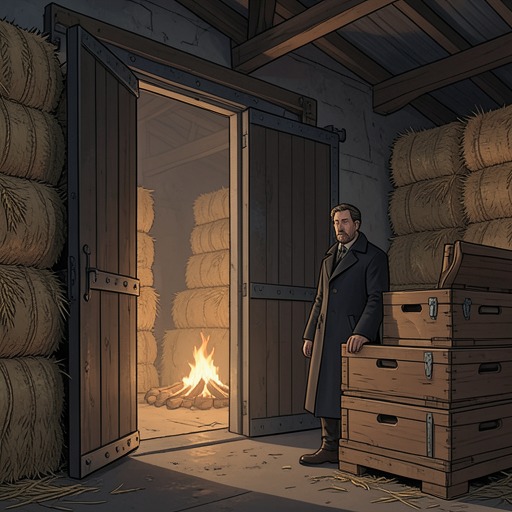
The decision is made known at home. Over after-dinner coffee, Thomas tells Elisabeth that he expects a lawyer and can no longer postpone making a will. Later, Hanno meets his father on the stairs with the lawyer, and Thomas gives the boy a task: stand outside the smoking-room door and let no one interrupt them. Hanno obeys. When Ida Jungmann and then an apprentice carrying a telegram approach, he bars the door with his arm and quietly explains that his father is making his will. The scene places the child, who is to inherit the family name, at the threshold of a decision that will end the family firm.
The Directive and Its Stakes
The will’s pivotal instruction is that everything be liquidated and the firm dissolved within one year. Thomas’s decision does not preserve the business for Hanno, the son and sole heir whose future Tony understands through the inherited language of family continuity. The document therefore separates the survival of the family from the continuation of its commercial institution: one may carry on the name, but the old firm, with its history and standing, is to end.
The decision acquires particular force against the history recorded in the family’s documents. The Buddenbrooks preserve a genealogy, accounts of births and illnesses, business correspondence, and successive entries in a family chronicle. Tony has treated this record as evidence that each generation belongs to a chain and bears responsibility for what follows. The will, by contrast, makes the ending of the business an explicit testamentary intention. It does not merely describe decline as something that has happened to the family; it requires the liquidation of the institution through which earlier generations understood their shared work.
Execution and Financial Consequences
Herr Kistenmaker serves as executor, estate administrator, and Hanno’s guardian. The liquidation is undertaken under his direction together with the elderly Herr Marcus. The one-year limit leaves little time, and the instructions are followed to the letter. Pending contracts are sold too quickly and on disadvantageous terms; successive hurried sales deepen the losses, and warehouses and stored grain are disposed of at a substantial loss. Kistenmaker’s excessive zeal and Marcus’s procrastination work in different ways toward the same result: profitable opportunities are missed or sacrificed.
The figures make the decline concrete. Thomas’s estate is valued on paper at 650,000 marks, but within a year of the will’s reading it is clear that the liquidation will yield nothing close to that amount. The discrepancy is not simply a matter of a once-large fortune becoming smaller over time. The forced timetable governs how the assets are sold, while flawed administration turns an already consequential decision into a rapidly worsening financial outcome.
Family Response and Significance
Tony responds to the order as a personal and historical loss. She is deeply hurt that Thomas has passed over Hanno as a reason to continue the firm. For her, the business’s inherited shield is a treasure handed down across four generations; its disposal means that this particular history will end despite the presence of a legitimate heir. She spends many hours weeping over the decision. Her response shows how the firm signifies more than capital or occupation: it is a material sign of the family’s continuity and a framework through which its members understand their obligations to the past and future.
Tony eventually finds another way to imagine Hanno’s future. She tells herself that the end of the firm does not have to mean the end of the family: Hanno might begin a new enterprise, follow what she regards as his high calling, and bring the family name to a second flowering. That hope does not undo the will’s terms or the losses incurred under them. It instead exposes the gap between the continuity Tony wants—the family name carried forward—and the institutional continuity Thomas’s testament has deliberately refused. The will thus makes the family’s generational crisis formal: Hanno remains the heir, but the inherited business is not to be his inheritance in practice.