Curzon Park
ChowringheeCurzon Park is a pause in the narrator’s life of effort and uncertainty: a place in central Calcutta where he rests, looks back across personal and civic history, and takes a statue as a landmark for a new appointment. Its significance lies in this double character—as an ordinary refuge for a tired body and a setting layered with remembered names and past events.
Setting and Respite
The narrator identifies Curzon Park as part of Chowringhee and describes stopping there when the day’s exertions have left him unable to walk farther. The park is not presented as a grand destination but as a practical resting place, encountered in the middle of daily struggle. In a sunny May afternoon in the twentieth-century heart of Calcutta, that pause lets the narration turn from immediate fatigue toward the city’s history.
The place has more than one name: some call it El Paseo, while the narrator calls it Chowringhee. This difference of naming gives the setting a lived, local character; it is not merely a point on a map but part of the narrator’s own way of belonging to and moving through the city.
Memorials and Historical Memory
From the park, the narrator addresses Lord Curzon with an unexpected gesture of peace. Bengal, he observes, has laid every sort of curse upon Curzon, and the history of its misfortunes can seem to begin with the proposal to divide the fertile land in two. Yet that controversy lies in the past, and the narrator offers a greeting to the much-maligned Englishman rather than renewing the denunciation. The scene holds public grievance and personal reconciliation in uneasy balance.
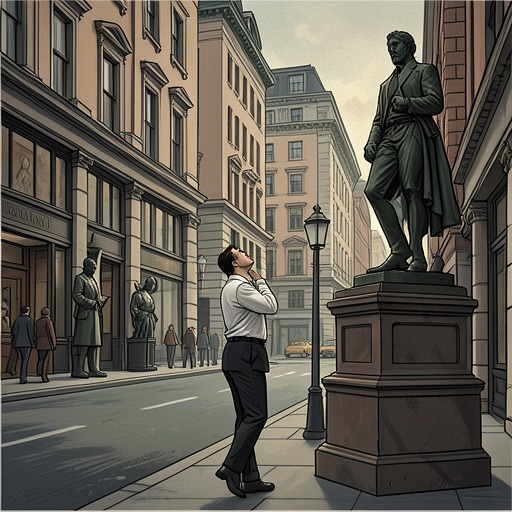
The narrator also salutes Sir Hariram Goenka, whose memorial inscription records that he was born on June 3, 1862, and died on February 28, 1935. The dates make the monument a precise marker of an individual life within the city’s changing present. Elsewhere, the statue of Sir Hariram Goenka stands before the Governor’s House and serves as a rendezvous point: the narrator is told to return beneath it within an hour, with explanations to follow later.
The Narrator’s Past and the Park’s Narrative Role
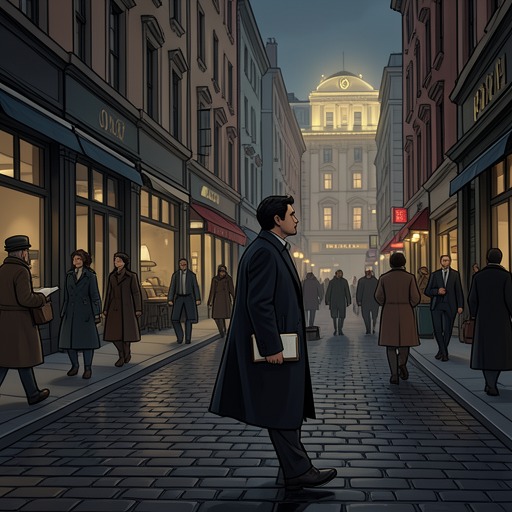
The park’s present-day pause opens onto the narrator’s earlier arrival in the city. He recalls himself as an innocent-eyed adolescent from Kashundia who crossed the Ganges on the steamer Amba, departing from Ramkeshtopur Ghat, and stared in wonder at the Calcutta High Court. He found work with a British lawyer and won the affection of older colleagues, while judges, lawyers, and clients welcomed him in his role as a legal secretary. The remembered city had once seemed like a beautiful new world; the park frames that youthful amazement from the vantage of later hardship.
The narrative also places public monuments beside less celebrated acts of care. In a moment of despair, the narrator weeps when a doorman’s kindness convinces him that the world has not been stripped of all goodness. The park’s memorials preserve names and dates, while this remembered kindness gives moral weight to an ordinary human encounter. Together, they make the setting a point where the city’s recorded past and the narrator’s private history meet.