Calcutta
ChowringheeCalcutta is both the setting of the narrator’s life and a city that seems to contain several times at once: the colonial past preserved in buildings and stories, the busy present of offices and hotels, and the vulnerable lives that disappear from public memory. Its streets offer work and spectacle, but also expose poverty and exclusion. As the narrator moves through the city, Calcutta becomes a school of human life and, in moments of despair, a landscape from which hope can still be drawn.
River Crossings, Work, and the City’s Edges
The narrator’s first remembered approach to the city begins far from its grand buildings. He comes from Kashundia and crosses the Ganges aboard the steamer Amba, leaving from Ramkeshtopur Ghat. On reaching Calcutta, the adolescent is transfixed by the High Court building. The city’s architecture first appears to him as the visible promise of a new world: he becomes a lawyer’s clerk, or babu, and receives affection from older colleagues such as Chhoka-da as well as from judges, lawyers, and clients. His early experience of the city is therefore not only one of awe at its buildings but of welcome within its working life.
That security proves temporary. The British lawyer who employed him dies, and the narrator, already shaped by poverty, must begin again. Later, after trying to make a living by selling wastepaper baskets, he remembers the unknown doorman at the Clive Building who had trusted him. The narrator had asked four annas for each basket and recognizes that he had betrayed that trust. From Dalhousie Square he goes to Curzon Park, where his private shame meets a wider landscape of precarious existence. People without offices to attend, and people without shelter, stop there to rest; homeless people sleep beneath the trees. The park’s quiet offers temporary relief from the city’s haste, but the sleepers also make visible how many lives depend on finding a place to pause.
Curzon Park and the Uses of Memory
Curzon Park is a recurring refuge for the exhausted narrator. In one scene, after the day’s efforts have left his body unable to continue, he stops there to rest. The park’s stillness is set against the labour and uncertainty beyond it. The narrator imagines time coming to a halt among the grass and shade, while the people sleeping there carry the burdens that the calm moment cannot erase.
The park also gathers conflicting histories into a single view. In a sunny May afternoon in the twentieth century, the narrator salutes Lord Curzon, whose name remains attached to the park even though Bengal has cursed him for the partition of the region. Nearby stands the statue of Sir Hariram Goenka, bearing the dates of his birth, 3 June 1862, and death, 28 February 1935. Crows perch on the statue’s shoulder. The juxtaposition is quietly ironic: public commemoration gives the dead a permanent place, while the living poor sleep at the monument’s feet and must keep moving when morning comes.
The narrator is grateful to the donors whose contributions made the park possible, including Curzon himself. Yet the statue seems, in his imagination, to turn away from him. This imagined rebuff connects the city’s monumental memory to the narrator’s own sense of having failed the doorman who helped him. Later, passing the park in a car at night, he again sees Sir Hariram as an insomniac ruler among the city’s sleepless. The figure appears to look through him, as if holding him responsible for the city’s humiliations. The recurring statue is not simply a landmark: it becomes a screen on which the narrator projects guilt, discomfort, and the weight of Calcutta’s accumulated experience.
A City Read Through Its Historical Traces
Calcutta’s past is present in the city, but its traces are fragile. Walking with Sutherland along the promenade, the narrator hears him describe the street as an astonishing chapter of history and lament the destruction of the old features that once recalled earlier Calcutta. The narrator answers with Raj Bhavan, the Governor’s House, which remains behind dense greenery and has witnessed dealings across successive eras. The surviving building offers a counter-image to the vanished details: not proof that the past is intact, but a reminder that the city has seen more than its present appearance reveals.
Hobbs makes this relationship between urban history and disappearance explicit. The narrator reflects that the person who uncovered Chowringhee’s secrets for him has died, that a shop associated with a man’s name survived for a time as part of the neighbourhood’s history, and that even the shop has since disappeared. Hobbs may remain in the memories of some older residents, but those memories too will eventually fade among the city’s busy inhabitants. Calcutta’s history is thus carried not only by official landmarks but by people, businesses, and recollections that can vanish without leaving an obvious record.
Hobbs also links the city’s social history to the opening of the Suez Canal. Before the canal, adventurers making the long journey around the Cape of Good Hope reached Calcutta and spent nights on barges at Chandpal Ghat because hotels were lacking. In 1762, William Parker opened a bar for Calcutta’s gentlemen; its original plan included alcohol but not female attendants, and its licence restricted daytime opening so that young men would not skip school. Other establishments followed, staffed by male khidmatgars. Hobbs’s account of bars and their changing customs makes the city’s commercial life part of a longer history of travel, entertainment, regulation, and gendered work. The past is not an ornamental backdrop: it helps explain how the city’s institutions and social arrangements took shape.
Streets by Day and Night
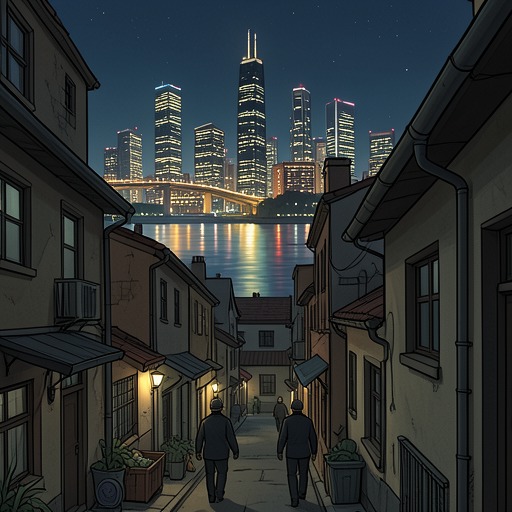
The city’s streets change their meaning with the hour. During the evening, Anindo describes driving towards the river to watch dusk settle over Calcutta, whose hidden brilliance seems to him like jewels released from a locked drawer. The image belongs to a city that does not give all its beauty at once: daytime conceals what evening reveals. Elsewhere, the Shahjahan’s arrivals make the street outside the hotel a display of wealth. From eight o’clock, a procession of fine cars fills the road; the doorman opens each door and bows to the arriving passengers. The spectacle concentrates privilege at the hotel entrance, even as other parts of Calcutta hold people who lack secure work or shelter.
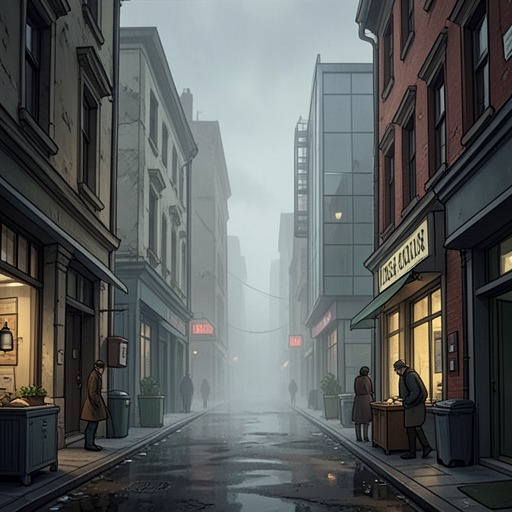
After the cars have departed, the narrator walks out into a different city. Buses and trams have stopped running; Chittaranjan Avenue lies in a calm that feels frightening rather than restful. The statue of Sir Ashutosh Mukherjee remains at a crossroads, while the illuminated globe above the headquarters of the Calcutta Electric Supply Corporation continues to turn. These surviving markers of civic life stand out against the quiet streets. The narrator wonders whether this can be the Calcutta of his dreams, or whether he is alone in a wilderness. The walk marks a change in his understanding: on returning to the hotel, he feels that he has crossed into adulthood, leaving the inexperienced way of seeing behind.
Night reveals both the city’s solitude and its unequal conditions. On another late journey, Sujata offers the use of an airline car, and the route turns towards Chowringhee. Neon lights keep dancing above the empty stage of the street; behind Curzon Park’s iron railings, Sir Hariram appears to be waiting for dawn. The occasional taxi and sleeping public transport make the nocturnal city seem suspended, while the narrator recognizes that its stillness does not mean that its stories have ended. The city remains inhabited by people whose lives and work continue beyond the scenes visible to passing travellers.
Calcutta as School, Witness, and Hope
The narrator ultimately understands Calcutta through his experience at the Hotel Shahjahan. The hotel has taught him about human nature and introduced him to kindred spirits, but it has also made him confront the hidden depths of a crowded human world without the kind of guide he had when he entered legal work. He describes himself as a prisoner of memories of real men and women, whose stories resist being turned into inventions. Calcutta is therefore not merely a backdrop to the hotel’s episodes; it is the larger city whose people, histories, and changing streets make those experiences legible.
The city’s associations and charitable gatherings also reveal the distance between public ideals and private hardship. At a reception organized by Mrs. Pakrashi before her departure abroad, representatives of twenty other Calcutta organizations attend, all concerned with supporting children, improving women’s circumstances, or reducing social inequality. This civic scene sits beside the continuing difficulties of ordinary people. The narrator later sees Rosie desperately seeking money because her parents are ill and she cannot afford their treatment, while Sohrabji keeps working at the Mumtaz bar and remains preoccupied with his daughter. Calcutta brings reformist aspirations and immediate need into the same social field without suggesting that one has already resolved the other.
At the end of the narrator’s hotel employment, the city becomes a measure of loss. He crosses Central Avenue, Chowringhee, and Park Street as a dismissed employee with neither work nor shelter. The Shahjahan’s neon lights seem to mock him; even the streets and streetlamps take on the force of an accusing audience. The scene recalls the shame he felt after deceiving the Clive Building doorman, joining the beginning and end of his Calcutta life through a repeated experience of exposure. Yet when he reaches the area where the Birla Planetarium now stands and looks towards the trees on the road to the Victoria Memorial, the stars do not join the imagined laughter. Their silence calms him. He refuses the despairing conclusion that the city is beyond redemption and finds strength in the possibility that time remains and that goodness may yet touch it. Calcutta’s decisive significance lies in this unresolved contrast: it can humiliate and erase, but it can also preserve a refuge, a memory, or a distant light by which the narrator begins again.