Old Post Office Street
ChowringheeOld Post Office Street appears as a temporary refuge in the narrator’s account of losing his employment, but not as a place where he can begin again. Its brief shelter, the kindness of his fellow court secretaries, and his refusal of a possible job there make the street a threshold between one life and the next.
A Temporary Place to Stay
After the death of his English employer, the narrator describes his exhausted soul as having found an unfamiliar boarding house on Old Post Office Street for the night. At daybreak, it is time to set out again. The image gives the street the character of a pause rather than a destination: the narrator has somewhere to stop, but no settled future there.
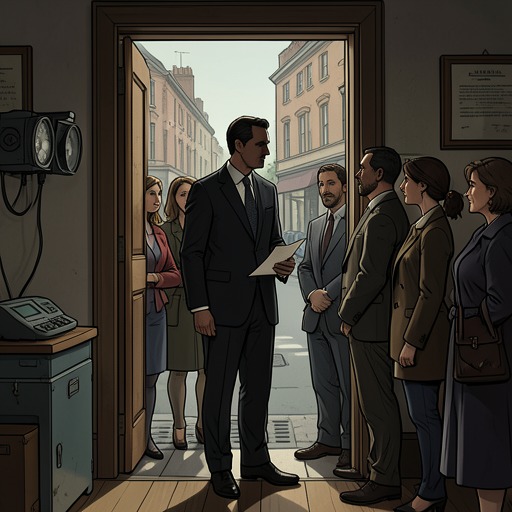
His fellow secretaries from the High Court respond to his loss with tears. One sits him down and offers him tea, urging him to eat despite his grief. It is the narrator’s last cup of tea on Old Post Office Street, a small act of care that gives the temporary lodging a human warmth without changing the insecurity of his position.
The Offer to Remain
The colleague tries to hearten the narrator by suggesting that he will find another job among them, working for one of the lawyers. The offer ties a possible livelihood to the familiar neighborhood and the people who have gathered around him. The narrator answers that even if he finds work, he cannot stay in the area. The account gives no further explanation for this refusal, but it makes clear that a job alone would not be enough to keep him there.
A Threshold in the Narrative
Old Post Office Street is associated with a final kindness and a departure, not with a lasting home. The movement from the boarding-house image at night to the call to walk again at dawn turns the street into a brief resting point in the narrator’s repeated displacement. His last tea and the rejected possibility of local employment sharpen the contrast: companionship is available for a moment, while security remains out of reach.