Hotel Shahjahan
ChowringheeHotel Shahjahan is both a landmark of Calcutta and the novel’s great viewing platform: a palace-like hotel whose rooms gather the city’s private crises, whose routines depend on often-invisible labor, and whose long survival contrasts with the fleeting lives of its workers and guests. For the narrator, it offers a new beginning after the end of his legal career, then becomes a school of life. But the building that shelters him also seems capable of erasing everyone who passes through it.
Architecture, History, and Arrival
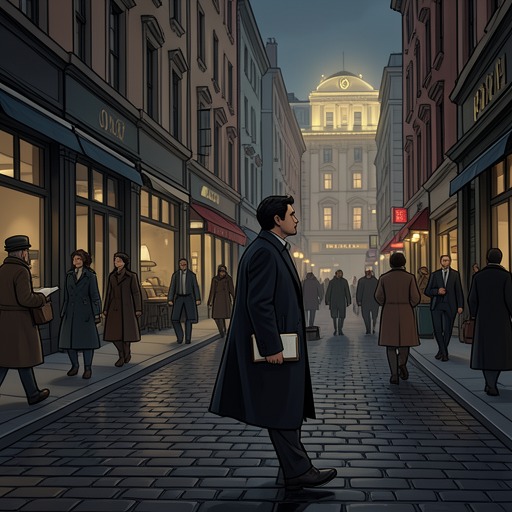
The narrator first sees Hotel Shahjahan from a distance as a majestic yellow building. Calling it merely a building seems insufficient: its scale and grandeur suggest a palace fit for a nizam or the Maharaja of Baroda. This impression accompanies a decisive change in the narrator’s life. His former occupation as the last secretary to the last English lawyer of the Calcutta High Court has ended, and the hotel manager agrees to take him on. The narrator understands the appointment as a new birth and the hotel as a safe harbor after a storm-tossed passage through a difficult life.
The hotel’s sense of age is not confined to its impressive exterior. Newspaper material and old sketches displayed in its lobby present it as an establishment with a long past and a tradition distinct from a modern American motel. One framed clipping includes a draughtsman’s sketch of Hotel Sajan, while other old drawings greet visitors with the suggestion that the hotel’s history reaches back many decades. Silverton’s Hotel Shahjahan, the narrator learns, has withstood the assaults of time and remained in the same place. The building seems to hold the city’s earlier life within its walls: one night, the narrator senses another century stirring around the palace, which he imagines as guardian to unread chapters of history languishing in dirt. Although he is waiting for morning on its roof, the hotel seems to belong to a past older than the present century.
Work, Time, and the Hotel’s Threshold
The hotel gives the narrator more than employment. Through Satyasundar Bose’s instruction, he learns the different aspects of reception work: how to please people and how to observe Calcutta from the privileged position behind the counter. The desk is a threshold between the hotel and its guests, giving the receptionist a close view of arrivals while keeping him in the position of a watcher. From there, the city’s apparent magic and its human complications unfold as a succession of encounters.
Hotel Shahjahan also measures time differently from the world outside. Its staff day begins with tea in bed, continues through breakfast, lunch, tea, and dinner, and does not necessarily end when the calendar date changes. The hotel’s schedule stretches across ordinary divisions of the day; its workers may still be awake to attend to guests leaving at four in the morning. A public calendar can turn over while the hotel’s labor continues. That altered rhythm makes the place feel less like a temporary stop than a system that absorbs its employees’ hours.
The work is not only continuous but carefully concealed. After spending time in a neighborhood without sewers or rubbish collection, the narrator arrives early at the hotel and notices the contrast: waste exists there too, although he does not know where it goes. The hotel has perfected the work of sweeping things away and directing attention from whatever is unsuitable or offensive to the eye. Its immaculate appearance is therefore an achievement of labor and concealment, not proof that disorder is absent. The early-morning view reveals how much effort is required to preserve the polished surface guests encounter.
The narrator’s attachment to the hotel develops alongside his awareness of its power over those who work there. He hears its atmosphere likened to an illusory, soul-destroying opiate: an addiction without an obvious escape, so strong that even an open door may not be enough to leave. This is not a simple rejection of the place. The narrator later recognizes that, without his stay there, his education in the school of life would have been incomplete. Hotel Shahjahan draws people inward even as it teaches them what the institution demands and what life behind its appearance contains.
A Stage for Public Spectacle
The hotel’s public rooms turn work into performance. Banquets are treated as major tests for hotels, events whose importance managers may not fully understand even when the staff must execute them. In preparation for one reception, Satyasundar Bose leaves William in charge of reception and hurries through the hotel with the narrator. In the service areas, waiters polish knives and forks under Parabashia’s supervision. What guests experience as effortless hospitality is assembled through hurried, exacting work out of view.
The performance continues at the entrance and among the guests. A newly established Calcutta branch of the international Sociedad Filantrópica hosts a banquet, with Agarwalla, Langford, and Khan Bahadur Huq welcoming arrivals in different styles of dress. The display presents a public commitment to humanity, but Satyasundar Bose warns the narrator that the city’s banquets repeatedly draw from the same invitation lists. The newspaper accounts will record speeches and summaries, much of which has been prepared before the banquet itself. The public version of the occasion can therefore be settled in advance, while the hotel workers watch what actually occurs around it.
The physical demands are substantial. At one meal, thirty waiters and five other staff members serve three hundred diners. The meal is priced two and a half rupees more when rice is absent, a small operational detail set against the scale of service. In another scene, cars continue to arrive as Calcutta’s prominent men gather at the hotel. The Mumtaz bar is packed; William controls the entrance, ticket register, and money, while Phokla Chatterjee and Ranganathan take front-row seats. When the lights go out, a restless spotlight searches the stage through darkness before settling on the uncertain appearance of Connie. The hotel is not merely the setting for a show: its staff manage the boundary between stage, audience, and backstage, and the narrator’s future depends on carrying out the cabaret host’s responsibilities well enough to keep earning his livelihood.
The strain and vulnerability behind the spectacle become visible when the first act ends. At the narrator’s signal, the electricians switch off the lights to preserve Connie’s modesty; when they come back on, she is backstage in a robe, panting. The changing light briefly exposes what the performance depends on, then restores the public arrangement. Across banquets and cabaret, Hotel Shahjahan repeatedly turns private effort into a polished event, while those responsible for its success remain subject to the pressures of their jobs.
Suites and Private Dramas
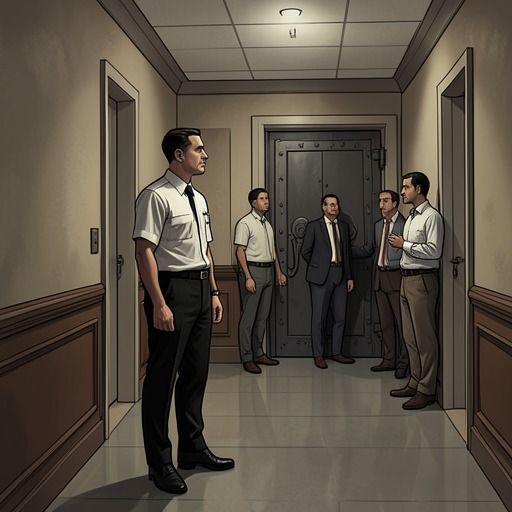
Behind the hotel’s public performance, rooms hold stories that the narrator cannot immediately understand. Suite Two, in particular, has its own elaborate routine. The distinction between an ordinary room and a suite depends on whether there is a sitting room, but Suite Two is exceptional even by that measure: it has a personal telephone and several sitting rooms. It requires many flowers, chosen in person by Karabi Guha. Early each morning, Nityahari Bhattacharya arrives with paper and pencil to attend to the hotel’s linen requirements. The room’s preparations turn hospitality into a precise daily practice, while its privacy makes it feel like a small stage whose drama may be hidden from everyone outside.
During dry nights, when alcohol is not sold, many hotel employees return to their rooms and go to sleep early. P.C. Gómez instead sits on a stool outside his room. The narrator, meanwhile, watches Karabi’s heightened excitement with concern and imagines Suite Two as a play unfolding in darkness, with himself as a member of the audience. He wonders what other dramas are taking place in rooms throughout the hotel, beyond public sight. The concern is not abstract: he fears for Karabi as though she were the heroine of a tragedy, even though he does not yet know what is happening.
A later visit by Mrs. Pakrashi changes the narrator’s understanding. She enters wearing a silk sari, dark glasses, and carrying a white handbag. She has not been seen at the hotel for some time; the German guests have since departed, and Madhab Pakrashi may be away in Delhi or Bombay with Anindo. With Suite One available, the hotel’s sequence of rooms and arrivals creates the conditions for another private encounter. The narrator recalls that he had understood little of what was unfolding until he saw Mrs. Pakrashi. Hotel Shahjahan grants him access to fragments, not omniscience: a receptionist can observe entrances, absences, and changes of room, while the meanings of those movements emerge only later.
Guests, Memory, and Forgetting
The hotel’s movement of people is relentless. Connie’s departure does not alter the routine for long; she is one among the many who enter and leave. Guests may remain for a week, three days, one day, or only a few hours. Welcome and farewell arrive as a pair, but the narrator observes an imbalance between them: arrivals carry a little anticipation, whereas departures prompt almost none. The employees’ apparent indifference mirrors the traffic of the building, where one person’s exit quickly makes way for another guest.
Satyasundar Bose gives that indifference a sharper meaning by saying that the building itself is colder than its employees. It does not want to remember Connie, the narrator, or Bose; it can be repainted and repaired, continue receiving visitors, and persist after the people who served in it are dead and gone. The hotel’s endurance, celebrated in its old sketches and its survival on the same site, has a cost: the structure lasts, but it does not preserve the identities of those whose work sustains it. The narrator later imagines how easily thousands can be forgotten, including the workers present at dramatic moments in history. The hotel’s lobby may preserve traces of its past, yet those traces do not guarantee recognition for the ordinary people who lived within it.
This tension shapes the narrator’s retrospective relationship with the building. By the time he is used to its quiet nights, the nineteenth-century hotel no longer surprises him; he feels that it has disclosed its secrets to a close friend. But intimacy does not cancel pain. Looking back, he describes the memories of Hotel Shahjahan as shadows over his thoughts, while also acknowledging the education the place gave him. The building becomes a vessel for memory in the narrator’s account precisely because the institution itself seems unwilling to remember its people.
Change and Departure
Hotel Shahjahan is enduring, but its organization is not fixed. When the narrator’s long-serving colleague Satyasundar Bose considers leaving, the prospect carries the weight of years spent at the hotel. Marco Polo has signed the narrator’s papers and offered him the possibility of going to Costa Dorada to begin another hotel together, in Africa. Marco Polo is occupied with handing command to Jimmy. The narrator experiences the departure as the dispersal of a life assembled over thousands of nights and days: after familiar faces have left at breakfast, lunch, and tea, he imagines himself at dinner as a patriarch sitting alone at an empty table.
Jimmy’s arrival signals a change in management. The narrator is told that the hotel will no longer be run as before, and that a young woman with painted lips has been brought in to replace Satyasundar Bose. Jimmy and Agarwalla also promise to bring attractive women to make Hotel Shahjahan a meeting place for people of all races. The proposed change is presented as modernizing and commercially expansive, but it also contrasts with the older personal order associated with Bose. The hotel’s continuity as a building therefore contains repeated breaks in its working life: new managers can alter the rules and replace familiar people without changing the structure that houses them.
At the end of this passage through the hotel, the narrator looks back at it one last time. Its tired lights continue to flicker. The image brings together the building’s persistent presence and the fatigue of the people whose lives have passed through it. Hotel Shahjahan can survive its employees, welcome another line of visitors, and acquire fresh paint and mortar; what it cannot do is hold their stories on its own. The narrator’s account supplies the memory that the hotel, for all its age and grandeur, refuses to keep.