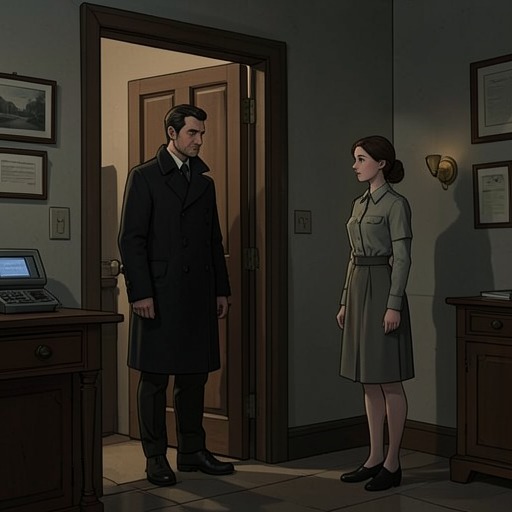
Hafezji's tavern
ChowringheeHafezji's tavern is the Calcutta bar where Sohrabji began to make a living as a boy, first accompanying women under a restrictive bar-entry system and later working behind the counter. In Hobbs's recollection, the tavern is more than a setting: its daily business exposes the ways poverty, gender rules, police oversight, and the need to survive meet across a single barroom.
Setting and remembered history
Hobbs knew Sohrabji before the First World War, when the boy worked at Hafezji's bar. Sohrabji was not yet fourteen, and his employment brought him to the attention of the excise authorities, who were told that a boy of his age was not permitted to work in a bar. Facing the loss of his job, he went to Hobbs in tears. Hobbs intervened and helped have the complaint withdrawn. The episode establishes the tavern as an early and fragile foothold in the city for a young worker: a place that provided work, but offered no security against regulations or denunciation.
Hobbs also explains that Sohrabji was not the boy's original name. His actual name was Madan, or something like it, while the name he came to use was taken from an Indian word for a drink. The recollection ties his adopted identity to the occupation that first sustained him. The tavern therefore belongs to the story of how he entered Calcutta's working life as much as to the later history of his career.
The escort system and Sohrabji's first meals
The tavern operated within a wider system of restrictions on women entering bars. Under the excise laws Hobbs describes, a woman could not enter many of Calcutta's bars without male company. For women with little money, this requirement generated a small economy of escorts: men accompanied them, sat with them, and made way for a customer if a client took interest. Hobbs recalls the law as old and differently intended by its authors, but in practice it supported arrangements in which women and their companions had to negotiate both access and cost.
Sohrabji found his way into this system while looking for work. On Dharmatala Street he met a young man seeking a temporary substitute to accompany Cynthia to a bar. The regular escort was leaving for Kharagpur to look for railway employment, and the replacement was warned that the arrangement would last only a week. He was also cautioned not to mistake a woman's friendliness or an occasional cigarette for a promise of intimacy. Sohrabji accepted the position because it meant he would have food for the next few days.
The tavern was unfamiliar and unsettling to him at first. He had never been in such a place; the smoke made it seem as though the room were on fire, while musicians played in the distance and urged the women sitting with drinks to dance because the bar could not afford dancers. Sohrabji noticed that many other pairs were arranged in the same way. The scene shows the bar's business taking shape around more than drink: women's presence, men's paid companionship, and the possibility of attracting a customer all formed part of its working economy.
Work, money, and the people around the bar
Cynthia tried to show Sohrabji how the arrangement could bring in extra money. After one encounter, she gave him more than they had agreed and suggested that he ask customers for a tip before leaving. He could not bring himself to do so. Instead, he sat and watched. That reluctance distinguishes his place in the tavern's economy: although he had accepted an escort's work to secure meals, he did not adopt every means of extracting money available to him.
His time at the tavern also brought him into contact with Hafezji, its proprietor. Sohrabji watched police officers arrive under cover of night. Hafezji attended to them and offered them drinks; the officers then entered a routine inspection in the bar's book, recording that they had received personal attention, that the place was full, and that the women were accompanied. Hobbs remarks that this sort of entry was still being written in Calcutta bar inspection books in his own time. The tavern's official oversight thus appears as a practiced exchange: the law's requirements are recorded, while hospitality to inspectors helps make the encounter part of the bar's ordinary business.
Daily rhythm and narrative significance
Sohrabji eventually came to work at Hafezji's bar rather than simply accompanying Cynthia. Hobbs frames this turn as if the gods had found a way to secure a job for him, but the account makes its material consequence plain: he had needed food, and the bar offered a route from temporary escort work into employment. The place's rhythms changed over the course of the day. Mornings were quiet, with an almost empty counter and only a few customers who stayed for a drink or two. More people arrived in the afternoon, mostly from the suburbs. At night, when Hafezji himself took his position behind the counter, the atmosphere changed completely.
That progression gives the tavern a social life beyond its regulations. It is at once a workplace where a boy's age can threaten his livelihood, a venue sustained by a gendered escort arrangement, and a business where police inspection is folded into the proprietor's nightly routine. Hobbs's story does not reduce the bar to a simple symbol of exploitation or opportunity: Sohrabji's need for food, his discomfort, his refusal to solicit tips, and his eventual employment all coexist within it. Through this remembered history, Hafezji's tavern becomes a compact record of how survival in Calcutta could depend on finding a place inside systems that were restrictive, unequal, and yet continually worked around.