Holy See
ConclaveThe Holy See is the ecclesiastical office declared vacant when a Pope dies and the institution whose authority and procedures govern the ensuing election. In the novel, its ceremonial signs and formal rules coexist with struggles over information, property, public dignity, and internal accountability. The institution’s condition is never abstract: it is marked by a ring cut in two, a carefully managed account of a death, unequal records of property, and cardinals arguing over what the Conclave may be told.
The vacant office and its procedures
The death of the Pope makes the vacancy visible in a specific act. At the vigil, Janusz Woźniak removes the Fisherman’s Ring and hands it to Joseph Tremblay, who cuts through its seal. Tremblay then announces that the throne of the Holy See is vacant. The ring, which depicts Saint Peter hauling in a fisherman’s net, is not merely a keepsake or ornament: its destruction marks the end of the dead Pope’s authority and the beginning of a period in which the institution must proceed without him.
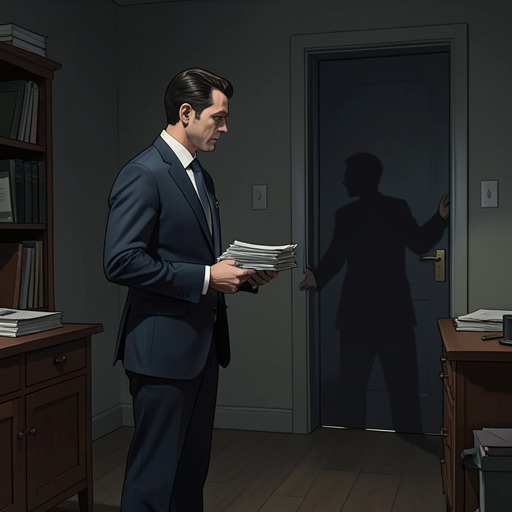
The vacancy also puts procedural authority into the hands of officials expected to manage the transition. The account of the Pope’s last evening is assembled as a printed timeline: dinner at 7:30 p.m., retirement to his apartment at 8:30, bed at 9:30, Woźniak’s check at 11:30, emergency treatment beginning at 11:34, and death pronounced at 12:12 a.m. Tremblay argues that discrepancies could revive malicious rumours, invoking the unresolved public suspicion surrounding the death of Pope John Paul I. The timeline is thus both a record of events and an effort to control how the Holy See will be understood beyond its walls.
The election’s rules likewise define who may act in the institution’s name. When Vincent Benítez arrives after being secretly created a cardinal, Lomeli initially doubts his claim. He then invokes paragraph thirty-nine of the Apostolic Constitution: a cardinal-elector arriving re integra, before a new Pope has been elected, may join the election at its current stage. By interpreting the rule as applicable, Lomeli recognizes Benítez’s legal standing. The episode shows that institutional continuity depends not only on titles but also on the precise reading of rules when an unexpected case tests them.
Public dignity and the management of information
The officials’ handling of the Pope’s body exposes competing ideas of what the Holy See owes the public and the dead. Tremblay urges an immediate transfer to the mortuary and proposes allowing Vatican television crews, pool photographers, and a newspaper reporter to record the body’s departure. He argues that the institution must not fall behind the news cycle. Joshua Adeyemi objects that the transfer should wait for daylight, a hearse, and a proper casket draped with the papal flag. Aldo Bellini counters that the Pope rejected status and would have preferred to be seen among the humble; Lomeli supports an ambulance as the closest available equivalent to public transport. Their disagreement is about more than logistics: it is a contest over whether public exposure or the Pope’s example should determine the ceremony.
The same tension shapes the official account of the death. Lomeli proposes adding the Pope’s attendance at vespers to the existing timeline while preparing a fuller account of the day for reserve. This compromise preserves an immediate statement while acknowledging that further information may become necessary. It also demonstrates how the Holy See’s public voice is negotiated among senior officials rather than simply issued as a transparent record.
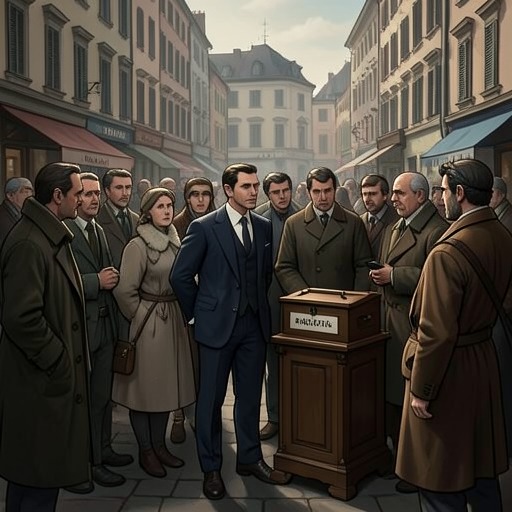
Later, when Lomeli receives news of coordinated attacks, he asks the assembled cardinals for authority to disclose what has happened. He cites paragraphs five and six of the Apostolic Constitution, which permit discussion of certain matters in special circumstances if a majority agrees. After a vote, he reports that a car bomb and a second explosive attack occurred in Piazza del Risorgimento, and that two gunmen attacked worshippers during Mass at San Marco Evangelista. Even in crisis, the information reaches the Conclave through a sequence of security reporting, procedural authorization, and public announcement. The Holy See’s ability to respond is shown as dependent on both the facts available and the legitimacy of the process by which those facts are shared.
Property, reform, and internal resistance
The novel’s contrast between the Pope’s chosen residence and the institution’s property holdings makes financial accountability a central test of the Holy See. The Pope remained in the Casa Santa Marta after his election, rejecting the larger apartment available to him in the Apostolic Palace. His room was a modest fifty square metres, and his decision began a conflict with Curial officials who considered such simplicity inappropriate to papal dignity. He cited Christ’s instruction to travel without provisions; the example left officials feeling reproached and resentful as they returned to grand official apartments.
After the Pope’s death, a hidden compartment in a bedpost yields documents that turn this contrast into evidence. The papers list official apartments, including Lomeli’s 445-square-metre residence, Bellini’s 410 square metres, Adeyemi’s 480, and Tremblay’s 510, beside the Pope’s fifty-square-metre room. A confidential addendum estimates the APSA patrimony at 347,532 square metres, potentially worth more than €2.7 billion, against a stated book value of €389.6 million. It reports a paid occupancy rate of only 56 percent and suggests that much of the income has not been properly declared. The papers make the Pope’s personal austerity a measuring stick against which the institution’s finances appear difficult to justify.
Bellini describes the Pope’s efforts to change that system as a sustained struggle. At his first meeting with the prefects, the Pope demanded financial transparency, proper books, disclosure of accounts, outside tenders for building work, and receipts. He then brought in accountants and management consultants to examine files, giving them offices on the first floor of the Casa Santa Marta. The response included leaks and public embarrassments over funds intended for the poor being used to renovate apartments or pay for first-class travel. Bellini presents reform not as a settled achievement but as a process that exposed resistance and left the Pope increasingly isolated inside the Holy See.
Institutional loyalty and the Conclave
The Holy See’s internal conflicts are not reducible to a division between reformers and traditionalists. Bellini argues that service to God must occur through the Church and that the Curia, despite its imperfections, is the Church’s heart and brain. His defense of institutional loyalty helps explain why exposing wrongdoing is not presented as an uncomplicated act: the same structures that conceal or mishandle information are also the structures through which reform and authority must operate.
That difficulty comes into sharp focus when Lomeli decides to disclose the attacks to the Conclave. He first clears the lobby and dining area, asking the sisters to withdraw and the officials to secure privacy. Before speaking, he asks Bellini whether he is doing the right thing; Bellini cannot decide for him but promises support. Lomeli then seeks the Conclave’s authorization rather than treating his office as sufficient warrant. When the proposal is put to a vote, scores of cardinals support receiving the information; a smaller group, including Goffredo Tedesco, opposes it. No one leaves when given the option. The episode gives procedural consent dramatic force: the Holy See is shown deciding not only what to disclose, but whether its members will accept a common account of events.
The organization’s significance lies in this unresolved conjunction of spiritual purpose and administrative power. The broken ring establishes the vacancy, rules preserve the election’s continuity, and the Pope’s concealed papers challenge the management of property; meanwhile, officials dispute how to represent his death and whether an emergency belongs within the Conclave’s deliberations. The Holy See can act through ceremony, law, investigation, and collective vote, but none of those mechanisms removes the conflict between protecting the institution and telling the truth about it.