Vatican Press Office
ConclaveThe Vatican Press Office serves as the public-facing communications body during the Pope’s death and the conclave, where control of timing, documentation, and images becomes part of the Church’s effort to preserve credibility and convey unity. Its work moves between the disciplined presentation of an official account and the unpredictable force of live reporting, culminating in the announcement of Pope Innocent XIV’s election.
Information and the Official Account
After the Pope’s death, a printed document headed “Timeline” sets out the night’s events in precise increments: the Pope’s supper, his retirement to his apartment, Archbishop Woźniak’s discovery that he was unresponsive, the doctor’s emergency treatment, and the formal pronouncement of death. The timeline gives the account an orderly, documentary form at a moment when confusion could produce damaging rumours. The need for such precision is underscored by the recollection that uncertainty over the discovery of Pope John Paul I’s body had fueled persistent suspicions about his death.
The office also works with the Holy See’s security service to prepare a factual briefing for the cardinal-electors after coordinated attacks in Rome. Lomeli presents the information as a press-office summary, distinguishing reported facts from the gathering’s wider debate over what the attacks mean. In this role, the office provides a basis for decisions inside the conclave, not merely material for public consumption.
News Timing and Public Visibility
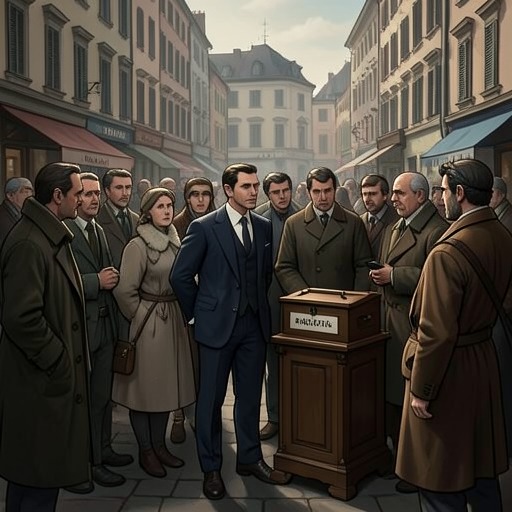
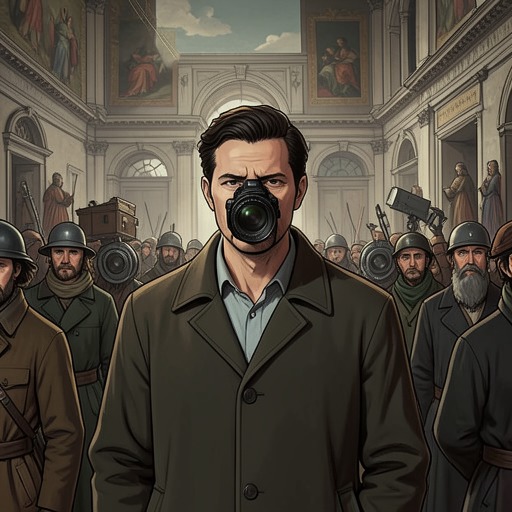
The death announcement becomes a dispute over both timing and presentation. Tremblay urges immediate release and proposes allowing television crews and photographers into Piazza Santa Marta to film the transfer of the body. He argues that the Church must not fall behind the news cycle and that prompt coverage would secure maximum exposure. Adeyemi instead favors waiting for daylight and a more formal transfer; Bellini and Lomeli support the ambulance as consistent with the late Pope’s modest way of life. The episode makes the office’s communications problem concrete: speed can extend visibility, but the images chosen also frame the deceased and the institution.
The conclave’s failure to elect a Pope after five ballots is reported through black smoke, television commentary, and speculation about the candidates. Analysts express surprise, question Bellini’s prospects, and begin treating Adeyemi as the likely choice. These reports show how the election’s meaning is shaped outside the sealed proceedings: forecasts and betting odds translate a slow, uncertain process into a public contest, even as the cardinals continue deliberating under strict rules.
Images of Crisis and Unity
After the attacks, the cardinal-electors vote to return immediately to the Sistine Chapel and resume voting. A television helicopter filming blast damage also captures their procession through the Vatican grounds. The images are broadcast live and replayed around the world; viewers see scarlet-clad cardinals moving together, a picture that conveys purpose and defiance and prompts pilgrims to gather in St Peter’s Square. Within an hour, the crowd there has reached a hundred thousand. The broadcast does not simply record the procession: it turns an internal decision to continue the election into a public sign that the Church intends to act together.
The Vatican Press Office later reports the outcome of the election and describes Pope Innocent XIV’s first encounter with the cardinal-electors. Rather than receive their pledges while seated on the papal throne, he greets them individually while standing before the altar, embraces them, and offers words of comfort and support, including to the cardinals who had been his rivals. The account presents his welcome as a rejection of recrimination and an appeal to unity. At the same time, the conclave’s records and ballots are burned, leaving the public statement as the authorized account of the new Pope’s first act toward his former competitors.
Role in the Narrative
The office’s work links private institutional procedure to public interpretation. Its timeline and briefings organize information for decision-makers; proposed access for reporters makes the management of images an immediate political question; and broadcasts of the cardinals’ march give a visible form to unity before the election is complete. The final announcement continues that work by framing the new Pope’s gestures as forgiveness and shared purpose. Across these episodes, public communication is neither a neutral backdrop nor a simple afterthought: it is one of the means by which the Church seeks to maintain trust while events remain uncertain.